

BY ALEX ALAGON

BY ALEX ALAGON
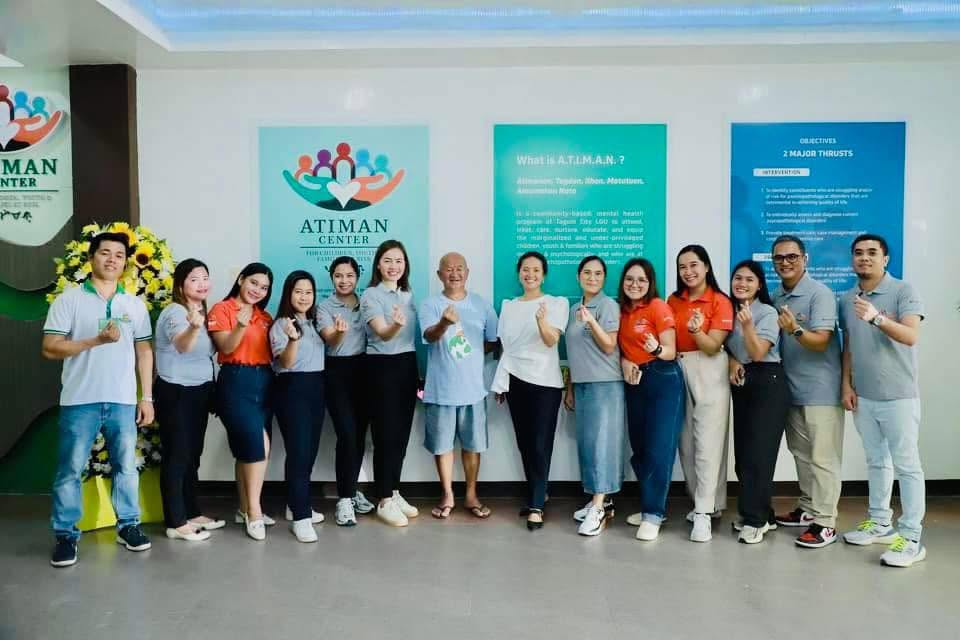
TAGUM CITY, Philippines — The Sangguniang Panlungsod of Tagum has approved on final reading the Mental Health Ordinance of Tagum City during its 50th Regular Session on July 20, 2026, marking a major milestone in strengthening the city’s mental health services.
The ordinance was principally authored and sponsored by Councilor Ciara Isabelle L. Uy-Salazar, chairperson of the committee on health, to institutionalize a comprehensive and community-based mental health system that ensures accessible, inclusive, and quality mental health care for every Tagumenyo.
Anchored on Republic Act No. 11036 or the Philippine Mental Health Act, the measure strengthens the delivery of mental health services by integrating mental health into primary health care, expanding psychosocial support, establishing referral systems, and promoting mental health awareness in schools, workplaces, and communities.
A key feature of the ordinance is the creation of the Tagum City Mental Health Council and a Mental Health Technical Working Group, which will coordinate the planning, implementation, and monitoring of mental health programs in partnership with government agencies, health professionals, civil society organizations, youth representatives, and the ATIMAN Center—a community-based mental health and resource facility providing free psychological care, mental health services, and support for children with special needs.
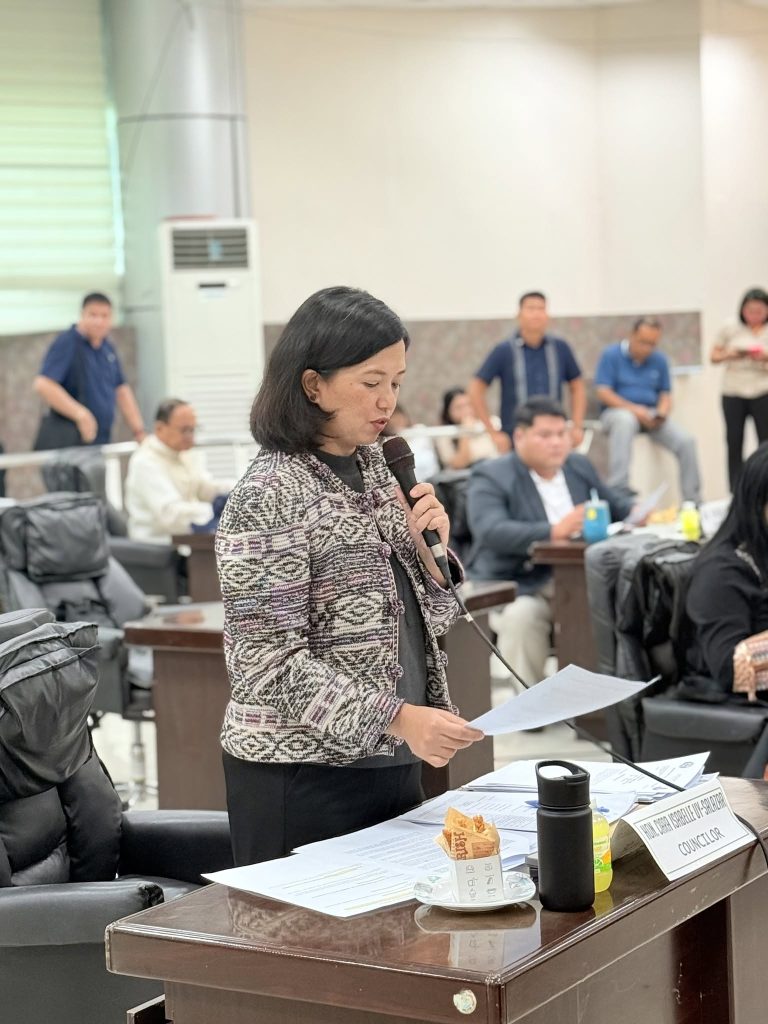
“This ordinance is about ensuring that every Tagumeyo has access to compassionate, community-based mental health care,” Uy-Salazar said. “By institutionalizing these programs, we are creating a stronger support system that protects dignity, promotes wellness, and encourages every individual to seek help without fear of stigma.”
The ordinance also promotes mental health education, workplace wellness programs, anti-discrimination measures, and rights-based mental health services while appropriating ₱2 million for its implementation.
With the ordinance’s approval on Final Reading, Tagum City takes another significant step toward building a healthier, more resilient, and more inclusive community through responsive local legislation.

IN OUR family, language has always been both discipline and delight. I’m an English teacher, so when my children were growing up, I would often correct their grammar and spelling. Wrong spelling? Wrong! In our family group chat, every message had to be in a complete sentence; no abbreviations, no shortcuts. My husband, meanwhile, was the pronunciation police.
Together, we raised our children with the conviction that words matter. Early on, we encouraged them to use either pure English or pure Filipino, believing that clarity and consistency would strengthen their linguistic foundation. It was not easy, but as a homeschooling family, we believed training them in clarity was worth the effort.
Speaking in Many Tongues
One day, while we were living in Malaysia, an American friend overheard me telling my daughter: “Mag-wash ka na ng hands mo doon sa sink.” She was amused that I had spoken in three languages at once: English, Tagalog, and Cebuano.
I hadn’t even noticed until she pointed it out. That moment made me realize the importance of speaking in one language at a time, so our children could build a strong foundation in their first tongue. I didn’t want them to be jacks of all languages but masters of none.
Our family has been shaped by movement. Each time we moved to a new country, we made an effort to learn the local language. Over time, our children became natural language learners. They picked up Chinese, Bahasa, Thai, and, one summer, French.
Our children learned to easily switch to another language depending on who they were speaking to, and so now that they have a strong grasp of their first language, we can drop the rule and speak to them in mixed languages.
Technically, it’s called code-switching. Studies say that it happens naturally when people speak more than one language. My husband and I usually speak Cebuano to each other, but when we need to keep a conversation private, we switch to one of the foreign languages we know.
Shared Experience
Over breakfast one morning, my daughter’s fiancé remarked, “I’m just so glad I don’t need to adjust to another language with you.” He found it easy to communicate with our family because we speak the same way as he does with his family.
What my daughter’s fiancé observed reflects a larger reality: multilingual families are no longer rare. Many families today share the same experience, shaped by intermarriages, travels, migration, and social media.
With technology making us globally connected, younger generations have learned languages almost effortlessly. Social media, streaming platforms, and online communities expose them to multiple tongues daily. So much code-switching is happening everywhere, sometimes unnoticed, sometimes celebrated. What once seemed unusual is now ordinary: children shifting between languages depending on context, parents blending dialects at the dinner table, and families carrying multiple linguistic identities at once.
Message Over Structure
Multilingualism has become a quiet norm in many households, a reflection of how interconnected our world has become. I happened to watch actor Luis Manzano on social media this afternoon.
He was talking to his daughter Peanut, in Taglish, a combination of Tagalog and English, which is also called conyo. I remember it was popularized when Kris Aquino came back from Boston in the late 80s and was a frequent guest on TV shows.
Davao Conyo is another unique way of speaking. It’s a combination of Tagalog and Bisaya, and sometimes with some English words. And it has become a dialect on its own, spoken by the younger generation like my nieces and nephews and their children. I didn’t like the idea at first, but I didn’t realize I had also been a conyo speaker myself.
Love in Many Languages
Thinking about multilingual households brings me back to a simple line in a children’s song we used to sing in Sunday School: “Love in any language, straight from the heart.” The words were childlike, but the truth was profound. Love, expressed in English, Tagalog, Cebuano, or any other tongue, carries the same meaning when spoken sincerely.
Many years ago, while training to teach English in China. I asked my TESOL trainer, “What kind of English should I teach, British or American? She smiled and said, “You teach English that communicates.” It was a simple but profound reminder: the message is more important than the structure. Language is not about perfection; it’s more about sincerity and connection.
That is why, even as we correct grammar and pronunciation, we remind ourselves that language is not just about rules, and that learning it is not the ultimate goal. It is only our tool to build relationships and to connect to people.
Apostle Paul wrote: “If I speak in the tongues of men and of angels, but have not love, I am only a resounding gong or a clanging cymbal” (1 Corinthians 13:1). Language, after all, is not just about words; it is about speaking in love. The heart of communication is not structure but love. And in our family, whether in English, Tagalog, Cebuano, or a mix of all three, love is the language that matters most, and it is the language of love that binds families together.
Ruth Sitchon Morales is a full-time instructor at a state university in Mindanao, specializing in foreign language education. She is a resource speaker, freelance writer, and textbook author, and is currently pursuing doctoral studies in applied linguistics. Along with her husband and their three children, Ruth served as a cross-cultural worker and as an ESL teacher and in China, Malaysia, Thailand, and Africa. Her formal studies in foreign languages, enriched by immersion in diverse foreign and local cultures, have given her a broad perspective on life and a wealth of stories to share with her readers.
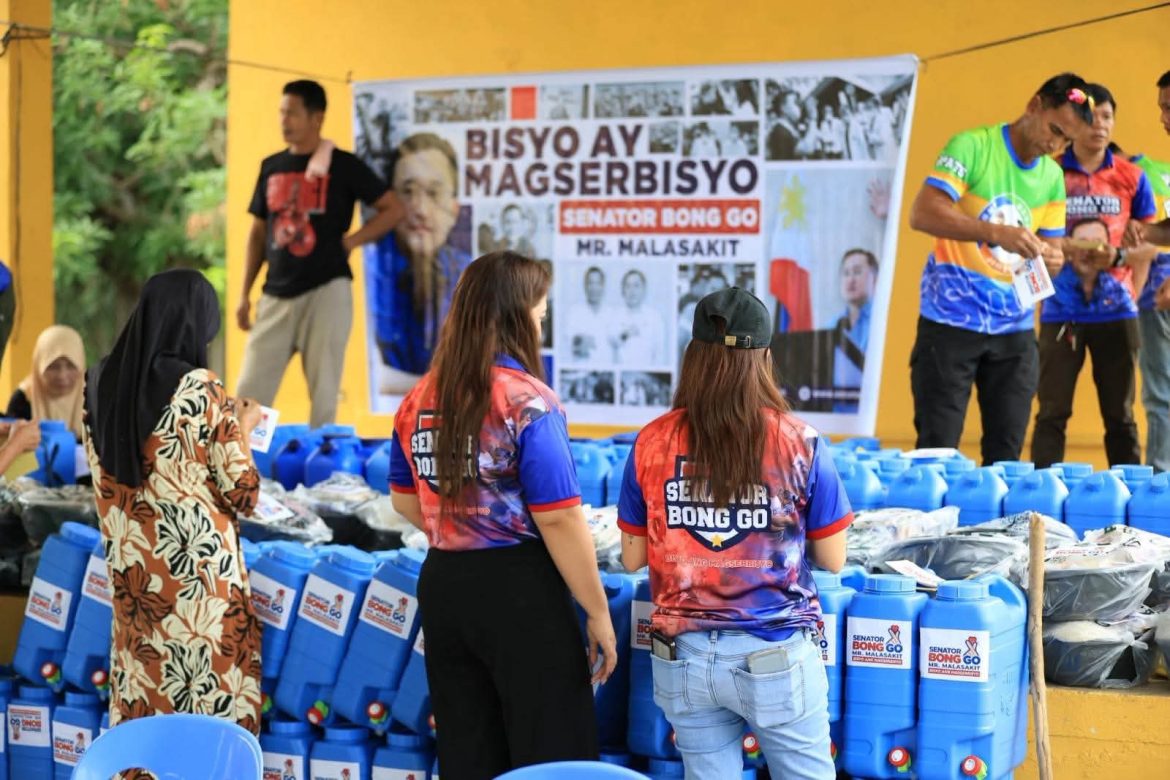
SENATOR Christopher Lawrence “Bong” Go extended relief assistance to dozens of families displaced by a recent landslide in Mati City, while also personally leading the turnover of a new primary healthcare facility in the province late last week.
During an outreach operation on July 22, Go’s relief team distributed financial assistance, grocery packs, clean water containers, food, clothing, vitamins, and sports equipment to 65 families in Barangay Tagabakid affected by a landslide that struck the area on July 19.
Go emphasized the necessity of rapid response during disaster recovery. “It is vital to reach affected families immediately and provide the support they need while they begin rebuilding their lives,” the senator said.
Reinforcing his disaster resilience advocacy, Go noted the passage of Republic Act No. 12076, or the Ligtas Pinoy Centers Act, which he principally authored and co-sponsored.
The law mandates the establishment of permanent, fully equipped, and disaster-resilient evacuation centers in every municipality and city nationwide.
Boosting Local Healthcare Services
Following the disaster relief distribution, Go—who serves as Vice Chairman of the Senate Committee on Health—visited Barangay Central in Mati City on Friday, July 24, to lead the official turnover of the newly completed Magapo Super Health Center.
The primary care facility is designed to provide outpatient services, lab testing, and emergency care directly to residents living in far-flung communities.
“These Super Health Centers are crucial in bridging the gap for primary healthcare, ensuring our countrymen in remote areas no longer have to travel far to receive basic medical services,” Go said during the handover ceremony.
Local government officials and health workers expressed gratitude for the dual interventions, citing the critical need for both emergency relief and expanded healthcare infrastructure in eastern Davao Oriental.
Part I: The Future Has Already Arrived
IMAGINE a child entering primary school in the Philippines this year.
By the time she graduates from university, many of today’s occupations may have changed beyond recognition. Some jobs that currently employ millions of people may no longer exist in their present form. At the same time, entirely new careers—many of which have not yet been imagined—will be waiting for those equipped with the right knowledge, skills and adaptability.
This is not science fiction. Nor is it a distant possibility.
It is the reality of the Artificial Intelligence revolution that is quietly but steadily unfolding across the world.
Every generation experiences technological change. Steam engines transformed manufacturing. Electricity revolutionized industry. Computers reshaped offices. The internet connected businesses, governments, and people across continents.
Artificial Intelligence, however, is different. For the first time in history, technology is beginning not only to automate routine physical tasks but also to perform many routine cognitive tasks that were once considered uniquely human.
AI is already writing reports, analyzing medical images, translating languages, assisting lawyers, supporting financial analysts, generating computer code, helping farmers monitor crops, and enabling businesses to make better decisions in real time.
The question, therefore, is no longer whether Artificial Intelligence will transform the future of work.
It already is.
The more important question is whether the Philippines is preparing its people—not merely to cope with this transformation, but to lead it.
A Revolution Unlike Any Before
Every industrial revolution has brought both anxiety and opportunity. Machines replaced manual labor in some industries but created entirely new sectors and professions. Computers eliminated certain routine jobs while generating millions of others that previous generations could scarcely have imagined.
History offers an important lesson.
Countries rarely prosper by resisting technological change. They succeed by preparing their people to adapt, innovate and seize new opportunities.
Artificial Intelligence is likely to follow a similar path. Some occupations will undoubtedly change. Certain routine tasks will increasingly be automated. Yet new opportunities requiring creativity, critical thinking, emotional intelligence, entrepreneurship, leadership and advanced digital capabilities will continue to emerge.
The future of work, therefore, is unlikely to be a contest between people and machines.
It will increasingly become a partnership in which human intelligence and artificial intelligence complement one another.
The countries that prepare their citizens for that partnership will enjoy a significant competitive advantage.
For the Philippines, this moment carries both urgency and enormous promise.
The Philippines Stands at a Defining Moment
The Philippines enters the age of Artificial Intelligence with one of its greatest strengths already in place—its people.
Every year, hundreds of thousands of young Filipinos enter the labour market with ambition, talent and the hope of building better lives for themselves and their families. Over the past several decades, this youthful workforce has become one of the country’s greatest economic assets, supporting sustained growth and earning international recognition for its professionalism, adaptability and resilience.
The country also possesses important advantages that many economies would envy. It has a globally respected English-speaking workforce, internationally recognized healthcare professionals, a vibrant Business Process Outsourcing industry that has evolved into a growing network of Global Capability Centers, a rapidly expanding digital economy, creative entrepreneurs and a young population that is remarkably comfortable with technology.
These strengths provide a solid foundation for the future.
But they cannot be taken for granted.
Artificial Intelligence is changing the very basis of global competitiveness.
In the years ahead, competitive advantage will depend less on abundant labor or lower costs and increasingly on the quality of human capital—how well people are educated, how quickly they acquire new skills, how confidently they embrace lifelong learning, and how effectively they work alongside intelligent technologies.
That is why the challenge before the Philippines is far greater than simply creating more jobs.
It is about preparing Filipinos for better jobs.
Jobs that demand creativity rather than routine.
Jobs that reward innovation rather than repetition.
Jobs that harness technology without losing the uniquely human qualities that no machine can fully replicate.
The choices made today by government, educational institutions, businesses and workers themselves will determine whether Artificial Intelligence becomes a source of greater prosperity or a widening divide.
The opportunity is immense.
If the Philippines invests wisely in its people, it can transform one of Asia’s youngest populations into one of its most competitive workforces, turning today’s demographic dividend into tomorrow’s AI dividend.
That is not merely a technological ambition.
It is a national development agenda.
Part II: Turning Challenge into Opportunity
The public debate on Artificial Intelligence often begins with a simple but unsettling question:
Will AI take away our jobs?
It is an understandable concern. Around the world, headlines frequently focus on occupations that may disappear as machines become capable of performing routine tasks more quickly, more accurately and at lower cost.
But that is only part of the story.
History reminds us that every great technological revolution has closed certain doors while opening many others. The arrival of electricity, automobiles, computers and the internet transformed labour markets in ways that few could have predicted. Some occupations faded into history, but entirely new industries, businesses and professions emerged in their place.
Artificial Intelligence is likely to follow the same path.
The challenge is therefore not to resist change but to prepare for it.
Beyond Automation: Augmenting Human Potential
Artificial Intelligence should not be viewed simply as a replacement for human workers. In many cases, it will become a powerful partner.
A doctor supported by AI can analyze medical images more quickly and devote more time to caring for patients. Teachers can personalize lessons according to the needs of individual students. Farmers can make better decisions using real-time weather forecasts, soil analysis, and crop monitoring. Engineers can design more efficiently. Small businesses can better understand customer preferences. Government agencies can deliver public services more effectively.
The most successful workers of the future will not be those who compete against Artificial Intelligence.
They will be those who know how to work with it.
The future belongs not to human intelligence alone, nor to artificial intelligence alone, but to the intelligent partnership between the two.
From the BPO Boom to the AI Economy
Few sectors illustrate this transformation more clearly than the Philippine Business Process Outsourcing industry.
For more than two decades, the BPO sector has been one of the country’s greatest economic success stories. It has created millions of quality jobs, strengthened the middle class, attracted substantial foreign investment and established the Philippines as one of the world’s leading providers of global business services.
Today, the sector is itself evolving. Around the world, routine customer support, data processing and administrative tasks are increasingly being assisted by Artificial Intelligence.
Some view this as a threat.
It would be more accurate to see it as an invitation to evolve.
The next chapter of the Philippine success story will depend less on routine processing and increasingly on higher-value knowledge services.
The rapid expansion of Global Capability Centers reflects precisely this direction. International companies are no longer looking only for cost efficiency. They are looking for talent capable of innovation, research, digital transformation, financial analysis, software engineering, cybersecurity, healthcare information management, legal process management, creative design and strategic decision-making.
Artificial Intelligence is not closing the door on the Philippines.
It is asking the country to move through a different one.
AI for Every Filipino Business
Artificial Intelligence is often associated with multinational technology companies and sophisticated research laboratories.
In reality, its greatest impact may well be felt among ordinary businesses.
Across the Philippines, millions of micro, small and medium enterprises provide employment, support local communities and drive economic activity. They are the backbone of the national economy.
Imagine a neighborhood retailer using AI to manage inventories more efficiently.
A small restaurant predicting customer demand more accurately.
A farmer receiving personalized advice on planting schedules and weather conditions.
A fisherman obtaining real-time information on sea conditions.
A tourism entrepreneur reaching visitors across the world through intelligent digital platforms.
A family-owned manufacturing business improving product quality while reducing waste.
These are not distant possibilities.
They are rapidly becoming everyday realities.
The challenge is to ensure that these opportunities are available not only to large corporations in major cities but also to entrepreneurs, farmers, and small businesses across every province and island of the country.
Artificial Intelligence should become a bridge that expands opportunity—not another barrier that widens inequality.
Innovation Begins in the Classroom
Preparing for the future of work does not begin when a young Filipino graduates from university.
It begins much earlier.
It begins in classrooms where curiosity is encouraged, questions are welcomed, and creativity is valued as highly as examination scores.
The age of memorizing information is gradually giving way to the age of understanding, applying and continually updating knowledge.
Tomorrow’s graduates will almost certainly change careers several times during their working lives.
Many will work in professions that have not yet been invented.
That reality demands a profound transformation in education.
Schools must nurture critical thinking, communication, teamwork, creativity, ethical judgment and digital literacy alongside strong foundations in science, mathematics and language.
Universities and technical and vocational institutions must strengthen partnerships with industry so that graduates leave not only with qualifications but also with the skills that rapidly changing workplaces demand.
Equally important, learning can no longer end with graduation.
Workers at every stage of their careers must have opportunities to reskill, upskill, retool, and reinvent themselves.
In the age of Artificial Intelligence, the greatest qualification may ultimately be the willingness to remain a lifelong learner.
From Demographic Dividend to AI Dividend
For many years, economists have spoken about the Philippines’ demographic dividend—the enormous opportunities created by its young and growing workforce.
Artificial Intelligence adds an entirely new dimension to that conversation.
A youthful population alone is no longer enough.
The true dividend of the future will depend upon how effectively that young population is educated, trained and empowered to innovate.
The Philippines has every opportunity to become one of Asia’s leading AI-ready economies.
But success will not be measured simply by the number of computers installed or digital platforms launched.
It will be measured by the confidence of a young entrepreneur creating a new business.
By a teacher inspiring students to think creatively.
By a worker successfully acquiring new skills midway through a career.
By a small enterprise reaching international markets through digital innovation.
By universities producing graduates who become creators of technology rather than merely consumers of it.
The journey from demographic dividend to AI dividend is, ultimately, a journey from potential to preparedness.
It is one of the most important development challenges—and opportunities—that the Philippines will face in the decades ahead.
Part III: Turning Intelligence into National Advantage
Artificial Intelligence is often presented as a technological race.
In reality, it is something much deeper.
It is a race to develop people.
The countries that will lead in the decades ahead will not simply be those with the fastest computers or the most sophisticated algorithms. They will be those that cultivate the most educated workforce, encourage the greatest creativity, inspire continuous innovation, and prepare their citizens to adapt confidently to change.
Technology can be purchased in many cases.
Human capability must be nurtured.
That is where the Philippines has one of its greatest opportunities.
The Human Advantage
Artificial Intelligence can process enormous quantities of information within seconds. It can recognize patterns, generate content, and automate routine cognitive tasks with remarkable speed and accuracy.
Yet there remain the qualities indicated below that continue to define human progress.
Curiosity.
Imagination.
Compassion.
Ethical judgment.
Leadership.
Trust.
The ability to understand culture, inspire confidence, resolve conflict, and build relationships.
These qualities cannot simply be programmed into a machine.
Indeed, the more capable Artificial Intelligence becomes, the more valuable uniquely human capabilities will become.
The future of work will therefore belong not to machines acting alone, nor to people working in isolation, but to societies that successfully combine technological intelligence with human intelligence.
The Enduring Value of Human-Centered Work
Not every occupation will be fundamentally disrupted by Artificial Intelligence. Many forms of work derive their value not merely from technical competence but from empathy, trust, intuition, creativity, judgment, experience, and the ability to build genuine human relationships.
Caregivers, counsellors, nurses, teachers, social workers, tour guides and tour operators, hospitality professionals, and numerous service occupations rely on qualities that technology can support but cannot authentically replicate.
Likewise, the accumulated wisdom and ethical judgement of specialized medical doctors and surgeons will remain indispensable, with AI serving increasingly as a powerful diagnostic and decision-support tool rather than a substitute for professional responsibility.
Equally resilient are the skilled trades and creative professions that demand dexterity, adaptability and craftsmanship in constantly changing real-world environments. Electricians, plumbers, carpenters, welders, mechanics, artisans, designers, artists, chefs, and countless other skilled professionals solve problems that rarely follow standardized patterns and often require improvisation, experience and personal accountability.
Their work combines technical expertise with human judgement and practical ingenuity in ways that remain exceptionally difficult to automate. Rather than eliminating these occupations, Artificial Intelligence is more likely to enhance their productivity through better planning, diagnostics, design support and knowledge access, while leaving the essential human contribution firmly at the center.
In many of these professions, demand may even strengthen as societies increasingly recognize the enduring value of authentic human service, craftsmanship and personal interaction in an increasingly digital world.
A National Agenda for the AI Age
Preparing for this future demands a national effort.
Government must continue investing in digital infrastructure, research, innovation and policies that encourage responsible and ethical use of Artificial Intelligence.
Universities, technical institutions and schools must equip young people not only with digital skills but also with the curiosity and confidence to become lifelong learners.
Businesses must invest continuously in retraining and reskilling their workforce, recognizing that learning can no longer end with recruitment.
Workers themselves must embrace change with openness rather than fear, understanding that adaptability has become one of the most valuable professional skills of the twenty-first century.
Artificial Intelligence should become a tool that expands opportunity, raises productivity and strengthens inclusion—not one that deepens inequality or leaves vulnerable communities behind.
That is why public policy must ensure that the benefits of AI extend beyond large corporations and metropolitan centers to farmers, fisherfolk, micro and small enterprises, local governments and communities across the archipelago.
A truly inclusive AI strategy must become an integral part of an inclusive national development strategy.
The Philippines’ Global Advantage: Its Overseas Filipinos
Perhaps few countries possess an asset quite like the Philippines.
Across the world, millions of Overseas Filipinos are serving as doctors, nurses, engineers, architects, scientists, teachers, researchers, software developers, seafarers, entrepreneurs, financial professionals and business leaders. Through decades of hard work, they have earned an international reputation for competence, dedication, adaptability and integrity.
Their contribution has long been measured in terms of remittances, which continue to support millions of Filipino families and contribute significantly to the national economy.
Yet their greatest contribution may lie elsewhere.
They represent one of the world’s largest communities of globally connected talent.
Every day, Overseas Filipinos work with cutting-edge technologies, advanced manufacturing systems, world-class hospitals, research institutions, multinational corporations, and innovation ecosystems. They are witnessing first-hand how Artificial Intelligence is transforming industries, organizations and societies.
The Philippines should view this extraordinary global community not simply as workers abroad, but as strategic partners in national transformation.
Their knowledge, international experience, professional networks and technological expertise can become invaluable national assets.
Imagine Filipino AI researchers mentoring students at home through virtual platforms.
Engineers abroad collaborating with Philippine universities on applied research.
Medical specialists supporting AI-enabled healthcare initiatives.
Technology entrepreneurs investing in Filipino start-ups.
Experienced professionals helping local companies adopt international best practices in Artificial Intelligence, cybersecurity, and digital innovation.
Distance is no longer the barrier it once was.
Digital technology now makes collaboration possible on an unprecedented scale.
If harnessed effectively, the global Filipino community can become one of the country’s greatest comparative advantages in the age of Artificial Intelligence.
The challenge is therefore not simply to celebrate Filipino talent overseas.
It is to build lasting bridges that allow this knowledge, innovation and experience to flow back into the country’s development journey.
In the twenty-first century, the Philippines’ greatest export need not only be labor.
It can increasingly become knowledge, innovation and global leadership.
Building Trust in the Age of AI
As Artificial Intelligence becomes more deeply embedded in everyday life, societies must also confront important ethical questions.
How should personal data be protected?
How can AI systems remain transparent and accountable?
How do we prevent technological progress from reinforcing discrimination or widening inequality?
How do we ensure that human judgment continues to guide decisions affecting people’s lives?
These questions remind us that the future of AI is not only about innovation.
It is also about values.
The Philippines has an opportunity to become not merely a user of Artificial Intelligence but a champion of responsible, ethical and people-centered AI that strengthens trust while protecting human dignity.
A Final Reflection
Every generation is defined by the challenges it chooses to confront.
For previous generations, the great tasks included expanding education, building infrastructure, strengthening institutions, and connecting the country to the global economy.
The defining challenge of our generation is different.
It is to ensure that technological progress advances human progress.
Artificial Intelligence will undoubtedly reshape the workplace.
Some occupations will change.
New industries will emerge.
Skills will continue to evolve.
Yet one truth will remain constant. A nation’s greatest competitive advantage will never be technology alone.
It will always be its people.
The Philippines has every reason to approach the future with confidence. It possesses a young population eager to learn, entrepreneurs willing to innovate, world-class professionals at home and abroad, respected educational institutions, dynamic businesses and communities whose resilience has been demonstrated time and again.
If these strengths are combined with bold investments in education, lifelong learning, research, digital capability and responsible innovation, Artificial Intelligence need not become a source of uncertainty.
It can become one of the greatest catalysts for national transformation in the country’s modern history.
Artificial Intelligence may well become the defining technology of the twenty-first century. But whether it becomes the defining force for Philippine development will depend not on the power of its machines, but on the vision, preparedness and collective determination of its people.
The future of work will undoubtedly be shaped by Artificial Intelligence.
But the future of the Philippines will continue to be shaped by the imagination of its young people, the ingenuity of its workers, the compassion of its communities, the excellence of its professionals and the enduring commitment of Filipinos—both at home and across the world—to build a stronger, more innovative and more inclusive nation.

MANILA, Philippines — Two-time GRAMMY®-nominated global girl group KATSEYE returns with “Animal,” a bold, flirtatious pop anthem that celebrates embracing one’s wild side. Co-written by Ed Sheeran, the song explores the tension between the polished versions of ourselves we present to the world and the uninhibited energy that emerges behind closed doors.
With playful verses, magnetic vocals and irresistible pop production, KATSEYE transforms secrecy, attraction and impulse into something empowering and alluring. The track was produced by Omer Fedi and Blake Slatkin, known for their work with The Kid Laroi, Justin Bieber, Sam Smith and Lil Nas X, among others.
The cinematic official video for “Animal” unfolds within a world of observation rooms, mirrored realities, and shifting personas as the members of KATSEYE move between feminine and masculine archetypes, blurring the boundaries between observer and observed. Dynamic choreography, striking styling, and surreal imagery heighten the tension between instinct and control, bringing the song’s themes to life.

Directed by Cody Critcheloe, who also helmed KATSEYE’s “Gnarly” and “Touch” videos, the visual features a special cameo from Academy Award-nominated actress, producer, and New York Times bestselling author Demi Moore. Reflecting on the collaboration, member Megan shared, “Animal is out now! The song is awesome! The video is awesome! Demi Moore is awesome! EYEKONS ARE AWESOME! 😽😽😽😽🖤🖤🖤” describing the experience of working with Demi Moore as a memorable highlight for the group. The video premiered across MTV Live, MTVU, and Paramount’s Times Square billboards, marking another striking visual chapter in KATSEYE’s evolving creative universe.
In the Philippines, excitement for KATSEYE continues to soar as the group deepens its connection with Filipino fans. Beyond their music, the six-piece have become familiar faces through their partnership with Jollibee, serving as global ambassadors for the beloved Filipino brand.
Their genuine love for Jollibee has become a recurring part of their journey—from memorable moments with the brand to even featuring Jollibee in their new “Animal” music video—further endearing them to Filipino EYEKONS and strengthening their special bond with local audiences.

KATSEYE | “Animal” MV
The group’s appreciation for Filipino culture was also on full display in Allure Philippines’ feature, “Watch KATSEYE Try To Guess What These Filipino Words Mean,” where the members enthusiastically took on a fun Tagalog challenge. Their playful attempts to guess and pronounce Filipino words delighted fans, while Filipino member Sophia shared how proud she was to see her fellow members embracing her culture and enthusiastically learning and speaking Tagalog. Their efforts continue to make Filipino fans feel seen and celebrated, further strengthening KATSEYE’s special connection with the Philippines.
KATSEYE introduced the WILD era during their first-ever Coachella performance, where they debuted lead single “PINKY UP” live. Ahead of the EP’s release, fans can immerse themselves in the group’s new chapter through the limited theatrical engagement of KATSEYE: WILD HEARTS, beginning August 12. WILD, KATSEYE’s third EP, arrives August 14 via HYBE x Geffen Records, following their 2025 EP BEAUTIFUL CHAOS, which debuted in the Top 5 of the Billboard 200 and featured the global hit “Gnarly.” Pre-save pre-order WILD now.

THE 10TH Infantry Division officially opened the Agila Patrol Challenge (Platoon Challenge) 2026 on Sunday, July 26, gathering infantry units for an intensive, seven-day competition aimed at elevating combat readiness, leadership, and operational tactical skills.
Colonel Silas Trasmontero, Chief of Staff of the 10th Infantry Division, presided over the opening ceremony at Camp General Manuel T. Yan Sr., emphasizing the vital role of continuous training in maintaining tactical dominance and military professionalism across the Agila Division’s ranks.
The high-stakes event features elite platoons from all organic infantry battalions under the 10th Infantry Division, alongside a participating team from the 11th Regional Community Defense Group (11RCDG) competing in the male category.
In a strong demonstration of gender integration and operational capability, the competition also features a dedicated female category comprising platoons from the division’s three infantry brigades and the 10ID Headquarters—highlighting the expanding role of female troopers in front-line readiness and mission execution.
Over the seven-day exercise, participating units will navigate demanding combat scenarios designed to reflect modern battlefield conditions, including:
Pivoting toward external security
As the Davao Region and adjacent areas maintain their insurgency-free status, the division is leveraging exercises like the Patrol Challenge to transition its focus from internal security operations toward broader External Security Operations (ESO).
Major General Alvin Luzon, Commander of the 10th Infantry Division, stressed that the competition directly validates the operational readiness of the Army’s fundamental maneuver units.
“The Agila Patrol Challenge validates the readiness of our platoons—the Army’s fundamental maneuver units—to operate decisively in today’s evolving security environment,” Luzon stated. “As we sustain the peace we have achieved across our area of responsibility, we must continuously sharpen our warfighting capability for External Security Operations.”
Luzon added that the training ensures every Agila trooper remains adaptive, highly disciplined, and fully prepared to fulfill the Philippine Army’s mission of building a world-class, cross-domain capable force.

NEW DETAILS have emerged surrounding the death of a 54-year-old construction worker whose body was retrieved on Saturday, revealing that he was swept away while attempting to navigate a flooded creek crossing during Friday night’s downpour in Tugbok District.
Investigation reports obtained by the media identified the victim as Alias Rolan, a resident of Purok Rambutan, Barangay Talandang.
According to his cousin, 50-year-old store owner Emmylou, Rolan was riding home on his black-and-orange Honda Wave 110 motorcycle at around 7 p.m. on July 24, 2026, amid intense heavy rainfall brought on by the southwest monsoon ( Habagat ).
Eyewitness accounts indicate that as Rolan attempted to cross an overflowing creek near his community, the sudden force of the raging flash flood overwhelmed his motorcycle.
Both Rolan and his vehicle were immediately pulled downstream into a violent current, which dragged them over a steep descent featuring an estimated vertical drop of 50 to 70 meters.
While responders recovered Rolan’s damaged motorcycle shortly after the incident on Friday evening, the construction worker was washed further downstream, launching an overnight search and retrieval operation.
3-kilometer search and recovery
Following an intensive search by local emergency responders, police, and community volunteers, Rolan’s body was discovered at around 9:50 a.m. on Saturday, July 25, along the riverbanks of Purok 5, Sitio Luman, Barangay New Valencia—approximately three kilometers away from where he was swept over the waterfall-like drop.
An inspection by the Scene of the Crime Operatives (SOCO) team led by PMAJ Roldan M. Parreño confirmed that Jose suffered fatal drowning and multiple severe traumatic injuries sustained during the steep fall and subsequent drift down the swollen river.
His family, through his son Roy, executed a formal waiver opting against an autopsy, citing conviction that the tragic incident was entirely accidental.

THE CHAMBER of Real Estate and Builders’ Associations, Inc. (CREBA) Davao City and Mindanao Development Authority (MinDA) signed a partnership on Friday, July 24, to align private sector real estate development with national and local government priorities.
During the VISMIN regional housing conference at Dusit Thani here, MinDA Secretary Leo Tereso Magno; CREBA national director Atty. Diosdado A. Mahipus Sr.; CREBA national president Noel Cariño; and CREBA Davao City chapter president Oscar Tabije signed the declaration of mutual support.
Tabije told TIMES that the shared mission is to provide dignified shelter for every Filipino, reinforcing that property development extends beyond basic structures to improving quality of life and human dignity.
“Our mission is a home for every Filipino.”No one left behind” in terms of the opportunity to have a decent home, decent life. Kasi it’s more than just a housing unit; it’s giving dignity to a family’s life,” Tabije said.
The official added the private sector needs to really be in alignment with whatever support that the government can provide and vice versa across Mindanao and the Brunei-Indonesia-Malaysia-Philippines East ASEAN Growth Area (BIMP-EAGA) sub-region.
Magno, in his address, said MinDA will provide whole-of-government facilitation to support private sector real estate and infrastructure initiatives.
“Together with the Chamber of Real Estate & Builders’ Associations and through our shared vision for sustainable growth and development, we can ensure that every project contributes to a stronger, more inclusive, and more peaceful Mindanao and the larger BIMP-EAGA region,” the secretary said.
MinDA has ongoing efforts to facilitate an investment commitment from Qatari firm Al Mansour Holding, which plans an initial phase of 1,000 housing units in the Bangsamoro Autonomous Region in Muslim Mindanao (BARMM), with a broader target of up to 30,000 units across Mindanao.
Magno noted the partnership with CREBA is hoped to establish the same program in the long run.
“Sana magawa ninyo ‘yan at magawa natin, magkaroon tayo ng pagsasama at partnership na magawa natin ito sa iba’t iba pang parte ng Mindanao,” he said.
Romeo Montenegro, MinDA deputy executive director and assistant secretary, said this forms part of the effort of MinDA to attract investments, foreign direct investments or specific private sector investments to Mindanao, particularly in the property sector.
Montenegro said property development cuts across several issues and imperatives, including urban planning; social implications of property development; requirements for energy; and even impact on transport mobility.
“These are among the critical points that need to be worked out as well, especially in looking at directing investments for property in certain areas in Mindanao. And that’s where MinDA is coming in to really facilitate,” he said.
Following the formal agreement signing, MinDA and CREBA aim to convene joint working sessions to formulate a comprehensive plan of action to define specific project sites, land availability, and strategies for private contractors and developers.

NAVAL Forces Eastern Mindanao (NFEM) personnel rescued 10 individuals during back-to-back maritime emergencies off the waters of Panacan, Davao City, on Sunday evening, July 26, 2026.
The emergency response saved a man who fell overboard from his motor vessel, as well as nine individuals aboard a tourist craft stranded at sea due to engine failure.
The operation began at approximately 7:30 p.m. after NFEM received a distress call from the Davao City Disaster Risk Reduction and Management Office (CDRRMO) reporting a man overboard near Panacan.
NFEM immediately deployed Boat Attack Craft BA489 to conduct search and rescue operations and spotted the victim floating unconscious.
Naval rescue swimmers deployed life rings and retrieved the victim, bringing him safely to the shoreline of Naval Station Felix Apolinario with support from a Philippine Coast Guard rubber boat team.
Standby medics from the Davao City 911 Ambulance Service immediately administered emergency care and transported the victim to the Southern Philippines Medical Center (SPMC) for further medical treatment.
Authorities identified the rescued man as Mark Sabate, a resident of Purok 18-A, Barangay Panacan.
While completing Sabate’s rescue, the crew of BA489 spotted a second motor banca, MB UCP, drifting nearby in distress.
The vessel, carrying eight passengers and its boat captain, had suffered engine failure while en route to Vanishing Island for a recreational trip.
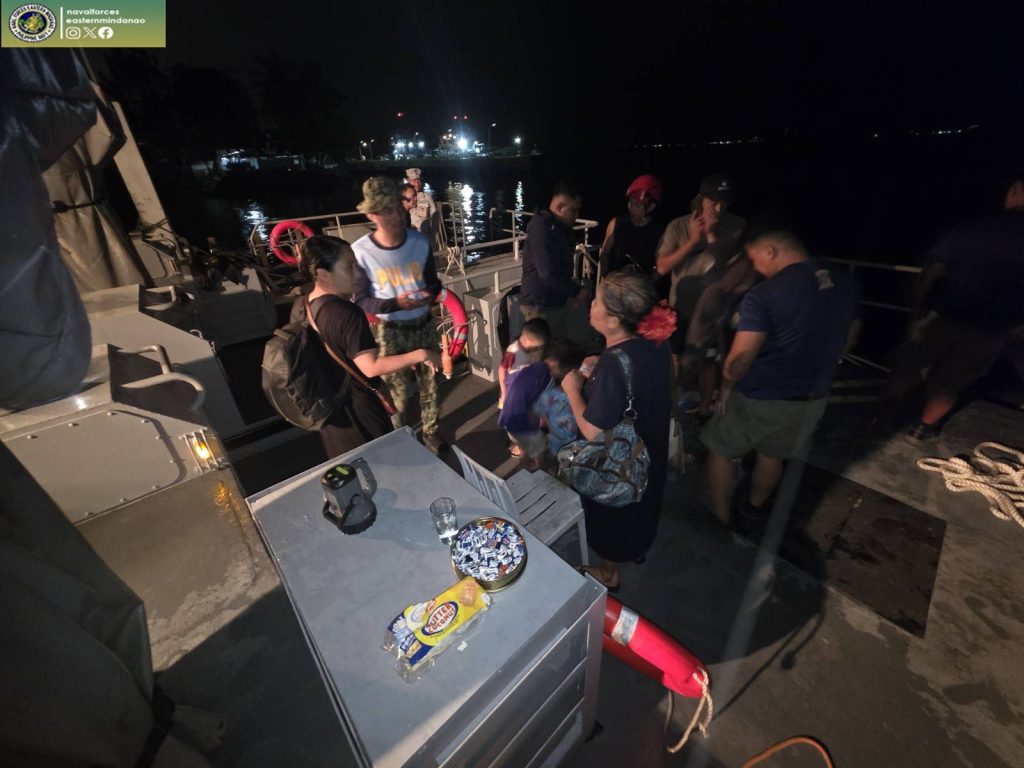
Naval personnel secured all nine occupants and towed MB UCP to Captain Feranil Pier inside Naval Station Felix Apolinario.
The passengers were brought to the Camp Panacan Station Hospital for medical evaluation and assistance before being safely transported back to their residences.
Commodore Ireneo D. Battung, Commander of NFEM, commended the rapid response of the naval crews and highlighted the seamless inter-agency coordination between the Navy, the Davao City Government, CDRRMO, City 911, and the Coast Guard.
“The successful rescue operation underscores the unwavering commitment of the Naval Forces Eastern Mindanao to safeguarding lives at sea and maintaining a high state of readiness in responding to maritime emergencies,” NFEM said in an official statement.
Naval and Coast Guard units in the Davao Gulf continue to maintain heightened vigilance and maritime safety patrols across Eastern Mindanao waters.