
BY ALEX ALAGON


BY ALEX ALAGON

DAVAO City councilors are looking at strengthening the penalties and enforcement mechanisms in the proposed ordinance against illicit tobacco and vapor products, with discussions emphasizing that illegal trade should not be treated merely as a minor violation comparable to ordinary anti-smoking offenses.
The issue was raised during the latest committee deliberations on the proposed Davao City Anti-Illicit Tobacco and Vapor Products Ordinance, which seeks to prohibit the manufacture, sale, distribution, transport, and possession of illicit and counterfeit tobacco and vapor products.
The committee on trade, commerce and industry, chaired by Councilor Myrna Dalodo-Ortiz, is tackling the proposed measure. The draft seeks to establish a citywide enforcement framework involving local offices and national agencies.
A key point raised in the deliberations is the need for penalties and enforcement to reflect the more serious nature of illicit trade.
Unlike an ordinary anti-smoking violation involving individual behavior, illicit trade may involve an entire commercial chain covering manufacture, smuggling, warehousing, transport, distribution, and retail.
The discussion therefore centered on ensuring that serious violations do not end simply with confiscation or payment of relatively small administrative fines.
Under the revised draft, local administrative sanctions would begin with a ₱1,500 fine and at least a 30-day suspension of a business permit for a first offense, escalating to a ₱5,000 fine and permanent revocation of the permit for third and subsequent offenses.
More serious cases involving violations of national laws would be referred to the appropriate agencies, including the Philippine National Police, National Bureau of Investigation, Presidential Anti-Organized Crime Commission, Bureau of Internal Revenue, Bureau of Customs, Department of Trade and Industry, Food and Drug Administration and Department of Justice, for prosecution under applicable national statutes.
The approach reflects concerns previously raised during committee discussions that enforcement should not stop with the seizure of illegal products.
During an earlier joint committee hearing, Dalodo-Ortiz stressed the importance of follow-through, saying authorities must ensure cases are properly developed and prosecuted rather than simply intercepted.
The proposed ordinance would also create an Anti-Illicit Tobacco and Vapor Products Task Force involving the city government, police, and national regulatory agencies. It provides for unannounced inspections of retailers, warehouses and distribution facilities, as well as verification of tax markings and regulatory documents.

Commercial vehicles and bulk shipments entering Davao City may also be subjected to inspections and required to present bills of lading, permits and distribution clearances under the proposed enforcement framework.
Business permits would likewise become a major enforcement tool. Establishments engaged in the sale, storage or distribution of tobacco and vapor products would be required to obtain a compliance clearance, while non-compliant businesses could face suspension or eventual revocation of their permits.
Davao City already imposes a ₱3,000 fine for ordinary anti-smoking violations, while establishments caught selling tobacco products to minors may face a ₱5,000 fine and possible cancellation of their business licenses.
The committee discussions point to the need to ensure that illicit traders, particularly those involved in organized distribution and commercial-scale activity, face consequences proportionate to the underlying violations rather than being treated merely as ordinary ordinance offenders.
The revised proposal takes that approach partly by referring violations of national statutes to national authorities, where heavier penalties may apply depending on the offense and evidence established.
The City Council has been deliberating the anti-illicit trade measure as part of a broader effort to strengthen Davao’s enforcement framework against counterfeit and unregulated tobacco and vape products. Earlier hearings brought together the BOC, BIR, NBI, DTI, FDA, local enforcement offices and industry representatives to identify regulatory and enforcement gaps. BY RJ CUEVAS
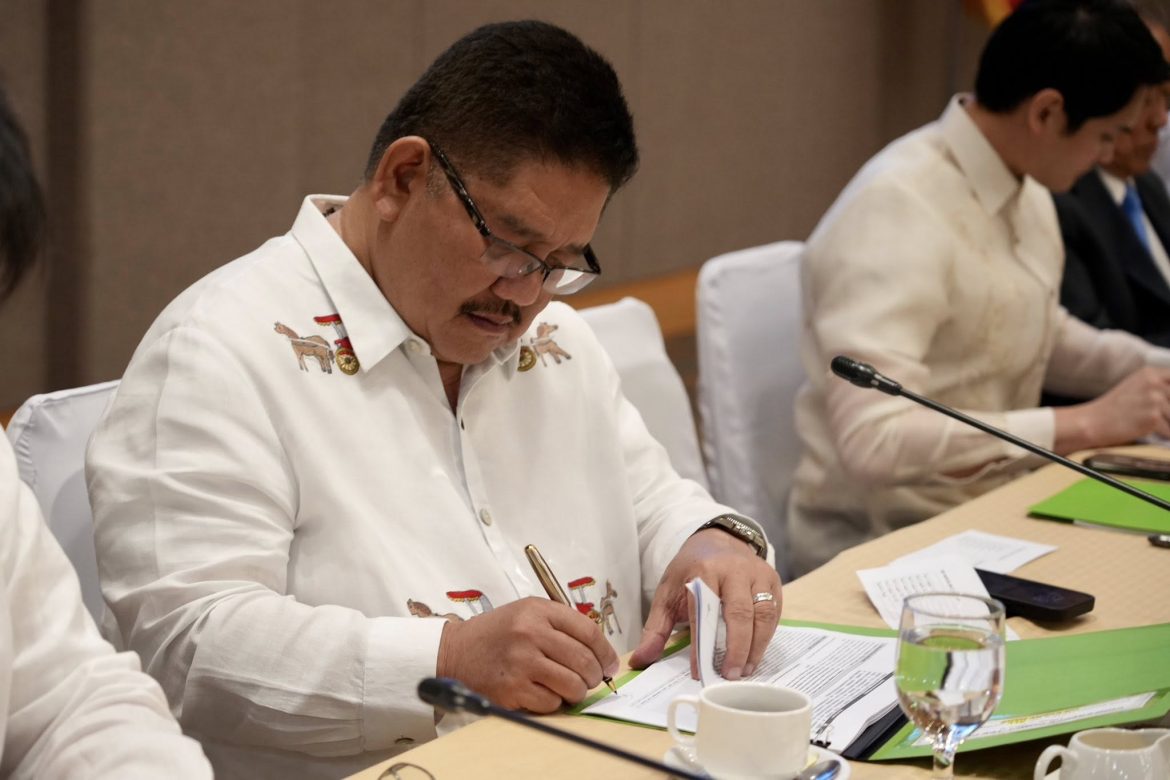
THE GOVERNMENT has allocated P3.44 billion to fund the P10,000 cash gifts for qualified octogenarians and nonagenarians, as well as the P100,000 cash gifts for centenarians, in 2027, House Minority Leader and 4Ps party-list Rep. Marcelino “Nonoy” Libanan said Sunday.
“The P3.44 billion allocation for the cash gifts under the Expanded Centenarians Act in the proposed 2027 national budget is P140 million higher than the P3.3 billion earmarked for the same purpose under the 2026 General Appropriations Act,” Libanan said.
Libanan urged families to register their elderly members aged 60 and above with the National Commission of Senior Citizens (NCSC) to facilitate their access to the cash benefits.
“We encourage all households to register their elderly members online with the NCSC through the Elderly Database Management System so they can readily avail themselves of the cash gifts,” Libanan said.
Libanan issued the statement as the country observes National Respect for Centenarians Day.
Republic Act No. 10868, or the Centenarians Act of 2016, declares the first Sunday of October as National Respect for Centenarians Day as part of Elderly Filipino Week, observed from October 1 to 7.
“We in Congress are absolutely determined to provide the necessary funding to sustain the payment of cash gifts due to every qualified elderly Filipino, as mandated by the Expanded Centenarians Act,” Libanan said.
The NCSC recently began the mass physical distribution of the P10,000 cash gifts to qualified elderly Filipinos who have reached the milestone ages of 80, 85, 90, and 95, as well as the P100,000 cash gifts for centenarians under the Expanded Centenarians Act of 2024, or Republic Act No. 11982.
President Ferdinand Marcos Jr. had previously directed the NCSC to promptly address delays in the release of the cash gifts.
The NCSC said it would work with local government units to expedite the physical distribution of the cash benefits to qualified beneficiaries.
As of August 26, the NCSC said it had paid out more than P1.9 billion to 179,529 octogenarians, nonagenarians, and centenarians.
The payouts covered 95,464 beneficiaries aged 80; 54,464 aged 85; 22,682 aged 90; 6,052 aged 95; and 1,240 centenarians.
Under the Expanded Centenarians Act, Filipinos who reach the ages of 80, 85, 90, and 95 are entitled to a P10,000 cash gift at each milestone, while those who reach the age of 100 are entitled to a P100,000 cash gift and a letter of felicitation from the President.
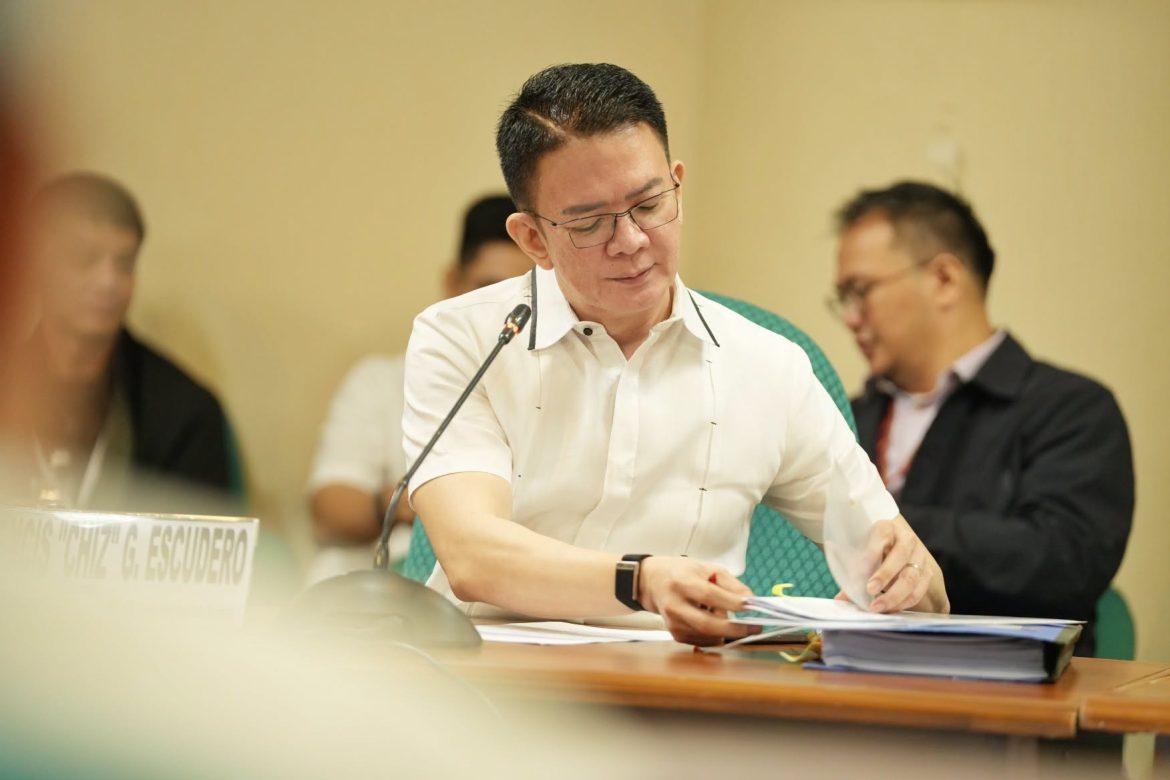
THE SENATE recently passed on second reading a bill offering incentives to private developers to build affordable rental units for poor and low‑income families.
Sponsored by Sen. Francis “Chiz” Escudero, Senate Bill No. 2507, passed Wednesday, gives life to the Constitution’s mandate to government and the private sector to work together in addressing the country’s housing needs.
“The Constitution itself recognizes that the challenge of housing cannot be met by government alone,” he said during his sponsorship speech, citing Article XIII, Section 9 on urban land reform and housing.
“The ‘Affordable and Decent Rental Housing Incentives Act’ gives life to this constitutional mandate by providing incentives for the private sector to develop, construct, rehabilitate, and operate affordable and decent rental housing for poor and low-income households.”
The bill establishes a system for registration and certification system for qualified rental housing. It requires providers to offer units at rental rates set by the Department of Human Settlements and Urban Development (DHSUD), based on household income, prevailing rental prices in the area, and the size and type of the unit.
Only units that meet these standards and are leased to poor and low‑income tenants will be eligible for the incentives.
Under SB 2507, developers and operators of qualified units may receive the following incentives:
They may also access preferential lending terms from Pag‑IBIG Fund, Land Bank of the Philippines (LBP), and the Development Bank of the Philippines (DBP), alongside risk‑sharing mechanisms such as credit guarantees, interest subsidies, and viability gap funding.
The veteran legislator said the measure also allows government land and assets to be used for affordable rental housing through usufruct, lease, concession, and public‑private partnership arrangements.
“These incentives give government the tools to orchestrate and harmonize public and private resources toward a common goal: decent and affordable housing for every Filipino family,” he said.
Escudero emphasized that the measure is designed to expand rental housing supply, and not merely regulate it. “In doing so, we fulfill the vision of our Constitution—government and the private sector working together to put decent and affordable housing within reach of our people,” he added.
Funding for the implementation of the measure will be included in the annual General Appropriations Act and in the spending plan of concerned government‑owned and controlled corporations.

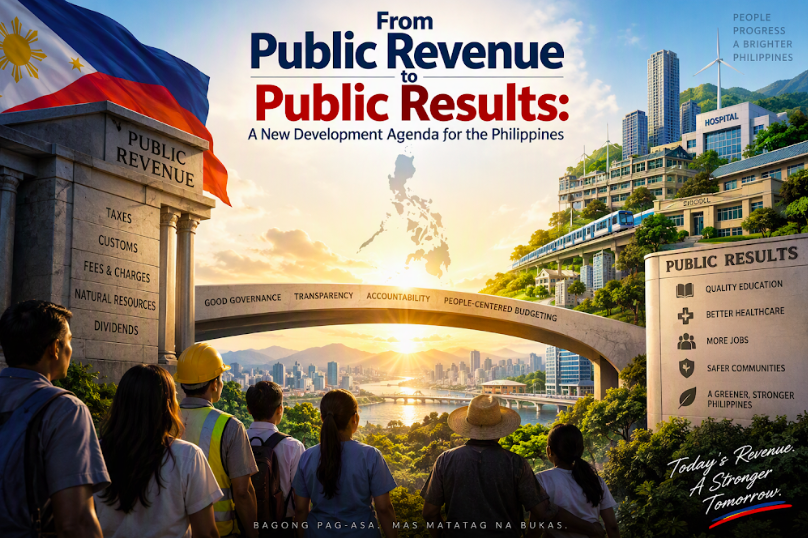
THE PHILIPPINES needs a stronger revenue base and a more disciplined system for turning every public peso into better services, stronger human capital, and productive investment.
The Philippines has entered a stage of development in which the quality of public finance will increasingly determine the quality of economic growth.
The country needs better schools, stronger health systems, more reliable infrastructure, improved transport, greater energy security, stronger climate resilience, and better opportunities outside the major urban centers. These requirements cannot be met simply by announcing larger budgets. They require the government to mobilize sufficient resources, use those resources efficiently and direct them toward areas that generate the greatest social and economic returns.
This makes the current discussion about fiscal policy particularly important.
Two major assessments released within days of each other point in broadly complementary directions. The International Monetary Fund’s 2026 Article IV Consultation, released on September 25, 2026, called for the Philippines’ medium-term fiscal adjustment to place greater emphasis on revenue mobilization while protecting priority social spending and creating room for productive public investment. It also stressed the need for reforms in procurement, project appraisal, project selection, and budget execution.
Three days later, on September 28, 2026, the World Bank released its Public Finance Review, Building on Reform: Public Finance for a Rising Philippines. It identified substantial potential fiscal gains from both stronger revenue collection and more efficient public spending.
The message is clear: the Philippines needs to mobilize more, but it also needs to spend better.
Fiscal capacity matters
The government’s latest medium-term fiscal program, as reported by the Development Budget Coordination Committee in its 2026 review, projects national government revenues of P4.807 trillion, or 15.8% of GDP, in 2026. Disbursements are projected at P6.466 trillion, or 21.2% of GDP, leaving a fiscal deficit of 5.4% of GDP. The government aims to bring the deficit down gradually to 3.5% of GDP by 2030.
That is important for fiscal credibility and debt sustainability. But fiscal consolidation cannot simply mean reducing expenditure.
For a developing economy, the composition of adjustment matters as much as its size.
Cutting productive investment, education, health or well-targeted social protection can weaken future growth while improving a short-term fiscal indicator. Conversely, mobilizing additional revenue and eliminating inefficient expenditure can create fiscal space without sacrificing development priorities.
That is why the debate should move beyond the simple question of whether government is spending too much.
The more useful questions are: Is the government collecting enough? Is it collecting fairly? Is it spending efficiently? And is each peso directed toward the country’s most important development needs?
The revenue side cannot be neglected
A country with ambitious development objectives needs adequate fiscal capacity.
The Philippines cannot depend indefinitely on a relatively narrow revenue base while expecting government to finance increasingly demanding responsibilities. Stronger revenue mobilization therefore has to be part of the development strategy.
The IMF’s September 25 Article IV assessment identified several possible areas: broadening the VAT base, strengthening excise taxation on luxury goods and goods detrimental to health or the environment, and improving the governance and design of tax incentives. It also emphasized stronger tax administration and advised against relying on tax amnesties as a substitute for durable revenue reform.
This does not mean simply increasing tax rates.
A better approach is to improve compliance, reduce unnecessary exemptions, modernize tax administration and ensure that businesses operating in comparable circumstances face broadly comparable obligations.
Digitalization can play an important role. Electronic invoicing, better data matching and stronger audit systems can make it harder for economic activity to remain outside the tax net while reducing unnecessary burdens on compliant taxpayers.
Tax incentives also deserve continuous scrutiny.
An incentive can be justified when it generates investment, employment, technology transfer or other measurable benefits that would not otherwise occur. But an incentive that continues automatically without demonstrating a meaningful public benefit becomes a permanent claim on fiscal resources.
The objective should therefore be more effective revenue mobilization, not indiscriminate taxation.
This is the other half of the fiscal equation.
Every additional peso collected from citizens and businesses creates an obligation to demonstrate that it is being used responsibly.
The World Bank’s September 28, 2026 Public Finance Review estimates that comprehensive reforms could potentially generate combined additional revenue and savings equivalent to 3.6% to 7.1% of GDP annually. These are potential gains, not guaranteed budgetary savings, but their scale illustrates how much fiscal capacity may be available through better systems rather than simply higher taxes.
The World Bank identifies three broad areas for reform: increasing fiscal space through measures such as consolidated procurement and easier tax payments; closing fiscal gaps through measures such as expanded e-invoicing and audits and rationalization of VAT exemptions; and improving the targeting of health, education and social-protection spending.
Procurement is one important example.
The World Bank estimates that procurement reform alone could potentially save up to P435 billion annually. This does not mean P435 billion can automatically be added to the government’s available cash. It means that improving procurement processes, competition and purchasing efficiency could reduce the cost of obtaining the same goods and services.
That distinction matters.
Public financial management is not an abstract bureaucratic exercise. If a government can build a school for less without compromising quality, more classrooms can be built. If medicines can be procured more efficiently, more patients can be served. If infrastructure projects are selected according to economic and social returns rather than administrative convenience, scarce capital can generate greater benefits.
Efficiency is therefore itself a form of fiscal capacity.
The question is where the money goes
The Philippines’ development challenge is not merely to increase the size of the public budget. It is to improve the allocation of that budget.
Education is an obvious example.
The national budget provides substantial resources for education. But the ultimate measure of success cannot be the amount appropriated. It has to include whether children are actually learning, whether classrooms are delivered on time, whether teachers receive the support they need and whether disadvantaged communities receive adequate resources.
The same principle applies to health.
Higher health allocations matter, but so do access, targeting, procurement, preventive care and the ability to reach families before illness becomes financially devastating.
Social protection requires similar discipline. A program that reaches the wrong households, overlaps with another program or imposes high administrative costs can consume resources without achieving its intended objective.
The World Bank’s September 28 report argues that better targeting of health, education and social-protection programs could improve outcomes without necessarily requiring larger budgets. It estimates that a common social-program registry could potentially lift about 2 million Filipinos out of poverty, while stronger foundational learning and streamlined medical assistance could improve education and reduce health costs.
This is the essence of outcome-based public spending.
Public investment needs special attention
There is another reason the quality of expenditure matters now.
The Philippine Statistics Authority, in data released on August 7, 2026, reported that GDP grew by only 2.3% year-on-year in the second quarter of 2026. Gross capital formation fell 9.2%, while industry contracted 2.4%. Household consumption grew 2.8% and government consumption grew 8.3%.
The IMF’s September 25 assessment subsequently identified a sharp fall in public construction investment following stricter infrastructure project reviews as one factor behind the second-quarter slowdown, alongside weaker confidence and natural disasters.
There is an important lesson here.
Better scrutiny of infrastructure projects is necessary. But scrutiny should not become prolonged administrative delay.
A development project has value only when it moves from the budget to implementation. Roads, bridges, schools, hospitals, water systems and power infrastructure do not generate economic benefits while sitting in procurement or approval processes.
The objective, therefore, should not be to spend faster at any cost. It should be to select better projects, approve them efficiently, procure them competitively and implement them on time.
That requires stronger project appraisal, better procurement systems and clearer accountability for delays.
Fiscal reform should protect the future
The Philippines also faces pressures that cannot be postponed.
Climate-related disasters are becoming a recurring economic concern. Energy costs can be affected by geopolitical shocks. The country needs investment in resilient infrastructure, reliable electricity, and human capital. At the same time, demographic changes will eventually increase demands on health and social protection.
Fiscal policy must therefore look beyond the next budget year.
The IMF’s September 25, 2026 recommendation is particularly relevant: fiscal consolidation should be anchored in concrete revenue and expenditure measures while protecting priority social spending and creating room for higher-quality public investment.
This suggests a different way of thinking about fiscal discipline.
Fiscal discipline should not mean less government.
It should mean better government for every peso collected and spent.
The Philippines could therefore focus on five mutually reinforcing priorities.
First, broaden the revenue base. Improve compliance, modernize tax administration, review exemptions and incentives, and strengthen digital collection systems.
Second, make procurement more competitive and transparent. Consolidated purchasing, better competition, and digital procurement can reduce costs while improving accountability.
Third, shift from expenditure monitoring to outcome monitoring. Ministries and agencies should be judged not only on whether they spent their allocations, but on what those allocations achieved.
Fourth, strengthen project appraisal and execution. Infrastructure projects should be prioritized according to economic, social and environmental returns, with clear timelines and accountability for implementation.
Fifth, protect high-return human and physical investment. Education, health, social protection, climate resilience, energy and productive infrastructure should be protected even as less effective expenditure is reviewed.
These reforms should reinforce one another.
Better tax administration generates more resources. Better procurement reduces the cost of government. Better project selection improves the return on public investment. Better targeting improves the impact of social programs. Better budget execution converts allocations into actual services.
Together, they create fiscal space.
Every peso should deliver more
The Philippines’ fiscal challenge should not be reduced to a debate between higher taxes and lower spending.
That is too narrow for the country’s development needs.
The real objective is to build a state with enough fiscal capacity to finance development priorities and enough institutional capacity to use those resources well.
The IMF’s September 25, 2026 Article IV assessment and the World Bank’s September 28, 2026 Public Finance Review arrive at an important moment. The Philippines is seeking to sustain growth while gradually reducing its fiscal deficit. At the same time, the country faces demands for better education, health, infrastructure, social protection and climate resilience.
The answer cannot be simply to spend more.
Nor can it be simply to spend less.
The more durable answer is to mobilize more revenue, eliminate waste, improve efficiency, and allocate public resources where they can produce the greatest long-term benefit.
For ordinary Filipinos, this ultimately comes down to a very simple question.
When the government collects one peso, how much development does that peso deliver?
The success of fiscal reform should increasingly be measured by the answer.
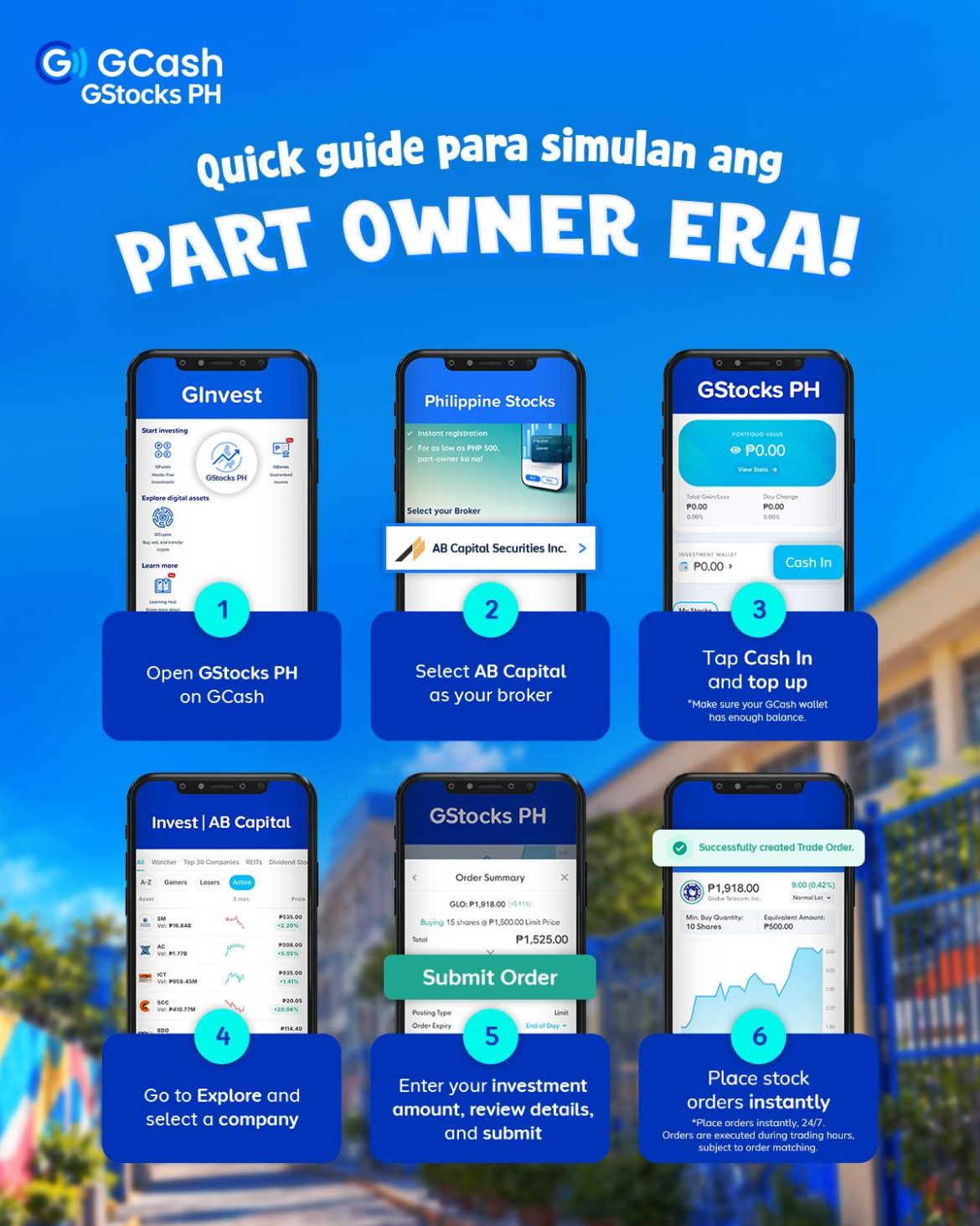
When it comes to investing in stocks, GCash helps users sign up for an in-app trading account with broker AB Capital Securities Inc., top-up their trading wallet, and place orders from over 280 publicly listed companies in just minutes through GStocks PH.
The e-wallet helps Filipinos to open an account with AB Capital Securities Inc. in a matter of minutes and invest in local stocks with as little as P500.
Finance super app GCash has made accessing the Philippine stock market more convenient through GStocks PH, allowing Filipinos to open an account with broker AB Capital Securities Inc. in under minutes and begin investing in local stocks with as little as P500.
By digitizing account opening and simplifying requirements, GStocks PH reduces traditional barriers to stock investing, allowing more Filipinos to become part-owners of top Filipino companies through stock ownership without having a bank account or needing to coordinate with a separate broker.
Across the industry, digital platforms have helped broaden participation in the Philippine stock market by making it easier for investors to open accounts, fund investments, place trades, and monitor their portfolios through mobile devices.
According to the Philippine Stock Exchange (PSE), local stock market accounts grew by 27.3 percent to 3.64 million last year, from the 2.86 million accounts recorded in 2024. Broken down, 99.2 percent, or 3.61 million accounts, belong to retail investors, with 3.22 million accounts held online through digital trading platforms and e-wallets. Digital accounts grew by 30.5 percent year-on-year.
Simplified Onboarding and Account Top-Up
Getting started on GStocks PH is designed to be simple, with users able to register for a brokerage account with AB Capital Securities Inc., fund their trading wallet, and begin investing in over 280 companies listed on the PSE all within the GCash app.
To access the platform, fully-verified GCash users need to open the app, select the GStocks PH icon on the Homepage or Invest tab, and click AB Capital Securities Inc. and complete the application process with the broker. After registration, which comes with real-time approval, users can top up their trading wallet with no transfer fees in real time. From there, Filipinos can become part-owners of different locally listed companies by investing with as little as P500. Orders are placed in real-time, but are executed during trading hours and subject to order matching.
By integrating stock investing into a digital financial ecosystem already familiar to millions of Filipinos, GCash is helping make participation in the capital markets more accessible and relevant to more investors. For more information, visit www.gcash.com.
THIS CONTENT IS INTENDED FOR PHILIPPINE RESIDENTS ONLY AND NOT FOR DISTRIBUTION OUTSIDE THE PHILIPPINES.
This content is for general information and educational purposes only, and does not constitute investment, legal, tax, accounting, or other professional advice; nor does it constitute a prospectus, or offering document or form a part of any offer, or invitation or solicitation to purchase or subscribe for securities in any jurisdiction. No money or other consideration is being solicited by this content, the information contained herein and, if sent, will not be accepted. Any potential public offering of securities referenced herein will be limited to the Philippines. Other restrictions may apply.
Any decision to invest in a public offering must be made solely on the basis of the final prospectus published in relation to such offering, which will contain important information about the offer, the business and financials of the issuer, and risks related to such business and the industry of the issuer, among others.
The information provided herein may not be complete, accurate, or current and may change without notice; no representation or warranty is made as to its accuracy or completeness. Before making any investment decision, investors should conduct their own due diligence, consider their objectives, financial circumstances, and risk tolerance, as well as obtain and consider advice from appropriately qualified professional advisers as necessary. Securities offerings such as IPOs are subject to closing conditions, some of which are not within the control of the issuer. An application or subscription for any shares offered through an IPO (including on GStocks) does not guarantee the success or closing of such IPO, or an actual issuance of shares (whether partially or fully) to an investor. Investing involves risk. The value of investments and any income from them may rise or fall, and investors may not recover the amount or principal invested. This content may also contain forward-looking statements that involve inherent risks and uncertainties, and may not be realized. Past performance is not indicative of future results.
G-Xchange Inc. (GXI) is regulated by the Bangko Sentral ng Pilipinas (BSP). To know more, Visit the GCash Help Center or call us at 2882 (Globe/TM) / (02) 7213-9999 (Globe Landline), or Internet Call through the Help Center.

If you ask Reine, a 25-year old sales agent from Laguna, about her priorities as a Filipino Gen Z, she will tell you one thing: financial stability.
Similarly, Jake, a Gen Z analyst from Muntinlupa, sees financial stability as a way to provide more for his family. This has meant looking for additional ways to diversify his income.
Reine and Jake are among the growing number of young Filipinos who are increasingly focused on achieving greater financial stability for themselves and families as they build their careers and plan for their future.
This growing focus on long term financial security is one of the factors contributing to the broader rise in investing among Filipinos, including participating in the stock market.
Reine opened a stock market account last year through GStocks PH, the trading platform offered by AB Capital Securities Inc., found in GCash. She began her stock investing journey with just P1,000, with the goal of diversifying her income. Investing doesn’t need to be complicated or expensive, she shared, after learning about digital platforms.
While Jake initially started his wealth-building journey through GSave, the high-interest digital savings hub found in GCash, he eventually gave GStocks PH a try. For him, it was the simple signup that helped make the transition to GStocks PH convenient.
Digitalization has helped broaden participation in the Philippine capital markets by making market information, investor education, and trading platforms more accessible. The availability of online educational resources, the rise of content creators focused on investing, and the proliferation of digital brokerages and mobile investment platforms have lowered traditional barriers to participation.
Together with simplified onboarding requirements, these developments are helping bring more Filipinos into the formal investment ecosystem and expanding access to the stock market beyond traditional investor segments.
How Gen Z Filipinos are shaping the future of financial services
Filipino Gen Zs are taking a more deliberate approach to their financial futures, with financial stability emerging as an important priority. As they explore saving, investing, and other financial tools through digital platforms, their preferences are also becoming an important consideration for financial institutions looking to serve the next generation of customers.
A study by researchers from the Ateneo de Manila University involving more than 170 Gen Z employees found that Gen Z Filipinos are focusing their efforts on “securing their future through savings and investments.”[1]
Meanwhile, digital platforms like GStocks PH allow younger Filipinos to start investing with incremental amounts as they build their portfolios without needing to coordinate with a separate broker.
The number of stock market accounts rose 27.3% year-on-year to 3.64 million in 2025, with 3.61 million held by retail investors, according to the Philippine Stock Exchange (PSE). Online accounts grew 30.5% to 3.23 million, while investors aged 18 to 28 accounted for 28.2% of total PSE accounts, reflecting the growing participation of younger Filipinos.
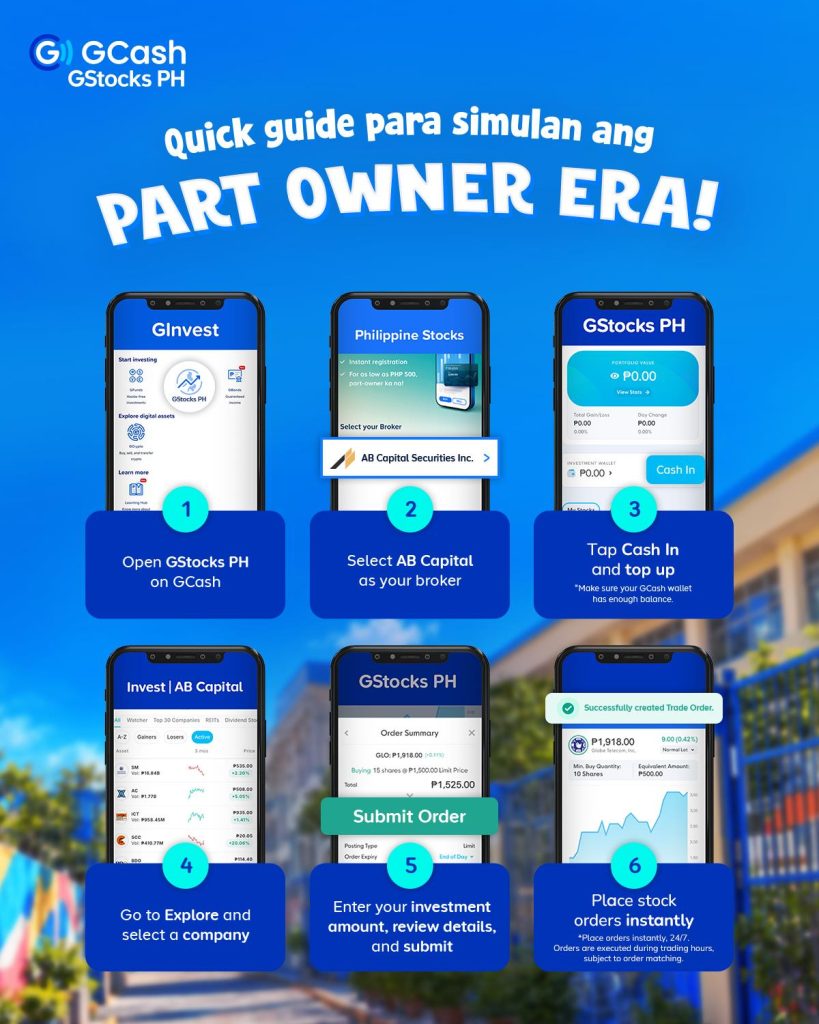
To get started, fully verified GCash users need to open the app, go to the Invest tab, select GStocks PH and complete the registration with broker AB Capital Securities Inc.
Through GStocks PH, GCash continues to make the capital markets more inclusive by making it easier for Filipinos to learn about and participate in investing as they work toward long-term financial stability. For more information, visit www.gcash.com.
THIS CONTENT IS INTENDED FOR PHILIPPINE RESIDENTS ONLY AND NOT FOR DISTRIBUTION OUTSIDE THE PHILIPPINES.
This content is for general information and educational purposes only, and does not constitute investment, legal, tax, accounting, or other professional advice; nor does it constitute a prospectus, or offering document or form a part of any offer, or invitation or solicitation to purchase or subscribe for securities in any jurisdiction. No money or other consideration is being solicited by this content or the information contained herein and, if sent, will not be accepted. Any potential public offering of securities referenced herein will be limited to the Philippines. Other restrictions may apply.
Any decision to invest in a public offering must be made solely on the basis of the final prospectus published in relation to such offering, which will contain important information about the offer, the business and financials of the issuer, and risks related to such business and the industry of the issuer, among others.
The information provided herein may not be complete, accurate, or current and may change without notice; no representation or warranty is made as to its accuracy or completeness. Before making any investment decision, investors should conduct their own due diligence, consider their objectives, financial circumstances, and risk tolerance, as well as obtain and consider advice from appropriately qualified professional advisers as necessary. Securities offerings such as IPOs are subject to closing conditions, some of which are not within the control of the issuer. An application or subscription for any shares offered through an IPO (including on GStocks) does not guarantee the success or closing of such IPO, or an actual issuance of shares (whether partially or fully) to an investor. Investing involves risk. The value of investments and any income from them may rise or fall, and investors may not recover the amount or principal invested. This content may also contain forward-looking statements that involve inherent risks and uncertainties, and may not be realized. Past performance is not indicative of future results.
A REGISTRATION STATEMENT RELATING TO THESE SECURITIES HAS BEEN FILED WITH THE SECURITIES AND EXCHANGE COMMISSION BUT HAS NOT YET BECOME EFFECTIVE. THESE SECURITIES MAY NOT BE SOLD NOR OFFERS TO BUY THE SAME BE ACCEPTED PRIOR TO THE TIME THE REGISTRATION STATEMENT BECOMES EFFECTIVE. THIS COMMUNICATION SHALL NOT CONSTITUTE AN OFFER TO SELL OR BE CONSIDERED A SOLICITATION OF AN OFFER TO BUY.
The Preliminary Prospectus filed with the SEC and PSE, which contains detailed information about the Company and the Offer is available for downloading on the Company’s website: [●]. The Preliminary Prospectus also contains the information required to be stated in any notice, circular, advertisement, letter or other forms of communication that will be published or transmitted to any person after a registration statement has been filed under Rule 8.3.1 of the 2015 Implementing Rules and Regulations of the Securities Regulation Code of the Philippines and which information is incorporated by reference in this communication.
G-Xchange Inc. (GXI) is regulated by the Bangko Sentral ng Pilipinas (BSP). To know more, Visit the GCash Help Center or call us at 2882 (Globe/TM) / (02) 7213-9999 (Globe Landline), or Internet Call through the Help Center.

Maxim Rides & Food Delivery has introduced a new feature that allows driver-partners to add emergency contacts in the app, giving them another way to seek assistance when they need help. Driver-partners can designate trusted contacts who can be notified during an emergency.
Once an emergency contact is added, the designated person can receive an SOS notification when the driver-partner requests help. The alert informs the contact that the driver-partner needs assistance and includes a link to their location, allowing them to quickly see where the driver-partner is.
The feature gives driver-partners a direct way to alert someone they trust while performing orders. By sharing their location with a designated contact, they can help family members or other trusted individuals respond or coordinate assistance during an emergency.
The emergency contact feature is part of Maxim’s existing in-app safety and support system. Driver-partners can also use the SOS function to contact emergency services or send an SOS signal to nearby drivers. Maxim also has an emergency driver support group that monitors SOS signals and responds to reported incidents.
These features are supported by Maxim’s customer support service, which prioritizes security-related requests. The company uses AI-powered functions to classify incoming requests and identify security concerns that require priority handling, helping the support team respond to urgent cases more efficiently.
“Driver-partner safety remains an important part of our efforts to continuously improve the support experience on our platform,” said Andres Morales Jr., President of Maxim Rides & Food Delivery. “With the addition of emergency contacts, driver-partners have another way to quickly notify someone they trust and share their location when they need assistance. Together with our existing SOS and emergency support features, this provides an additional layer of assistance when it matters most.”

More surprises, 6 midnight launches
Premier Apple partner Power Mac Center (PMC) opens pre-orders for the newest iPhone 18 Pro series, with an exclusive event happening at Greenbelt 3 and SM Mall of Asia on October 1, 2026, leading to the nationwide pre-order opening on October 2. Be among the first to pre-order the latest iPhone and secure your chance at taking home premium freebies to complete your new-iPhone experience.
“Power Mac Center is once again opening pre-orders for the new iPhone with a lineup of experiences and surprises together with our valued partners. After more than three decades in the industry, we continue to believe that premium technology is accessible and possible for all, giving people the freedom to enjoy it in their everyday life,” said PMC Director for Marketing and Product Management Joey Alvarez.
Pre-order iPhone 18 Pro at Power Mac Center in 3 ways
PMC’s “iPhone for All” initiative highlights the many ways Filipinos can experience the latest iPhone across the different ways technology has become part of everyday life. Whether you’re a new Apple fan or simply upgrading, start your new-iPhone journey in three ways:
The pre-order events will be at Greenbelt 3, 2nd Level and at SM Mall of Asia – 2nd Level, Cyberzone, Entertainment Mall. Activities start on October 1, at 12 p.m. and the door opens on October 2, at 12:01 a.m. Customers who will join the pre-order events in Greenbelt 3 and SM Mall of Asia will get:
Nationwide pre-order will commence in stores on October 2, 2026 starting at 12:01 a.m. at Apple Premium Partner stores. Meanwhile, PMC stores nationwide will accept pre-orders during mall hours.
Customers who prefer online transactions can visit PMC’s official Web Store at powermaccenter.com and the NEW official Lazada Flagship Store starting October 2, 2026 at 12:01 AM. Online pre-order customers will likewise get exciting pre-order kits.
Customers may use their 1 Infinite loyalty points as payment. Bank offers are also available. Do note that pre-order ends on October 15, 2026. Visit the following locations on October 15, 2026 to explore and enjoy booths with partner brands: Greenbelt 3, SM Mall of Asia, SM City Iloilo, SM Lanang, SM Megamall, and The Annex at SM North EDSA. Full pre-order mechanics are available at the website.
Highly anticipated iPhone midnight launch
To celebrate the iPhone 18 Pro series, Power Mac Center will be holding midnight launches in six key locations: Greenbelt 3, SM Mall of Asia, SM Megamall, and The Annex at SM City North EDSA in Luzon, SM City Iloilo in the Visayas, and SM Lanang in Mindanao. Customers who want to be part of the exciting midnight launch must choose these stores as their branch of pickup to ensure the availability of their preferred devices.
The parties start on October 15, 2026 at 10 p.m. until October 16, 2026 at midnight.
More details will be revealed on Power Mac Center’s social media accounts (Facebook, Instagram, X, TikTok, and YouTube) in the coming days. Follow and share to be updated on news and promotions.
The iPhone 18 Pro launch is celebrated in partnership with Belkin and JBL. Major sponsors include ADAM elements, Before Anything Else, CARE by PanzerGlass, PanzerGlass, and ZAGG. Minor sponsors are BMX, Chipolo, Cygnett, Energea, Function101, LAUT, Mokin, Native Union, Promate, and Shokz.
With a nationwide network of stores and a variety of payment options to choose from (including 1 Infinite loyalty points), Power Mac Center makes the Apple experience more attainable, from choosing the right technology to getting the support to make the most of it.
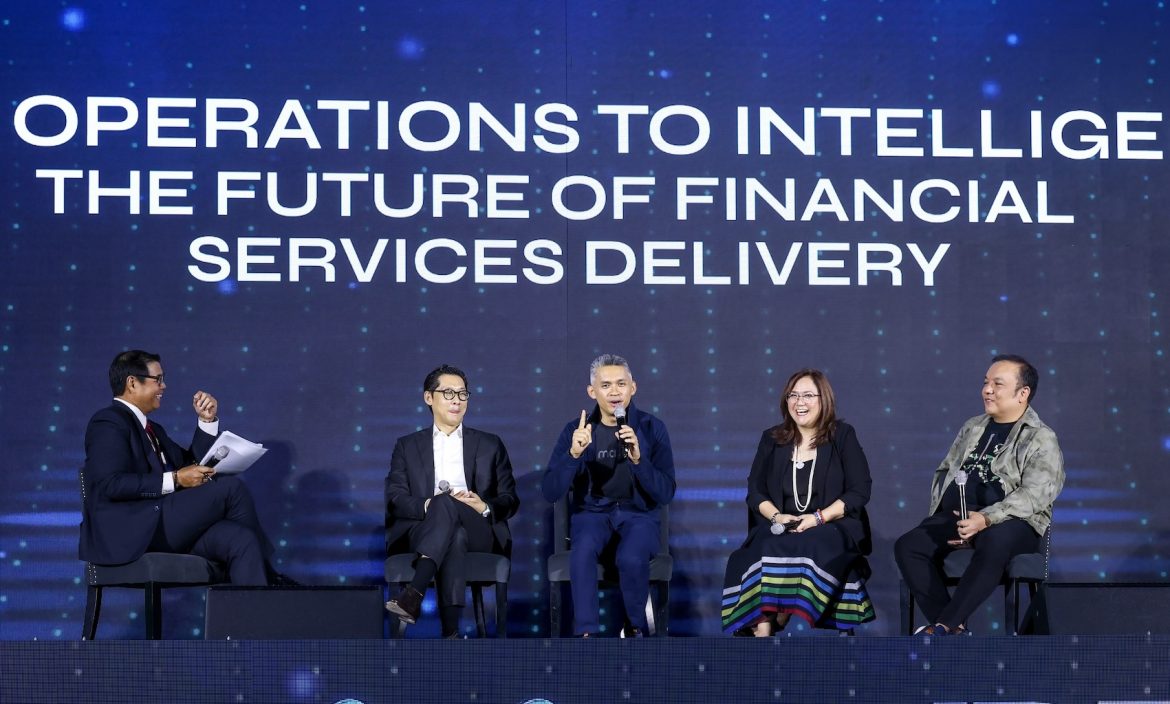
MAYA is urging employers in the information technology and business process management (IT-BPM) sector to make workers’ financial health part of their competitiveness agenda by connecting digital payroll with access to savings and responsible credit.
Speaking at the International IT-BPM Summit 2026, Maya Bank President Angelo Madrid said the industry’s investment in skills and technology should be accompanied by financial services that help its workforce manage everyday expenses and build savings.
The IT and Business Process Association of the Philippines (IBPAP) reported that the sector supported 1.9 million workers and generated more than US$40.3 billion in revenue in 2025, contributing 8% to national GDP.
“Filipino workers who help customers around the world manage their finances should also have the tools to build financial security for themselves,” Madrid said. “We are working with employers to connect salary payments with savings tools and credit suited to workers’ needs and ability to repay, helping them manage everyday expenses and prepare for emergencies.”
Maya, the leading digital financial services platform in the Philippines, is working with IBPAP and business process outsourcing (BPO) companies to expand employees’ access to financial services and modernize payroll, disbursement and reimbursement processes. The collaboration brings together employers’ operational needs and the financial well-being of their workforce.
Through Maya Business, employers can send salaries and other employee payouts digitally and at scale. This can help reduce manual processes and administrative work, particularly for companies operating across multiple sites and around the clock, while providing visibility over employee payouts.
Employees can receive and manage their pay through the Maya app, which connects everyday payments with banking services. Maya Savings, Personal Goals and Time Deposit Plus provide ways to set money aside, while credit products are available to eligible customers, subject to assessment.
“The opportunity is to make payroll more efficient for employers while helping employees manage their money beyond payday,” Madrid said. “Progress should mean more businesses using digital financial tools and more employees able to save, meet their obligations and prepare for unexpected expenses.”
Madrid said the industry’s move into higher-value financial-services work also calls for teams that combine financial expertise, technology and sound judgment. Maya builds and manages its core technology in-house, applying AI across credit assessment, fraud prevention,
personalization and operations.
“Our strength in global finance should also be reflected in the financial health of the businesses and people delivering it,” Madrid said.