



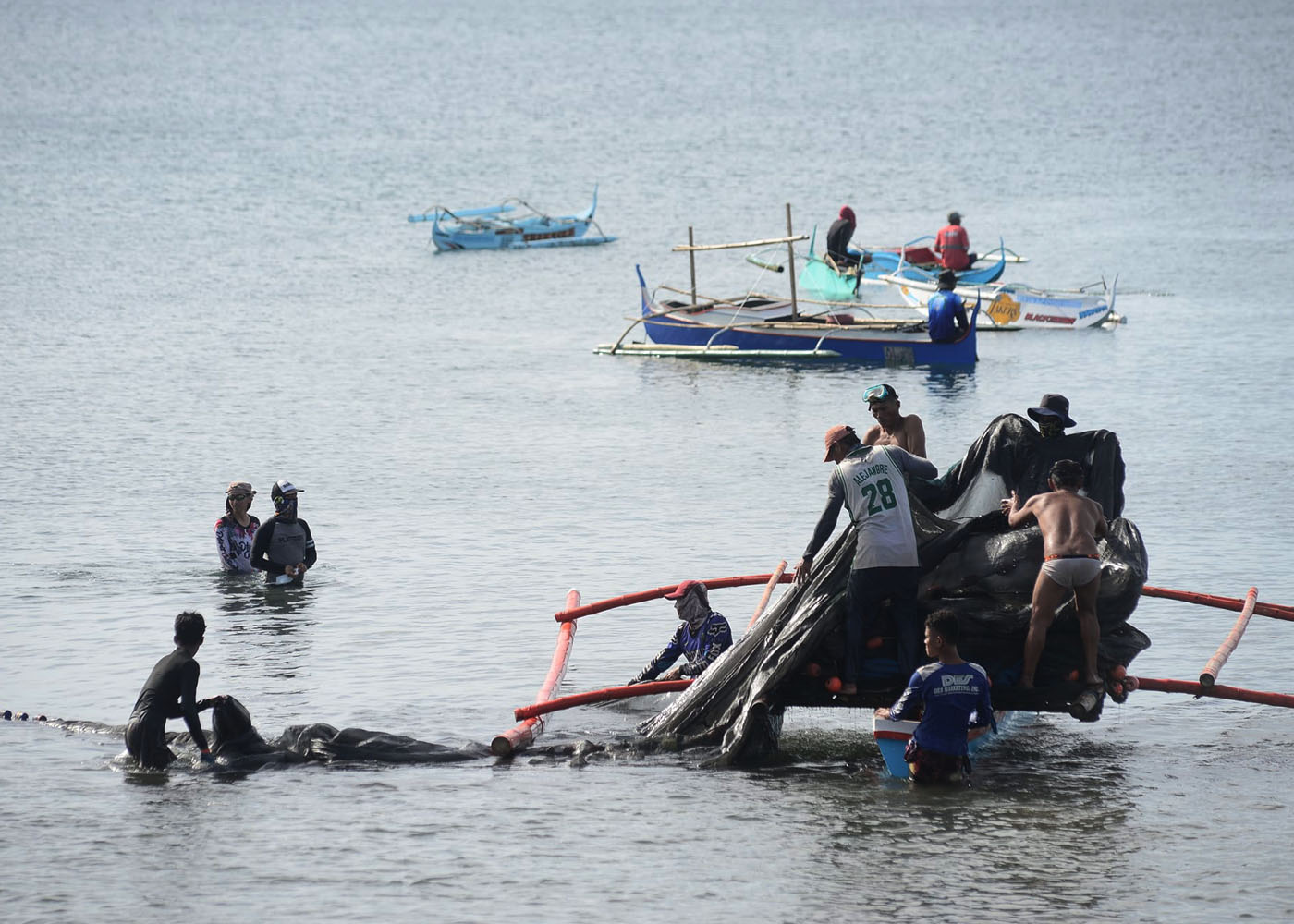
- BFAR XI: Davao Gulf closed for three months starting June 1
THE THREE-MONTH fishing ban in Davao Gulf beginning June 1 will last until Aug. 31, 2026, to allow small pelagic fishes to mature and the marine life to thrive during their spawning period.
The Bureau of Fisheries and Aquatic Resources (BFAR) XI said the annual ban is now in its 12th year.
“The annual three-month closed season forms part of the government’s continuing efforts to conserve small pelagic fishes and ensure the sustainability of marine resources in the Davao Gulf,” BFAR XI said in a statement.
The fishing ban for specific gears with the Department of Agriculture-Department of the Interior and Local Government (DA-DILG) Joint Administrative Order (JAO) No. 02, Series of 2014, “Establishing a Closed Fishing Season for the Conservation of Small Pelagic Fishes in Davao Gulf” and Section 100 “Fishing during Closed Season” of Republic Act (RA) No. 10654, which amends RA 8550, also known as The Philippine Fisheries Code of 1998.
Citing scientific studies, the agency said that June to August is the peak spawning period for small pelagic species in the Davao Gulf.
The gulf, which stretches from Cape San Agustin, Governor Generoso, in Davao Oriental, to Talagotong Point, Don Marcelino, Davao Occidental, serves as a vital spawning ground for various small pelagic species.
These fish species include big-eyed scad (matambaka/matangbaka), mackerel (karabalyas/alumahan), and round scad (galunggong).
During the closed season, the use of bag nets (basnig or tapay-tapay) and ring nets (kubkuban or likom) is strictly prohibited, regardless of tonnage and/or modified fishing gears with similar fishing operations.
Registered municipal fisherfolk, on the other hand, are allowed to fish using registered municipal fishing gears such as hook and line (kawi o pasol), gillnet (pante), fish pots (bubo), and other permitted gears.
Since the annual closure in 2014, there has been a positive, steady increase in landed fish catch volumes, according to the National Stock Assessment Program.
“Assessment results showed a gradual increase in recorded fish landings over the years, suggesting improved fish stock productivity and resource availability in the Davao Gulf,” BFAR said.
Small pelagic species continue to dominate fish catches in the Davao Gulf, including Matambaka, Galunggong, Bilong-bilong, Karabalyas, and Tamban, which remain among the major species landed in the area.
Researchers also observed higher concentrations of fish eggs and larvae around Samal Island and northeastern Davao Gulf, indicating potential spawning and nursery grounds.
Small pelagic fish larvae, including sardines, were commonly found in eastern Samal, Lupon, and Sta. Cruz waters, while tuna larvae were frequently observed near the mouth of the gulf.
“These findings highlight the ecological importance of Davao Gulf and the role of the closed season in supporting fish recruitment and long-term fisheries sustainability,” it said.
However, harvesting of juvenile fishes immediately after the lifting of the closed season continued to be a pressing concern, which BFAR XI emphasized that these may affect the long-term sustainability of fisheries resources.
Erring violators will face severe penalties, including fines ranging from P20,000 to P500,000, imprisonment, confiscation of catch and fishing equipment, and revocation of fishing licenses, as stated in Section 100 of RA 10654.
Local government units, along with national line agencies, will implement support programs and community-based interventions to assist affected coastal communities during the Closed Season.

