
REGIONAL government agencies and the Davao City Youth for Green Environment (DCYGE) launched the Youth ECOnvention 2026 on Wednesday, Sept. 9, to strengthen participation in sustainable development, health and nutrition, environmental protection, and community resilience.
Russell Bonn Noval, chairperson and CEO of DCYGE, stressed that rather than serving as passive participants, youth delegates will co-create concrete strategic outputs.
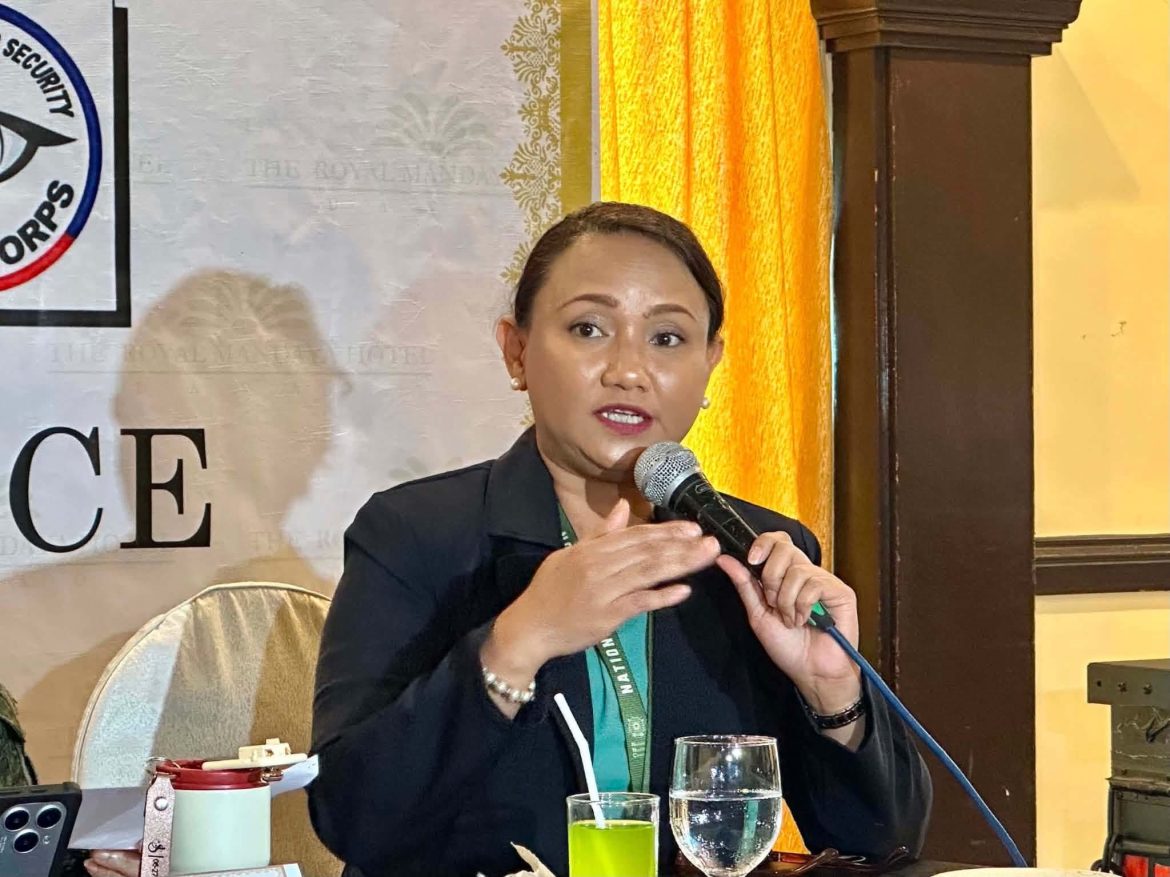
“The youth must learn, reflect, engage, create and act. This is not simply a convention-type event but a movement for youth-led sustainability and community action,” Noval said during the Habi at Kape media forum on Wednesday.
Following last year’s convention, which gathered over 2,000 attendees, Noval announced they are scaling up operations to engage 5,000 participants across 10 distinct batches.
While initially focused in Davao City, registration has been expanded regionally to include delegates from Tagum, Davao de Oro, Davao Occidental, and nearby provinces.
The convention is expected to produce outputs to be proposed as policy recommendations to various agencies addressing challenges confronting the youth.
This includes a Youth Population, Nutrition, and Planet Action Agenda to be formally submitted to the Climate Change Commission.
The convention also seeks to produce a policy recommendation paper aligned with the Philippine Youth Development Plan, Philippine Plan of Action for Nutrition (PPAN), and Population and Development Plan, targeting submission to the National Youth Commission.
The Compendium of Youth-Led Environmental Best Practices featuring top-performing Youth for Environment in Schools Organizations is to be submitted to the Department of Education.
An inter-agency proposal to enhance the Green Brigade initiative under the Department of Environment and Natural Resources (DENR) is also being pushed.
Additionally, an ASEAN Declaration of Youth Participation in Population, Nutrition, and Planet will also be produced, coinciding with the Philippines’ current ASEAN chairmanship.
Retsebeth Laquihon, National Nutrition Council XI Regional Nutrition Program coordinator, said the convention can lead to the transformation of the nutrition challenges that affect the sector.
She noted that 77.7% of local adolescents lack adequate physical activity, aggravating non-communicable conditions like diabetes and early-onset obesity.
“The youth sector can work in different settings across all dimensions in addressing malnutrition and promoting good nutrition as a whole; we could be able to reach the desired outcome of a healthy and well-nourished Davao Region,” Laquihon said.
The youth, she added, can contribute to health advocacy and mobilize information drives.
Jeff Fuentes, regional director of the Commission on Population and Development XI, also pointed to sustained high adolescent pregnancy rates among youth aged 10 to 14.
Although the data among 15 to 19 is decreasing, there are areas where concentrations of teen pregnancy are still high.
It directly correlates with elevated instances of child stunting, wasting, and high school dropout rates.
“They will also give their inputs and provide us a better understanding and a better perspective on how we can truly engage our young people when we talk about issues like teen pregnancy, nutrition, environment,” Fuentes said.
Addressing structural barriers in youth participation, DENR officials highlighted that youth organizations and Sangguniang Kabataan (SK) councils often face limited awareness of national environmental policies and lack capacity beyond standard tree planting or cleanup drives.
Through integrated lectures and regional caravans across Davao’s five provinces, the convention aims to bridge local youth action with higher-level programs such as adopt-a-watershed and forest protection initiatives.
The 2026 Davao ECOnvention is anchored on the theme “Population, Nutrition, Planet,” scheduled for Oct. 31, 2026, for Barangay and SK (Pre-ECOnvention 2026) and Dec. 7-18, 2026, for schools, clubs, and organizations.