



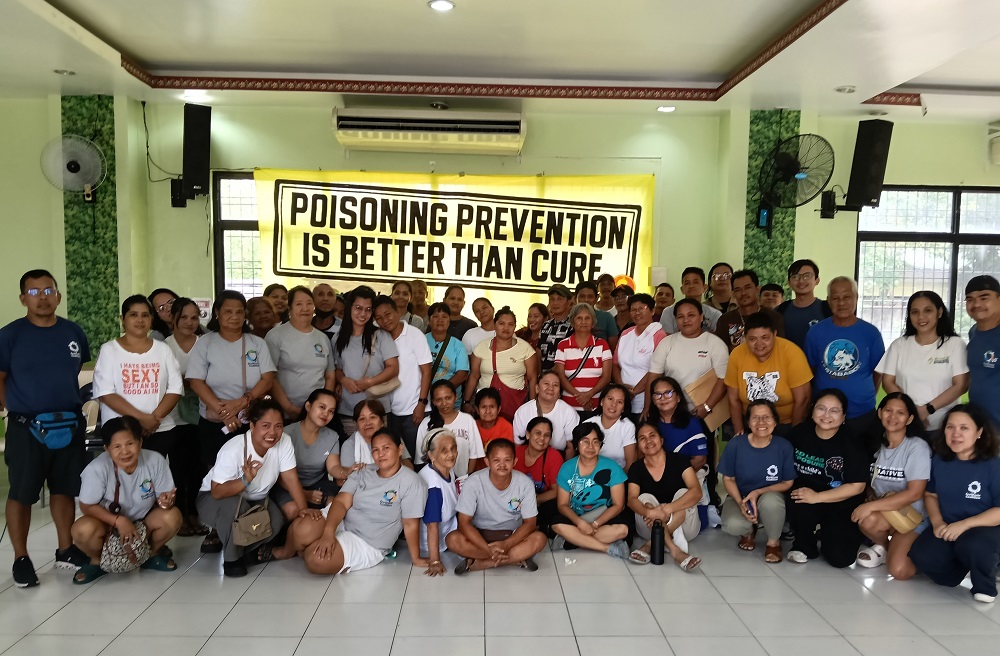
QUEZON CITY — “Prevention is better than cure.” At the “Usapang Lason” organized by the toxics watchdog group EcoWaste Coalition, community participants agreed that being informed about poison hazards and taking proactive steps to prevent poisoning incidents can save lives, help families stay well, and cut medical expenses.
To mark National Poison Prevention Week (NPPW), the organizers yesterday convened the “Usapang Lason” at the San Pablo Apostol Parish in Tondo, Manila. The activity stems from Proclamation No. 1777-2009, declaring the last week of June as NPPW to raise awareness about preventing poison hazards at home, school, work, and the general environment.
Over 50 community participants, including homemakers, informal waste recyclers, and e-waste dismantlers from the cities of Malabon, Manila, and Navotas, took a break from household and occupational chores to learn about common toxicants lurking in their homes and workplaces. Exposure to these toxicants may cause serious health problems. How sick a person gets depends on the type, amount, and duration of contact with the chemical, the person’s age, and state of health.
In her talk, “Bantay-Bahay, Bantay-Trabaho, Bantay-Buhay,” Dr. Charmaine Micu-Oblefias, consultant of the National Poison Management and Control Center (NPMCC), identified common poisons at home and work, offering the audience actionable prevention tips and instructions on how to respond if a poisoning occurs.
A clinical toxicologist for children and adults, she pinpointed common domestic sources of poisoning, flagging items like household cleaning agents, pesticides, medicines, fuels, and gases, and decanted hazardous substances.
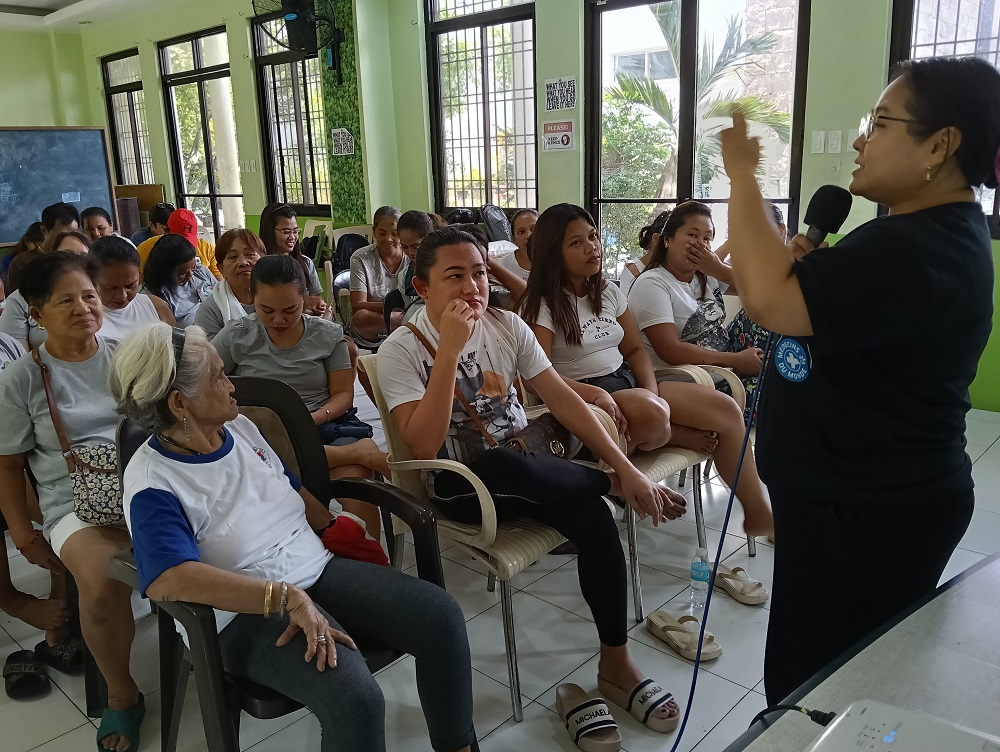
Regarding common poison hazards at work, especially for those dealing with electronic waste or e-waste, Micu-Oblefias pointed out that “constant exposure to invisible dust, fumes, and chemical residues silently damages the lungs, skin, kidneys, and nervous system.” Among the chemicals of concern are noxious fumes from burning wires and circuit boards, lead in old paint, wire casings and solder, mercury released from broken fluorescent lamps, acids and cadmium, leaking from dismantled batteries, and hazardous solvents in degreasers and thinners.
During the Usapang Lason, the participants learned about “the three shields of safety” based on the acronyms LASON, IWAS, and TAWAG, noting that the use of a mnemonic provides an easy-to-remember framework to prevent poisoning and promote informed emergency response.
Shield 1 LASON addresses poisoning prevention at home. “L” stands for labeling containers (note: never reuse food or drink bottles for chemicals); “A” is for “alisin” or removing hazardous articles out of children’s reach; “S” is for separating chemicals from food, rice or medicines; “O” is for observing warning signs like strange smells, leaks or sudden dizziness; and “N” is for numbers, or keeping the emergency hotline numbers of the poison control center, barangay health unit, and nearest hospitals handy. The NPMCC, based at the Philippine General Hospital, can be reached at 09667189904.
Shied 2 IWAS protects e-waste workers from occupational exposures. “I” is for isolating or separating hazardous waste such as batteries, bulbs, chemicals, and sharp items. “W” is for wearing protection such as gloves, masks, closed shoes, and protective eyewear. “A” is for avoiding burning cable to remove the copper or sniffing bottles to identify unknown liquids. And “S” is for safe disposal.
Shield 3 TAWAG provides guidance on what to do in case of suspected poisoning. “T” is for “tanggalin” or removing the victim away from the chemical source, smoke or contaminated arear; “A” is for “alamin” or assessing the cause of poisoning incident, for example, what was swallowed or inhaled, how much and when; “W” is for “wag pasukahin” or never force vomiting; “A” is for “agarang banlaw” or rinse immediately with clean running water and remove contaminated clothing; and “G” for go or call for help, noting the importance of bringing the chemical container or a photo of it.
During the open forum, participants raised specific concerns on best-before and expiry dates, pharmaceutical waste disposal, hazards of vaping, alternative ways of cleaning silver jewelry, safe management of e-waste, etc., eliciting a lively sharing of experiences and perspectives
Among those who came for the learning session on poison hazards and poisoning prevention were the representatives of the Nagkakaisang Lakas ng Mangangalakal sa Longos (NLML), Pagkakaisa ng Mamamayan sa Barangay Dampalit (PMBD), Samahan ng mga Mangangalakal ng Scrap sa Capulong (SMNC), Samahan ng Mamamayan-Zone One Tondo Inc. (SM-ZOTO), Sambayanan ng Muling Pagkabuhay Multi-Purpose Cooperative (SMPMPC), Justice, Peace and Integrity of Creation Ministry of the Parish of the Risen Christ, San Pablo Apostol Parish, and the staff of the EcoWaste Coalition.

