

BY ALEX ALAGON

BY ALEX ALAGON
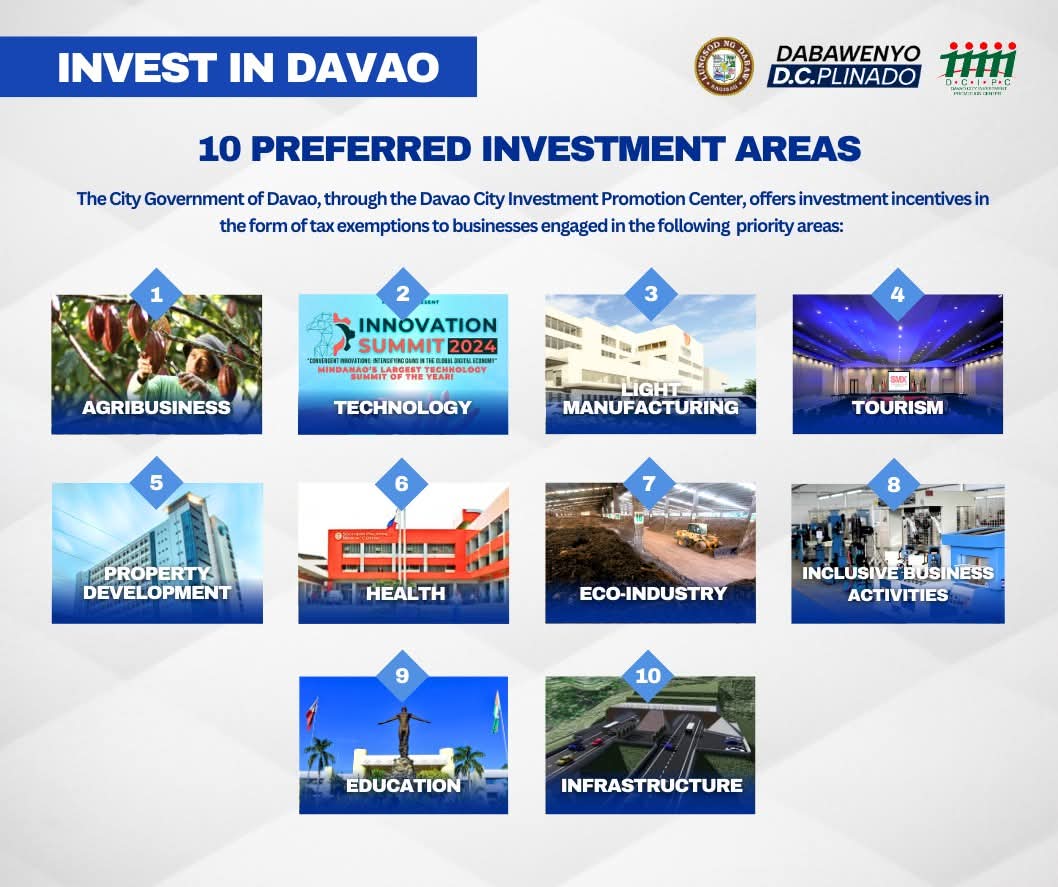
THE DAVAO City Investment Promotion Center (DCIPC) said the Davao-Borneo Economic Growth Forum will bring in more investments to Mindanao and cross-border trade with BIMP-EAGA.
DCIPC will hold the forum on Sept. 19, 2026, at the SMX Convention Center in SM Lanang. It is part of the second year of “Davao Global Connect,” an annual investment flagship program established in 2025 during the Kadayawan festival.
“This year, Davao Global Connect, on its second year, will be focusing particularly on the Davao-Borneo Economic Corridor,” Matias Regis Jr., DCIPC technical adviser for special concerns, told reporters on the sidelines of a DCIPC meeting on Wednesday at Seda Abreeza.
The event will run back-to-back with two other major economic summits: the Davao Agri-Trade Expo on Sept. 17 and the ASEAN Innovation Summit on Sept. 18.
The forum aims to gather approximately 500 local and international delegates to discuss cross-border trade, economic trends, and industrial partnerships within the Brunei-Darussalam-Indonesia-Malaysia-Philippines East ASEAN Growth Area (BIMP-EAGA).
“The purpose of the event is to gather thought leaders within the BIMP-EAGA region and the Davao-Borneo corridor to discuss investment trends, economic trends, cross-border agreements, and possible collaborations on specific industries,” the official noted.
DCIPC expects more than 70 percent of participants to represent foreign delegations.
“We are discussing right now with the embassies, the consulates, and the honorary consulates to help us identify international businesses that could participate in the event,” the representative added.
Invitations are also being extended to delegates from the United States, Australia, Japan, South Korea, China, and European countries.
Key priority sectors for investment and collaboration include agribusiness, tourism, property and mixed-use development, halal industry, logistics and connectivity.
Local government units from the Bangsamoro Autonomous Region in Muslim Mindanao to Regions 9, 10, and 11 have also been invited to join the discussions.
“Our goal is, number one, so that there are clear investments coming in for Davao and Mindanao. Second is to have actual tangible partnerships with local and international businesses; there will be a signing of MOUs and MOAs later in the afternoon,” he said.
The official confirmed that preparations remain seamless ahead of the September event, and reported positive feedback from diplomatic channels and international partners.
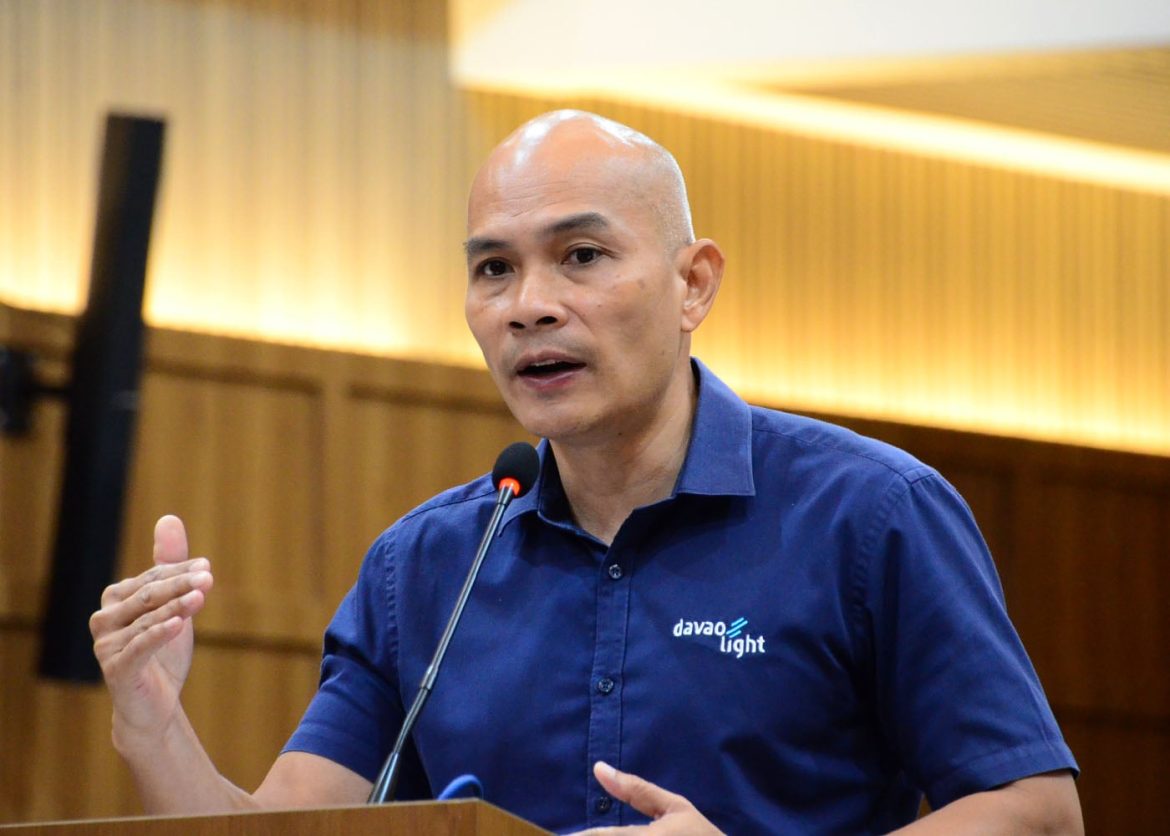
DAVAO Light and Power Company (DLPC) does not keep the amount it collects from electricity pilferers, but instead returns these to consumers in the form of rate reductions, DLPC president and COO Henrizar Tia said.
“It is important for us to understand that all system losses that we collect, we also give back to the consumers,” Tia told the City Council during the Aug. 5 session on the utility firm’s systems loss.
The clarification came after Councilor Arnulfo Cabling asked DLPC to account for how much it had billed Davao City residents for systems loss and how much it had recovered from illegal power connections, suggesting that any excess collected from pilferers be returned to paying customers.
Pilferage in a distribution utility means the theft, unauthorized use, or illegal tapping of a utility service which results in losses for the provider.
Tia said the company follows a legal procedure when apprehending pilferers, which requires the presence of a law enforcement officer.
“Meron po yang kasamang police, so kung sa far-flung areas na walang kasamang police, pwede na ang barangay officials for us to execute it properly,” he said.
Tia said any amount collected from systems loss out of pilferage is not retained by Davao Light but is remitted to the appropriate agencies and eventually returned to consumers through rate reduction.
He cited a hypothetical example of ₱200,000 collected in back-billing, saying the full amount would not go to the company but would instead be reflected in lower rates.
Cabling asked DLPC to submit a formal report and historical data on the matter for the committee’s review, which Tia agreed to provide.
In a follow-up question, councilor Louie John Bonguyan, committee chair on Energy, asked about the system’s loss cap set by the Energy Regulatory Commission (ERC).
Tia said the ERC has progressively lowered the cap over the years, recognizing that systems loss is an “inherent technical characteristic of power distribution from generation to end users.
The current cap for private distribution utilities such as Davao Light is 5.5 percent, while electric cooperatives are allowed a higher cap depending on their classification, with some allowed more than 10 percent.
Tia said DLPC’s systems loss has stayed slightly above 5 percent but below the 5.5-percent cap over the past 12 months.
Bonguyan noted that systems loss is generally categorized into two types: non-technical losses refer to illegal connections, jumpers, and pilferage, while technical losses occur naturally in the process of transmitting electricity from generation to distribution and are considered unavoidable.

VICE PRESIDENT Sara Duterte has expressed openness to the potential mayoral bid of retired PNP chief and current Metro Manila Development Authority general manager Nicholas Torre III, emphasizing that democratic processes allow any eligible citizen to seek public office.
When asked about reports suggesting that Torre might run for mayor, the Vice President affirmed the right of any individual to join the local race.
“In a democratic country, everyone is allowed and welcome to file their certificate of candidacy and run in the election,” Duterte noted.
Despite growing speculation surrounding political realignments in Davao City, Torre has yet to issue an official statement regarding his political plans or confirm whether he intends to file a certificate of candidacy (COC).
Torre previously served as the regional director of Police Regional Office XI before being appointed PNP Chief. He was instrumental in the arrest of Pastor Apollo Quiboloy of the Kingdom of Jesus Christ and in sending former President Rodrigo Duterte to The Hague for trial on crimes against humanity.

MANILA — AirAsia Philippines has achieved a new milestone after being ranked the world’s most punctual low-cost airline in July 2026, according to the latest On-Time Performance (OTP) report by OAG, a global air travel data provider.
The airline posted a 94.42% OTP, ranking first among 46 low-cost airlines worldwide monitored by OAG for the month.
In OAG’s All Airlines category, which covers carriers operating more than 1,500 flights during the month, AirAsia Philippines also landed the second spot globally, underscoring its reliability alongside full-service and low-cost airlines alike.
The achievement follows AirAsia Philippines’ strong performance in June 2026, when it recorded a 92.96% OTP and ranked fourth globally, reflecting the airline’s sustained operational excellence and continuous improvement.
“While the global geopolitical crisis and elevated fuel prices have pushed us to make difficult decisions and operational adjustments, our move to optimize our fleet is now yielding tangible benefits. It enabled us to plan our flights, fuel consumption, and manage our slot compliance in close coordination with Air Traffic Control. These measures help us minimize disruptions while ensuring safe, reliable, and efficient operations across its network,” said AirAsia Philippines president and CEO Anna Victoria Lu.
AirAsia Philippines continues to strengthen the operational capacity that drives high on-time performance. It also issues timely passenger advisories and maintains close coordination with Air Traffic Services and airport authorities to ensure efficient operational management.
Despite weather-related disruptions throughout July, the airline improved its on-time performance to 94.42%, up from 87.1% in May, demonstrating the effectiveness of its operational discipline to manage aircraft turnaround time.
“Maintaining strong on-time performance requires constant focus, especially in an operating environment where weather and other external factors can change quickly. But we know our guests rely on us for safe, affordable, and reliable air travel, so we continue to work even harder to deliver that. We have strengthened the way we operate to ensure we can continue serving our guests today and well into the future. Even with a low-cost model, this milestone only proves that affordable fares never come at the expense of operational reliability.” Lu added.

(L-R) Signing the Retail Aggregation Program agreement are Maxwell Quilat, Fast Autocore Chief Operating Officer; Anton Rafael Chiongbian, FAST Logistics AVP for Customer Revenue Strategy and Digital Transformation; Manuel Onrejas, Jr., FAST Logistics CEO for Logistics; Jose Alfonso Miras, JNEC President and CEO; Jacinto Ray Ng III, SOLARIS Chief Operating Officer; and Neo Jade de Guzman, JNEC Retail Operations Head.
FAST Logistics Group and Chiongbian Group have partnered with Jin Navitas Electric Corp. (JNEC) as their electricity supplier to power several key facilities, strengthening their shift toward cleaner, more cost-efficient energy under the Retail Aggregation Program (RAP).
JNEC, the retail electricity supplier company of the Joy~Nostalg Group, will power six (6) FAST facilities, including the FAST ColdChain Hub in Imus, Cavite; FAST Cross-Docking and Container Freight Station in Navotas; FAST Corporate Office in Alabang, Muntinlupa; and warehouses in Meycauayan, Bulacan, and Calamba, Laguna.
Through its renewable energy affiliate, Jin Navitas Solaris Inc., (SOLARIS), JNEC will also supply renewable energy to four (4) Chiongbian Group offices located in Muntinlupa, Las Piñas, Cavite, and Laguna.
The partnership will enable the facilities to source renewable energy while lowering generation costs, reinforcing how RAP is enabling businesses to access cleaner, more competitive power.
“This partnership reflects our commitment to making our operations more cost-efficient, resilient, and sustainable,” said FAST CEO for Logistics Manuel L. Onrejas Jr, noting that the organization is taking deliberate steps to adopt cleaner and more competitive power solutions.
JNEC President and CEO Jose Alfonso C. Miras emphasized the company’s commitment to supporting businesses like FAST through cost-efficient and renewable energy solutions. “At JNEC, we are proud to support FAST’s growth and efforts to reduce electricity costs,” Miras said, adding that the partnership goes beyond a contractual obligation and is an opportunity for JNEC to become FAST’s long-term energy partner.
This partnership builds on FAST’s broader sustainability initiatives, including plans to maximize the solar potential of roof spaces across its owned warehouse network, which spans more than two million square meters nationwide, the largest in the Philippines.
FAST was the first Filipino-owned third-party logistics company to publicly commit to achieving Net Zero by 2050 and is a member of the Net Zero Carbon Alliance. Under its climate roadmap, the company aims to reduce its Scope 1 and Scope 2 emissions by 55% by 2030, using 2023 as its baseline year.

RISE AGAINST Hunger Philippines (RAHP) works with local partners to help communities recover by restoring access to food after disasters.
In the Philippines, disasters rarely happen in isolation. A typhoon strikes. Crops are damaged. Livelihoods are lost. As communities begin rebuilding, another disaster often follows.
The challenge is becoming increasingly urgent as the country enters the months when nearly 70% of tropical cyclones typically develop. In recent years alone, disasters have affected more than 2 million Filipinos annually, disrupting livelihoods, damaging crops, and limiting access to food in some of the country’s most vulnerable communities.
For Jomar Fleras, executive director of Rise Against Hunger Philippines (RAHP), this is one of the biggest reasons hunger persists in some of the country’s most vulnerable communities.
“The communities affected are often those that were already nutritionally vulnerable to begin with,” he said. “With typhoons and storms coming one after another, there is barely any time for recovery. Crops are destroyed, livelihoods are affected, and the cycle of poverty and hunger continues.”

According to the Food and Agriculture Organization (FAO), an estimated 37.8 million Filipinos experienced food insecurity from 2022 to 2024 following major disasters each year. For many communities, recovery is not only about rebuilding homes and infrastructure, but restoring access to food and livelihoods.
While many organizations focus on food distribution, RAHP has taken a different approach.
As the country’s first and only nationally accredited food bank, RAHP has built a nationwide network that allows it to respond quickly when disasters strike.
“We don’t do small-scale responses. If we respond, we respond at scale.”
Today, the organization reaches approximately 1.8 million Filipinos annually through food assistance, disaster response, school feeding initiatives, and community programs. Its work is supported by a network of 85 food manufacturers and private-sector partners, yet it operates with only around 25 full-time staff members. The network has grown to the point where government agencies also work with RAHP during major disasters because of its logistics, warehousing, and food distribution capabilities.
Turning corporate support into community impact
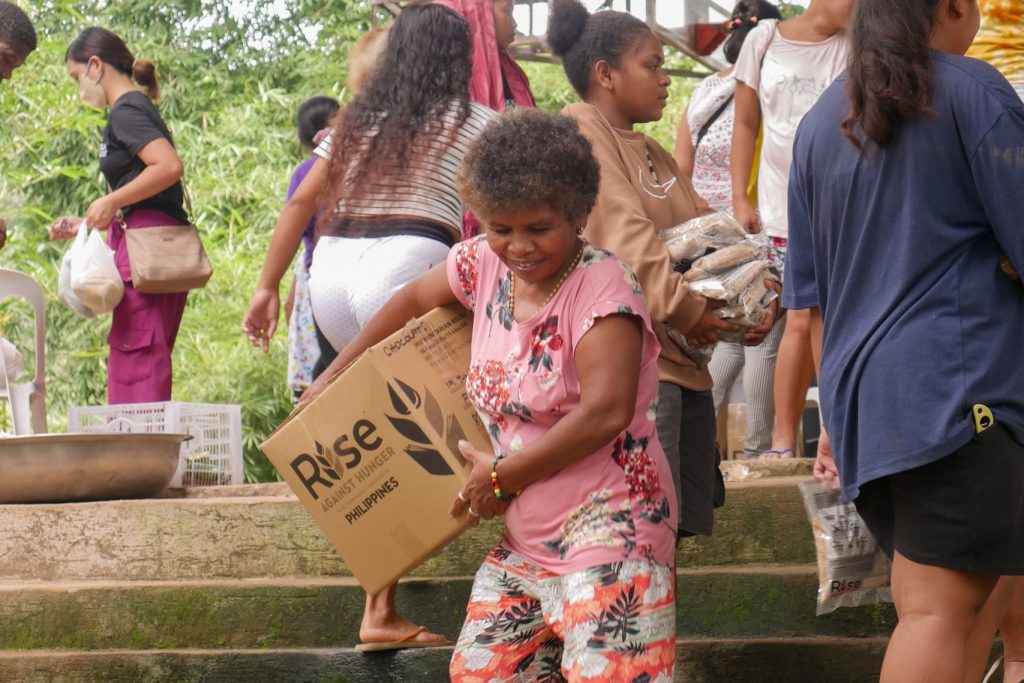
Rather than viewing companies simply as donors, RAHP looks for long-term partners that can contribute their own strengths to disaster response.
Today, its network includes food manufacturers, logistics providers, financial institutions, business process outsourcing firms, and multinational companies. Organizations such as Amazon, JP Morgan, and JTI Philippines each play different roles, allowing RAHP to mobilize resources far beyond what a single organization could achieve.
“Companies are not ATMs. We look at our donors as partners. We want organizations that believe in the cause and share our vision of a world without hunger.”
The value of these partnerships often becomes most visible during disasters.
Following a major earthquake in Cebu, for example, RAHP faced an unexpected challenge. Tents had become nearly impossible to source after available supplies were quickly depleted for emergency response. Working with Amazon and local partners, the organization instead developed temporary shelter kits that families could assemble themselves. Residents built the shelters, while an Amazon employee from the affected community helped coordinate volunteers on the ground—turning what could have been a simple donation into a community-led recovery effort.
“What made that response successful wasn’t the donation itself,” Fleras said. “It was the collaboration. People in the community helped build the shelters, volunteers organized the effort, and partners contributed resources. That’s what allows us to respond at scale.”
The same partnership model continues to shape RAHP’s work with organizations across the private sector.
One of those long-term partners is JTI Philippines, which has worked with RAHP for several years by combining financial support, employee volunteerism, and its nationwide operational presence to support food assistance initiatives.
Faith Mondejar, community investment manager of JTI Philippines, said the partnership reflects the company’s belief that businesses should contribute more than funding.
“Every organization has something different to contribute. For us, it’s not only financial support. It’s also our people, our nationwide presence, and the relationships we’ve built in the communities where we operate. That’s why this partnership works. Rise Against Hunger Philippines brings the expertise in food banking and disaster response, while we contribute the strengths we have as an organization. Together, we’re able to reach more communities than either of us could on our own,” said Mondejar.
From food relief to food banking
Looking ahead, RAHP is advocating for the institutionalization of food banking through the proposed Food Banking Bill while continuing to help build the capacity of food banks across the country.
“We’re focused on developing models that others can replicate,” Fleras said. “If more organizations can do what we’re doing, then we can reach more people.”
For RAHP, the goal is to build a food banking system that enables communities to recover faster, reduces food waste, and strengthens the country’s ability to respond to future disasters.
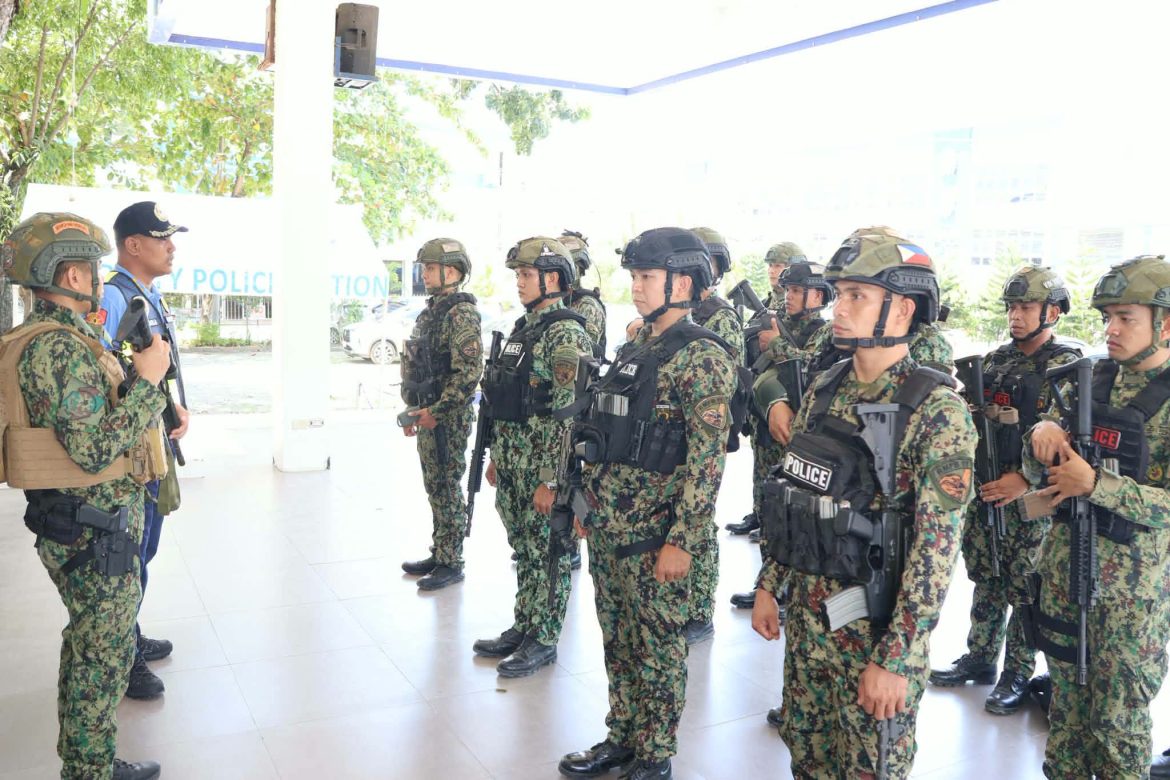
DAVAO City Police Office (DCPO) City Director PCol. Peter B. Madria rallied augmented police forces from the Regional Mobile Force Battalion (RMFB) on Thursday, August 6, reminding them to maintain strict discipline and utmost courtesy while securing the city for the 2026 Kadayawan Festival.
During a “Talk to Men” session held at the DCPO parade grounds in Camp Captain Domingo E. Leonor along San Pedro Street, Madria addressed the augmented RMFB troops deployed to bolster the city’s security grid throughout the month-long festivities.
Madria emphasized that professionalism and respect are critical in fostering public trust while managing large crowds expected to gather across key festival venues.
“PCol. Madria reminded the personnel to remain vigilant in maintaining security and to always be courteous in dealing with the public, underscoring that professionalism and respect are essential in fostering trust and ensuring a peaceful and orderly celebration,” the DCPO statement read.
The DCPO leadership initiated the engagement to align operational directives, reinforce accountability among field units, and boost the morale of personnel tasked with safeguarding both local residents and visiting tourists.
Security forces across the Davao Region have heightened operational readiness as major cultural, socio-civic, and street-dancing events take center stage for the 41st edition of the annual harvest festival.

VICE PRESIDENT Sara Duterte brushed off questions about President Ferdinand Marcos Jr.’s recent inspection of the People’s Ville Housing Project in Barangay Riverside, Calinan District, instead emphasizing the project’s local roots from her tenure as mayor.
Speaking to reporters following a Thanksgiving Mass for the Kadayawan Festival at San Pedro Cathedral on Thursday, Aug. 6, Duterte explicitly pointed out that the socialized housing initiative was conceptualized under her city administration.
“Yes, I know, because that was our project when I was mayor, right? So, I don’t want to comment on his visit,” Duterte told reporters when asked about the President’s visit. “What’s better is that we let the people he visited comment because I’m not there.”
During his 30-minute walkthrough, Marcos inspected completed residential units and announced plans to add 42 more five-story buildings—aiming to scale the development to over 7,000 units alongside community infrastructure like schools and commercial stalls.
Duterte’s deliberate decision to decline further commentary comes amid escalating political friction between Malacañang and the Duterte camp, marked by recent exchanges over regional development, foreign policy, and administration priorities.
Instead of expanding on the presidential visit, the Vice President pivoted toward broader policy issues, urging the national government to treat flood control and mitigation as an urgent, nationwide priority rather than focusing solely on isolated localities.

JOINT law enforcement elements arrested an American fugitive wanted for multiple violent assault charges during an operation at a high-rise residential building in Davao City on Wednesday evening, August 5.
In a statement released Thursday, Aug. 6, Naval Forces Eastern Mindanao (NFEM) commander Commodore Ireneo D. Battung said that their intelligence personnel assisted the Bureau of Immigration-Fugitive Search Unit (BI-FSU) and the Criminal Investigation and Detection Group XI in apprehending alias James at Inspiria Condominium.
According to military authorities, alias James is the subject of an active warrant of arrest issued by the Newburyport District Court under the Massachusetts Trial Court in the United States.
He faces two counts of assault with a dangerous weapon and one count of assault under Massachusetts state law.
Immigration records retrieved via the BI’s Central Query Support System (CQSS) verified that James arrived in the Philippines on March 4, 2026.
Following his arrest, the foreigner was turned over to the BI-FSU for documentation and deportation proceedings. He was placed under temporary custody at Police Station 18 (Bajada) of the Davao City Police Office pending his transfer to Manila for final processing and extradition procedures.
Battung commended the inter-agency coordination, emphasizing that NFEM remains committed to leveraging maritime intelligence to support law enforcement operations and maintain regional peace and security across Eastern Mindanao.