
METRO MANILA— As millions of Filipino students return to school this June, Plan International Pilipinas is sounding the alarm for countless girls across the country who are facing many barriers that keep them from coming back — period poverty, unpaid domestic labor, and teenage pregnancy. The girls’ and children’s rights organization is calling on government agencies, schools, and families to move beyond enrollment numbers and confront these obstacles.
“Every June, we celebrate the return to school, but for too many girls, the bigger story is what is stopping them from fully being there,” said Plan International Pilipinas executive director Pebbles Sanchez-Ogang. “Period poverty, unpaid caregiving, and teenage pregnancy are not personal problems; they are systemic failures that we have the responsibility to address. Plan International Pilipinas is calling on everyone — from lawmakers to school principals and parents — to make this the school year we address these barriers head-on.”
Girls are missing school because of their periods
Eight percent of girls in the Philippines reported skipping school because of menstruation, according to the World Bank. Some girls miss classes due to severe menstrual pain, lack of access to menstrual products, and fear of bullying or discrimination associated with periods. Findings from the Sang pour Sang Project revealed that 96% of menstruators in the Philippines have experienced at least one form of menstrual discrimination, including teasing, exclusion, and stigma related to menstruation.
Limited menstrual health education continues to shape how many girls view and manage menstruation. UNFPA Philippines noted that shame, stigma, and misinformation surrounding periods can discourage girls from asking for help, accessing proper menstrual products, and fully participating in school activities. Girls from remote and disadvantaged communities, including those with disabilities, also shared that menstruation often causes anxiety, shame, and discomfort, especially in schools with inadequate facilities and support.
As one of the solutions to address these barriers, Plan International Pilipinas, in partnership with UNICEF and the Philippine Government, launched the Oky Period Tracker App — a girl co-created digital tool that provides reliable menstrual health information and personalized cycle tracking, helping girls manage their periods with confidence and dignity.
Since its launch, the app has reached over 187,000 registered users in the Philippines, with half of online users remaining consistently active. An independent assessment by BBC Media Action found that 18 out of 24 adolescent girls interviewed in the Philippines credited the app with significantly improving their understanding of menstrual health and bodily changes — and that nearly two-thirds reported feeling more open and less embarrassed about their periods. The app has also been used in school integration sessions to engage adolescent boys, with educators observing reduced period-related bullying and greater empathy toward female peers.
“Menstrual health is not just a hygiene issue — it is an education issue,” said Pebbles Sanchez-Ogang, Executive Director of Plan International Pilipinas. “When girls cannot afford menstrual products or are too ashamed to ask for help, they miss class, fall behind, and eventually drop out. We need better facilities, more affordable products, and innovative solutions like the Oky App to equip girls with accurate information and tools to manage their periods with confidence — so that no girl has to choose between her period and her future.”
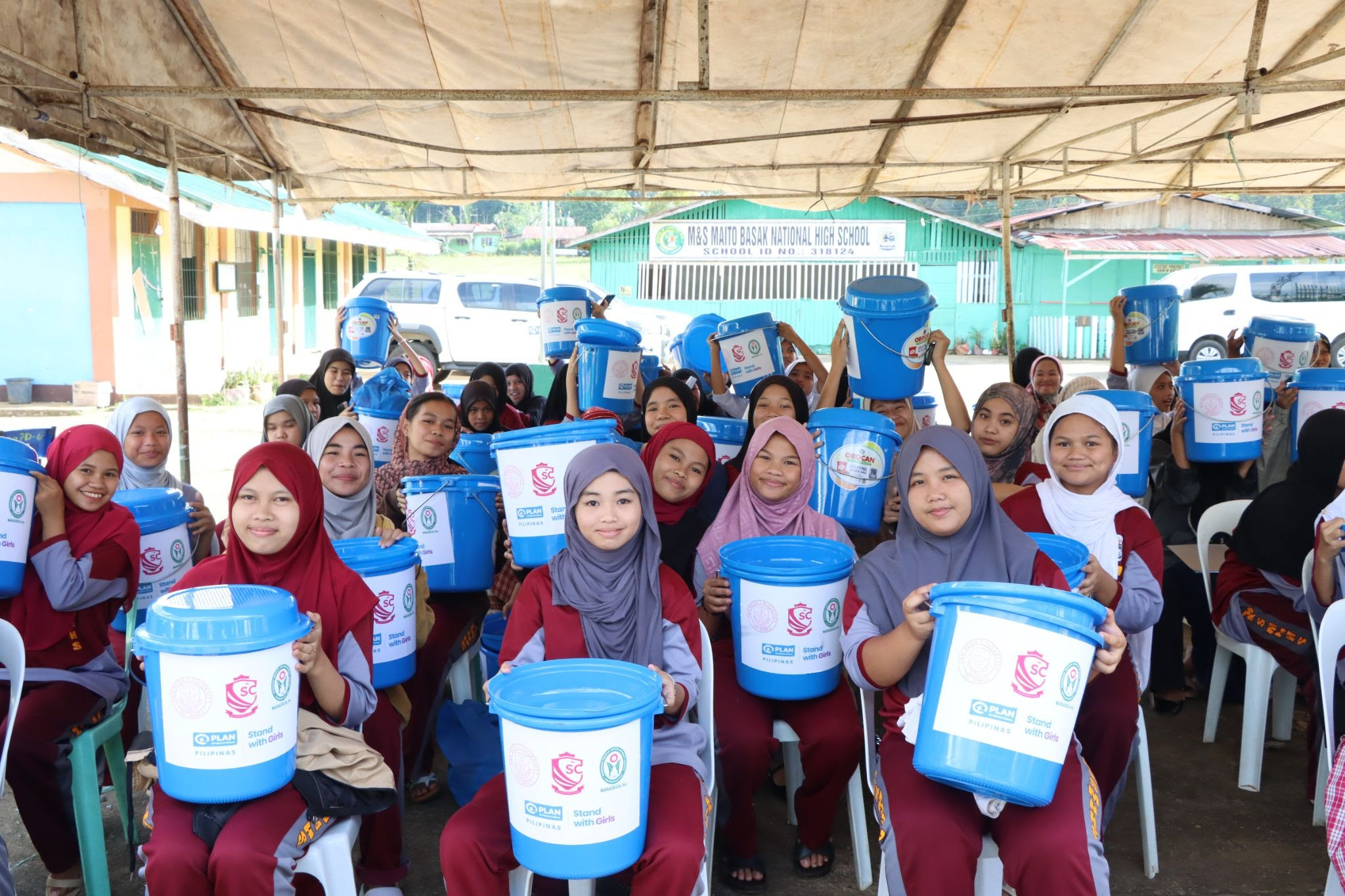
Plan International Pilipinas has backed this with action by hosting its “Period Pains: Tackling the Challenges of Menstrual Equity” workshop in 2021 and distributing MHM kits to girls nationwide in partnership with the San Beda CAS Student Council, MARADECA Inc., and the Quezon City government.
Unpaid domestic work is pushing girls out of classrooms
Unpaid domestic and caregiving responsibilities also continue to affect girls’ education and future opportunities. Plan International’s landmark longitudinal study, Real Choices, Real Lives — which tracked 142 girls across nine countries including the Philippines from birth to age 18 — found that girls spend an average of 5 hours and 15 minutes per day on unpaid domestic work, leaving little time for schoolwork and pushing families to pull girls out of school when that trade-off no longer seems financially justified.
Data from EDCOM II reinforces this: nine in ten economically inactive women identified household and family duties as the main reason they could not participate in the labor force.
EDCOM II also reported that the “need to work” contributes to 44.17% of school dropouts among Filipino youth, highlighting how economic pressures continue to interrupt education.
Rising teenage pregnancy rates are forcing even more girls out of school
Teenage pregnancy remains a significant barrier to girls’ education. Data from the Philippine Statistics Authority recorded 138,697 live births among females aged 10 to 19 in 2024, including 3,560 cases involving girls aged 10 to 14 — an increase from 3,343 cases in 2023.
The underlying conditions are alarming. A 2024 study commissioned with support from Plan International Pilipinas in Occidental Mindoro found that among girls under 15, adolescent pregnancies surged by 35% between 2021 and 2022. The same study, drawing on national data, found that 78% of sexually active youth reported having unprotected sex during their first sexual encounter — a direct consequence of an information gap so severe that four in ten young people say they have no access to trustworthy sources on sexual health. Under current law, minors cannot access modern contraceptives without written parental consent, leaving girls who most need protection without it.
NGO calls on governments, schools, and families to act
Plan International Pilipinas emphasized that addressing barriers to education requires coordinated action from schools, communities, government agencies, families, and civil society organizations. The organization continues to advocate for safe, inclusive, and supportive environments where girls can access education, information, protection, and opportunities without discrimination – and calls on the public to #StandwithGirls by supporting efforts that break down systemic barriers and ensure every girl can stay in school and reach her full potential.
Founded in 1961, Plan International Pilipinas is a girls’ and child rights organization working to advance children’s rights and equality for girls through programs focused on education, health, protection, youth leadership, and humanitarian response.