

THE DEPARTMENT of Social Welfare and Development (DSWD) Field Office XI renewed its push for the institutionalization of the Sustainable Livelihood Program (SLP) after 15 years of helping the poor and marginalized families.
Implemented in 2011, SLP is DSWD’s flagship capability-building program to help beneficiaries achieve economic self-sufficiency through entrepreneurial skills, livelihood assistance, employment support, and strategic partnerships.
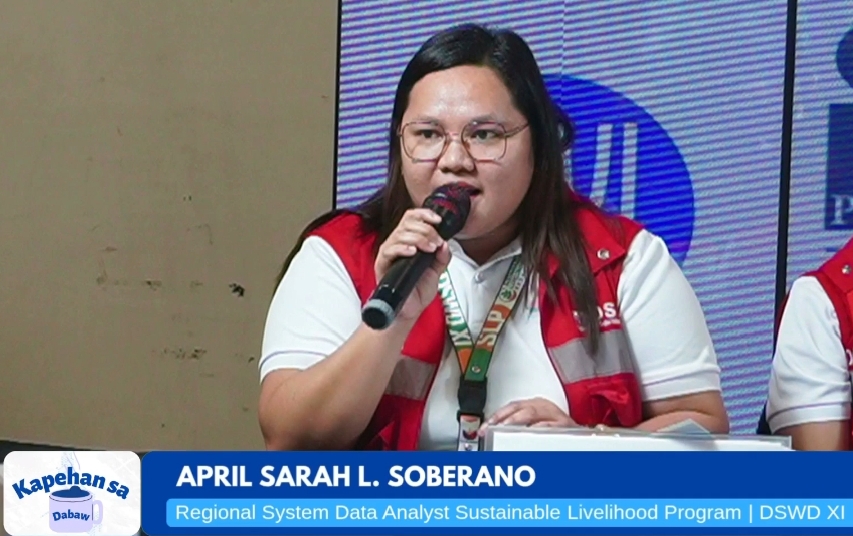
April Sarah Soberano, DSWD XI SLP regional system data analyst, said, “One of our primary advocacies is to push for the institutionalization of the program. If given the chance nga ma-approve kini into law, dako kaayo kini og impact sa atong programa.”
The proposed measure seeks to establish SLP as a permanent government program with an allocation and strengthened implementation.
The bill has recently advanced in Congress after the House Committee on Social Services approved its substitute bill.
“Una sa tanan, mahatagan ta og permanent and sustainable funding, which will allow us to implement more projects and further increase the number of beneficiaries we can serve,” Soberano added.
John Paul A. Falguera, DSWD XI regional technical support for monitoring and evaluation focal person, said the program has assisted more than 4.5 million beneficiaries nationwide since its implementation.
From 2017 to the first semester of 2026, a total of 139,533 beneficiaries have been served through livelihood grants and enterprise development, among others.
Among the program’s accomplishments this year, the program enabled 6,557 beneficiaries to establish microenterprises through the Seed Capital Fund under the PUNLA Phase, surpassing its revised target by 274%.
It also completed 6,744 monitoring and organizational assessment activities under the USBONG Phase, exceeding its target by 154%.
Falguera emphasized that the assistance does not end after receiving assistance, but regular monitoring is done to ensure the sustainability of the enterprise’s beneficiaries.
“Institutionalizing SLP will strengthen the program and ensure continuity in its implementation, allowing us to continuously serve poor and vulnerable families,” Falguera said.