



BY ALEX ALAGON
BY ALEX ALAGON

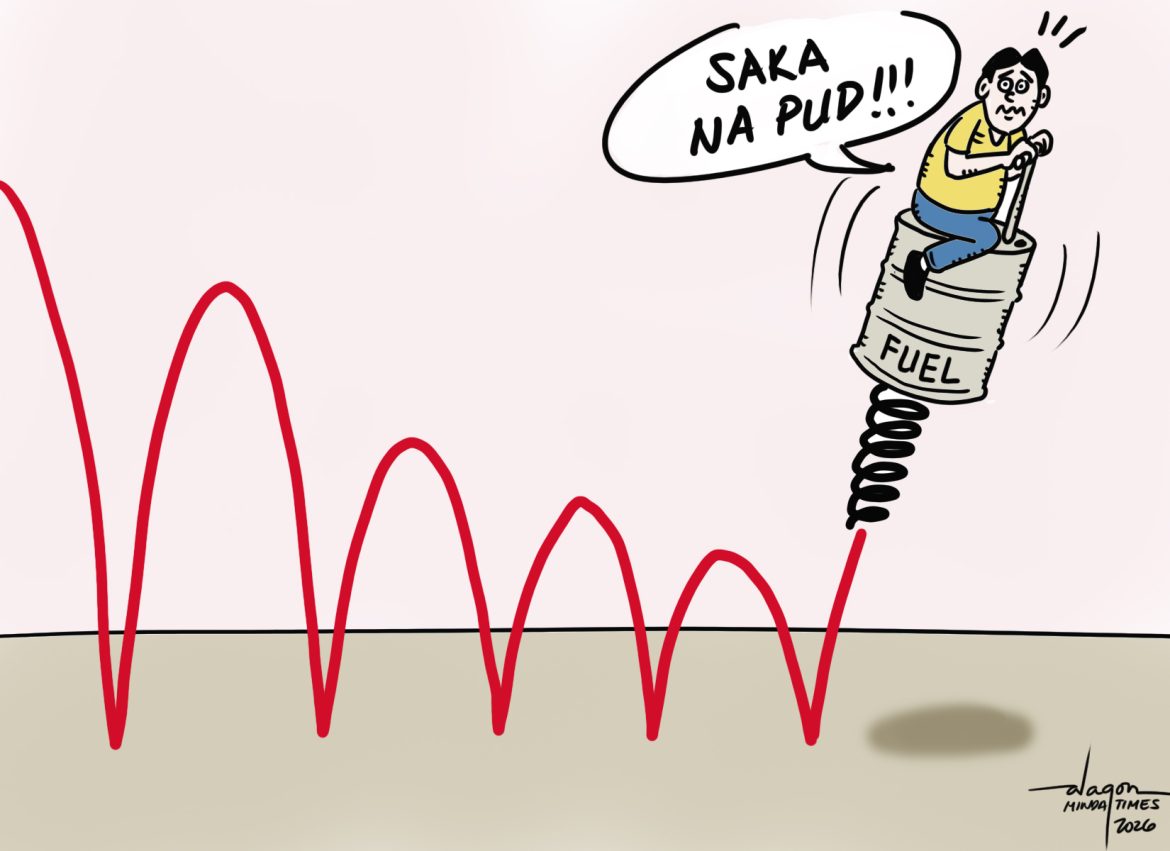
Just a few days ago, a collective sigh of relief swept through the city, especially on transport terminals and private garages here. We witnessed what can only be described as a “big” rollback—a huge P20.89 per liter slashed from diesel, and P4.43 from gasoline. For the average fixed-wage earner, this wasn’t just a few pesos added to the wallet, it took out some burden from their worries, a respite from days of budgeting and counting coins.
But as I sit to write this, the air remains thick with uncertainty. While the Department of Energy (DOE) has taken the step of “price setting” under a state of national energy emergency, the continuing trouble of the Middle East looms large. The report of ongoing naval blockades in the Strait of Hormuz have sent global crude benchmarks on a tailspin, briefly touching $150 per barrel.
The controversial Strait of Hormuz, this body of water that has now enriched our understanding of geopolitics, is a narrow waterway that connects the Persian Gulf (to its west) with the Gulf of Oman and the Arabian Sea (to its southeast).
Geographically, it separates Iran to the north from the United Arab Emirates and the Musandam enclave of Oman to the south. It is what polical and economic experts coin as the “jugular vein” of the global energy market.
So, do we dare hope for more rollbacks? We close our eyes tight, clasp our hands and pray. The reality is a balancing act, according to energy officials.
The recent reductions felt in the market were a “gift” from a temporary cooling of tensions and a strategic ceasefire announcement. As Energy Secretary Sharon Garin noted, this is not a guarantee of a trend. We are currently beneficiaries of a “physical-futures disconnect,” where the government is leveraging stable national reserves (currently at a 50-day inventory) to buffer us from the immediate shock of the war.
Despite this, there is a silver lining for the “coming days.” The DOE’s aggressive move to invoke the Downstream Oil Deregulation Law’s emergency provisions means the government is no longer a passive observer. A report from the Philippine Daily Inquirer said that by requiring prior notification and unbundled pricing, they are squeezing the “fat” out of corporate margins to ensure that any slight dip in the world market is immediately felt at the local pump. We hope this truly happens.
We know all too well that while fuel prices surge, the prices of basic commodities rarely moves down. For our office clerks, teachers, and service workers—the backbone of our economy who live on a fixed monthly wage, the “inflationary hangover” is real. When diesel spikes, the price of a kilo of rice or a pack of bulad follows suit, but prices go down in slow motion when the rollback arrives.
To protect the purchasing power of the Filipino family, we are forced to look beyond the gas station. In some conversations and opinion articles, some measures were discussed and we tried to look at some doables. Here are a few to-dos that might mitigate this crisis. The government’s current P10 per liter fuel subsidy for PUVs is a start, but it could very well be expanded. A more robust “Pantawid Pasada” for drivers to ensure they don’t pass the cost to commuters is raised in this concept.
We turn our attention to the possibilty of making Kadiwa centers work in every district. By limiting the supply chain and bringing produce directly from our farmers in Marilog or Bukidnon to the urban centers, we bypass the middleman costs that are often bloated by “transportation surcharges.”
It is time to revisit social packages for low wage earners. Temporarily reducing SSS or PhilHealth deductions for those earning below a certain threshold during energy emergencies could provide immediate, relief without the controversial cash aid rollout.
For the long term, we cannot remain hostage to global turmoil. We have to hasten the transition to electric public transport and other green activities like bikes within the downtown area. Or, we can make our sidewalks become more pedestrian-friendly. This can alleviate traffic congestion and sustain a healthy lifestyle.
Most of us have noticed the “silence” of the streets last week. It painfully made us look back at the COVID-19 pandemic on a lighter scale. Some schools are already thinking of changing the modality to allow asynchronous classes should the situation worsen. As we prepare for the coming weeks, the prospect of more rollbacks remains “guarded.” We may see marginal decreases as the government continues to play with oil players, but the global “war premium” isn’t going away overnight.
For now, we take the P20 rollback as a breathing spell. But as we exhale, let us demand changes that ensure our survival isn’t dictated solely by events happening at the other side of the globe. For us working to put food on the table each single day, responding to the basic needs of the family is truly all that matters.

BY ALEX ALAGON

BY ALEX ALAGON

SEVERAL passenger buses under the Yanson Group of Bus Companies across the country will grant a 10% discount to all passengers travelling from April 2-4 (Black Friday to Easter Sunday).
The Land Transportation Franchising and Regulatory Board (LTFRB) has granted the request of Yanson through Board Resolution 114.
In a statement on Tuesday, March 31, LTFRB chairperson Atty. Vigor D. Mendoza II said the resolution covers the passenger buses under the Yanson Group operating nationwide.
The following companies under the Yanson Group will participate in the fare discount:
The Yanson Group of bus companies moved to cut the fare by 10 percent “in line with the call for Bayanihan of the national government” during the observance of Holy Week.
The Group also intends to provide financial relief and promote public welfare for the travelling passengers.
Mendoza recognized the “benevolent gesture” in extending assistance to the riding public.
BY ALEX ALAGON
Last Friday, the crawl from Matina to downtown felt less like a commute and more like a collective test of endurance. As the afternoon heat shimmered off the asphalt and traffic stalled near a gasoline station, the taxi driver, Lando, heaved a weary sigh that seemed to carry the weight of the entire transport sector.
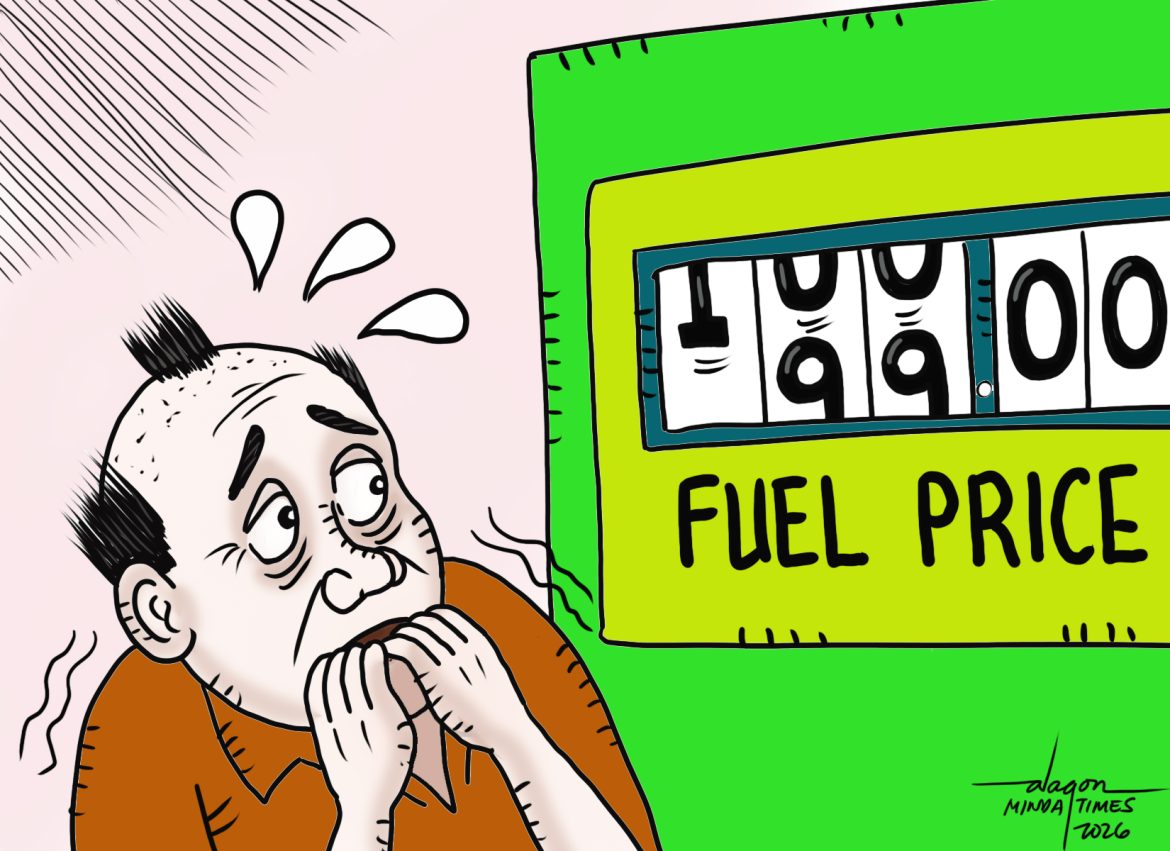
He didn’t complain about the gridlock—in Davao, that’s just the norm these days. Instead, he pointed toward the neon glow of the price board at the pump.
“Ma’am,” he said, his voice dropping into that low, candid tone drivers use when they’re about to deliver a hard truth. “If that hits 100 pesos per liter, I’m done. I’ll park this taxi for good and just look for manual labor. At least then, my sweat won’t be evaporated by a fuel tank I can’t afford to fill.”
For Lando, the ongoing war in the Middle East isn’t a distant headline or a subject for academic debate. It is a ghost sitting in his passenger seat, silently calculating his take-home pay before he even shifts into second gear. When he hears of escalating tensions across the globe, he doesn’t think of geopolitics, he thinks of the kilo of rice that might have to be cut from his family’s table.
There is a raw, unfiltered sociology that happens sitting at the passenger seat. For him, “hope” has become a luxury item, much like the fuel he burns while idling in the Matina traffic.
He spoke of the “stabilization” of oil prices as if it were a memory from decades ago. To Lando, the volatility of the world has finally reached a tipping point where the labor no longer outweighs the financial toll. “Maypa balik ta ani pag-uma (It’s better if we go back to farming),” he mumbled.
Getting stuck in traffic is usually a nuisance, but it offers one distinct advantage – it forces us to listen. In the stillness of that Friday afternoon, Lando’s ultimatum felt like a warning bell. If the people who move our city lose the hope that they can sustain their lives by doing so, we aren’t just looking at a transport crisis—we’re looking at a disconnection of the city’s very heart.
As we finally cleared the congestion and headed toward the city center, the meter kept clicking. But for Lando, the real countdown isn’t on the dashboard; it’s on the price board at the station, inching ever closer to that 100-peso mark.
Just as Lando has his breaking point, the daily wage earner also bears the burden of the oil increase. This breaking point happens when the cost of living (fare+food+utilities) goes beyond the daily wage. There is a growing, heavy realization that no matter how hard they work, they are running on a treadmill that is speeding up faster than their feet could carry them.
Daily wage earners feel the oil price hike most acutely at the carinderia or the market because every vegetable, grain of rice, and piece of fish in Davao traveled there on a truck or boat fueled by diesel, the price of oil is essentially the price of food.
When the “listahan” or the credit notebook at the local sari-sari store grows longer, it’s because the oil prices have shortened the reach of the daily wage. There is a quiet, desperate dignity in choosing which meal to skip because the transport of that meal became too expensive for the consumer to absorb.
Whether it’s Lando behind the wheel or the passenger behind him, the sentiment is identical, when the oil price moves, a family’s future shifts.
