

BY ALEX ALAGON
BY ALEX ALAGON

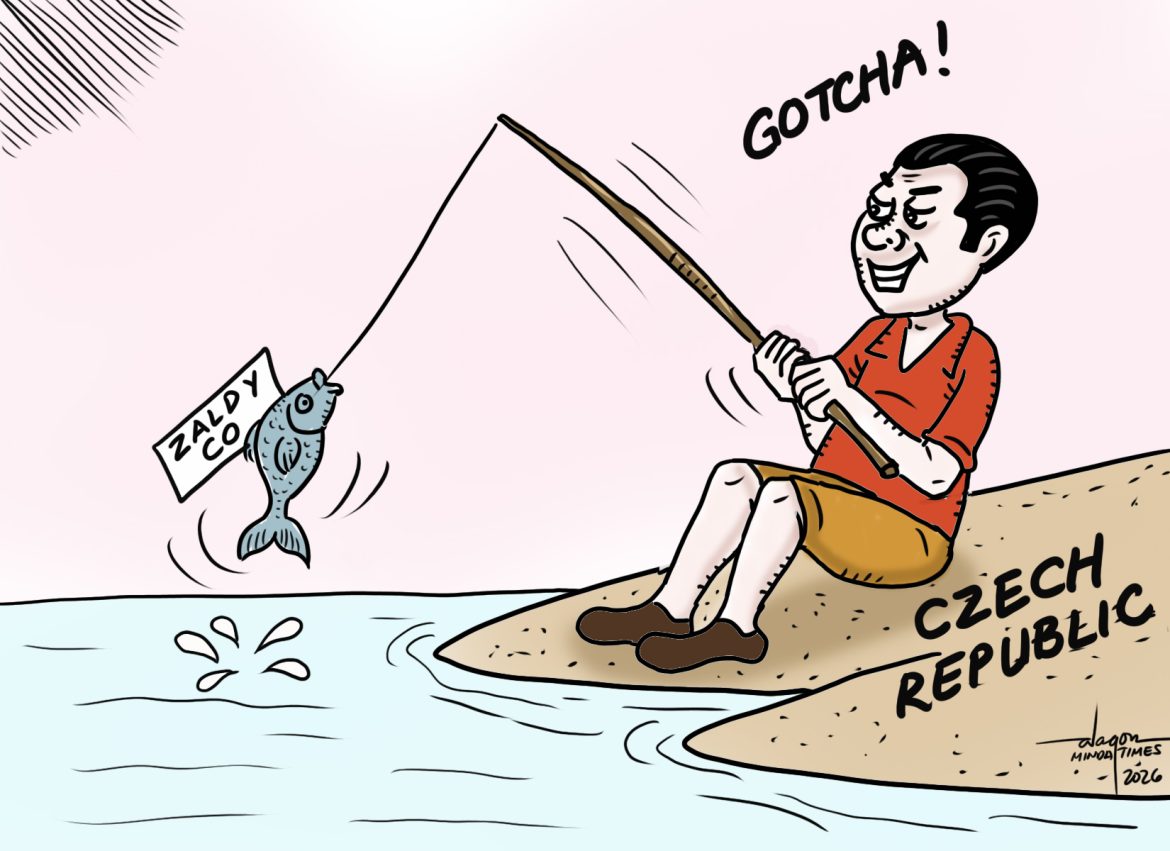
WE ARE not one of those who favored incumbent President Ferdinand R. Marcos Jr. However, we also cannot believe how easily some Filipinos are convinced to believe “disgraced” former Partylist Congressman Zaldy Co’s claim that Marcos, Jr. caused the insertion of some P100 billion worth of projects in the 2025 national budget.
For us, the claim is very preposterous. Common sense tells those who are willing to dig deeper into the budgeting process that the chief executive can very well do it when the National Expenditure Program (NEP) is being prepared. So, why would he wait for the budget bill to get reviewed by the Bicameral Committee and have the insertions done during the said process?
Besides, it was the President during his 4th State of the Nation Address (SONA) who exposed the prevalence of corruption-laden projects undertaken by the Department of Public Works and Highways (DPWH) at the behest of several Congressmen. Why would he make himself vulnerable to the repercussions?
On another, Co made his charges to the President months after the SONA, and his having been pinpointed as the leading lawmaker in the insertion scheme. He also alleged the President’s involvement while he is making himself beyond the reach of the investigators of the graft-tainted flood control projects.
We believe, though, that Co can provide some degree of credibility to his claim if he comes back to the Philippines and reiterates his charges against the President either in the hearings conducted by the Senate Blue Ribbon Committee or directly to the Independent Commission on Infrastructure (ICI).
He should disprove the common saying that “Flight is an indication of guilt.”
*********************************
We viewed with amazement our friend Romy Sabaldan’s vlog on the ongoing construction of the Samal Island-Davao City (SIDC) connector bridge project. In his post, Romy mentioned the possibility that with the way the construction goes, the multi-billion-peso bridge, targeted to be completed by 2028, may already be finished and used by 2027.
Viewing Romy’s vlog, we agree to his assumption that the bridge may be completed before the target year of completion.
We, however, are having some apprehensions. While the project is funded by a loan from China and constructed by a Chinese construction company, the ongoing dynamics between the present Philippine leader and his immediate predecessor on one hand, and between the apparently “strained” relations between the Philippine and Chinese governments on the other, might affect the project implementation, adversely at that.
Most Davaoeños, if not all, are hoping that the SIDC bridge project will be isolated from the political and diplomatic squabbles now raging in the Philippines.
*********************************
Davao City is putting up a P1.5 billion trust fund for the efficient operation of the local government’s Transport Modernization Program.
Yes, the trust fund has to be put up because, from what we learned, under the program, the buses ferrying passengers to and from designated destinations will not be collecting fares. So, without the trust fund, the Modernization Program will have no ready source of money for maintenance of the vehicles and for the program’s overall operation.
We can only hope that the trust fund will be managed well so that the money in it will not be “flown in cash” by some “innovative” fund managers.
Meanwhile, we are wondering how legitimate public utility franchise holders with vehicles plying the routes to be taken by the buses operated by the city government will confront a major forthcoming problem. The franchisees are well aware that they will be facing competition that can derail their transportation business.
We would not be surprised if, after the full operation of the Transport Modernization Program, financing companies will be busy filing replevin cases against the operators who failed to pay the monthly amortization of their units.

TWO MORE barangays in the Davao Region have been declared by law enforcement authorities, more specifically the Philippine Drug Enforcement Authority or PDEA XI, as having earned the so-called “drug-free” status. These are Barangays Mudiang in Davao City’s second district, and Zone 1 in Sta. Cruz, Davao del Sur.
The two villages are among the 15 others that are still verified. Other than the two declared as on “drug-free” status, 159 barangays all over the region were validated as already in the “drug-free” category.
It has been a long time since we started reading and hearing pronouncements from the law enforcement authorities that this and that barangay in the Southern Mindanao Region is already free from the clutches of the addictive drugs.
We took it to mean that street-level drug pushers have abandoned the said barangays, possibly because of the voluntary decision of the residents that they already have so much negative image because of the existence of the drug trade in their area.
The residents, too, might have realized that the ideal society they are painstakingly building is seriously eroded at its foundation because of the prevalence of illegal drugs in their barangays.
But how come patronizing the prohibited merchandise appeared not to have been prevented despite the very strong – and even deadly – campaign against the addictive substance proliferation in the whole of the region?
Could it be that the demolition of the illegal drugs trade structure met a barrier so strong to confront? Where then has the campaign against illegal drugs in the region, specifically with Davao City as the primary focus, met its most difficult challenges?
We can only hope that no one influential personality, or groups wielding power in certain, if not all, areas in Southern Mindanao, are interfering in the efforts of the lawmen to hasten the quashing of the prohibited drugs business in this part of the country.
After all, is it not a given that when supplies of illegal drugs are not readily available, customers or those who are hooked on them will have no other option but to slowly do away with the vice?
****************************************
Now the tele-novela of sorts, that is, the investigation into the prevalence of the multi-billion-peso corruption on the government’s flood control projects, is already on its second level. From establishing who those involved were and the degree of their participation in the massive and open heist of taxpayers’ money, it is already time for finger-pointing.
The person who is portrayed as one of two who got the biggest chunk from the corruption money, former House Committee on Appropriations chair Zaldy Co, although speaking from his safest location abroad, strongly denied his appended status. Instead, Co claimed that he is only the “fall guy” in the corruption issue.
However, the former Ako Bicol Partylist Congressman’s assertion is wanting in credibility. Why, because Co just conveniently said he is merely the “fall guy.” But he did not mention any name that made him so. Our take on Co’s pointing a finger at an unidentified real mastermind in the budgetary insertions where the funds are to be sourced is that he could not risk naming the person behind the anomalous flood control projects.
It surely is very difficult for him. After all, if he allowed himself to be the “fall guy,” then the person making him such could only be someone who is above him in the Congressional hierarchy.
So the possibility that the one who made him the “fall guy” in the biggest open heist of people’s taxes could either be the Speaker of the House up to the time of his resignation, or the President who makes the final approval of the appropriations bill for it to become a law.
Unfortunately for Co, he does not have the raw courage to expose those who made him the “fall guy.” So he will have to suffer the consequences of his cowardice and serve the sentence that might be given if the court finds him guilty.
And we could only imagine the degree of humiliation that he and his family will reckon with during ang after the trial.
With the former Congressman’s money, however, we are certain that he will fight it out even up to the highest court just to prove his innocence, or perhaps reduce the gravity of the cases that might come out because of the multi-billion–peso anomalies.