

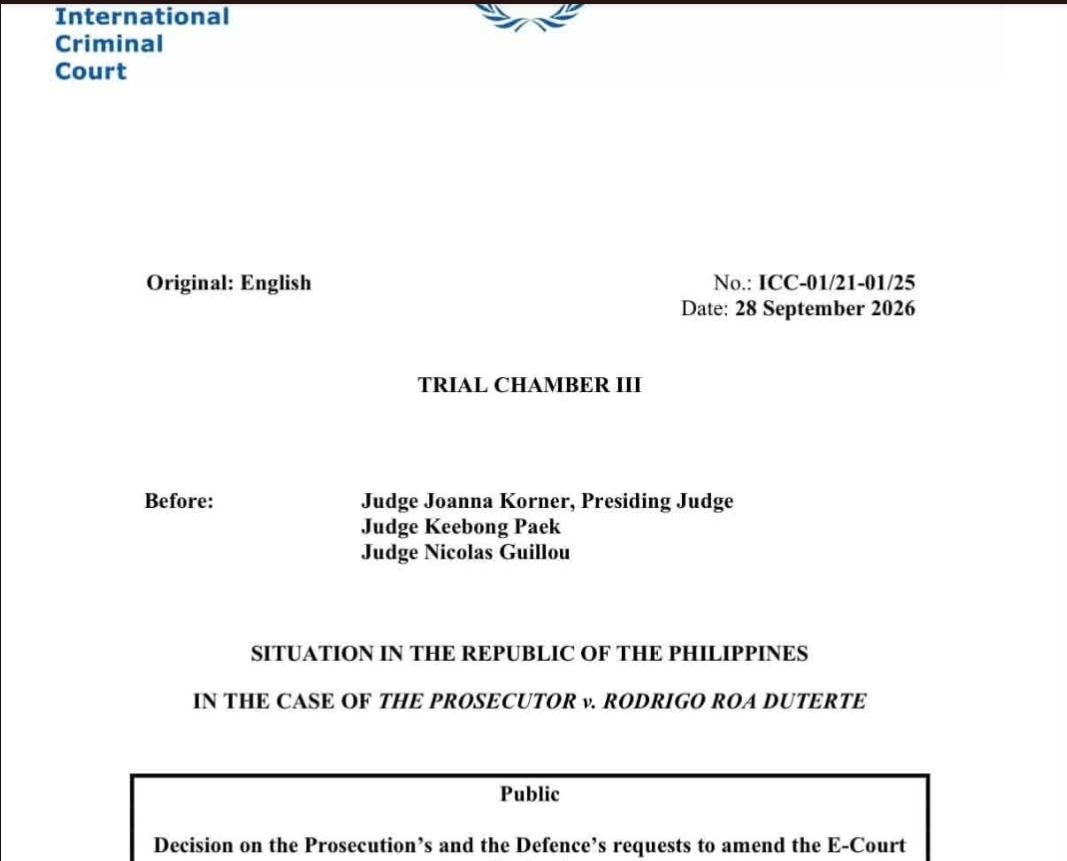
TRIAL Chamber III of the International Criminal Court (ICC) has issued a ruling on the E-Court Protocol in the case against former President RODRIGO Duterte, granting a prosecution request on online source tracking while rejecting a defense push for mandatory expert verification reports on open-source evidence.
In its Sept. 28 decision, the chamber—composed of Presiding Judge Joanna Korner, Judge Keebong Paek, and Judge Nicolas Guillou—addressed competing motions regarding how digital and user-generated evidence will be recorded and processed ahead of trial.
The judges approved a prosecution request asking for a designated field in the court’s system to record the web address (URL) associated with online material at the exact time it was captured.
However, the chamber drew the line at a defense proposal. The defense had asked that open-source and user-generated material submitted to the chamber be accompanied by an expert verification report.
Judges rejected the request, warning that imposing a blanket requirement for such reports across all items could unnecessarily delay the start of the trial.
The rulings come to light against the backdrop of a massive evidentiary volume.
The chamber acknowledged the sheer scale of the evidence problem facing the court, noting that the prosecution’s evidence list already contains more than 15,000 items—representing only a portion of the total material disclosed thus far.
Meanwhile, the defense has raised concerns that the current disclosure pile includes duplicates and poor-quality documents, which they argue complicates meaningful legal review.
Under the chamber’s order, the Registry has been instructed to file the formally amended E-Court Protocol by Oct. 2, 2026, as pre-trial proceedings continue to navigate the logistical hurdles of handling thousands of digital records.