



BY ALEX ALAGON

BY ALEX ALAGON
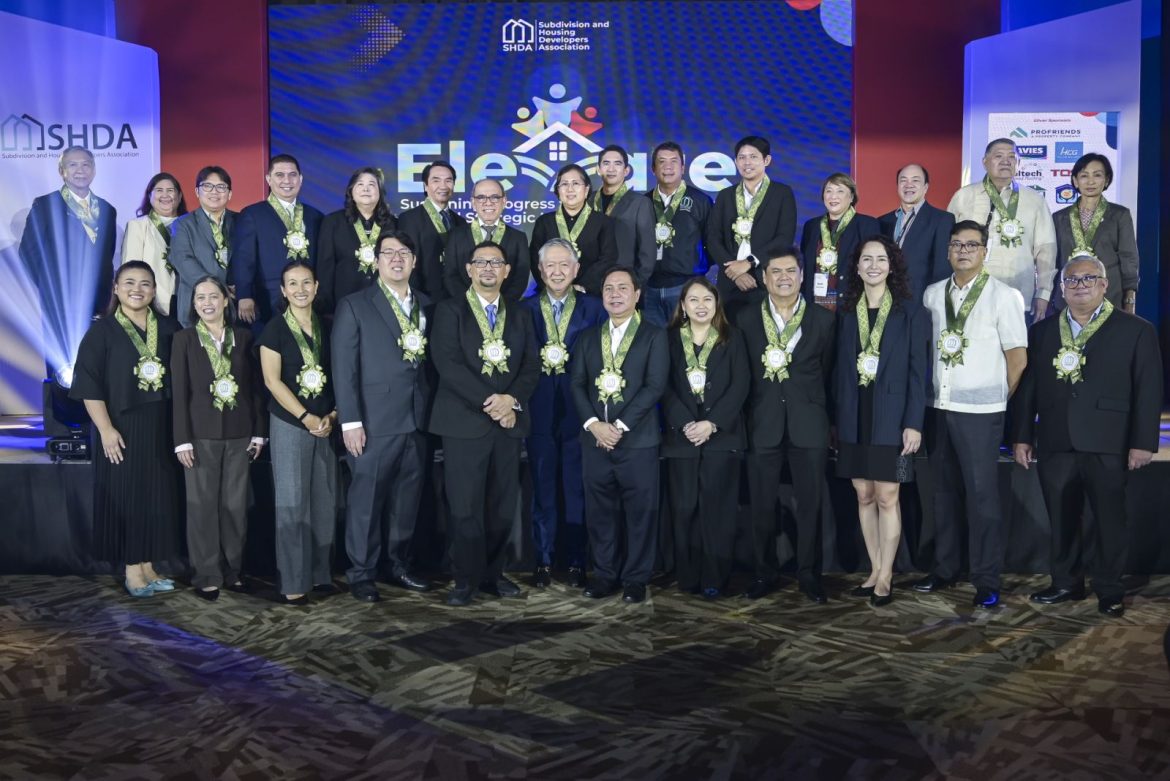
Bringing together over 400 stakeholders, including national policymakers, regulators, financial institutions, and industry leaders from September 16 to 17, the Subdivision and Housing Developers Association (SHDA) concluded its 34th National Developers Convention at Marquis Events Place in Bonifacio Global City, Taguig. Anchored on the theme “Elevate: Sustaining Progress through Collaboration and Strategic Housing Innovations,” the two-day summit wrapped up with the adoption of a strategic 7-point resolution roadmap to accelerate housing delivery and foster a more responsive housing sector.
Formally presented by SHDA Corporate Secretary Atty. Mena R. Ojeda Jr., the Convention Resolutions outline key industry commitments: 1) sustaining engagement with the Department of Human Settlements and Urban Development (DHSUD); 2) strengthening ease of doing business and participation in Technical Working Groups for the Joint Memorandum Circular involving 15 agencies on housing permitting and licensing; 3) supporting digitization of government-to-government processes and land-titling computerization; 4) strengthening housing taxation efforts, including review of the Real Property Valuation and Assessment Reform Act (RPVARA) and land valuation; 5) enhancing collaboration for affordable and sustainable housing; 6) maximizing economic corridor opportunities alongside solid waste management, water, electricity, and connectivity requirements; and 7) pursuing new and innovative housing developments and interventions responsive to shifting social, economic, demographics, and housing preferences and demand.
These priorities reflected the convention’s discussions. Dr. Winston Conrad Padojinog, Senior Economist at CRC Foundation Inc. and Associate Professor at the University of Asia & the Pacific, delivered a status report on the Collaborative Philippine Housing Roadmap 2025–2040, citing progress in streamlining developer permitting standards, with a mandatory 15-day service-level agreement for License to Sell approvals, zero-backlog initiative across regional offices, and 100% digital tracking for development permits, alongside other roadmap goals still underway. Bureau of Internal Revenue Deputy Commissioner Atty. Larry Barcelo discussed tax issuances and compliance requirements; Philippine Institute for Development Studies Vice President Dr. Marife Ballesteros examined housing affordability; and Colliers Philippines Research Director Joey Bondoc provided an outlook on the country’s property market beyond 2026.
An update from Anti-Red Tape Authority (ARTA) Deputy Director General for Operations, Undersecretary Dr. Lea Grace Salcedo, covered the presentation of JMC No. 1, s. 2026 under the National Effort for Harmonization of Efficient Measures of Inter-related Agencies (NEHEMIA) initiative, aimed at streamlining housing processes and supporting an electronic housing one-stop shop. Sessions also covered land acquisition and conversion, digital government services, 4PH project processes, and eNotarization, alongside discussions on the Luzon Economic Corridor, waste management, circular economy practices, and electricity solutions for communities.
Day 2 focused on market trends, design, and innovation. Philippine Survey Research Center Research Director Andrea Dizon shared findings showing that 61% of Filipinos who plan to purchase a house within the next 3 years prefer to live just outside the city. Location and accessibility remain top considerations, with 78% citing opportunity, while 57% prefer to live within 30 minutes’ distance from family. The findings highlighted a primary home with location connected to the city corridor, accessible, in close proximity to family, and better space as factors shaping housing choices across generations.
Jacinto C. Ng Jr., Founder and Group Executive Officer of Joy~Nostalg Group | Raemulan Lands Inc., spoke on how synergy and enterprise can transform lives through NING*NING, creating the world’s first grid-connected, utility-scale solar rooftop installation integrated into a socialized housing community. Globe Telecom Vice President Abigail Cardino highlighted connectivity in modern homes and communities, while GIGIL Founding Partner Badong Abesamis and Plus 63 Co-Founder Dan Matutina explored creative strategy, design thinking, and connecting with the modern generation of homebuyers.
Fort Bonifacio Development Corporation Chief Operating Officer Enrique Manuel shared lessons from three decades of developing Bonifacio Global City, highlighting long-term planning, infrastructure, estate management, and the district’s next phase of smart-city, mobility, and sustainability initiatives. PGAA Creative Design Principal Archt. Paulo Alcazaren traced the evolution of Philippine subdivision planning and examined more walkable, sustainable communities with greater emphasis on public spaces.
SHDA Chairman Engr. Francis Richmond Villegas emphasized that the convention’s value extends beyond the discussions held during the two-day event. “A convention is only as good as what happens after it ends. These resolutions give our members, and the agencies we work with, something concrete to hold each other to,” hesaid.
Assistant Corporate Secretary and Convention Overall Chairperson Clarissa de Joya highlighted, “What stood out this year wasn’t just how many agencies showed up, it was how specific their commitments were, from permitting reforms to a formal review of the property valuation law, while also bringing new perspectives on shifting consumer behavior. That clarity is what will actually move things for the housing community.”
National President Kerwin Padua likewise emphasized the importance of continuing the work initiated during the convention. “Two days of dialogue mean nothing if we don’t act on them. These resolutions are how we make sure this convention outlasts the days it happened in,” he said.
SHDA reaffirmed its commitment to continue collaborating with DHSUD and key government partners, with the Convention Resolutions serving as a guide for public- and private-sector stakeholders in shaping policy and program directions affecting housing development and delivery.

MANILA, Philippines — PeraSure, a digital lending app operated by SEC-registered Sulit Lending Corporation, officially launched in the Philippines on August 8, offering one of the lowest interest rates in the local digital lending market alongside paperless, ID-only credit for the everyday cash-flow needs of salaried Filipinos, gig workers, and micro-entrepreneurs.
PeraSure charges a daily interest rate of 0.10%, calculated against the remaining principal so that the cost of borrowing decreases as repayments are made. Including applicable service fees, the total daily rate is 0.25%, equivalent to roughly 7.5% a month, one of the lowest all-in rates disclosed in the Philippine digital lending market and well below the SEC’s regulatory ceiling.
Under SEC Memorandum Circular No. 14, Series of 2025, effective April 1, 2026, combined interest and fees on qualifying small loans are capped at 12% a month, or about 0.4% a day, down from the previous 15% a month. Borrowers see the full rate breakdown, applicable fees, and total repayment amount upfront, before confirming the loan, with no hidden charges and no mismatch between the advertised rate and what is actually charged, a gap that has drawn criticism elsewhere in the market.
The app also addresses a persistent gap in Philippine digital finance, where prospective borrowers are often required to provide payslips, HR letters, or other formal proof of income to qualify for a loan. Applicants need only a valid Philippine mobile number and one valid government-issued ID to apply, with no payslips or supporting documentation required. Borrowers who can provide proof of income may still submit it in-app for later credit re-evaluation, while returning borrowers who build a consistent repayment record are reassessed for higher credit limits over time.
PeraSure leverages automated decisioning and data science to assess an applicant’s identity, ability to repay, and credit risk. Most application decisions are delivered in under three minutes, with approved funds disbursed directly to the borrower’s chosen digital wallet in about five minutes.
Rather than requiring borrowers to reapply and requalify with every transaction, PeraSure is structured around a revolving credit relationship. Eligible borrowers can continue drawing on an approved credit line over time instead of starting the process from zero with each new loan, with the line itself growing as a borrower’s repayment record builds.
PeraSure said the platform is designed so that a mobile number and one valid ID are all a borrower needs to access credit that is genuinely affordable. Filipinos who work hard for their income should not have to prove it again on paper, the company said, particularly gig workers and micro-entrepreneurs who do not have standard payslips to show. Its goal, PeraSure added, is to ensure that a lack of physical documentation is never the reason someone is excluded from affordable, formal credit.
PeraSure upholds strict data privacy and security standards across its operations. Beyond its SEC registration, the company complies with the Credit Information System Act of 2008 (RA 9510) and applicable Credit Information Corporation requirements, as well as the Anti-Money Laundering Act (RA 9160, as amended), covering customer identification, due diligence, recordkeeping, and regulatory reporting. PeraSure does not access borrowers’ phone contact lists and does not contact family members, friends, or employers regarding repayment.

CO-WRITTEN BY CHRISTY ZOE MORALES
ALL THREE of my children write, but lately my youngest, who is a teacher overseas, has been especially drawn to putting her thoughts into words. When she shared this piece with me, it touched my heart in ways I did not expect.
As parents, we often go through our days doing ordinary things for our children, preparing meals, caring for the home, creating traditions, and simply being there.
We rarely stop to think which of those moments will stay with them. Yet, years later, those seemingly small acts of love often become the memories they cherish most. I am sharing an excerpt from one of Zoe’s recent stories because it is a beautiful reminder that the little things we do for our children matter more than we may ever know.
As I sat down and prepared for my lessons for the day, carefully picking up tiny bits of scrap paper from my desk, a student greeted me with a sweet good morning. I greeted him back and gestured for him to unpack his bag and get ready for class. Before he did, he excitedly shared something happy about his breakfast. His mom had made him delicious pancakes, drizzled with maple syrup, which I believed was probably still on his cheeks.
I happily shared that my mom used to make pancakes for me too, and for a moment, I danced along with the same excitement before reminding him to prepare for class. But for a little while, I stopped and thought about the pancakes my mom had made for me.
She had a way of preparing them that could make any child’s breakfast feel a little more special. She would make me a Mickey Mouse pancake, three little circles carefully placed together in a pan.
Suddenly, the loud and crowded morning of first period smelled like pancakes and maple syrup. I could almost imagine my mom in our little kitchen early in the morning, stirring the batter and scooping it into a pan, making three circles just so I could have my Mickey Mouse pancake.
So I went back to my student and told him what I had remembered. He, in turn, told me more about how his mom made his.
And when the day ended, I returned home to my small apartment and found myself reminiscing about Mom again. I thought about the things she used to do that I never thought much about when I was younger. I loved the smell of her home cooking and the sound of her cleaning early in the morning. Even on quiet days, I could hear her somewhere in the garden, planting or moving pots around.
Somehow, thinking about Mom in those ordinary moments always brings me back to Christmas. I loved waking up to the sound of groceries being brought into the house, the kitchen slowly filling with the noise of pots and pans, and Dad moving around the house to help Mom with whatever she needed.
I remember Mom always leading the team during these times. Dad was always somewhere nearby helping, while my siblings and I added our own little flair with the decorations, lights, and song choice.
Eventually, the house would be clean. The food would be ready. The warm lights would be up, and we would all sit down together. Dad would lead the prayer, and then we’d dine and thank God for what He had done for our family that year.
At the time, Christmas was just Christmas. We didn’t really think about everything that had to happen before we could sit around that table together. We just got to enjoy it. We were allowed to just be children.
Now, I find myself missing that version of home sometimes. There’s no one in the kitchen making noise in the morning or moving things around the house. It’s just me, doing the things I never really noticed someone was always doing for us.
Maybe that’s what the little boy in my classroom reminded me of that morning. He was so excited to tell me about his pancakes because, to him, it was simply something his mom did that made him happy.
And I realized I had one of those memories too.
So, Mom, I suppose this is just my long way of saying that I notice those things now. The little things you did that I didn’t know were little acts of love at the time.
The breakfasts, the cooking, the Christmas preparations, the garden, the way you made our home feel like somewhere we could simply be kids without worry.
Thank you for the pancakes, Mom!
Reading Zoe’s reflections reminded me that childhood is built not only on grand celebrations and milestones, but also on ordinary moments repeated with love.
A special breakfast, the sounds of a busy kitchen, holiday preparations, or simply the comfort of being cared for can become treasured memories that last a lifetime.
As parents, we may never fully know which moments our children will carry with them into adulthood. But stories like this reassure us that love leaves footprints in the smallest places. And sometimes, years later, those footprints take the shape of three little circles in a pan… a Mickey Mouse pancake.
“Train up a child in the way he should go: and when he is old, he will not depart from it.” Proverbs 22:6
Ruth Sitchon Morales is a full-time instructor at a state university in Mindanao, specializing in foreign language education. She is a resource speaker, freelance writer, and textbook author, and is currently pursuing doctoral studies in applied linguistics. Along with her husband and their three children, Ruth served as an ESL teacher and a cross-cultural worker in China, Malaysia, Thailand, and Africa. Her formal studies in foreign languages, enriched by immersion in diverse foreign and local cultures, have given her a broad perspective on life and a wealth of stories to share with her readers.

MANILA, Philippines — Cardiovascular disease has become one of the Asia’s most pressing health challenges. A study revealed that this region accounted for 61.3% of global cardiovascular mortality, and a disease burden that exceeds the global average by 8.3%. In the Philippines, ischaemic heart diseases remain the top cause of death with 100,958 cases, taking up 19.8 percent of total deaths in the country in 2025 . Despite the fall in cardiovascular disease death rates over time, the overall burden continues to grow, driven by ageing populations and changing lifestyles.
According to Dr. Vipada Sae-Lao, Herbalife’s Nutrition Education and Training Lead for Asia Pacific, “A healthy heart needs the basics. The American Heart Association’s evidence-backed framework identifies eight pillars of cardiovascular health: a heart-healthy diet, regular physical activity, avoiding nicotine, quality sleep, maintaining a healthy weight, and keeping blood glucose, cholesterol, and blood pressure within safe ranges.”
Research shows that as the body ages, blood vessels undergo progressive changes- a process known as vascular ageing, that can affect cardiovascular health over time. At the cellular level, mitochondria are increasingly recognised as a key driver of this process, and a decline in their function is one of the reasons why the health of the blood vessels can deteriorate over time.
Think of mitochondria as tiny power stations inside every cell in the body whose job is to convert food into usable energy. “The heart is one of the most energy-intensive organs in the body for its size, and this energy comes from mitochondria. When mitochondria are working well, the heart can contract, relax, and respond to the body’s physical demands with ease,” added Dr. Sae-Lao.
Good cardiovascular health begins at the cellular level, inside the mitochondria. It is useful to understand nutrients, whether from food or targeted supplementation, which can help the heart at a cellular level.
Alpha Lipoic Acid (ALA)
ALA is one of the body’s defenders of cellular health, working inside the mitochondria to protect DNA from damage and guard the cardiovascular system from cellular wear and tear. While antioxidants like Vitamin C work best in the body’s water-based environments and Vitamin E is better suited to areas of fat, ALA has the unique capability to work in both. This compound also helps recycle Vitamins C and E to amplify their protection.
While spinach, broccoli, tomatoes, brussels sprouts, and organ meats like liver and kidney contain ALA, research suggests that dietary absorption is unlikely to deliver meaningful amounts into the bloodstream. This makes supplementation an option worth exploring with your healthcare provider.
Nitric Oxide (NO)
Nitric oxide works for your heart in several ways — it helps blood vessels relax and widen for smoother blood flow, discourages unwanted clot formation in arteries, supports anti-inflammatory action in arteries to maintain a healthy arterial lining without cholesterol plaque buildup. Research also suggests NO supports the body in building new energy-producing mitochondria. NO levels naturally decline with age, and when compounded by poor nutrition or a sedentary lifestyle, this reduction can compromise cardiovascular health over time. Physical activity is one of the simplest ways to boost the body’s NO production.
Dietary nitrates found in spinach, beets and brussels sprouts convert directly to NO by the body. Citrus fruits and pomegranate help preserve NO once it is produced, while food sources like fish and nuts supply arginine, are the building blocks for NO and supply omega-3 healthy fat which support NO production.
Creatine
Creatine works inside heart muscle as an energy buffer, ensuring adenosine triphosphate (ATP) i.e., the fuel that every heart cell depends on, continues to be in steady supply with every beat. Studies suggest that creatine supports the mitochondria’s ability to work more efficiently, potentially reducing cellular damage that accumulates over time. Creatine supplementation may also support cardiovascular health by helping to manage blood pressure responses and reducing inflammatory markers. Creatine is found in red meat and fish, but diet may not be sufficient to fully support the heart’s energy systems, particularly when creatine production declines with age.
Coenzyme Q10 (CoQ10)
CoQ10 is at its highest concentration within the heart and vital in converting food into the energy the heart needs. This antioxidant found in meats, fish, nuts and vegetable oils, helps protect heart cells from everyday cellular wear and tear while supporting blood vessel function. Produced in the body, CoQ10 levels naturally decline with age.
Balanced diet, exercise routines, quality sleep, and regular health checks are important for good cardiovascular health. And Filipinos are a step closer towards having a healthy heart with 75% more focused on trying to increase the frequency or intensity of physical activity while 72% for sleep quality.
ALA, NO, creatine and CoQ10 further support the energy systems your heart depends on.
“The good news is most of what your heart needs at a cellular level can be built into daily meals. And where food falls short, a conversation with your healthcare provider about targeted supplementation can help close the gap,” said Dr. Sae-Lao.

OPERATIVES of the Criminal Investigation and Detection Group (CIDG) arrested a former communist terrorist group (CTG) member wanted for a high-profile 2020 murder during a manhunt operation in Barangay Mat-i, Surigao City, on Sept. 24, 2026.
According to a report submitted to CIDG director PMGEN Robert AA Morico II, joint elements of the CIDG Surigao del Norte Provincial Field Unit and the Surigao City Component Police Station nabbed the 35-year-old fugitive around 10:25 a.m.
The suspect, a resident of Cabadbaran City, Agusan del Norte, was cornered by virtue of an outstanding warrant of arrest for murder issued by a court in Tandag City, Surigao del Sur on July 20, 2020, with no recommended bail.
2020 killing recalled
Authorities identified the suspect as a former member of the Communist Party of the Philippines–New People’s Army (CPP-NPA) previously assigned to Sentro de Gravidad 21, Guerrilla Front 16, under the North Eastern Mindanao Regional Committee (NEMRC), and listed in the Armed Forces of the Philippines’ 2020 Periodic Status Report.
Investigators detailed that the arrest stems from the April 14, 2020 killing in Barangay Magroyong, San Miguel, Surigao del Sur.
The suspect, alongside 12 other individuals allegedly acting in conspiracy, shot a CAFGU Active Auxiliary (CAA) member in the face, inflicting fatal wounds that caused the victim’s immediate death.
CIDG leadership lauded the operating units, led by RFU 13 acting regional chief PLTCOL Butch Ian C. Miñoza and Surigao del Norte Provincial Field Unit head PLTCOL Darwin B. Dura, highlighting that the capture brings long-overdue justice to the victim’s family and deals another blow to remnant security threats in the region.

DEPARTMENT of Public Works and Highways (DPWH) Secretary Vince Dizon returned to San Juan Village in Bangkal on Monday, Sept. 28, 2026, to personally inspect the ongoing gabion wall project along the Talomo River.
The inspection follows a destructive overflow last July 24 that submerged parts of the Talomo District and displaced hundreds of residents.
To fast-track recovery, the agency allocated P100 million from its quick response fund for the repair, targeted for finish by the end of the year.
Asked by media members about alleged ghost projects in Davao City, Dizon remained cautious of his answer.
“That is subject to verification. May mga ghost projects na confirmed sa Davao Occidental kaya nga nakakulong na. So, we will subject [it] to ongoing investigation,” Dizon stated.
The inquiry comes amid heightened scrutiny over infrastructure spending in the region, following recent National Bureau of Investigation subpoenas issued to local DPWH officials regarding dozens of flagged flood-control projects.
Dizon stressed that any verified anomalies will face strict accountability under the department’s ongoing sweeping reforms.
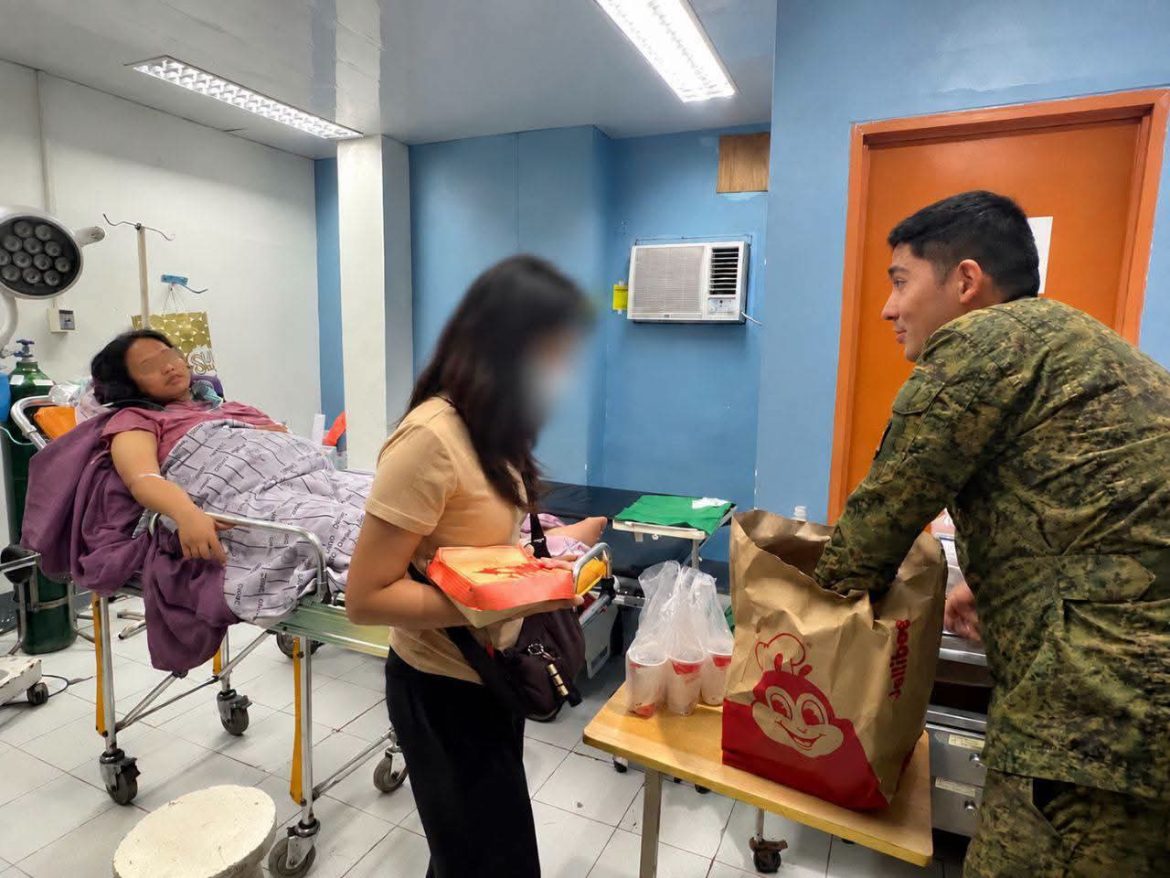
MAJOR General Alvin Luzon, commander of the 10th Infantry Division, led an ocular and aerial inspection across earthquake-battered communities in Glan, Sarangani Province, and Jose Abad Santos, Davao Occidental, to fast-track ongoing rehabilitation following the magnitude 7.8 tremor that struck earlier this year.
During the inspection of the local government’s “Bangon Glan” initiative, Luzon reviewed the deployment of Joint Task Force Agila personnel, engineering units, and CAFGU auxiliary forces who are actively assisting in reconstruction efforts.
The collaborative effort has successfully completed 89 temporary shelters for displaced families.
Aboard a Philippine Air Force Black Hawk helicopter, Luzon conducted an aerial survey over Glan and Jose Abad Santos to evaluate the persistent risks of flooding, landslides, and damaged waterways left in the wake of the disaster.
The continued military intervention aligns with President Ferdinand Marcos Jr.’s directive to sustain long-term recovery operations beyond initial emergency relief.
“Our mission does not end when the ground stops shaking. We stay with our communities as they recover and rebuild. Every shelter completed and every affected area assessed is a step toward restoring safety, dignity, and hope to our people,” Luzon stated.
The 10ID remains embedded with local government units and partner agencies, providing critical engineering, logistical, and manpower support to ensure affected families fully recover from the calamity.
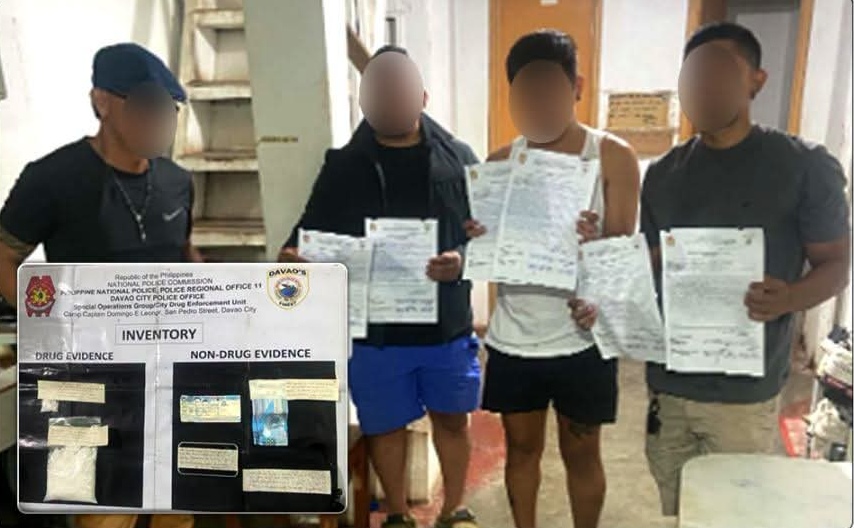
A HIGH-VALUE individual (HVI) was arrested during a joint buy-bust operation at 11:26 p.m. in Barangay 19-B, on Thursday, Sept. 25.
Operatives of the City Drug Enforcement Unit/City Special Operations Group under PMAJ Bernie B. Suaga executed the raid, backed by the RPDEU XI/RSOG, the 1st and 2nd City Mobile Force Companies, Police Station 18 – Bajada, and the Philippine Drug Enforcement Agency XI.
Authorities recovered approximately 355 grams of suspected shabu from the suspect, carrying an estimated street value of P2,414,000.00.
Following the successful operation, Davao City Police Office (DCPO) director PCOL Peter Bauzon Madria lauded the operating units for their seamless coordination, emphasizing the command’s unwavering resolve to run down persistent drug offenders and keep Davao City secure.
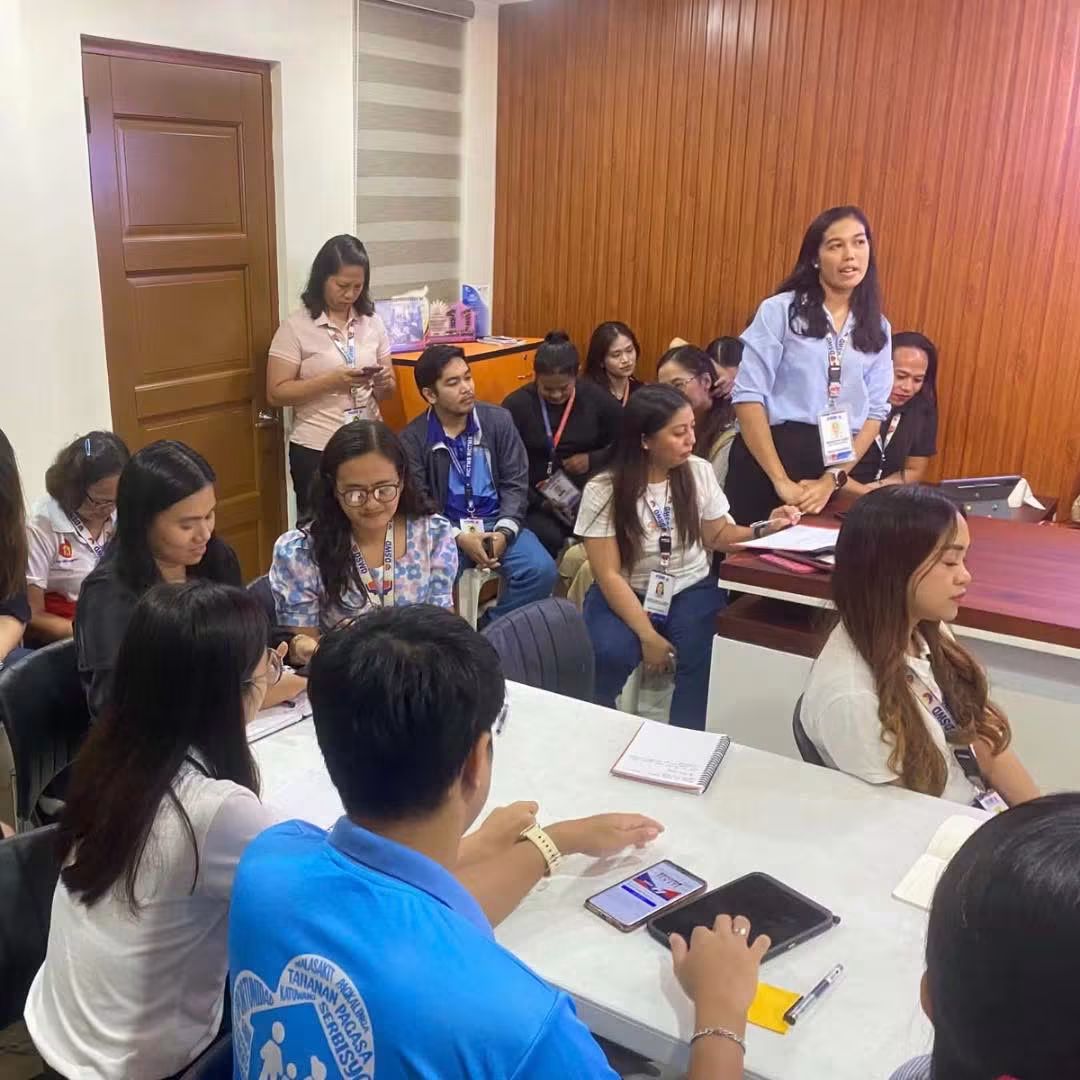
THE DEPARTMENT of Social Welfare and Development (DSWD) XI is preparing to roll out the Walang Gutom Program in the region.
DSWD XI announced on Monday it aims to reach 12,838 households in the region who are experiencing food insecurity.
The program, called Reducing Food Insecurities and Undernutrition through Electronic Vouchers (REFUEL) Walang Gutom Program aims to address food insecurity and undernutrition by supporting qualified food-poor households.
As part of preparations, the DSWD XI held an orientation for its staff on Sept. 24, to ensure readiness on the processes and mechanisms to be used in implementing the program.
The Walang Gutom Program falls under the DSWD’s Innovations Division.
In the region, the program targets household beneficiaries across four provinces: Davao del Norte, Davao de Oro, Davao del Sur, and Davao Oriental.
The orientation also introduced an application tool that will be used to identify, validate, and manage qualified household beneficiaries.
“Sa nalalapit na implementasyon ng programa, inaasahang mas mapalalakas ang mga hakbang ng DSWD sa pagtugon sa gutom at food insecurity, lalo na para sa mga pamilyang higit na nangangailangan,” the agency said.
WGP beneficiaries, according to the DSWD website, are provided with monthly P3,000 food credits that they can use to purchase balanced and nutritious food from accredited retailers.
Complementing the WGP is the Walang Gutom Kitchen, the country’s first government-run soup kitchen and food bank which addresses hunger among families in the streets.
DSWD expanded the initiative with the opening of WGKs in Cebu City on June 22 which already served 6,666 meals, and Zamboanga City on June 29 which provided more than 3,000.
This is in addition to the first kitchen in Pasay City which has served 306,428 meals since its launch in December 2024.
From December 2024 to June 2026, the kitchens served 219,304 individuals, including children, adults, and families experiencing hunger.
The DSWD is also set to open a Walang Gutom Kitchen in Quezon City, Catbalogan City in Samar, and Butuan City in Surigao this year, and 12 are targeted to be operational before June 2028.
