



BY ALEX ALAGON

BY ALEX ALAGON

ERCEFLORA, together with the Manila Water Foundation, Department of Education (DepEd), and the Pasig City Government, is expanding the Batang Matatag child health initiative across 44 schools in Pasig as the program marks its fifth year.
The initiative will bring refrigerated drinking water fountains and health education on gut health and everyday hygiene—including toothbrushing, handwashing, and sanitation—to school communities. The expansion is part of Batang Matatag’s broader effort to promote healthier school environments through sustained community partnerships.
“Batang Matatag has always been about creating healthier environments where children can grow and thrive. As we enter our fifth year, we are looking beyond immediate needs to help communities build the knowledge and habits that can support children’s health in the long term. Through our partnerships, we hope to make these healthy practices more accessible and sustainable for the communities we serve,” Rica Mateo, Erceflora ASEA Brand Zone Lead said.
Five Years of Batang Matatag: It Takes a Village
Since its launch, Batang Matatag has grown from a program focused on essential water access, sanitation and hygiene or WASH facilities into a broader child health initiative, reaching 150,000 students and healthcare professionals by 2026, up from 9,494 students in 2023.
In July and August, Erceflora brings Batang Matatag to De Castro Elementary School, Nagpayong High School, Pinagbuhatan High School, Manggahan High School, and San Miguel Elementary School to bring health education closer to school communities. Through the WASH paaralan sessions, select student attendees are challenged to be lead and role models of hygiene on campus.
The Pasig rollout began with a ceremonial turnover of WASH facilities and refrigerated drinking water stations at De Castro Elementary School, where more than 100 students, teachers, and parents participated in a gut health lecture.
“Access to safe, clean, and cold drinking water can make a real difference in encouraging our learners to drink more water and stay healthy. When children are healthy, they are better able to attend school, participate, and learn. That is why partnerships like this are important—not only in improving our school facilities, but also in supporting the health and learning of our students,” said Lailani Lucero, De Castro Elementary School Principal.
The program’s expanded focus reflects the growing recognition that child health requires more than access to safe water. Nutrition, gut health, and consistent hygiene practices also play an important role in supporting children’s immunity, development, and ability to learn.
“Providing access to safe water is an important first step, but children also need good nutrition, proper hygiene, and healthy habits to support their overall health. These practices should start at home and be reinforced in school, where children can learn how simple, consistent habits can help protect them from illnesses like diarrhea,” said Dr. Jo-Anne De Castro, Pediatric Infectious Disease expert.
Batang Matatag therefore continues to equip children, parents, teachers, and healthcare professionals with practical knowledge on gut health and everyday hygiene.
“Healthy habits need to be consistent. It’s not enough to have access to clean water or practice proper hygiene only sometimes. Children need an environment where these practices are maintained every day, because consistency is what helps turn good health practices into lasting habits,” Dr. Jo-Anne added.
Why Gut Health Deserves a Seat at the Table
The program’s growth reflects the scale of its expanding impact.“Seeing Batang Matatag grow from reaching just over 9,000 students in 2023 to 150,000 students and healthcare professionals in 2026 is a meaningful milestone for us. More importantly, these numbers represent more children and communities gaining access to healthier practices and resources. The program’s continued expansion shows what can be achieved when we sustain our commitment to child health and work closely with schools and communities,” Mateo noted.
For Manila Water Foundation, the collaboration highlights the importance of bringing together different sectors to create healthier learning environments. “Building healthier learning environments cannot be done by one organization alone. It requires the combined efforts of partners providing safe and reliable water, health resources, education, and support. When these efforts come together, we can give our learners the healthy and conducive environment they need to stay in school, stay well, and learn better,” the Manila Water Foundation Executive Director, Reginald Andal, emphasized.
As Batang Matatag enters its fifth year, Erceflora sees the milestone as a foundation for its next phase and its broader commitment to ensuring no child suffers needlessly from preventable and curable gut health issues. “Year 5 is an important milestone, but we see it as a foundation for what comes next. In Year 6, we hope to build on what we have learned and expand beyond Luzon and BARMM to reach more children in need of WASH facilities and gut health education. Our goal is to keep evolving Batang Matatag and strengthen our efforts to help prevent childhood mortality caused by diarrhea,” Mateo concluded.

Philippine Airlines (PAL) plans to launch nonstop services from Manila to Delhi and Mumbai in December 2026, subject to Indian Government approval. The new routes will establish direct air links to two of India’s leading cultural and commercial centers, providing Filipino travelers with more convenient access for business, leisure and cultural exploration
“Opening services to Delhi and Mumbai strengthens PAL’s network in one of Asia’s most dynamic economies,” said PAL President Richard Nuttall. “These routes will create new opportunities for Filipinos to explore India while supporting the growing movement of travelers, businesses and goods between our two countries.”
Flights from Manila to Delhi will depart every Monday, Wednesday, and Friday at 10:40 PM and arrive at 3:00 AM the following day under PR642. Delhi–Manila flights will operate as PR643 every Tuesday, Thursday, and Saturday, departing at 8:15 AM and arriving at 5:00 PM.
From Manila, PR646 will leave for Mumbai every Tuesday, Thursday, Saturday, and Sunday at 10:40 PM, arriving at 3:05 AM the following day. PR647 will depart Mumbai every Monday, Wednesday, Friday, and Sunday at 7:15 AM and arrive in Manila at 5:00 PM. All times are local.
PAL will operate both routes using its 168-seat Airbus A321neo aircraft, featuring 12 lie-flat Business Class seats and 156 Economy Class seats. Passengers will enjoy a full-service journey with inflight meals, entertainment, and PAL’s signature heartfelt service.
Delhi serves as a gateway to India’s historic landmarks, seat of government, and northern regions, while Mumbai is the country’s financial and commercial capital and a major center for entertainment and culture.
The flights will also expand PAL’s cargo capacity between the Philippines and India, allowing shipments to connect efficiently with the airline’s broader international cargo network.
Filipino passport holders may take advantage of India’s e-Visa program, making it more convenient to plan trips to Delhi, Mumbai, and other destinations across the country.
By opening new gateways to Delhi and Mumbai, PAL is bringing Filipino travelers closer to the heart of India’s culture, commerce and heritage. The expansion reflects PAL’s role as the country’s flag carrier—strengthening links between the Philippines and India and connecting Filipinos to more destinations across the globe.
Flights may be booked through www.philippineairlines.com, the PAL mobile app, PAL ticket offices and hotline, or accredited travel agents.
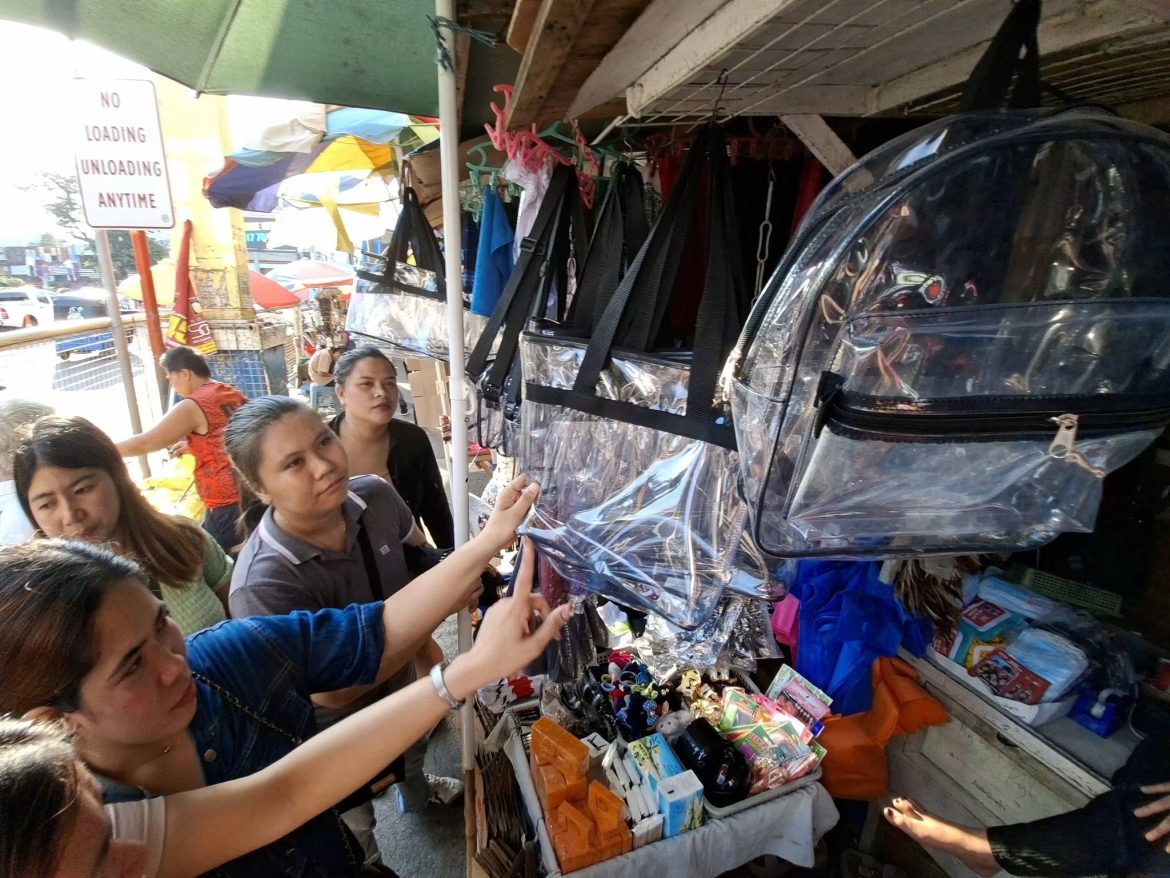
THE DEPARTMENT of Education (DepEd) Schools Division of Davao City urged parents and guardians to buy transparent school bags for their children as a preventive security measure but stressed that the policy is not mandatory.
Reynante Solitario, Davao City Schools Division superintendent, told TIMES that this is part of their continuing efforts to strengthen the safety of learners.
“We have been actively encouraging parents and guardians to provide transparent bags for their children,” Solitario said in a Messenger interview on Thursday.
The official is also seeking the understanding and cooperation of the parents and guardians.
Division Memorandum SGOD-2026-496 dated Sept. 16 cited “recent incidents of violence involving schools and learners in different parts of the country” and stressed the importance of protecting the safety, security, and welfare of learners in the Davao Region.
The memorandum, which follows Regional Memorandum ESSD-2026-287 on the same subject, says parents and guardians are encouraged to consider clear bags “where practicable” and according to their own capacity and preference.
But DepEd said the use of clear bags “shall not be construed as a mandatory requirement or an obligation.” School heads were urged to communicate this appropriately and avoid imposing any financial burden on learners and their families.
On Sept. 18, another shooting took place in a Grade 9 classroom at Banga National High School in South Cotabato, claiming the lives of three students, including the shooter, and wounding six others.
It was the third deadly school shooting in the country since June, following incidents in Tacloban and Zamboanga.
The suspect used a firearm owned by his father, an employee of DepEd XI, who has since been dismissed.
After the Aug. 18 shooting at Ateneo de Zamboanga University, some private schools in Davao City began requiring transparent bags, and police welcomed the move as a way to speed up entrance inspections.
DepEd XI said private schools may adopt the measure, but the government must also weigh the economic side.
For Davao City, Solitario said the division is coordinating closely with the Public Safety and Security Office.
“Our school heads are being reminded to coordinate with the PSSO and other security partners, particularly on security protocols, monitoring, and the implementation of measures appropriate to each school’s situation,” he stressed.
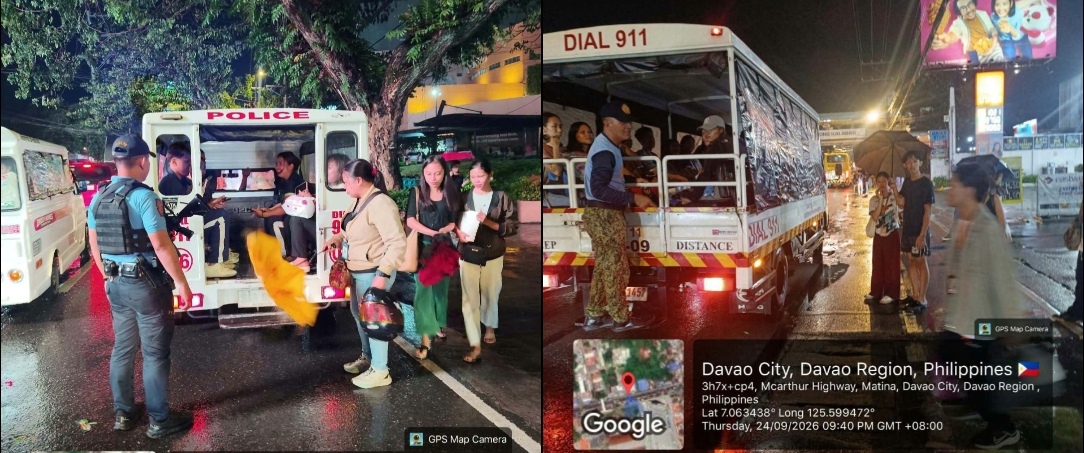
AS SUDDEN rain left countless commuters stranded during the late-afternoon rush hour on Thursday, Sept. 24, the Davao City Police Office (DCPO) mobilized all 19 stations to provide free rides.
The swift mobilization harnessed patrol vehicles and personnel from police stations 1 through 20, alongside the 1st and 2nd City Mobile Force Companies, Mobile Patrol Unit, Traffic Enforcement Unit, and the Tourist Police Unit, to help stranded workers, students, and residents.
The “Libreng Sakay” initiative targeted heavily congested loading zones where commuters struggled to secure transportation home.
By utilizing tactical and patrol assets for humanitarian transport, the DCPO reinforced its mandate to safeguard the community during emergency situations.
Authorities announced that the command will continue monitoring weather disturbances and key transportation bottlenecks across Davao City, maintaining a state of readiness to roll out emergency free rides whenever severe weather strikes.
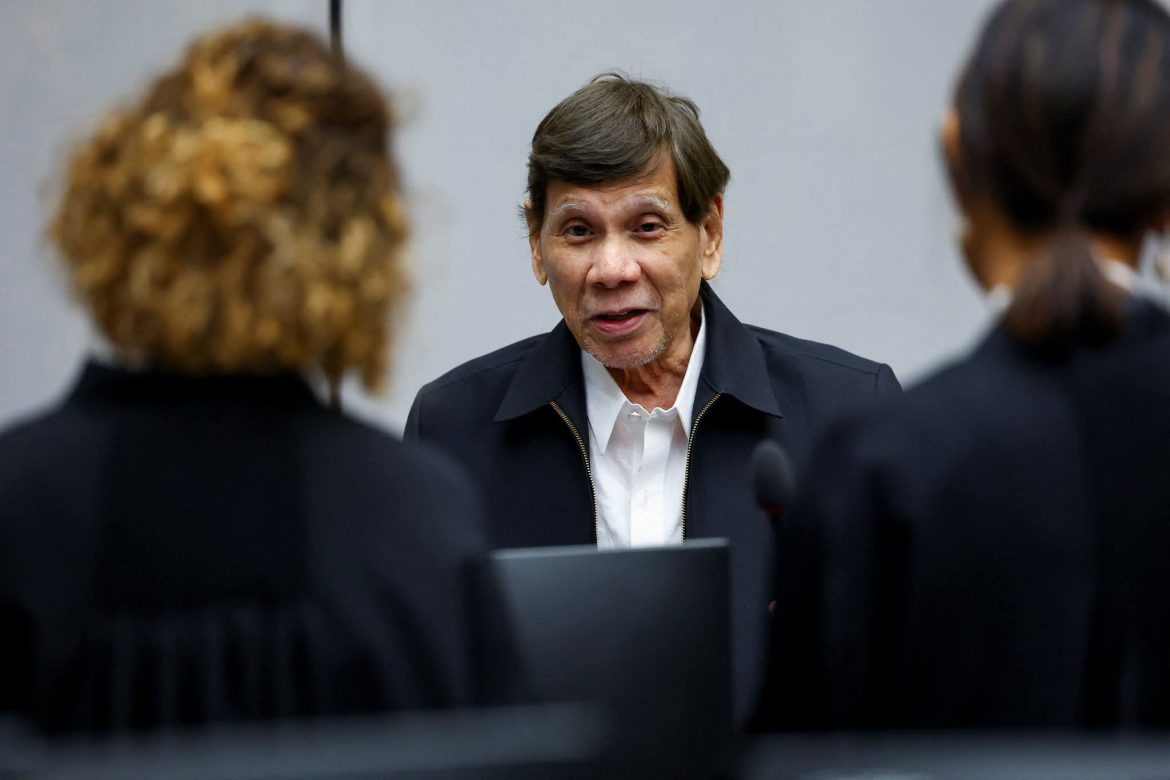
THE INTERNATIONAL Criminal Court (ICC) prosecution team has formally asked the Trial Chamber III to reject the defense’s ongoing challenge against eight disputed incidents, numbered 50 through 57, in the proceedings against former President Rodrigo Duterte.
According to the prosecution, the contested incidents fall comfortably within the scope of the charges already greenlit by the Pre-Trial Chamber.
The prosecutors maintained that introducing these specific incidents is simply a matter of fulfilling disclosure obligations—giving the defense proper notice of the evidence slated for presentation at trial—rather than altering the underlying charges.
Furthermore, the prosecution asserted that the notice was successfully delivered ahead of the Chamber’s Aug. 31, 2026, deadline.
Meanwhile, the defense disputed that legal boundary, adding that the eight disputed items introduced entirely new victims, specific dates, locations, or alleged perpetrators who were never part of the original incidents tabled during the confirmation stage.
Legal analysts note that simply meeting a disclosure deadline does not automatically resolve whether these incoming details fundamentally alter the material facts of the case that the Defense is required to answer, making individual judicial scrutiny critical.
The friction between both sides is sharply illustrated by the debate surrounding Incident 57.
The defense argued that the event falls completely outside the relevant charged time frame.
In response, the prosecution countered that the confirmed legal wording explicitly specifies “around July 2017” and should not be boxed in by a rigid calendar cutoff. Whether that phrasing legally extends to cover Incident 57 remains a question for the bench, as the prosecution’s interpretation carried no formal ruling weight on its own.
With the prosecution urging the Chamber to dismiss the defense motion outright, the formal legal scope and admissibility of the eight incidents remain heavily contested pending a definitive decision from the judges.

POLICE Regional Office (PRO) XI welcomes its new acting commander, PBGEN Benigno L. Guzman, succeeding PBGEN Leon Victor Rosete, effective Sept. 25.
PRO XI spokesperson MAJ Catherine Dela Rey confirmed the leadership transition to the TIMES on Thursday evening, Sept. 24, adding that the formal change of command ceremony took place at Camp Crame on Sept. 25.
Following the reshuffle, Rosete will be reassigned to the Directorate for Information and Communication Technology Management, taking over the post from PBGEN Erickson D. Dilag, who has been reassigned to the Philippine National Police Academy.
Prior to his assignment in the Davao Region, Guzman served under the Police Security and Protection Group (PSPG), where he will be succeeded by PCOL Ranie P. Hachuela.
Addressing inquiries regarding the sudden shift in regional leadership, Dela Rey clarified that the movement is part of standard administrative rotations within the organization, describing it as “regular assignment and reassignment only.”
PRO XI partners with financial institutions
Meanwhile, the PRO XI partnered with banking and financial institutions to tighten preventive measures, boost visibility, and establish security protocols.
Emphasizing the core philosophy of “Secure Institutions, secure communities,” the regional police force highlighted that locking down commercial and financial perimeters is vital to maintaining overall public order and regional economic stability.
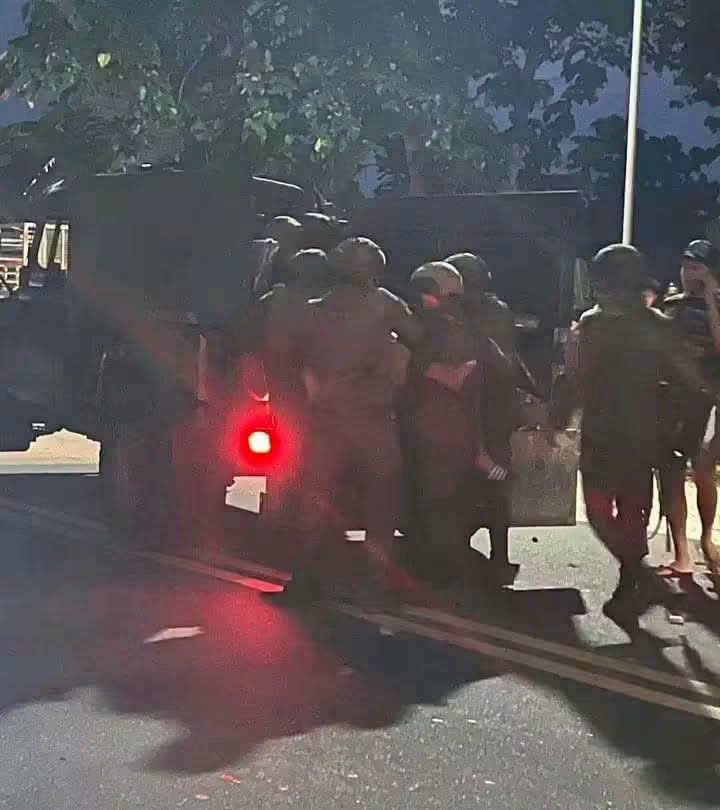
THE 6TH Infantry Division and Joint Task Force Central (JTFC) condemned the shooting incident that claimed the lives of two soldiers on Sept. 23, 2026, in Sultan Kudarat, Maguindanao del Norte.
The victims, both members of the 7th Infantry (Tapat) Battalion, were gunned down in what the military leadership denounced as “an unacceptable and cowardly act of violence.”
In an official statement released by the command, 6ID/JTFC acting commander BGEN Ricky P. Bunayog expressed profound grief over the loss of the two dedicated soldiers who faithfully served the Filipino people, extending deepest condolences to their bereaved families, loved ones, and comrades-in-arms.
Military authorities are calling on the public to remain vigilant and cooperate with law enforcement.
The command urged citizens with relevant information to come forward and assist the proper authorities in identifying the perpetrators, ensuring they are hunted down and brought before a court of justice.

THE DAVAO City Housing Office (DCHO) has warned residents against transacting with unauthorized individuals claiming to process applications for the BALAI Calinan Housing Project.
In an advisory released Thursday, Sept. 24, the city government clarified that the program requires no membership or application fee.
“BALAI Calinan Housing Project in Barangay Talomo River, Calinan District, is a public rental transitory socialized housing project for underprivileged and homeless Dabawenyos,” the city government stressed.
DCHO reminded the public to coordinate only with the office directly. Those interested in applying can proceed to the DCHO office on the 2nd floor, Dakudao & Sons Building, No. 3 San Pedro Street corner Anda Street, Barangay 2-A, Poblacion District.
“An Affidavit of No Landholding and a Certificate of No Landholding from the City Assessor’s Office shall be required as initial document requirements,” it said.
Residents are told to report suspicious transactions through the DCHO or the City Government’s official channels, including its Facebook and Twitter accounts (@davaocitygov), website (davaocity.gov.ph), or hotline 241-1000.
The BALAI Calinan Housing Project, which broke ground on Aug. 11, 2026, aims to provide around 630 socialized housing units to be implemented under the City Government’s Public Rental Transitory Housing Scheme.
BRIA Homes Inc. donated approximately 121,378 square meters of land, which the project will cover, as part of its socialized housing compliance.
The City Planning and Development Office (CPDO) reported that around 40% of households in Davao City, or approximately 195,000 families, currently do not own both their home and lot, pointing to a growing demand for socialized housing.
Based on the 2024–2025 Community-Based Monitoring System (CBMS) census, Davao City currently has about 485,000 total households.
While 60% (around 290,000 households) enjoy secured tenure, owning both their house and lot, the remaining 40% either rent, own only the structure, or reside in informal arrangements without property titles.
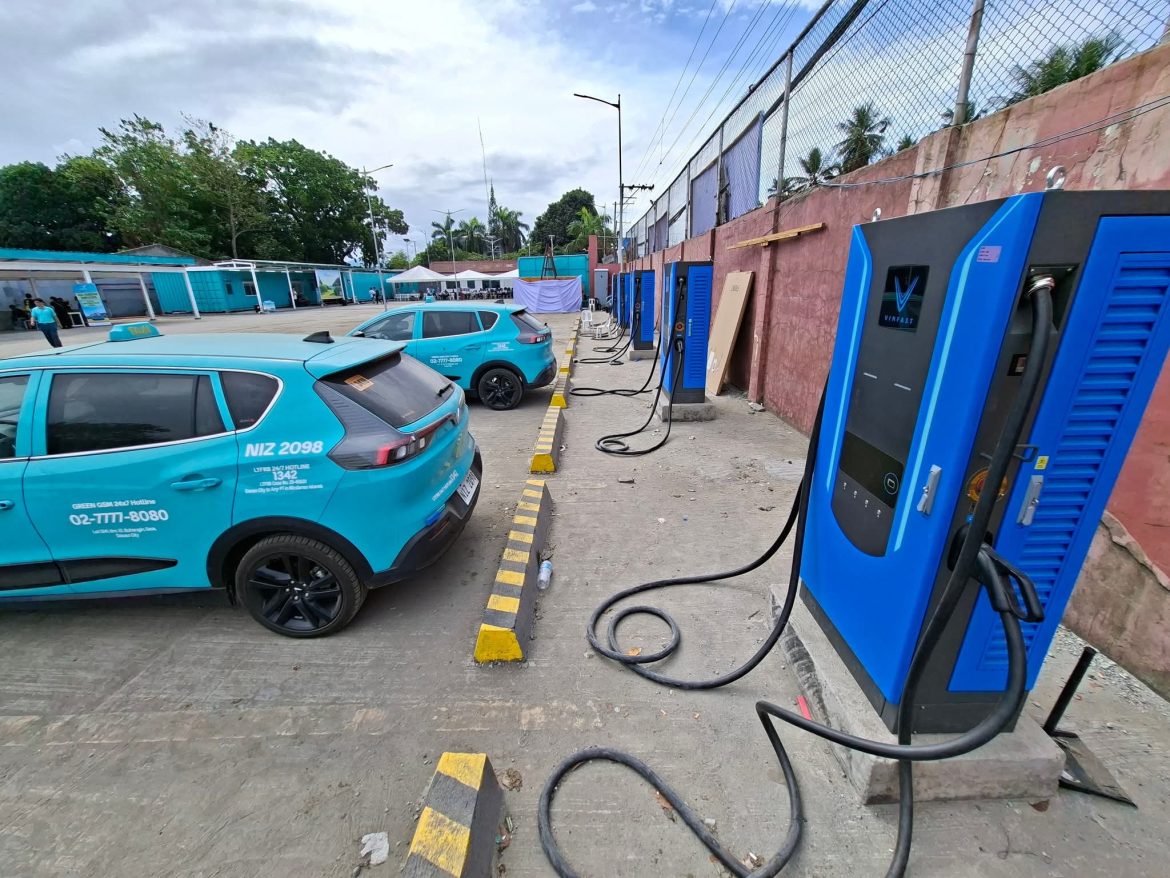
THE DEPARTMENT of Energy (DOE) Mindanao Field Office said electric vehicle charging stations (EVCS) across Davao Region should expand to meet the demand of an increasing number of users.
Eric George Uy, DOE Mindanao Energy Utilization Management Division OIC-chief, said there are only 16 registered charging stations across the region.
Of the number, Davao City accounts for 14 of the registered charging stations, while Tagum City and Digos City each have one. Uy said plans are underway to expand the network through new government guidelines targeted for release in the coming months.
“With regard to further the acceleration adoption of electric vehicles. So, currently, the department has issued and has been developing several additional guidelines for the expansion of the charging infrastructure,” Uy said during Habi at Kape on Wednesday.
He added the agency is finalizing two key policy measures to accelerate the rollout of charging infrastructure.
The first is a set of guidelines mandating the installation of EV charging stations in identified public and private buildings.
“The draft department circular is being updated following the changes to the proposed provisions,” Uy said.
He added that a public consultation is targeted for the first week of October 2026.
The second measure is a streamlined permitting process for EVCS installation and operation, to be issued through a Joint Memorandum Circular involving the DOE, the Department of the Interior and Local Government (DILG), the Department of Public Works and Highways (DPWH), and the Anti-Red Tape Authority (ARTA).
Uy said the DOE is currently awaiting comments and concurrence from the DPWH on the draft circular.
He reminded that applications related to EVCS recognition, including for operators and service providers, are processed online through the agency’s platform, evindustry.ph, which also shows the locations of registered charging stations nationwide.
On EV adoption, the DOE cited a sharp increase in registered electric vehicles nationwide, based on data from the Department of Transportation.
From a baseline of 24,000 registered EVs in 2024, the number rose to more than 60,000 by 2025. DOE is projecting around 100,000 registered EVs by the end of 2026.
Uy highlighted the cost advantage of electric vehicles contributing to the shift.
Citing DOE estimates, running a conventional internal combustion engine (ICE) vehicle costs around ₱5 per kilometer, compared to ₱3.50 for hybrid or plug-in hybrid vehicles, and ₱1.71 per kilometer for battery electric vehicles.
The DOE said distribution utilities are now required to factor electricity demand forecasts from the EV industry into their respective distribution development plans, under a department circular covering all distribution utilities nationwide.
Asked about the ideal number of charging stations per city or municipality, the DOE representative said this would depend on local conditions and current EV demand in each area.
The DOE said electric mobility forms part of the country’s broader energy security strategy, aimed at reducing dependence on imported petroleum products, offering a modern transport alternative, and supporting cleaner, more energy-efficient technologies.
But he added that this transition must be paired with adequate and accessible charging infrastructure, alongside continued investment in power generation, particularly renewable energy transmission capacity, and energy efficiency measures across sectors.
