



THE DEPARTMENT of Education (DepEd) has activated emergency interventions and its long-term school resilience program following the 7.8 magnitude earthquake that struck Sarangani on June 8.
DepEd reported that the quake left damage to education infrastructure, now documented across five regions and 39 divisions.
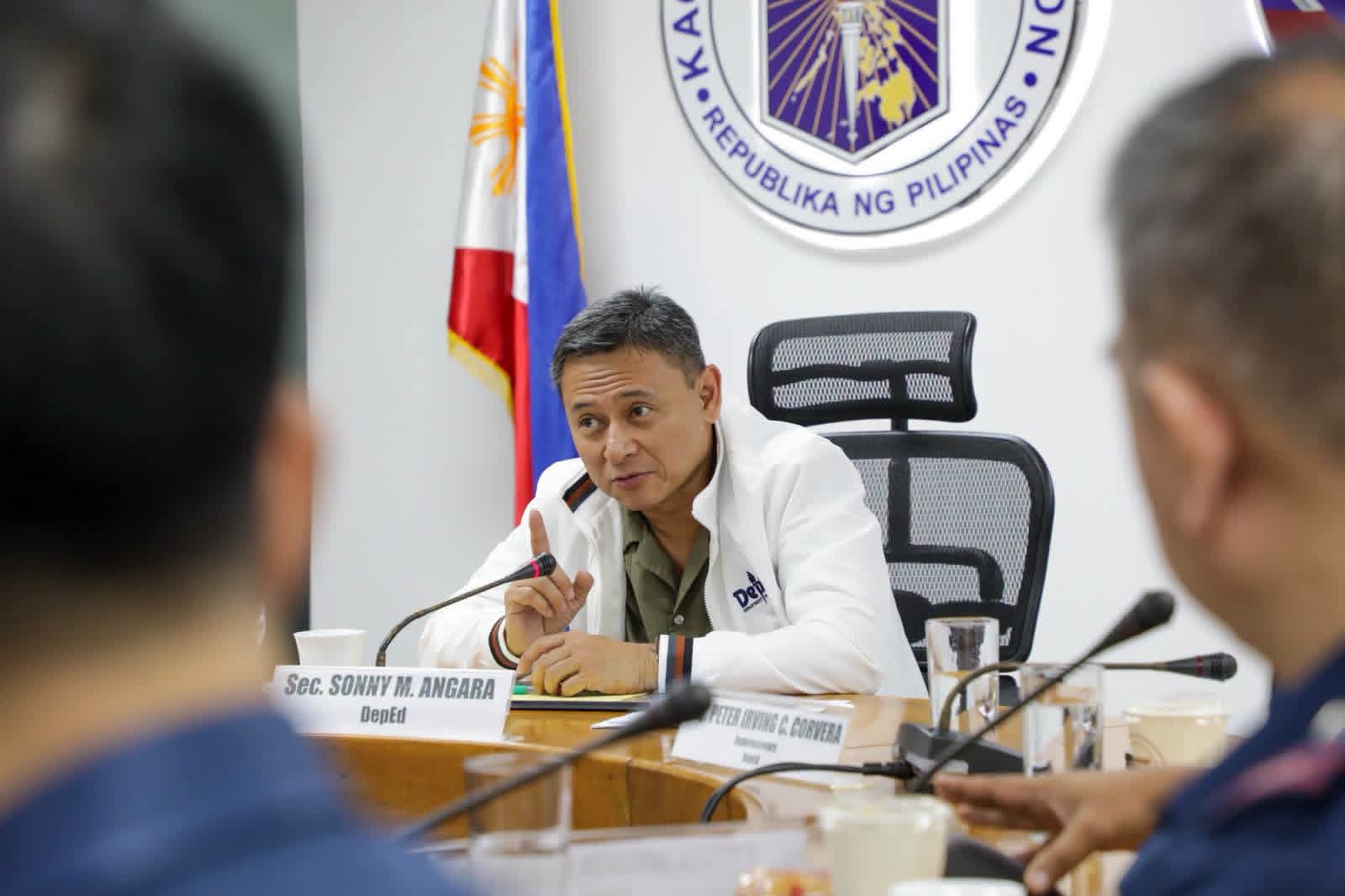
Education Secretary Sonny Angara released a directive to prioritize schools affected by the quake under the Infrastructure for Safer and Resilient Schools Project (ISRS) with interventions ranging from repair and retrofitting to full reconstruction of school facilities.
The ISRS Program, developed with support from the World Bank and approved by the NEDA Board in 2024, uses a risk-based approach combining structural engineering evaluations and scientific hazard assessments, covering approximately 1,282 public schools nationwide, outside the National Capital Region, identified as vulnerable to earthquakes and other natural hazards.
Based on data from the Incident Management and Reporting System as of June 24, 2026, the disaster has affected 1,676 schools, 266,001 learners, and 11,557 teaching and non-teaching personnel.
The earthquake caused severe infrastructure damage, triggering prolonged class suspensions in the hardest-hit areas, including General Santos City, South Cotabato, and Sarangani.
The agency’s preliminary damage assessments show that 2,631 classrooms were totally destroyed, requiring an estimated PHP 9.21 billion for repair and replacement.
Meanwhile, another 2,945 classrooms need major structural repair at an estimated cost of P3.54 billion, while 6,917 classrooms with minor damage will require P338.9 million.
Non-structural losses include 21,761 chairs; 3,987 IT equipment units; 418 WASH facilities, and 17,604 learning materials.
According to preliminary assessments, 2,489 schools were earthquake-affected, of which 241 are already within the priority ISRS program portfolio.
Meanwhile, the remaining 2,248 affected schools outside the current ISRS are being evaluated for possible funding under the Quick Response Fund, Basic Education Facilities Fund, and other disaster recovery frameworks.
“The safety of our learners and school personnel remains our highest priority. While we provide immediate assistance through alternative learning setups and temporary spaces, we are fully committed to investing in long-term, resilient infrastructure that ensures every Filipino learner has access to a safe and secure learning environment,” Angara said.
To note, DepEd has rolled out psychosocial and instructional recovery measures in affected schools and communities to address learning loss and the psychological impact.
Psychosocial response interventions have reached 216,841 learners, 10,166 personnel, and 2,794 parents across 398 schools.
Meanwhile, the agency also implemented extended class hours, make-up classes, and the Dynamic Learning Program, alongside a temporary shift to distance learning modes in areas where in-person classes remain suspended.
For schools with totally destroyed facilities, DepEd is fast-tracking the emergency procurement of Learning Continuity Spaces, including prefabricated and modular foldable classrooms.
DepEd and the Department of Public Works and Highways have established the DepEd–DPWH Joint Special Task Force on the Assessment of School Buildings Affected by Disasters, Emergencies, and Other Hazards to conduct structural inspections, validate technical recommendations, and expedite fund releases for repairs.
The agency stressed it will advocate for climate-resilient school building designs and enhanced minimum performance standards for all new classroom construction.

