
BY ALEX ALAGON

BY ALEX ALAGON
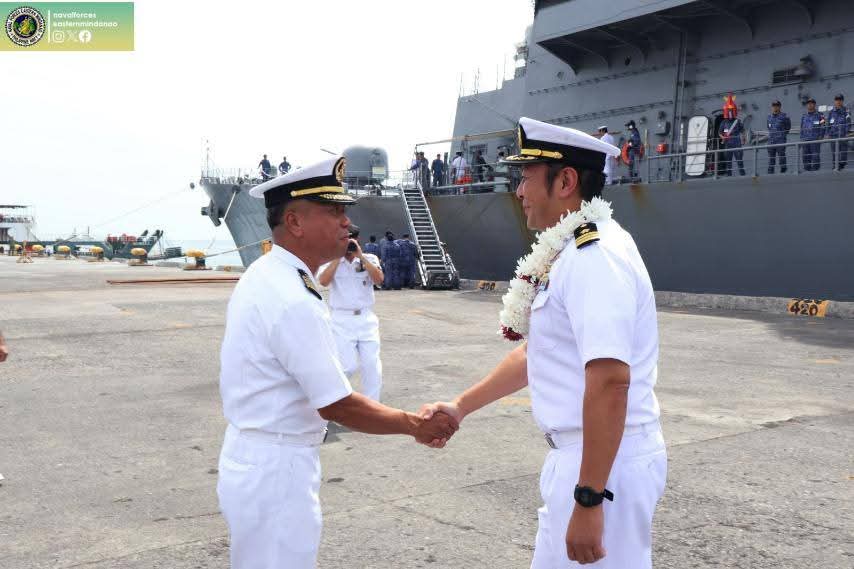
THE NAVAL Forces Eastern Mindanao (NFEM) formally welcomed a Japan Maritime Self-Defense Force (JMSDF) Murasame-class destroyer at Sasa Port here on Saturday, May 30, marking another key engagement in naval diplomacy between the two partner nations.
The visiting vessel, JS Ikazuchi (DD-107), arrived in the city as part of Japan’s ongoing Indo-Pacific Deployment (IPD) mission. The port call in Davao City would be three days.
According to NFEM commander, Commodore Ireneo D. Battung, the routine port call serves a dual purpose: reinforcing maritime goodwill while allowing the Japanese warship to undergo crucial refueling and replenishment of supplies before proceeding to its next operational engagements.
NFEM officials emphasized that the arrival of the JS Ikazuchi highlights a mutual defense posture aimed at safeguarding regional waters.
“The activity underscored the shared commitment of the Philippine Navy and the Japan Maritime Self-Defense Force in promoting regional stability, maritime security, and cooperative presence within the Indo-Pacific area,” the NFEM Public Affairs Office said.
Local naval authorities added that the port call continues to reinforce longstanding bilateral relations between Manila and Tokyo, showcasing the role of naval diplomacy in fostering professional exchanges and technical interoperability between the two partner fleets.
The port call comes on the heels of increasing maritime security cooperation between the Philippines and Japan, as both democratic nations navigate complex security dynamics in the defense sector.
Commissioned in March 2001, the JS Ikazuchi is classified as a Murasame-class destroyer, the seventh ship in the fleet of the Japan Maritime Self-Defense Force. Its homeport is in Yokosuka, Kanagawa, Japan.
The JS Ikazuchi is expected to depart Davao City once its logistics replenishment is completed to continue its deployment across the Indo-Pacific corridor.
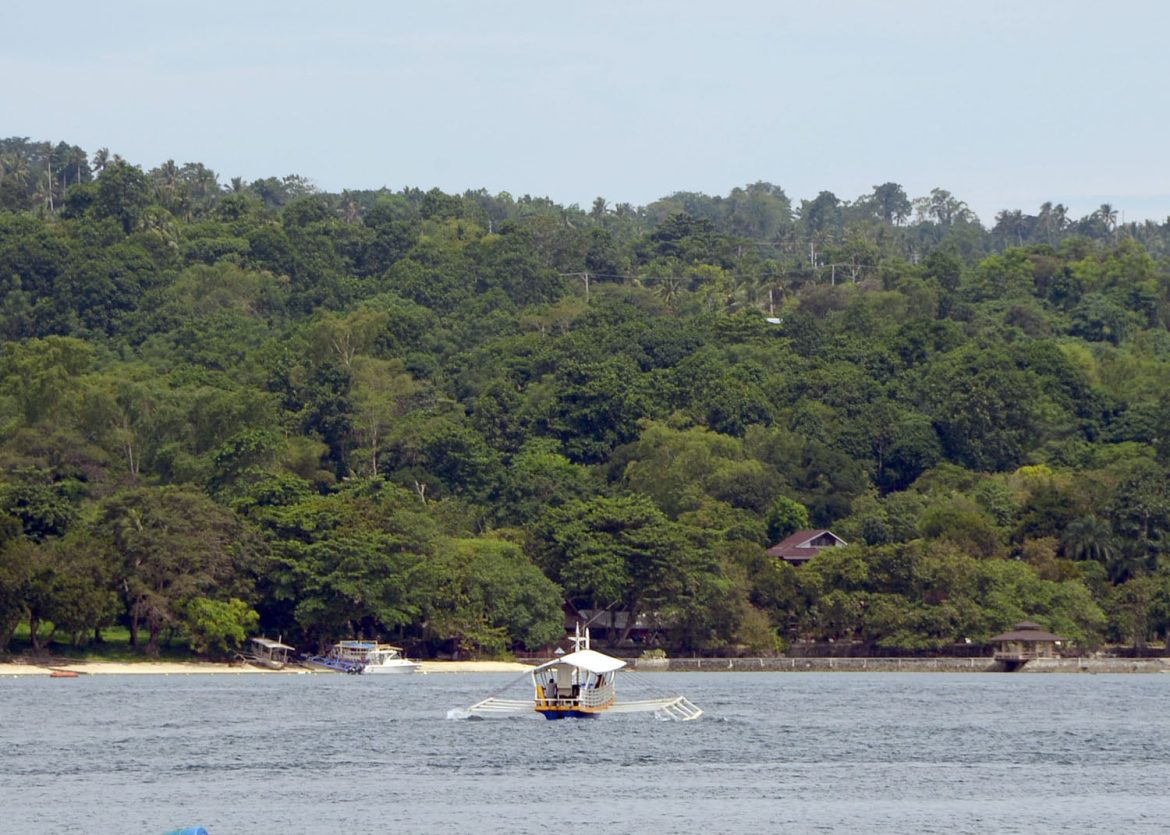
DAVAO LIGHT and Power Company Inc. (DLPC) will continue to expand its electrical services in the remaining 20 barangays in the Island Garden City of Samal (IGACOS) after the implementation of the Supplemental Writ of Possession by the Sheriff of the Regional Trial Court (RTC) Branch 4, Panabo City, on May 28, 2026.
DLPC officially took over distribution assets covering all barangays following the power distribution operations on Feb 25, 2026, and will commence the full range of services such as system operations and maintenance, customer service, billing, and collection on the island.
The court order covers 16 Samal barangays and four barangays in Talicud Island. These are Adecor, Anonang, Aumbay, Aundanao, Bandera, Cogon (Talicud), Dadatan, Kanaan, Libertad, Licup, Linosutan, Pangubatan (Talicud I), Peñaplata (Poblacion), Poblacion (Kaputian), San Isidro (Kaputian), San Remigio, Santa Cruz (Talicud II), Sion (Zion), Tagbaobo, and Tagbitan-ag.
In a statement released by DLPC, they reaffirmed their focus on delivering safe, reliable, and dependable electricity service to the communities in Samal as well as Davao del Norte to address concerns such as power interruptions in affected areas.
The company also ensures that mandates from the court will be carried out peacefully. Samal’s transition of electricity services is part of the implementation of Republic Act No. 12144, granting DLPC the right to expand franchises in the provinces of Davao del Norte and Davao de Oro.
With the recent launch of DLPC’s 1.25-kilometer submarine cable project, IGaCoS will be connected to the Davao City mainland grid, meeting its electricity demand via the 69-kilovolt cable with a rated capacity of 50 megawatts, which is higher than the island’s estimated peak of 12 megawatts.
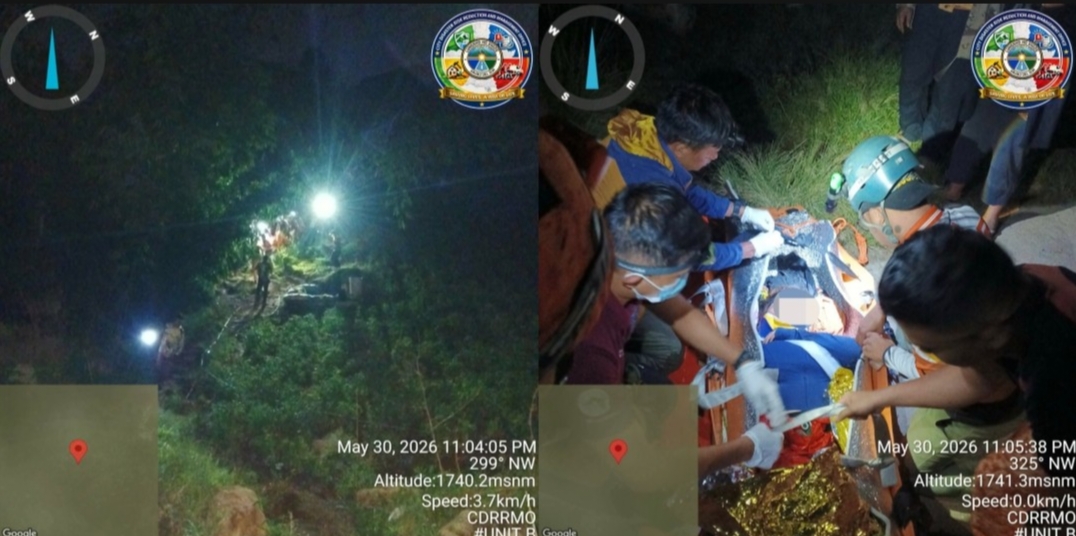
A 37-YEAR-OLD tourist from Metro Manila survived a harrowing 30-meter fall near the summit of Mt. Apo after being swept off a boulder by strong winds on May 30, triggering a midnight cross-boundary rescue operation by local disaster units.
The victim, identified to TIMES by Digos City Disaster Risk and Reduction Management, as alias Glai, was declared in stable condition after being rushed to the Digos Doctors Hospital at around 12:45 a.m. on Sunday, May 31.
According to an operational update from the Digos City Disaster Risk Reduction and Management Office (CDRRMO), the incident occurred on Saturday morning at the landmark “White Sand” area of the country’s highest peak.
Personnel from the Department of Environment and Natural Resources (DENR) station in Kapatagan first alerted emergency responders about the accident at around 9 a.m.
Initial reports stated that alias Glai was standing on top of a rock formation when a sudden, powerful gust of wind caused her to lose her footing and stumble into an estimated 30-meter drop.
Because the victim was a registered tourist of Sta. Cruz, Davao del Sur, Digos City Mayor Josef F. Cagas, and the CDRRMO coordinated with the Municipal DRRMO of Sta. Cruz to expedite the extraction.
To ensure the fastest possible medical evacuation, Sta. Cruz mountain guides intentionally diverted the rescue party through the Digos trail, which offered an easier and more direct path down the mountain.
A joint team consisting of the Digos CDRRMO and the Bureau of Fire Protection Special Rescue Force climbed the trail to intercept the mountain guides and retrieve the injured climber.
Mountaineering authorities have repeatedly cautioned trekkers regarding unpredictable weather shifts and high-velocity winds near the Mt. Apo summit, especially during sudden weather transitions.
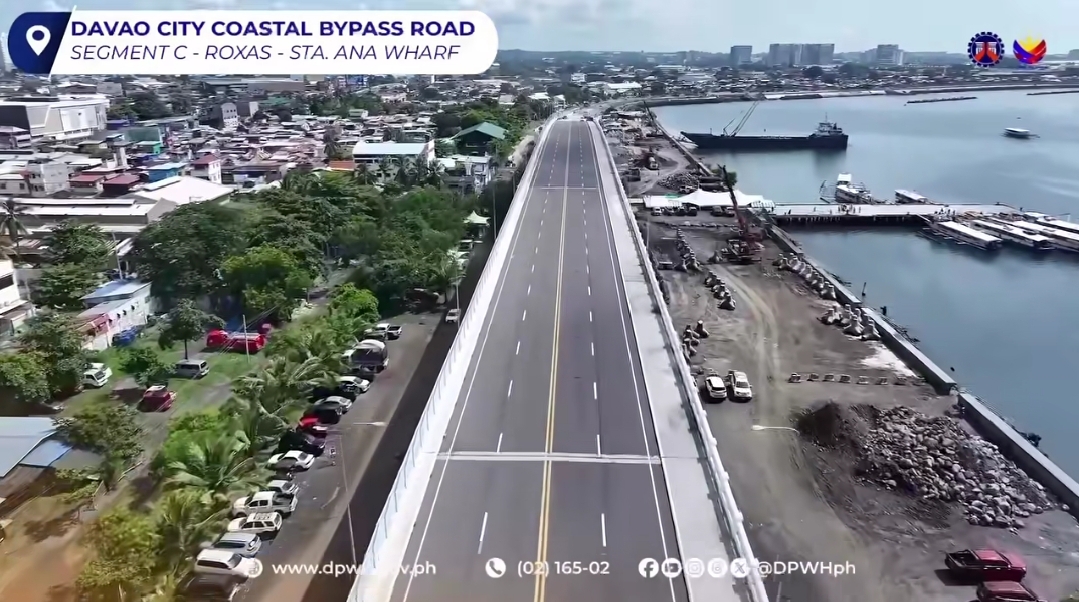
ANOTHER segment of the 17.8-kilometer Davao City Coastal Road is expected to be opened by the Department of Public Works and Highways (DPWH) XI this June.
The opening completes Segment C (Roxas to Sta. Ana Wharf), covering 1.75 kilometers, while the remaining Segment D–Sta. Ana to Jerome, R. Castillo–spans 3.57 kilometers.
The agency’s regional office revealed that it will cut travel time from Toril to Poblacion from 45 minutes to just 15 minutes.
The new segments will serve as an alternative route for motorists who contribute daily to heavy traffic congestion along the Davao-Cotabato Road.
“The opening follows repeated directives from President Ferdinand Marcos Jr. to accelerate the completion of bypass and access roads nationwide to strengthen road connectivity,” DPWH said in a statement.
The entire stretch of the Davao City Coastal Road traverses the coastal areas of Davao City from Barangay Bago Aplaya in Talomo District to Barangay Jerome, Agdao District.
This opening marks the third and fourth phases in the series of phased openings since construction began in 2017.
President Marcos inaugurated the project in July 2023 in Davao City, covering the 8.019-kilometer Segment A, which runs from Bago Aplaya to Tulip Drive, passing through the coastal lines of the Bago Aplaya–Times Beach Section in Talomo–Matina.
Meanwhile, Segment B of the project, which is from Tulip Drive to Roxas Avenue, spanning 4.435 kilometers, was opened to motorists on Dec. 19, 2025, after it was postponed twice due to safety concerns.
The newly opened segment covered the stretch from Times Beach Rotonda to the Roxas Exit. Segment B also includes the 1.34-kilometer Davao River (Bucana) Bridge.

A WALK around Chinatown, which will become a part of the city’s tourism circuits, will be piloted in this year’s Duaw Davao, which kicks off at Rizal Park on June 5.
Willenito Tormis, chief of the City Tourism Operations Office (CTOO), said the Chinatown walk will cover the entire stretch of Ramon Magsaysay Street, from Santa Ana to the Unity Arch, up to the Friendship Arch in front of Magsaysay Park.
“Hopefully, this Chinatown walk that we are doing now will also eventually become a circuit, as well as the art walk that we are doing,” Tormis said.
The Duaw Davao Walking Tour is scheduled on multiple dates: June 6, 13, and 27 for the Chinatown Walk.
The itinerary for the walking tour starts at Santa Ana Port, the jump-off point, to discuss the center of early trade, followed by the Unity Arch, the gateway to Chinatown.
Then the walking tour will go to Kianbee Trading, where the guide will discuss the textile industry, to be followed by the DCLA trip for a P100 shopping challenge.
The tour will also visit New Farmacia SuyHoo, a pharmacy selling Chinese herbs and medicines; next is Bohol Trading, for abaca and indigenous materials; then the RTW shopping, and food culture; followed by the NCCC Department Store, the old department store.
Participants will also drop by the Four Cafe, a coffee stop for coffee exporting; Davao Star Bakery, an old-timer bakery there for hopia and dice.
The tour will end at the Friendship Arch, followed by snacks at the Famous Davao restaurant or at Shanghai Restaurant.
“We haven’t called them circuits yet because right now, they are just walks that we are developing, and once we finalize the product, which is the circuit, that will be our way of selling it to different tour operators,” he stressed.
Tour guide operators in the city are invited to the walking tour for validation and to also be involved in the development of the circuit.
To note, CTOO, together with the Department of Tourism XI (DOT XI), introduced four new tourism circuits on March 6 in time for Araw ng Davao.
The circuits named “Abundant Harvest”, “Market Experience”, “Food Crawl”, and “Furusato Davao” with travel routes leading to the city’s agriculture, visitor experience at Bankerohan Public Market, homegrown establishments, and the shared connections with Japan before World War 2
Tormis said the circuits have performed well since their launch, citing the increased number of tourists availing “Abundant Harvest” and “Furusato Davao” tours, mostly students.
“Right now, we have many inquiries, and many have joined, and even Belviz and Gran Verde have informed us that their number of visitors is increasing because of our marketing from our new circuits,” he said.
For the Furusato tour, Tormis reported that different students, with some coming outside of the city, availed themselves of it.
Furusato Davao, a heritage tour to tell stories of the Japanese communities who came to Davao City.
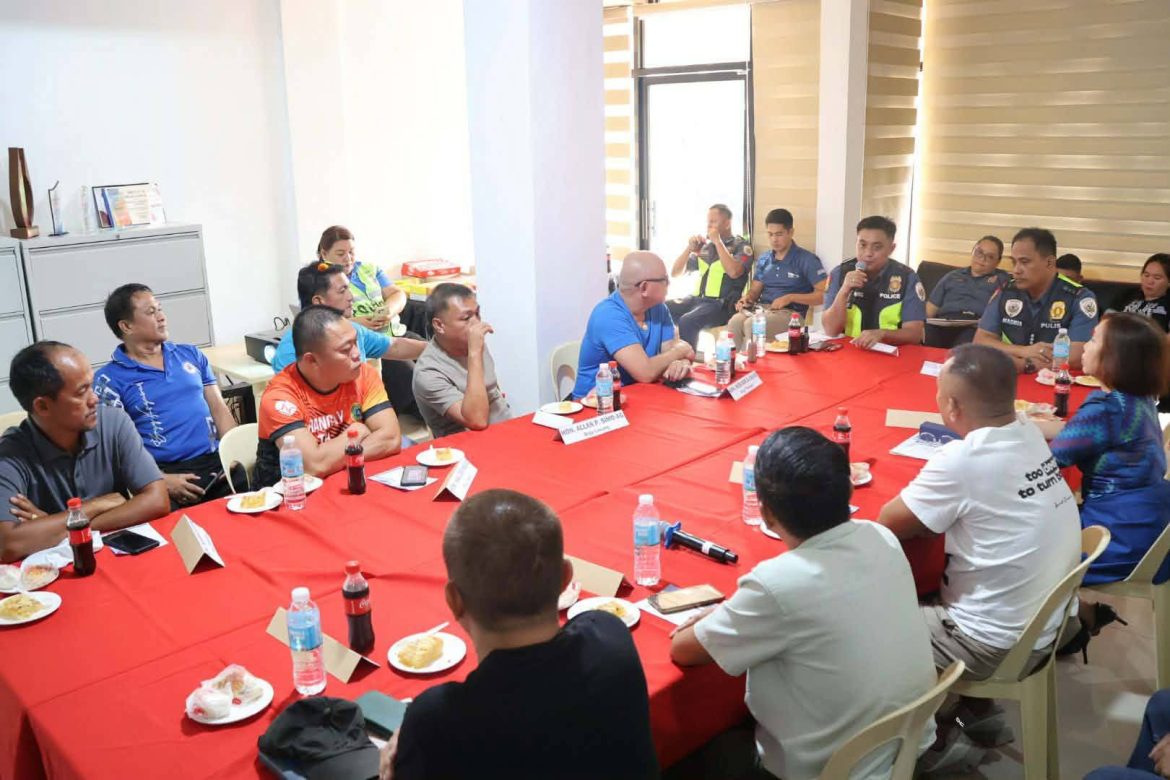
THE CHIEF of the Davao City Police Office (DCPO) led a comprehensive “Meet and Greet” dialogue with community officials in Bunawan District in a security summit held at the barangay function hall.
During the dialogue with Colonel Peter B. Madria, barangay officials complained about persistent illegal drug issues, violations of the curfew ordinance on minors, illegal parking, and a growing backlog of impounded vehicles.
Local leaders also raised alarm over a rising trend of fraudsters impersonating police officers to scam residents.
In response, Madria and the barangay leaders formalized a five-point collaborative strategy to counter these issues:
Madria underscored that top-down policing is insufficient without active community counterparting. He emphasized that timely coordination, proactive measures, and shared responsibility are foundational to making public safety initiatives felt at the grassroots level.
“Open communication and partnership with barangay leaders are essential in addressing community concerns,” Madria said.

ONE MOMENT we are celebrating the New Year, and before we know it, we are already nearing the middle of the year—a time when Filipinos know all too well as the onset of the rainy season. And when disasters strike, they expose not just vulnerabilities but the limits of short-term solutions.
Recent events have reminded us that real progress cannot come from abrupt changes or one-time fixes. Whether in public governance, community development, or corporate responsibility, meaningful transformation must be nurtured over time, strengthened through consistency, and sustained through shared commitment.
In the past months, the public has been vocal about controversies surrounding flood-control projects, damaged waterways, and development plans that appear to favor commercial interests over public welfare. But while issues like these continue to expose systemic challenges, Filipinos have a deeper sentiment in mind. They want institutions to take responsibility and contribute to long-term solutions instead of temporary fixes.
And yet amid these realities, the Philippines has always relied on one thing to pull itself forward, the concept of “bayanihan”. Long before corporate social responsibility (CSR), Filipinos practiced collective care and mutual support.
True nation-building, much like bayanihan, is not achieved overnight. And the Philippines path towards this lies in progress that evolves gradually and purposefully.
Strategic imperative of CSR in businesses
There was a time when CSR was viewed as a charitable side activity. Something that is good to have, but not essential.
Global trends show that CSR now plays a significant role in business success. In fact, research has shown that a competitive employer brand is increasingly linked to a company’s positive social impact. Paychex also reported that 57% of business leaders are realising that to attract and retain top talent, they need to contribute to building strong and livable communities and not just offer competitive salaries to have a sustainable talent pipeline, stronger consumer trust, and higher long-term profitability.
Gen Z and millennial workers in particular are pushing CSR to the forefront. Younger professionals want to work for organisations that represent their values, and they are willing to walk away from those that don’t.
Why CSR matters now more than ever
The social and business gains of CSR continually reinforce one another. The more companies engage in socially responsible initiatives, the more opportunities they unlock, such as enhanced brand reputation and customer loyalty, since most consumers prefer brands that align with their values; having greater employee attraction and retention as purpose-driven workplaces perform better, especially among those who value ethics and advocacy; and operational efficiency and innovation because sustainability inspires new business models and reduces long-term operational costs.
CSR in action through the spirit of P&Ause
At P&A Grant Thornton, we uphold the value of helping people within and beyond the Firm. Initiatives like P&A for a Cause (P&Ause) demonstrate how CSR can make corporate work meaningful, not only for beneficiaries, but for the volunteers who participate. These initiatives have been evident for the past year as we have reached 10 communities and projects with more than 6500 beneficiaries, involving donation drives from various typhoon victims, schools needing supplies, and other initiatives such as tree-planting, blood donation drives, senior citizen outreach, and Christmas donation drives for children in need.
Through programs that promote education, community development, and environmental responsibility, P&Ause embodies the belief that business success should coexist with social contribution.
While organisations cannot solve every nationwide challenge, every effort, whether sustainability, livelihood support, youth empowerment, or disaster response, creates ripples of change. And the more businesses join in, the stronger the impact becomes.
Sustaining progress through purposeful action
With the nation approaching yet another rainy season, we are reminded that true progress lies with long-term protection for communities. Infrastructure alone cannot keep communities safe; that is why it takes collective responsibility from Filipinos, the government, and our business organisations.
CSR alone cannot prevent floods. But CSR can help rebuild mangroves that protect coasts. It can support climate education, reforestation, sustainable housing, and community disaster preparedness. It can also empower livelihoods so that families do not lose everything each time a disaster strikes. CSR, when done right, reinforces the systems that keep communities safe, thriving, and resilient.
Real impact does not come from isolated efforts or short-term responses. Instead, they are built through sustained commitment—by continuing the good work that has already begun, deepening our commitments, and steadily shaping a future that is inclusive and compassionate. Because when businesses embrace a deeper sense of purpose, they help build a Philippines where progress is not swept away by every flood but protected by the collective will to uplift and stand for each other.
Maine Sanchez-Jimenez is a Manager for the Tax Advisory & Compliance Practice Area at P&A Grant Thornton. One of the leading audit, tax, advisory, and outsourcing firms in the Philippines, P&A Grant Thornton is composed of 29 Partners and 1,500 staff members. We’d like to hear from you! Connect with us on LinkedIn and like us on Facebook: P&A Grant Thornton and email your comments to business.development@ph.gt.com. For more information, visit our website: www.grantthornton.com.ph.