

BY ALEX ALAGON
BY ALEX ALAGON
The LTFRB XI, headed by Regional Director Nonito A. Llanos III, continues its campaign and encourage PUV beneficiaries to avail of the on-going P10-per-liter Fuel Subsidy Discount.
In line with the directives of President Ferdinand R. Marcos Jr. through DOTr Secretary Atty. Giovanni Z. Lopez and LTFRB Chairman Atty. Vigor D. Mendoza II, LTFRB XI encourages all 4,468 diesel-fueled Public Utility Jeepneys and UVEs (Vans) both Traditional and Modernized type in Region XI, to avail of the on-going P10-per-liter Fuel Subsidy Program of the DOTr, DOE and Landbank of the Philippines.
Qualified beneficiaries are Traditional or Modernized PUJs and UVEs who have confirmed or active franchise or CPC, PA or SP with the LTFRB XI.
Beneficiaries may avail of upto 30 liters per day or a total of P300 discount daily (Mondays- Fridays). Each week, a maximum of 150 liters of diesel per unit or P1,500 savings per PUV may be availed by beneficiaries at participating gasoline stations in Region XI.
LTFRB XI Regional Director Nonito A. Llanos III advises PUV Driver-beneficiaries to check out partner gasoline stations with Tarpaulin Signage of the Program. “It’s very easy to avail of the discount, you need only inform the gasoline station personnel of your PUV plate number. They will confirm that you are one of the beneficiaries through the Landbank App and they will automatically deduct P10 per liter from the total amount to be paid. You will also see through the App, your weekly consumption update. Para mahibaw-an ninyo kung pila pa ang discount nga inyong makuha for that current week”.
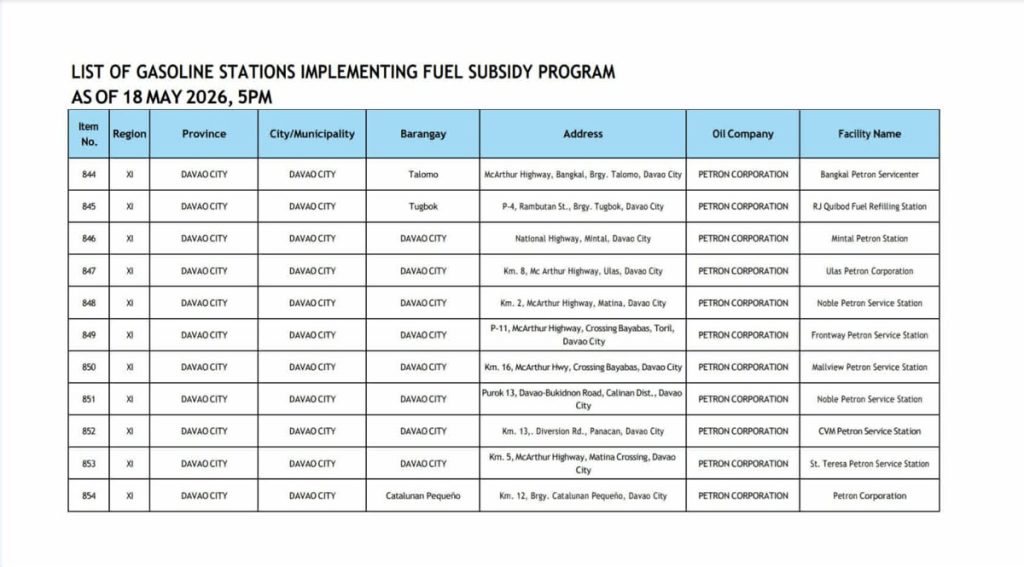
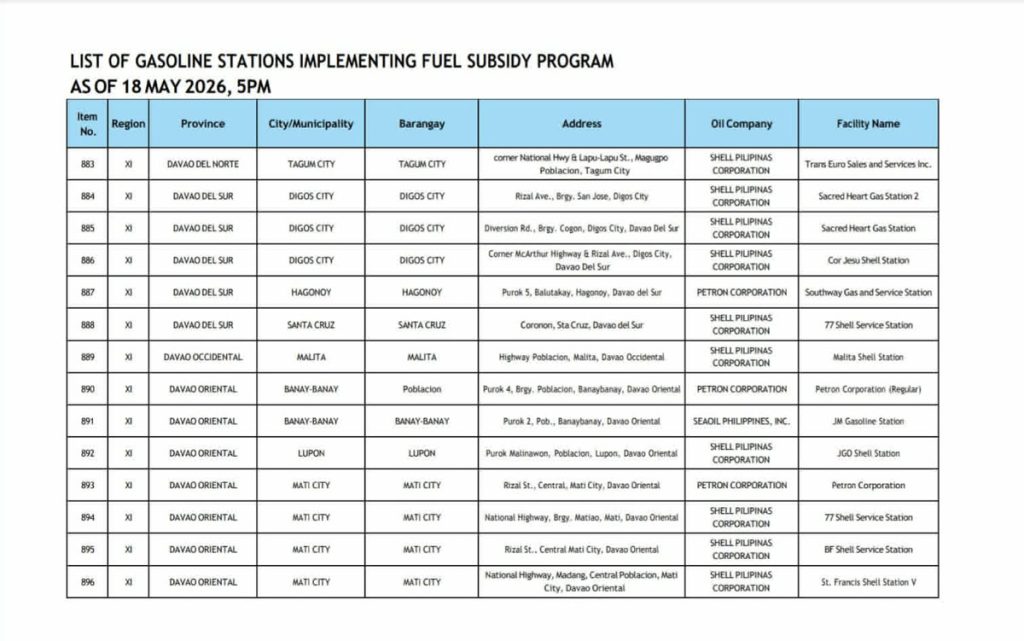
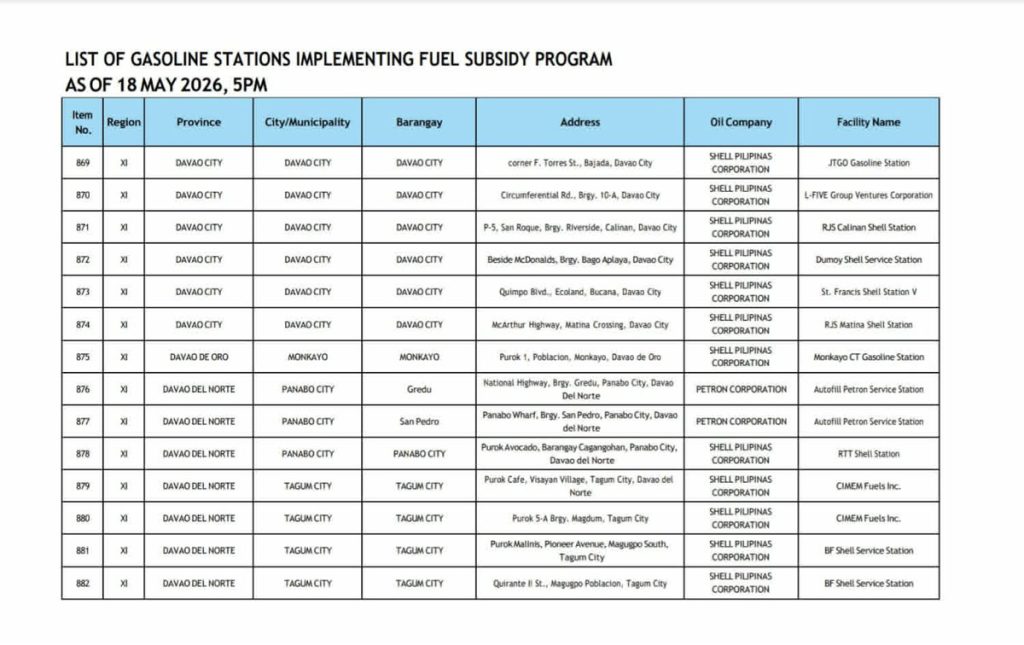
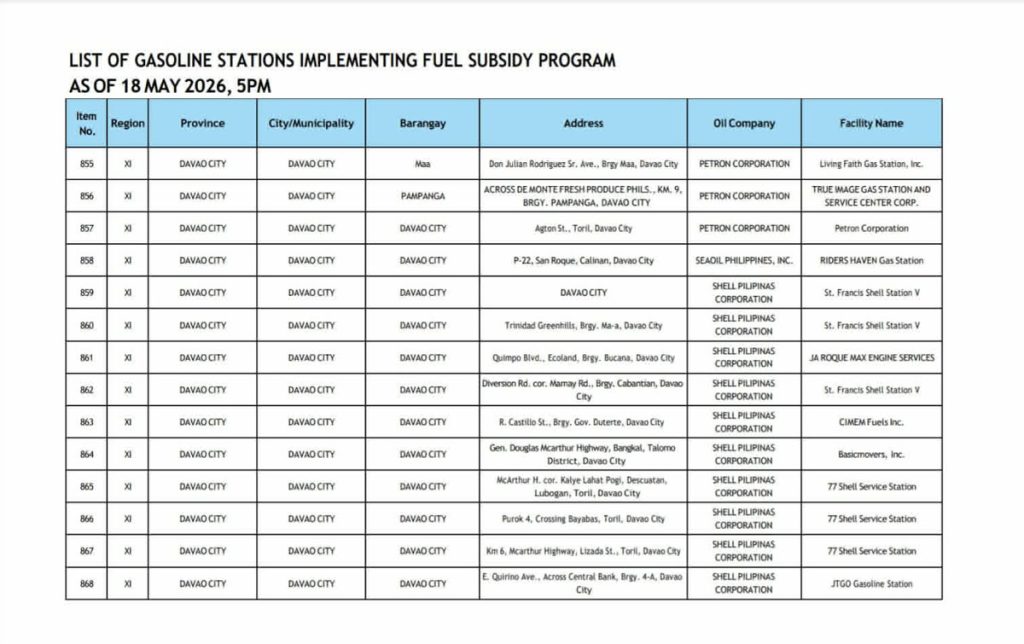
As of May 18, a total of 53 gasoline stations have participated in Region XI.
(Here’s the list of participating gasoline stations
https://drive.google.com/file/d/1THB2thxIibCE2YoDQarw2hOv_T8AWNSK/view?usp=sharing)
The Department of Energy Mindanao Field Office together with the Landbank of the Philippines are still actively enrolling gas stations to participate in the program. As of May 20, more than 100 additional gas station branches in Davao City have already have been given participating codes and about to be officially verified or onboarded. By the end of the month, more partner gas stations will be posted.
LTFRB XI Regional Director Llanos adds “Nanghinaot mi nga tanang benepisyaryo nga mga PUJ ug Vans makakuha sa discount base sa maximum amount. Usa kini sa mga lakang nga mahimong direktang makatabang sa mga labing apektado sa pagsaka sa presyo sa krudo.”

IN A move to reinforce his legal defense, the International Criminal Court (ICC) has approved the appointment of veteran international law expert Kate Gibson as associate counsel for former President Rodrigo Roa Duterte.
The ICC Registry—the administrative body of the court—formally notified Trial Chamber III of Gibson’s appointment on May 18, 2026.
The Australian defense lawyer will work directly alongside British attorney Peter Haynes KC, who took over as Duterte’s lead counsel on May 15 following the departure of British-Israeli lawyer Nicholas Kaufman.
An elite track record
Gibson’s entry into the case brings a wealth of specialized ICC experience to the defense roster.
Notably, she was a key member of the legal team that successfully secured an acquittal for former Congolese Vice President Jean-Pierre Bemba before the ICC—a landmark case in international criminal law.
According to official court documents, Gibson has formally confirmed to the Registry that she holds no conflicts of interest regarding the assignment, paving the way for her immediate integration into the team.Strengthening the defense
The addition of Gibson comes at a critical juncture for the 81-year-old former leader, who has been held at the ICC Detention Center in The Hague for over 14 months following his arrest in March 2025.
Duterte faces charges of crimes against humanity stemming from his administration’s controversial anti-illegal drugs campaign.
With the Trial Chamber III pushing forward into active proceedings, legal analysts note that securing a defense team of Haynes and Gibson signals a heavily fortified strategy by the Duterte camp.
The duo will be tasked with navigating the complex international litigation process as the court reviews the evidentiary foundations of the prosecution’s case.
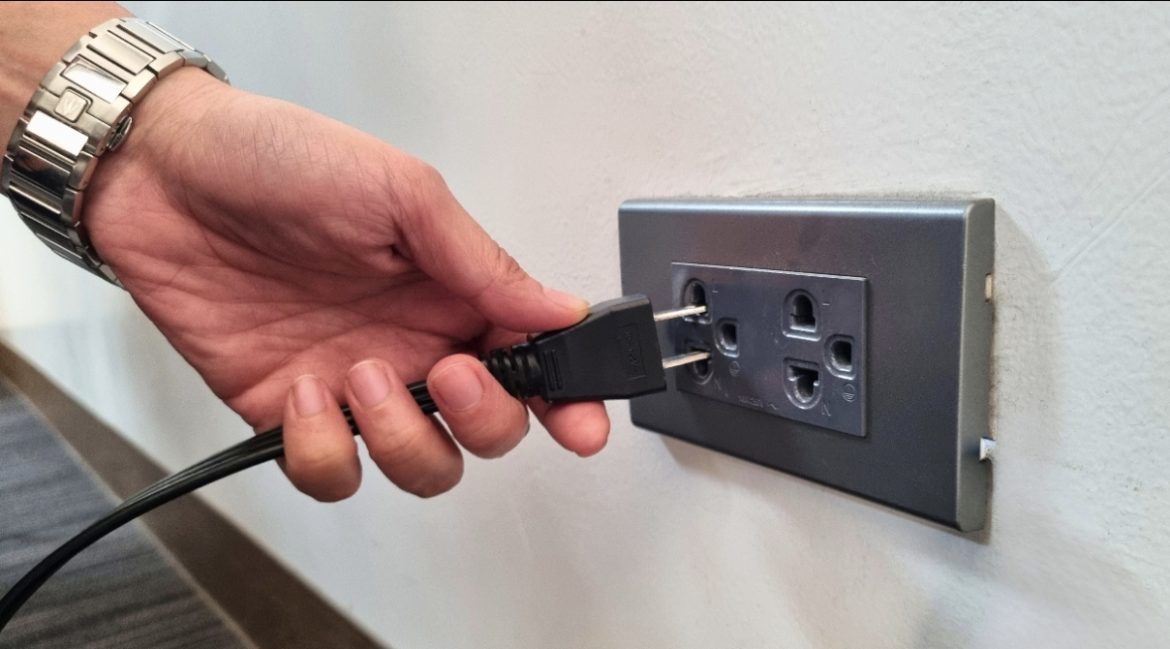
Davao Light and Power Co., Inc. (Davao Light) residential customers will see a drop in their electricity bills for the May 2026 billing, mainly due to a lower transmission charge.
The overall residential electricity rate decreased by P0.18 per kilowatt-hour (kWh), bringing the new rate to P10.35/kWh from last month’s P10.53/kWh.
This translates to savings of P35.94 for typical households consuming 200 kWh. The rate applies to bills received from May 12 to June 10.The adjustment is primarily due to lower transmission rates from the National Grid Corporation of the Philippines (NGCP).
Additionally, the Energy Regulatory Commission (ERC) has directed the temporary suspension of the P0.0371/kWh Green Energy Auction Allowance (GEA-All) collection for the May and June 2026 billing periods.
This is the second consecutive month in which the overall residential rate decreased, providing continued financial relief for households this warm and dry season.
Since market prices remain volatile, Davao Light reminds customers that rates change monthly and encourages continued energy-efficiency practices to manage electricity costs.
“The rate reduction comes at the perfect time,” said Fermin Edillon, Davao Light Reputation Enhancement Department head. “With the warm and dry season, electricity demand will be high as heat drives up the use of air-cooling appliances. Moreover, with school out, students are spending most of their time at home. While power consumption may go up, we encourage everyone to practice energy efficiency so families will not worry about high bills.”
Here are some practical tips to smartly manage power use in households:
More importantly, damaged wires are serious fire hazards that can compromise your family’s safety.
Davao Light customers may check the company’s official Facebook page, @DavaoLightOfficial, for more tips on energy efficiency and electrical safety.
Meanwhile, for a full breakdown of monthly rates, customers may check www.davaolight.com.
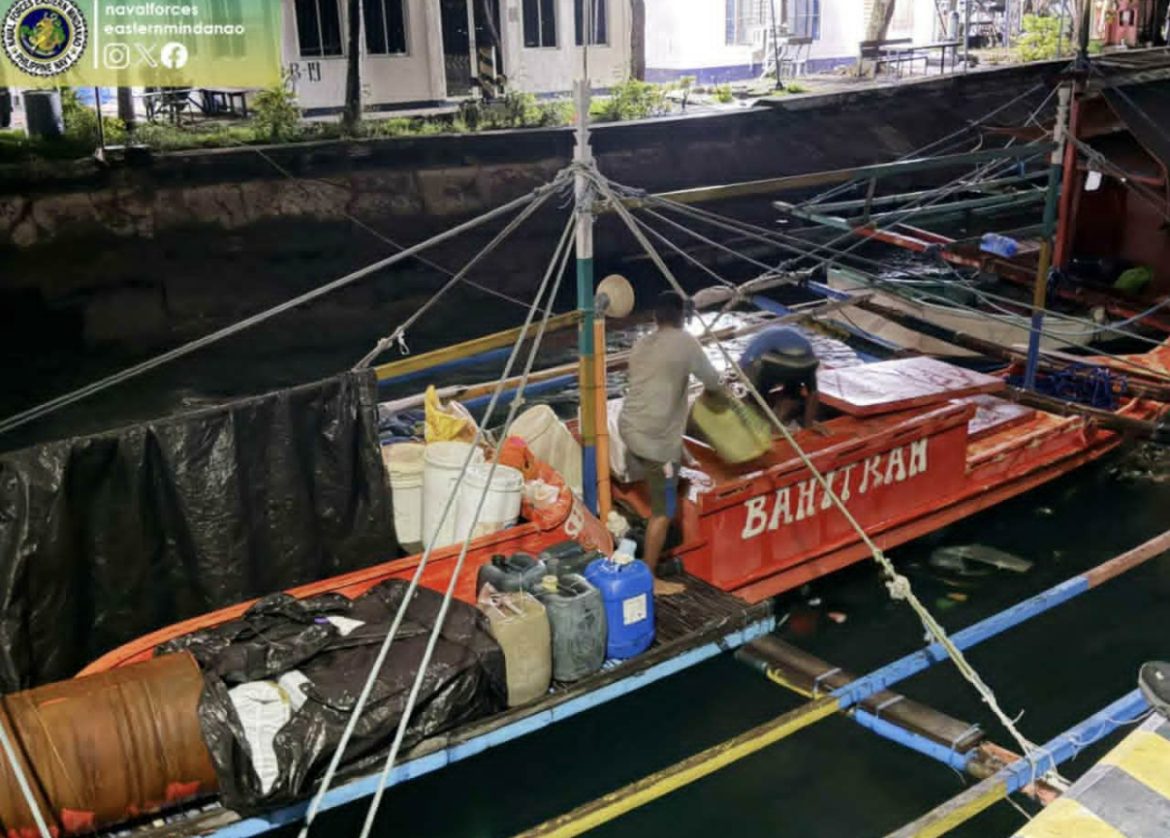
A TOTAL of P3.7 million worth of smuggled cigarettes were seized by the joint inter-agency maritime operation from a motorized vessel carrying contraband in the coastal waters of Sarangani, Davao Occidental.
The operation, executed on Monday, May 18, 2026, was spearheaded by the Naval Forces Eastern Mindanao in coordination with the Sarangani Maritime Police Station, Bureau of Customs, the Regional Intelligence Division XI, and the Criminal Investigation and Detection Group XI.
Maritime operatives flagged down the motorized banca, identified as M/B Bahitrah, after monitoring its “suspicious movements.”
According to the report authorized by NFEM commander Commodore Ireneo D. Battung, the vessel actively attempted to evade government forces before being cornered and boarded by law enforcement personnel.
A subsequent onboard inspection revealed a haul of 228 boxes of undocumented cigarettes bearing the brand name Gajah Baru.
The total street value of the confiscated contraband is pegged at exactly ₱3,722,800.Three crew members aboard the vessel were immediately apprehended.
Authorities identified the suspects as Edwin, 57 years old, Adubert, 39 years old, and Roger, 47 years oldAll three individuals are listed as residents of General Santos City.
Following the interception, the suspects, the seized contraband, and the M/B Bahitrah were escorted to the NFEM headquarters in Panacan, Davao City.
The confiscated cigarettes and the motorized vessel have been turned over to the Bureau of Customs for proper disposition and seizure proceedings.
Meanwhile, the three suspects are temporarily detained at the Sasa Police Station as prosecutors finalize the filing of smuggling and regulatory law violation charges.
A COMPREHENSIVE written statement submitted to the 62nd Session of the United Nations Human Rights Council (UNHRC) accused President Ferdinand Marcos Jr. of executing a “totalitarian political purge,” starting with former President Rodrigo Roa Duterte.
The 4-page document, submitted by the International Career Support Association (ICSA)—an NGO in special consultative status—claims that the domestic campaign to neutralize the Duterte family has actively subverted democratic institutions in the Philippines through systemic corruption, institutional bribery, and asset liquidation.
The ₱20-M impeachment bribe allegation
Among the most explosive claims detailed in the submission is an alleged institutional buy-out within Congress to legally disqualify Vice President Sara Duterte from the 2028 presidential election.
According to the document posted by Fujiki in his Facebook account, Representative Leandro Legarda Leviste formally exposed an operational bribe originally brought to light by the President’s own sister, Senator Imee Marcos.
The submission alleged that members of the House of Representatives were offered ₱20 million each in exchange for voting in favor of the Vice President’s impeachment.
The statement asserts that the move was intentionally manufactured to neutralize the Vice President due to her “overwhelmingly superior national popularity rating compared to the Marcos faction.
“Alleged plunder of welfare funds and sovereign gold liquidationThe UN submission further alleges that the immense financial capital required to fund these congressional bribes was siphoned directly from critical state infrastructure and public welfare sectors.
Citing ongoing legislative investigations, the report claims that out of the ₱545.6 billion national budget earmarked for urgent flood control projects, billions have vanished into “ghost projects” and contractor monopolies.
It also points to a suspicious depletion of public funds within the Social Security System (SSS), national healthcare, and development sectors.
Compounding the economic allegations, the document notes that “grave alarms” have been raised in the Senate regarding the irregular and aggressive unloading of the nation’s sovereign assets.
Under current leadership, the Bangko Sentral ng Pilipinas (BSP) reportedly became the top global seller of gold, liquidating nearly 25 tons of the country’s gold reserves within a remarkably short window.
The opposition has denounced the liquidation as a systematic strategy to generate untraceable cash reserves used to fund domestic bribery networks and secure the regime’s political survival.
Targeting political allies and the Senate arrest attempt
Illustrating what it calls an active “domestic coup,” the statement highlights the highly controversial May 15, 2026 attempt within the Senate of the Philippines to arrest sitting Senator Ronald “Bato” dela Rosa—the former PNP Chief who led the Duterte administration’s anti-drug campaign and remains a critical political ally of the family.
The convergence of these events, the document argues, provides empirical proof that law enforcement mechanisms and legislative processes are being weaponized for political coercion.
Accusations of ICC weaponization
The submission also takes aim at the International Criminal Court (ICC), accusing it of violating the principle of political neutrality under Article 42(3) of the Rome Statute.
By accepting a “selectively surrendered” target from a regime allegedly utilizing looted public funds to purchase the political demise of the defendant’s family, the statement argues the ICC has severely compromised its objectivity and allowed itself to become an “enforcement echo chamber” for the ruling faction in Manila.
Furthermore, the document challenges the statistical foundation of the ICC prosecution, asserting that it relies heavily on exaggerated and unverified data from biased non-governmental organizations.
The statement contrasts publicized casualty figures of 12,000 to 30,000 deaths with verified Philippine National Police (PNP) data, which documents the actual number of casualties in legitimate anti-drug operations to be 6,252—all involving armed suspects resisting arrest ( nanlaban ).
Demands for immediate release
Asserting that the 81-year-old former President has been held in continuous, unconditional physical detention at the ICC Detention Center in The Hague for over 14 months since his arrest in March 2025, the submitting party made a series of definitive recommendations to the UNHRC:
Malacañang and leadership of the House of Representatives have yet to issue an official statement responding to the specific allegations contained within the UN document.
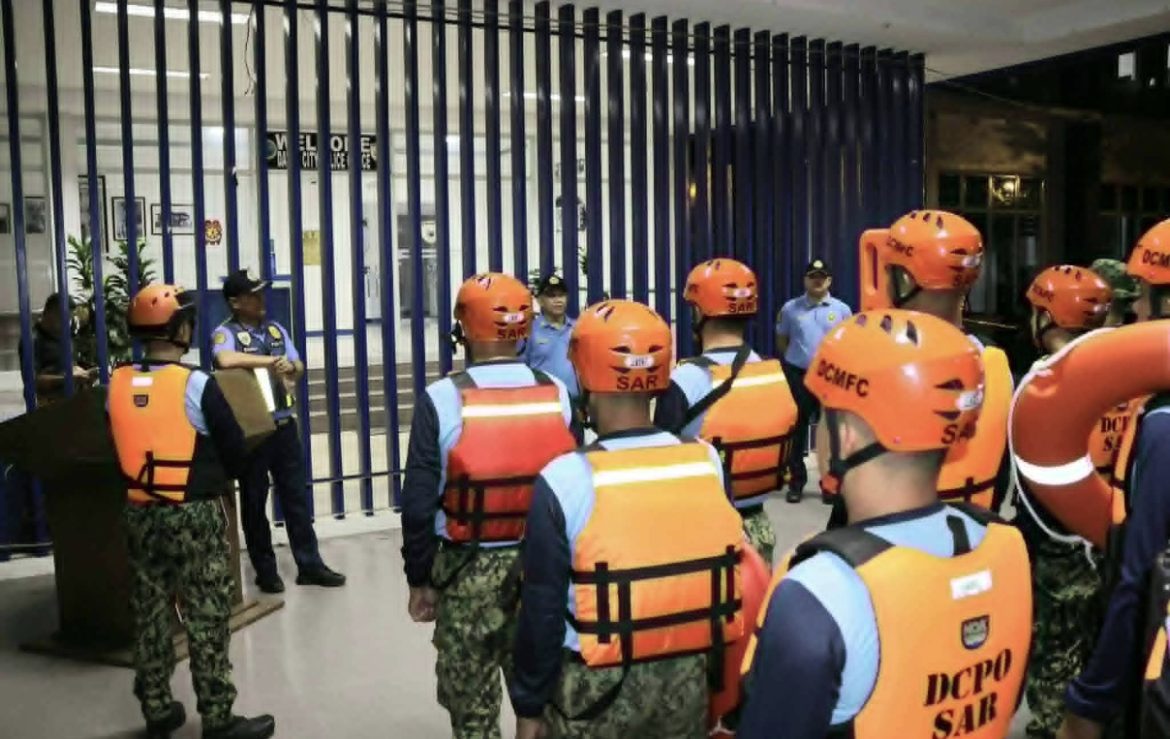
THE DAVAO City Police Office (DCPO) has intensified emergency search, rescue, and monitoring operations across the hardest-hit districts following severe flooding and critical infrastructure damage triggered by heavy rains.
The concentrated deployment in the areas of responsibility of Police Station 16 (Ma-a) and Police Station 5 (Buhangin) follows a destructive weather pattern on Monday, May 18, which left over 1,400 residents displaced and caused severe localized destruction.
Bridge collapse
Exacerbating the emergency situation, local authorities confirmed the structural failure of a bridge at Purok 2, Barangay Callawa, within the Buhangin District.
City director Col. Peter Bauzon Madria led an onsite inspection and safety assessment of the collapsed structure on Tuesday afternoon.
Safety perimeters have been established around the site to protect motorists and residents from navigating the hazardous drop-off.
“Our immediate presence here is to gauge the extent of the structural failure and fast-track coordination with engineering and disaster agencies for swift intervention,” Madria said during the site visit, urging local communities to remain vigilant against further terrain instability.
Concurrently, DCPO search and rescue teams have maintained an active presence in submerged communities to manage ongoing evacuation logistics and security.
With hundreds of families forced inside emergency shelters—particularly in low-lying pockets of Ma-a and Buhangin—ground personnel have been tasked with securing abandoned residential properties to prevent looting and property damage.
Official data from regional disaster offices indicates that Buhangin alone suffered a confirmed fatality due to flood-induced electrocution, prompting police to continuously warn residents against returning to flooded homes prematurely.
Madria ordered al police stations to maximize humanitarian assistance and maintain an open communication loop with the Davao City Disaster Risk Reduction and Management Office and the Department of Public Works and Highways.As of Wednesday, police forces remain on high alert.

THE DAVAO City Police Office (DCPO) has received no directive from higher headquarters to monitor or arrest Senator Ronald “Bato” Dela Rosa if spotted within its jurisdiction.
This was the announcement of DCPO spokesperson Capt. Hazel Caballero at the Davao Peace and Security Press Briefing at The Royal Mandaya Hotel on Wednesday, May 20.
The local statement follows Dela Rosa’s sudden exit from the protective custody of the Senate sergeant-at-arms last week, which occurred shortly after the Senate convened to vote on the impeachment of Vice President Sara Duterte.
“Honestly, within the Davao City Police Office, we have not received any instructions once our Senator Bato Dela Rosa is in (he is in the) area of responsibility,” Caballero said.
When pressed on whether specific tracking or monitoring protocols had been initiated by leadership, Caballero reiterated the lack of central directives.
“As far as I know, there are no instructions received by the Davao City Police Office with regards to the arrest of Senator Bato once he is in our area of responsibility,” she added.
Dela Rosa’s sudden departure from the Senate premises last week sparked widespread speculation of an impending arrest or legal summons.
It is a narrative the PNP Criminal Investigation and Detection Group (PNP-CIDG) previously attempted to downplay by denying any new domestic subpoena, alongside rumors of an enforcement timeline regarding an International Criminal Court (ICC) warrant.
As of Wednesday afternoon, the DCPO maintained a “business-as-usual” stance.Local authorities stated they will not actively track the former PNP chief-turned-lawmaker without any direct order.
The International Criminal Court (ICC) has officially unsealed and confirmed a warrant of arrest against Senator Ronald “Bato” dela Rosa for crimes against humanity of murder.
The warrant alleges he served as an indirect co-perpetrator in a “common plan” to neutralize alleged criminals in the anti-drug campaign between July 2016 and April 2018.
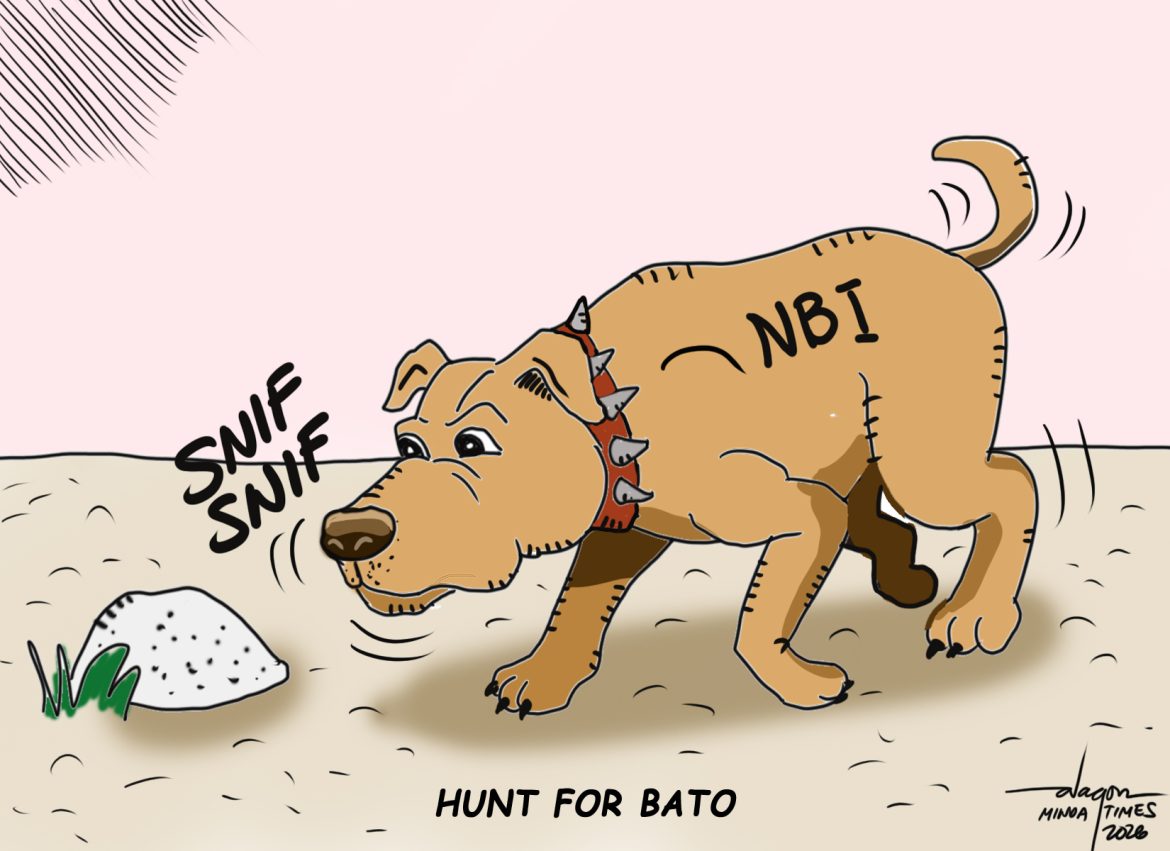
National Bureau of Investigation (NBI) agents attempted to enforce the warrant but backed down when the Senate shielded him within the chamber.
Dela Rosa’s legal camp is seeking a Temporary Restraining Order (TRO) from the Supreme Court to block the warrant’s enforcement, arguing jurisdictional issues due to the Philippines’ withdrawal from the Rome Statute.
The Department of Justice has issued an immigration lookout bulletin to prevent Dela Rosa from leaving the country.

Manila – A new TransUnion (NYSE: TRU) analysis found that fraud remains a prevalent reality in the Philippines. The country’s suspected digital fraud rate1 stood at 4.1% in 2025, exceeding the global level of 3.8% for the sixth consecutive year. Suspected digital fraud attempts refer to activities flagged by TransUnion clients as fraudulent indicators and in violation of corporate policy. It draws on insights from TransUnion’s global intelligence network, spanning billions of transactions across tens of thousands of websites and apps.
This heightened level of fraud was also mirrored in consumer sentiment. Nearly three‑quarters (72%) of surveyed Filipino consumers reported being targeted by digital fraud attempts (online, email, phone and text messages) between August and December last year, compared with 53% globally2. This places the Philippines among the markets with the most widespread digital fraud exposure across 18 countries and regions surveyed by TransUnion.
Additional insights from TransUnion’s H1 2026 Top Fraud Trends Report also highlighted the financial impact of digital fraud, with more than one-third (38%) of Filipino consumers reporting losing money from digital fraud last year. Despite widespread exposure, however, the consumer reported financial losses in the Philippines remained comparatively lower. The median reported fraud loss last year was USD850 (approximately PHP50,000 in local currency)3, below the global median of USD1,671 (approximately PHP98,000)3.
“Our data indicates that fraud in the Philippines is driven more by scale than severity,” said Yogesh Daware, chief commercial officer at TransUnion Philippines. “While a significant proportion of Filipino consumers report being targeted through online, email, phone call or text messaging fraud attempts, the typical financial loss per incident is relatively lower compared to other markets. These insights point to a landscape characterized by more frequent, lower-value scams across digital channels and industries, rather than isolated big-ticket cases. The breadth and frequency of these incidents make digital fraud a persistent concern.”
Higher Digital Engagement Drove Greater Fraud Risk Exposure, Concentrated at the Account Login Stage
As one of the world’s most digitally engaged markets with high internet penetration and mobile‑first connectivity, a majority (91%) of Filipinos reported conducting at least part of their account management activities online – such as address changes, account name updates and other modifications. This high level of engagement and reliance on digital channels increases exposure to fraudsters and related vulnerabilities.
Reflecting this heightened risk, the most reported fraud schemes among Filipinos who said they were targeted with digital fraud were phishing (fraudulent emails, websites, social posts, QR codes designed to steal data) at 45%, followed by smishing (fraudulent text messages intended to trick consumers into revealing information) at 38% and third-party seller scams on legitimate online retail websites at 28%.
Given the prevalence of fraud schemes aimed at stealing sensitive data and personal information, suspected digital fraud risk was largely concentrated at the initial identity verification and authentication stages across the digital consumer lifecycle. In the Philippines, fraud risk was highest at the account login stage (6.1%) – which is significantly above the global rate of 4.3% – followed by account creation (4.5%) and financial transactions (1.1%).
“With fraud risk in the Philippines highest at the account login stage, and phishing and other scams primarily focused on stealing credentials, fraud in the Philippines is fundamentally an identity issue. Fraudsters rely on impersonation and synthetic identities to evade detection, while AI-powered tactics make these attacks easier to scale and harder to identify. This raises critical questions for both businesses and consumers: whether organizations can reliably verify the person on the other side of a digital interaction and whether consumers can effectively protect their personal information,” said Daware.
Logistics Was the Industry That Recorded the Highest Suspected Digital Fraud Rate From the Philippines in 2025
Based on TransUnion’s analysis, the logistics sector recorded the highest suspected digital fraud rate in 2025 for attempted transactions where the consumer was in the Philippines, at 8.5% – up from 6.0% a year earlier – highlighting logistics as a growing area of fraud risk in the country. Recent cases of fake delivery and cash-on-delivery (COD) scams, in which victims are induced to pay for items they did not order or that are misrepresented, underscore how fraudsters are increasingly exploiting delivery and last‑mile touchpoints.
After logistics, the insurance sector recorded the second‑highest suspected digital fraud rate in the Philippines last year at 7.6%. This was followed by the communities sector, which encompasses online dating platforms, social media sites and online forums, at 5.8%, reflecting continued fraud activity in digital environments driven by user interaction and identity‑based engagement.
Logistics Saw the Highest Suspected Digital Fraud Rate in 2025 From the Philippines, Followed by Insurance and Communities
| Industry | Philippines suspected digital fraud attempt rate 2025 |
| Logistics | 8.5% |
| Insurance | 7.6% |
| Communities | 5.8% |
| Retail | 5.2% |
| Financial services | 2.3% |
| Travel & leisure | 0.8% |
| Telecommunications | 0.6% |
Source: TransUnion global intelligence network
Recognizing the need for a collective defense against fraud across different industries and all segments of the society, TransUnion Philippines pioneered an anti-fraud task force in the country through the Fraud Industry Council (FIC), launched in November 2024. The FIC brings together leading financial institutions and key industry players to strengthen businesses and consumer protection through coordinated fraud intelligence sharing – a collective approach to an industry-wide challenge.
“The latest data from TransUnion shows that fraud risks are present across sectors, affecting consumers at multiple points in their digital journeys. In addition to strengthening digital onboarding, device validation and network intelligence within individual organization, this underscores the need for collaborations beyond single entities. Through the Fraud Industry Council, we are bringing industry leaders together to share intelligence, enhance safeguards and better protect Filipino consumers through a coordinated, collective approach. Ultimately, this effort is about enabling people to transact with confidence, supporting businesses growth and strengthening trust across the country’s digital economy,” said Daware.
TransUnion came to its conclusions about digital fraud based on intelligence from its array of fraud prevention solutions. To learn more about how TransUnion fraud prevention solutions can help businesses avoid fraud and prevent fraud losses, click here.
Specific country and regional data in the report includes Botswana, Brazil, Canada, Chile, Colombia, Costa Rica, the Dominican Republic, El Salvador, Guatemala, Honduras, Hong Kong, India, Kenya, Mexico, Namibia, Nicaragua, the Philippines, Puerto Rico, Rwanda, South Africa, Spain, the United Kingdom, the United States and Zambia. Download the TransUnion H1 2026 Top Fraud Trends Report for more information and insights about the global fraud trends.

PLDT Home Fiber Prepaid users can now reload their internet faster and more conveniently through the Maya Shop on the Maya app and via nearest Maya Business Centers.
This new loading option gives customers greater flexibility in managing their home internet, offering both cashless digital payments and assisted over-the-counter transactions within their communities. With just a few taps on the Maya app or a quick visit to a local retailer, users can stay connected for work, school, and entertainment hassle-free and on their own terms.
“By expanding our loading channels through Maya’s consumer app and Maya Business Center retailer network, we’re making PLDT Home Fiber Prepaid more accessible, flexible, and aligned with how Filipinos live and use digital payments today,” says John Y. Palanca, PLDT Senior Vice President and Head of Consumer Business.
Reloading via Maya seamlessly fits into customers’ daily routines, especially for those who already use the app for bills payment, money transfers, and shopping. For households that prefer in-person transactions, Maya Business Center outlets can also process PLDT Home Fiber Prepaid reloads. This brings essential internet services closer to home while providing small business owners with additional income opportunities.
“Digital payments play an important role in expanding access to essential services,” said Renan Santiago, Head of Retail & MSME Maya Business. “Enabling PLDT Home Fiber Prepaid on Maya gives customers a simple, cashless way to manage their home connectivity while supporting our initiatives to make digital payments inclusive across communities, whether via online or Maya Business Centers.”
To buy PLDT Home Fiber Prepaid load, customers can easily go to the nearest Maya Business Center in their community or purchase via the Maya app:
Once payment is successful, the load is instantly credited, allowing customers to continue enjoying reliable and uninterrupted fiber internet. Customers may check their myHome account to view the purchase details.
PLDT Home continues to expand its digital and over-the-counter channels to make reliable and affordable home internet more accessible to Filipino families nationwide.