
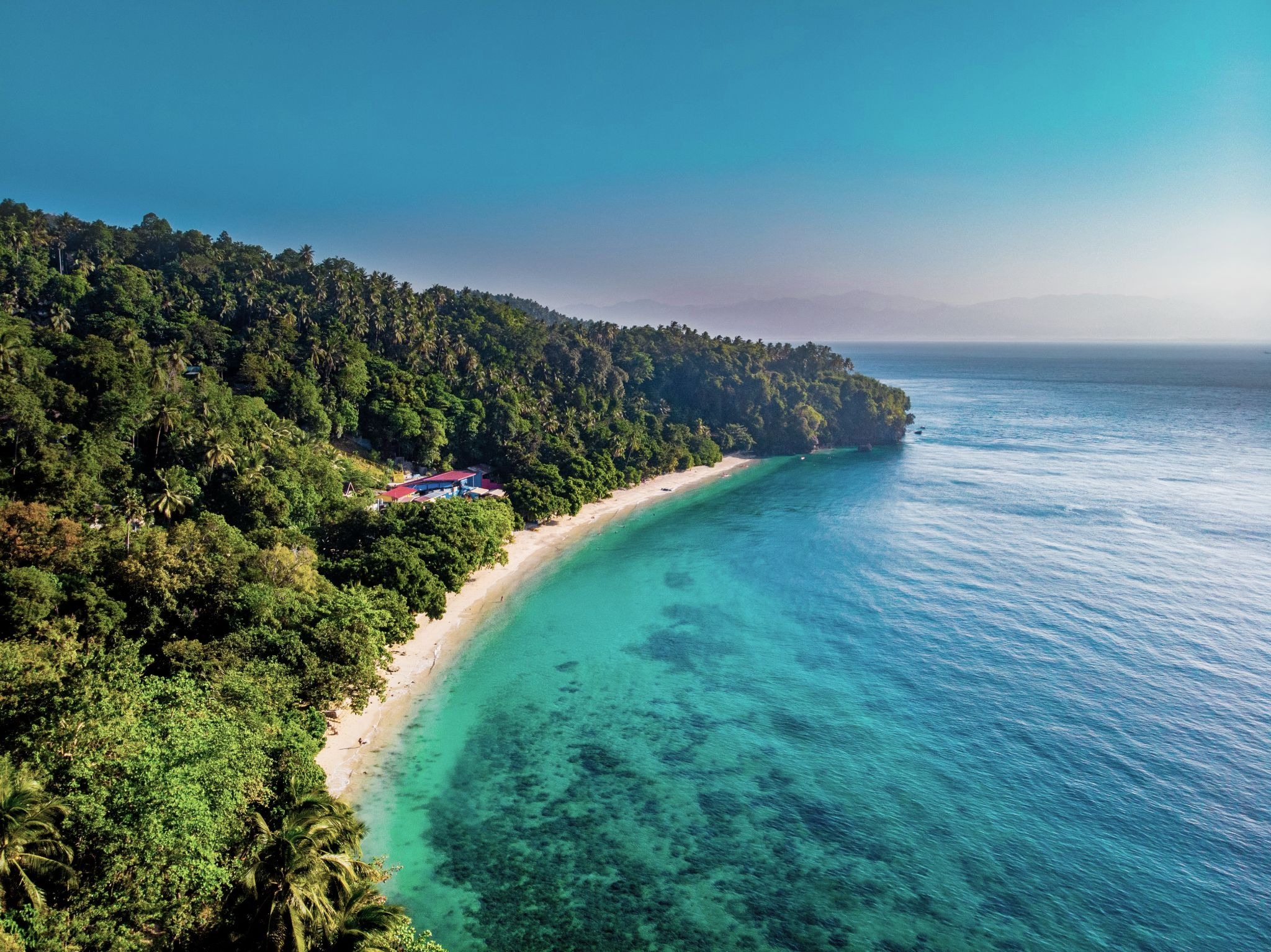
ISLAND GARDEN CITY OF SAMAL — There is a moment, somewhere between the five-minute boat crossing from Davao City and the first sight of Samal’s white-sand coastline, when the noise of the city falls away completely. The water turns a shade of turquoise that belongs on a postcard. And if you are paying attention, you begin to understand why investors, hotel brands, and tourism planners are increasingly pointing their compasses here.
The Island Garden City of Samal has long served as Davao’s weekend exhale. But something has shifted. With surging visitor numbers, a bold new identity, and the kind of infrastructure momentum that developers spend years waiting for, Samal is no longer a footnote in someone else’s travel story.
A destination that earns its ranking
In 2024, Samal recorded 921,748 verified tourist arrivals — the highest on official record, nudging the island toward one million visitors for the first time in the post-pandemic era. The Department of Tourism ranks it 9th among the Philippines’ top tourist destinations, designating it the country’s largest island resort and the face of Davao del Norte in tourism. This Holy Week alone, nearly 48,000 tourists came through — a figure that speaks to the island’s pull and its unmet potential.
But numbers rarely explain why people keep coming back. For that, you have to walk — and dive — the island.
Start at the Monfort Bat Cave in Babak, a Guinness World Record holder for the world’s largest colony of Geoffroy’s Rousette bats. At dusk, millions of them exit in a living black ribbon that unfurls across the sky — one of the most arresting wildlife spectacles in the archipelago. Puting Bato offers dramatic white rock formations along a rugged coastline, while Sabang Cliff draws the daring: those who want to look down at the sea from a height before plunging into it. Inland, the Hagimit Falls cascade through forest and rock, offering a cooler, quieter counterpoint to the island’s coastal drama.
Beneath the surface is where Samal truly sets itself apart. Coral gardens of exceptional biodiversity, giant clam sanctuaries protecting the taklobo, celebrated dive walls like Mansud Wall, wreck sites layered with marine life, and protected areas like Angel’s Cove and the Aundanao Fish Sanctuary form an underwater portfolio that few Philippine islands outside Palawan can rival in density and accessibility. Then there is the Vanishing Island — the Sanipaan Shoal sandbar that appears and disappears with the tides, a sliver of white sand surrounded by open turquoise water. It is the kind of place that makes people stop mid-sentence.
It is precisely this natural depth that anchors Samal Island’s new tourism brand, Dive into Beauty, a deliberate repositioning targeting high-value, experience-driven visitors who compare Samal not to nearby Davao, but to Tubbataha, Coron, and Apo Island.
The infrastructure turning point
Every great island destination has a moment when geography stops being a limitation and starts being an asset. For Samal, that moment is approaching on two fronts.
The Samal Island–Davao City Connector Bridge, targeted for completion in 2028, will make the island accessible from one of Mindanao’s most economically dynamic cities in under ten minutes by car — with zero air-travel dependency. Davao City draws 1.8 million annual visitors, hosts a growing BPO sector, and serves international routes across Asia. Post-bridge, Samal inherits that entire demand base as a year-round leisure extension of the city.
On the ground, Davao Light and Power Company’s Submarine Cable Project has already strengthened the island’s energy backbone — the quiet prerequisite for the hospitality and commercial growth that sustained tourism demands.
The investment picture: early stage, strong signals
Samal’s hospitality market tells a story of striking undersupply. The island’s existing upper-market inventory — a handful of properties with no international flag among them — serves an island that received nearly a million visitors last year. The gap between demand and supply is visible to anyone running the numbers.
The most consequential response to that gap broke ground when PHINMA Hospitality and Damosa Land, Inc. launched TRYP by Wyndham Samal, the Philippines’ first-ever TRYP condotel and the island’s first internationally flagged hotel. The project is the third collaboration between PHINMA Hospitality and Damosa Land, following Microtel by Wyndham hotels in Davao and General Santos.
Backed by Wyndham Hotels & Resorts and its 100 million-strong Rewards membership across 95 countries, the four-star, 100-room property — complete with a 250-seat ballroom and flexible meeting facilities — gives Samal a global distribution reach it has never had, while directly targeting the island’s emerging MICE market.
That hospitality confidence does not exist in isolation. Damosa Land’s Bridgeport Park, a 13-hectare master-planned waterfront community, has been quietly laying the groundwork for the island’s commercial and residential growth since its launch. With low-density condominium buildings, premium lots, a commercial area, and an exclusive marina, Bridgeport represents a different but equally telling signal: that Samal can sustain not just tourists, but residents, businesses, and long-term community life.
Together, the two developments point toward a destination crossing a threshold — from weekend escape to full-spectrum growth corridor. For a destination with this much natural endowment, this much infrastructure momentum, and this little branded supply, the window of early-mover advantage is still open. It will not stay open for long.
To learn more about Damosa Land and its developments, visit https://damosaland.com/.