

BY ALEX ALAGON

BY ALEX ALAGON

BY ACE CYRELLE M. PAGLINAWAN/CMU Intern
THE DEPARTMENT of Migrant Workers XI (DMW XI) opened the 31st National Migrant Workers Week celebration on June 15 in NCCC Mall Buhangin, honoring the invaluable contributions of Overseas Filipino Workers (OFWs) as modern-day heroes.
The “Buy Lokal by OFWs” (BLBO) Trade Fair showcased products managed by OFWs and their families, highlighting the reintegration and entrepreneurial efforts of migrant workers who have returned home or are currently investing in local enterprises.
In her opening remarks, Maria Carolina B. Agdamag, regional director of DMW XI, emphasized the importance of recognizing OFWs not only as contributors to the economy but also as pillars of resilience and nation-building.
OWWA XI regional director Mohammad I. Victor and DMW Secretary Atty. Hans Leo J. Cacdac also gave support through a video message.
The program also featured interactive activities, including trivia games focused on OFW-related information and raffle draws that added a festive atmosphere to the celebration.
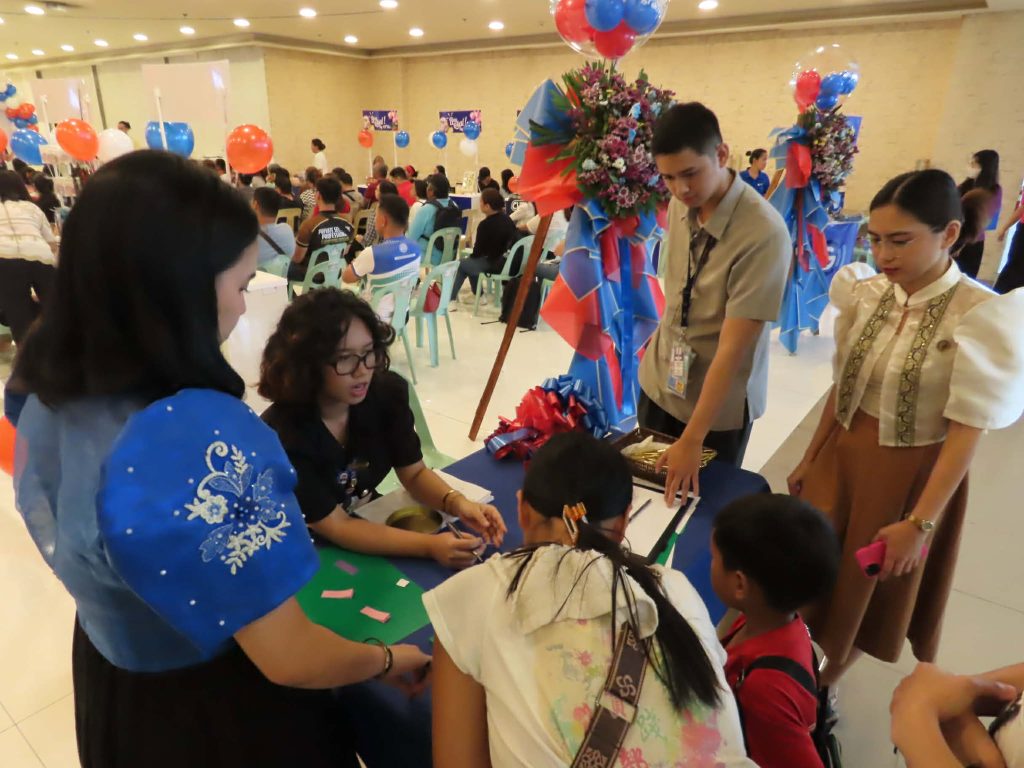

Participants also engaged in briefing sessions aimed at strengthening awareness of government services and programs for migrant workers.
Attendees were given access to free legal services from the Commission on Human Rights, as well as a GCash orientation and other informational activities designed to support financial literacy and digital inclusion among OFWs and their families.
The celebration, which runs until June 17, continues with a series of activities that highlight the sacrifices, achievements, and empowerment of Filipino migrant workers, reaffirming the government’s commitment to honoring and supporting OFWs.
Photos by GIO TANUDTANUD

THE DEPARTMENT of Transportation (DOTr) and the Civil Aviation Authority of the Philippines (CAAP) announced that commercial flight operations at General Santos International Airport resumed on Monday, June 15.
Transportation Secretary Banoy Lopez confirmed the airport is safe for resumption of commercial operations following several assessments.
“Nagsagawa na ang DOTr at CAAP ng kumpletong safety assessment, and we confirmed na pwede nang ituloy bukas ‘yung commercial operations sa GenSan Airport para hindi na maantala ‘yung biyahe ng ating mga pasahero,” Secretary Lopez said in a press release on Sunday.
The CAAP coordinates with airline operators, airport stakeholders, and government agencies to ensure the continued safe and efficient operation of the airport.
Passengers are advised to coordinate directly with their respective airlines regarding flight schedules and travel arrangements.
Flag bearer Philippine Airlines (PAL) advised the public of the resumption of the following flights to and from General Santos City (GES) effective June 15.
The flights include:
The airline advised its passengers to arrive early for check-in and boarding procedures due to limited terminal capacity and reduced check-in counter availability.
However, passengers are requested not to arrive earlier than four hours before the scheduled flight, as the terminal can accommodate only a limited number of passengers.
Mabuhay Lounge, on the other hand, remains temporarily closed due to ongoing repairs following earthquake-related damage.
Passengers are reminded to ensure that bookings are confirmed prior to travel, as only confirmed passengers will be accommodated.
Operations of commercial flights at General Santos International Airport were temporarily suspended following the magnitude 7.8 earthquake that struck offshore Sarangani on June 8.

THE OFFICE of the Civil Defense (OCD) XI is assessing five artificial dams in Jose Abad Santos town, Davao Occidental, which were created by the 7.8-magnitude earthquake that struck offshore Sarangani on June 8.
The five sites were identified in the barangays of Butuan, Camalian, Malalan, San Isidro, and Sugal, according to Jose Abad Santos’ summary reports.
The Mines and Geosciences Bureau XI said that possible flashfloods or debris flows might occur should a dam break, which could happen during extreme weather conditions or aftershocks. So, residents living downstream must immediately evacuate for their own safety.
The MGB XI said that artificial dams form when earthquake-triggered landslides block natural waterways.
JAS information officer Julie Marie Buen reported that about 2,000 residents have been evacuated to a safer area as a precautionary measure.
OCD XI regional director Ednar Dayanghirang said they are considering three methods to safely drain the impounded water, which is still undergoing ground evaluations at the municipal level.
The methods include controlled blasting to break open the blockages; manual excavation using manpower; and inserting siphon tubes to allow controlled water drainage.
“The three options will be evaluated by the provincial government of Davao Occidental and the municipal government of Jose Abad Santos, and tonight during our meeting, it will be decided,” Dayanghirang said.
The MGB XI released a GeoHazard Threat Advisory on June 14 following its aerial survey that showed earthquake-induced landslides resulting in five artificial damming in Nuing River in Barangay San Isidro, Sugal River in Barangay Sugal, Butuan River in Barangay Molmol, Malalan River, and an unnamed creek in Barangay Malalan.
The Municipal Disaster Risk Reduction and Management Office of Jose Abad Santos reported another damming in Barangay Camalian.

THE ATENEO de Davao University held a final send-off for student-athlete Rene Clert “Bobet” Baterbonia on Monday, June 15, 2026, as he returns to his hometown in Talacogon, Agusan del Sur.
The AdDU community gathered at dawn on Monday, June 15, 2026, for Day 4 of the public mourning period, marking the final blessing and official send-off for Baterbonia.
Flanked by crying teammates, friends, and university administrators, Baterbonia’s family prepared the 2025 Palarong Pambansa MVP for his final journey home to Talacogon, Agusan del Sur. University officials described the departure as a heavy but necessary moment of collective healing.
On Sunday, June 14, 2026, tension brewed in the memorial hosted by AdDU when the family’s legal counsel and his party were reportedly blocked by Ateneo officials.
Atty. Israelito Torreon, the designated legal counsel for the Baterbonia family, confirmed to reporters that he, along with Cebu-based lawyer and content creator Atty. Regal Oliva, was denied entry into the wake on Sunday.
According to Torreon, the sudden lockout disrupted scheduled legal consultations regarding the logistics of transporting the late athlete’s remains from Davao City back to his hometown.
“I was supposed to confer with my clients regarding the preparation for the transfer of the cadaver from Davao City to Agusan,” Torreon stated, adding that he was left completely in the dark regarding who ordered the restriction or why he was turned away at the gate.
School officials have yet to comment on the issue.
Meanwhile, AdDU president Fr. Karel San Juan, SJ, officially announced the permanent renaming of the campus’s Senior High School gym into the Rene Baterbonia Covered Court (RBCC).
AdDU Senior High School Head coach Jess Evangelio emphasized that the court will serve as a permanent North Star for future generations of Mindanaoan athletes.
“Rene, your name will forever be part of Ateneo de Davao,” Evangelio shared in a statement. “Every practice, every game, every young athlete who steps onto the RBCC will remember the boy who proved that no dream is too big when you are willing to work for it.”
While Baterbonia’s remains make the long journey back to Agusan del Sur, questions surrounding the safety protocols of the fateful team-building exercise.

THE PROVINCIAL government of Sarangani recorded 33 deaths, along with 251 injured individuals, after a Magnitude 7.8 earthquake that struck the province on June 8, according to the PDRRMC consolidated report posted on its Facebook page on Saturday, June 14.
The 24 confirmed deaths were due to landslides and covered by fallen debris in Glan municipality: three are from Tango; E. Alegado (2); Tapon (1); New Aklan (3); Pangyan (2); Kapatan (1); Calpidong (2); Burias (1); Poblacion (5); Calabanit (2); and Rio del Pilar (2).
Meanwhile, the other nine are in Tuyan (3); Poblacion (1); Lun Padidu (2); Sapu Masla (2); and Daan Suyan (1) due to drowning; struck by rolling heavy boulders; covered by fallen debris; and landslide.
The province also reported 251 injured and 15 still missing.
Affected families climbed to 57,843, while 428 families are in the evacuation centers.
The earthquake left 17,854 partially damaged homes, and 5,565 were totally damaged.
The Department of Trade and Industry (DTI) Sarangani has implemented a 60-day price freeze on basic necessities following the declaration of a State of Calamity in the province.
There will be no increase in the prices of covered basic goods across the province, effective June 10 to August 9, 2026.
DTI directed all covered establishments within Sarangani province to observe the price freeze.
Any act of overpricing, hoarding, profiteering, or refusal to sell may be punishable by imprisonment of up to 15 years and/ or fine of P5,000-P2 million, under the Price Act.
Governor Rogelio D. Pacquiao announced on Thursday that the emergency protocols, safety sweeps, work adjustments, and face-to-face class suspensions established under Executive Order No. 33, series of 2026, are extended from June 11 to 17.
“This extension is in view of the provincial declaration of a state of calamity and the ongoing disaster response operations,” Pacquiao said, noting the provincial government continues to monitor the seismic situation in real-time.
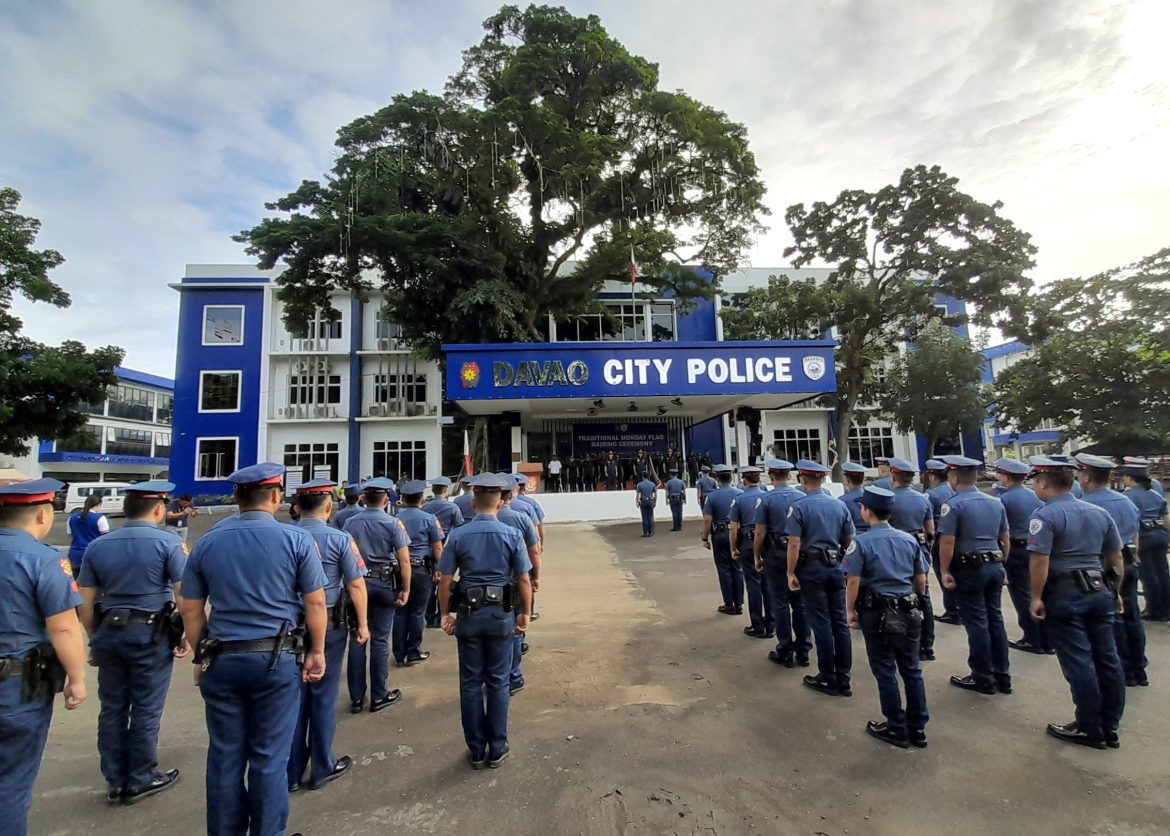
THE DAVAO City Police Office (DCPO) cleared the streets of P2.5 million worth of illegal drugs and 79 suspected criminals following a week-long series of operations from June 7 to June 13.
City police director Colonel Peter Bauzon Madria said the operations are focused on illegal drugs, illegal gambling, loose firearms, and capturing fugitives.
Anti-illegal drug units led the charge by launching 37 separate operations, neutralizing local distribution networks and arresting 44 suspects.
In total, tactical teams seized 375.13 grams of shabu (Methamphetamine hydrochloride) with a standard drug price valuation of ₱2,550,911.20 and 16.02 grams of marijuana valued at ₱1,922.40.
Loose firearms
In a bid to curb gun-related violence, the DCPO executed 17 operations on loose firearms:
Meanwhile, Intelligence-led manhunts resulted in the arrest of 10 fugitives, including five of the city’s list of Most Wanted Persons.
Finally, police conducted 13 anti-gambling raids, leading to the arrest of 20 gamblers, the confiscation of ₱4,850 in bet money, and the filing of 13 criminal cases in court.
Madria credited the operational success to a robust intelligence network operating at the grassroots level.
“These achievements reflect not only the dedication of the men and women of DCPO but also the strong partnership with the community, barangay officials, and the local government unit,” the DCPO stated.

AUTHORITIES have officially taken custody of 20 firearms belonging to Senator Ronald “Bato” Dela Rosa following the revocation of his gun privileges in connection with the arrest warrant issued by the International Criminal Court against him.
The voluntary handover took place on June 11, 2026, at the former PNP chief’s residence in Barangay Ma-a, Davao City.
The turnover serves as the culmination of an enforcement order initiated late last month by the PNP Firearms and Explosives Office (FEO).
Timeline of de-escalation of Dela Rosa’s gun privileges:
The process began on May 26, when the RCSU XI received an electronic directive ordering the immediate cancellation of Dela Rosa’s License to Own and Possess Firearms (LTOPF) and corresponding registrations.
The following day, May 27, RCSU XI chief Colonel Jomar Alexis A. Yap—in coordination with Police Regional Office XI director Brigadier General Leon Victor Z. Rosete—officially served the revocation order to Dela Rosa’s legal representative, Atty. Vicente Adrian Pajaro.
Two weeks after the order was served, Dela Rosa’s legal team coordinated the handover of the weapons. RCSU XI operatives conducted an on-site inventory of the surrendered firearms, cross-checking the serial numbers with the documents before issuing formal acknowledgment receipts.
The cache was subsequently transported to the RCSU XI headquarters at Camp Sgt. Quintin M. Merecido in Buhangin, Davao City, for custody.
PNP Director General Jose Melencio C. Nartatez Jr. praised the police and the senator’s camp for an incident-free process.
“What is vital is that the law is enforced clearly and orderly, with total respect for due process and coordination with all parties involved,” Nartatez said in a statement. “This underscores our continuing effort to ensure that enforcement is carried out with professionalism, transparency, and due regard for proper procedures.”
For his part, Rosete mirrored the sentiment, declaring that the operation was executed with the “highest degree of professionalism” and remained entirely fair and impartial.
The revocation and subsequent safekeeping operation align with President Ferdinand R. Marcos Jr.’s directive to tighten institutional firearms controls and bolster nationwide public safety through Enhanced Managing Police Operations.
The PNP has not publicly disclosed the exact administrative grounds that triggered the initial revocation of the high-profile lawmaker’s gun licenses.

AXA, a worldwide leader in insurance, releases its latest edition of the Mind Health Report[1], a global study carried out in partnership with IPSOS, one of the world’s leading market research companies. The 2026 report highlights the continuous deterioration of people’s psychological state, the rise in the use of artificial intelligence to consult about their mental health, and the responsibility of companies to support individuals.
Global pattern, local intensity
Mental health worldwide continues to deteriorate: in 10 of the 16 countries in the study, mental health scores are at their lowest since the first survey wave in 2021. 46% of those surveyed say they are struggling or languishing[2]. These results confirm a structural trend, driven by an accumulation of stress factors that are durably undermining psychological well-being.
The Philippines shows slight improvement in those classified as struggling, but a more persistent concern remains: that about 31% of Filipinos are still in a languishing state, amid persistent concerns around financial instability and rising social unrest.
Progress exists, but it is fragile and overshadowed by pressures that remain deeply embedded in everyday life. Among younger Filipinos, this weight is increasingly personal. While digital life remains constant and immersive, 72% of Filipino youth report feelings of loneliness or sadness.
For many, being online is less a choice than a condition of modern life. It is where conversations unfold, where news breaks, and where identity is continuously shaped. But it is also where pressure accumulates without pause.
Filipino youth now spend an average of 7.5 hours a day on screens, and 98% say this negatively affects their daily lives. The impact is not abstract. It shows up in disrupted sleep, fractured attention, and emotional overstimulation that lingers even after the screen is turned off.
Beyond fatigue, many also reported elevated levels of stress, anxiety, and poor well-being, leading to more frequent sick leaves. This suggests that emotional strain is no longer confined to digital spaces but is increasingly affecting performance in school and at work, as well as day-to-day functioning.
A double-edged development
In response, coping has become more adaptive and increasingly digital. As emotional pressures mount, more Filipinos are turning to AI-enabled tools for emotional guidance and everyday support. Regular AI usage for mental health management stands at 29% among Filipinos (higher than the global average of 21%), predominantly among 18–34-year-olds. This regular engagement with AI is also notably higher among individuals who self-report a mental health condition.
However, this reliance comes with risks: about a third (33%) reported having felt uneasy or concerned after receiving AI guidance. Worryingly, 25% reported that AI recommendations have led them to harmful behavior.
Another glaring discrepancy between the Philippines and the rest of the world is that the cost of mental health services remains the primary barrier to mental health support, unlike global trends, where lack of awareness is more common. This widening gap between awareness and access reflects a clear reality that while many Filipinos recognize their mental health needs and are open to seeking support, taking action is still largely constrained by affordability and ease of access.
It is within this gap that more practical forms of support become especially relevant, helping individuals take small but meaningful steps toward better mental wellbeing within the realities of daily life. This is why AXA Philippines continues to expand access to mind health solutions designed for ever-evolving needs, including the Mind Health Self-Check tool, which helps individuals assess and monitor their mental wellbeing. It also offers health plans that include free mental health consultations, making professional support more accessible to customers, and coverage for select mental health conditions. These approaches reflect a broader shift toward integrating mental wellbeing into everyday health protection, with the aim of encouraging earlier action and supporting longer-term resilience.
For Ayman Kandil, President and CEO of AXA Philippines, the findings reveal a deeper shift in how Filipinos experience emotional pressure. “This year’s findings show that stress is no longer showing up as one challenge at a time. Filipinos are carrying multiple pressures at once and still trying to keep up with school, work, and daily life. When emotional strain starts affecting how people function every day, support cannot wait for burnout or crisis. We need to make it easier for people to seek help early and nurture communities where mental well-being is treated as a shared responsibility,” said Kandil.
In the end, this year’s AXA Mind Health Report underscores a simple but uncomfortable reality that Filipinos are not just stressed; they are managing multiple, overlapping pressures with limited space to recover in between. This reality calls for more accessible support, healthier coping environments, and stronger collective attention to mental wellbeing.
As the one name to cover all your insurance needs, AXA provides complete protection from life to non-life. For more information about AXA Philippines’ commitment to holistic well-being for all, visit here.