
BY ALEX ALAGON

BY ALEX ALAGON
BY JOHN DABLO & ANGEL SHAUN NONOL, /DSSC Interns
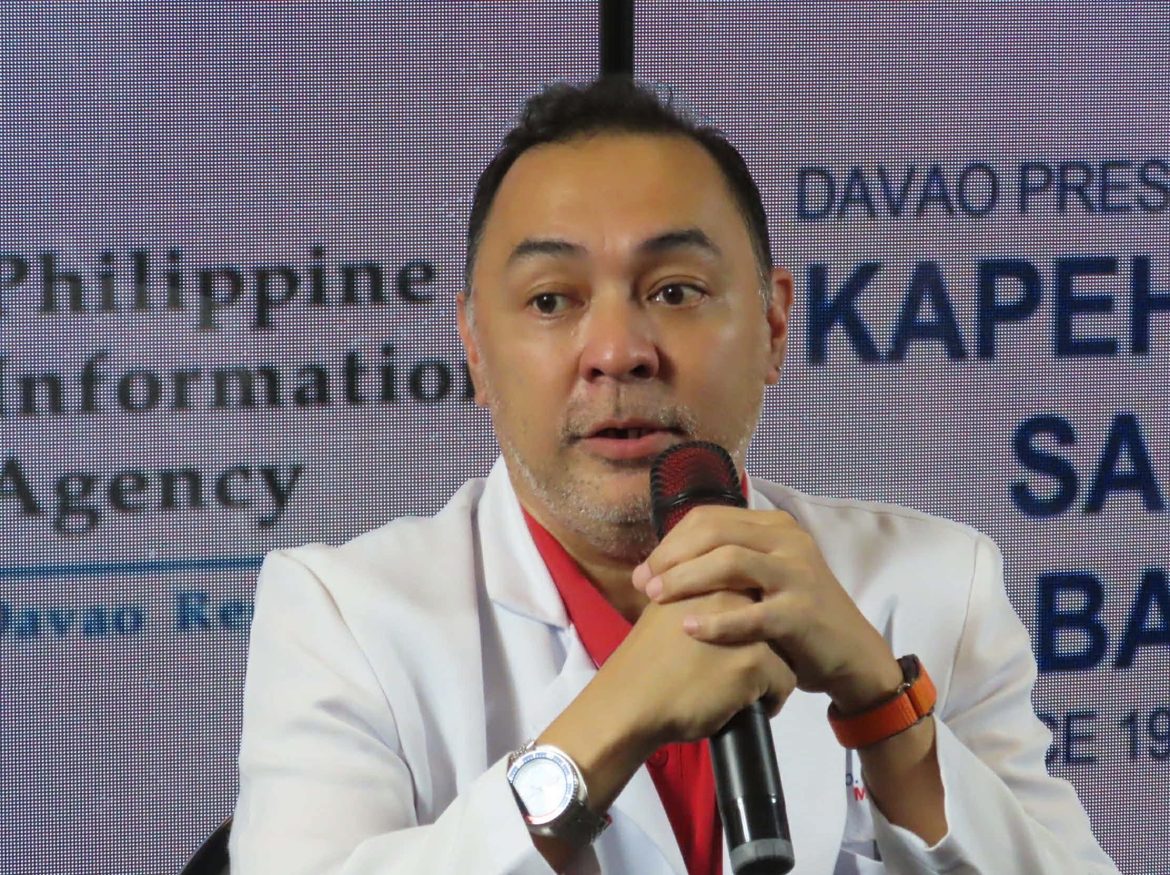
PATIENTS on organ transplant waitlists have a high risk of dying while waiting for lifesaving donors, with an increasing number of younger individuals now requiring transplants, according to Dr. Dennis Benjamin O. Geli, medical officer of Southern Philippines Medical Center’s SHARE Team.
Speaking during the Healthy Davao Media Forum held at SM City Davao, Geli underscored the urgent need to strengthen public awareness and education on organ donation.
He noted that despite the growing demand for organ transplants, the number of registered donors remains insufficient, leaving many patients waiting for organs that may never become available.
“Usually, mag hesitate sila mudawat or donate due to taboo or religious beliefs,” Geli said.
Most names on the donation waitlist are kidney patients who suffer from end-stage organ failure. Patients have to wait several months to years without assurance that they can have a compatible donor.
Reportedly, there are more than 400 individuals in need of kidney donors, according to the Department of Health.
Among the primary barriers to organ donation are the persistence of cultural beliefs, religious misconceptions, and misinformation, which discourage many individuals and families from consenting to organ donation.
He stressed that improving public understanding is essential to increasing donor registration and addressing the shortage of transplantable organs.
Geli also expressed concern over the increasing number of younger patients requiring organ transplants, particularly those suffering from kidney disease.
He explained that unhealthy lifestyle habits, including the excessive consumption of energy drinks, poor dietary practices, and other preventable risk factors, have contributed to the rising incidence of kidney-related illnesses among younger age groups.
Geli said that a single deceased donor, with prior consent or the approval of the donor’s family, can save multiple lives by donating vital organs such as the heart, lungs, liver, kidneys, and pancreas, while tissue donation can benefit many more recipients.
He further explained that organs intended for transplantation remain viable while they continue to receive oxygenated blood, making timely medical intervention and proper coordination among healthcare professionals critical to successful organ recovery and transplantation.
As the demand for organ transplants continues to rise, Geli called for stronger public education campaigns to dispel misconceptions surrounding organ donation and encourage more Filipinos to register as organ donors. He emphasized that increasing awareness, promoting informed consent, and fostering community support are vital steps toward reducing transplant waitlists and giving more patients the opportunity for a second chance at life.

BACK-TO-SCHOOL season often brings changes in routine, environment, and diet—making it a time when children’s digestive comfort can be more easily disrupted.
Parents are usually quick to track grades, behavior, and even immunity—but gut signals? Those often get lost somewhere between “I’m fine” and “I just don’t feel good.” The truth is that kids often feel discomfort in their gut long before they can explain it properly. What they can’t name, they act out, ignore, or brush off.
With the transition from a more relaxed summer schedule to structured school routines, changes in sleep, eating habits, and daily stress levels can show up in ways that are not always immediately obvious. According to an article by Everyday Parenting, kids are still figuring out how to interpret what their bodies are telling them—and the gut is often the first to speak, but the hardest to decode. What starts as mild tummy discomfort, a skipped meal, extra fatigue, or sudden irritability can easily be brushed off as “just a phase” or “bad mood,” when in reality, these may be subtle signals worth paying attention to.
That’s why gut awareness isn’t just a health topic—it’s an early life skill. Learning to recognize what their body is trying to say, even in its simplest form, helps kids respond better to their feelings instead of just pushing through them.
Teaching Kids to “Listen to Their Gut” (Literally)
A report from Michigan Medicine notes that kids often downplay stomach pain, especially during school hours, and are quick to say they’re “fine.” But recurring tummy pain, bloating, or discomfort should not be treated as something to simply endure. Encouraging kids to speak up early helps parents spot possible digestive issues sooner and reinforces that stomach discomfort should not be ignored, especially at school, where children may be reluctant to mention symptoms due to embarrassment or fear of standing out.
As an article from Harvard Health points out, tummy concerns in children don’t always appear as obvious pain. They may show up as loss of appetite, frequent bathroom trips, fatigue, or irritability after eating. Helping kids notice when these signs happen—after certain meals, busy days, or poor sleep—builds awareness of patterns that may signal digestive imbalance, particularly when routines shift due to school, activities, or schedule changes.
Many common tummy issues can be supported by consistent daily habits. Regular meals, proper hydration, enough sleep, and good hygiene all help promote smoother digestion, especially during busy school routines. Probiotics can also help support gut balance with proper diet and exercise by maintaining a healthy digestive environment during periods of increased exposure in shared spaces like classrooms, school buses, playgrounds, and cafeterias.
A study published in the National Library of Medicine notes that not all digestive discomfort is easy for children to describe. Sometimes it’s just a vague “weird” feeling in the stomach, mild nausea, or general unease. Building a habit where kids feel safe to speak up—even when they can’t fully explain what they feel—helps parents respond early. Persistent or worsening symptoms, however, should always be checked by a doctor.
Healthy Habits Start with Listening Early
Between school bells, packed schedules, and daily distractions, it’s easy for kids to overlook what their bodies are trying to communicate. Periods of change, like the start of a school term, often highlight these gaps in awareness. But when they are guided to recognize early gut signals, speak up about discomfort, and practice simple digestive health habits, they develop stronger body awareness that supports them beyond childhood.
“At Erceflora, we believe supporting children’s wellbeing includes being attentive to both what they express and subtle changes in their daily behavior,” said Rica Mateo, Erceflora ASEA Zone Brand Lead. “Digestive discomfort in children may show up as changes in appetite, energy, mood, or routine, especially during busy school days. Encouraging open conversations about tummy concerns and reinforcing simple healthy habits such as proper hygiene, balanced meals, and consistent routines can help support children’s digestive wellness and help them feel more comfortable, confident, and ready for daily activities.”
Alongside these habits, probiotic supplements such as Erceflora Probiotics may also be included in overall digestive care. Erceflora Probiotics with billions of 4-strain INTELLI-SPORES™ is for all ages above 6 months old. It aims to aid in the enhancement of natural resistance to intestinal infections, the enhancement of intestinal ecology, the improvement of digestion, and the improvement of lactose malabsorption with proper diet and exercise.


Because when children learn to pay attention to what their bodies are telling them—and are given the right daily habits and care—they don’t just avoid tummy troubles. They build lasting awareness, confidence, and healthy routines that help them stay active and feel their best through every school season ahead.

A TRAGIC early morning collision along the Davao City Coastal Road left one man dead and three others injured, including two minors, after an SUV slammed into the back of an e-bike in Purok 8, Bucana, Barangay 76-A, at 5:03 a.m. Sunday, June 28.
Traffic investigators identified the fatality as 23-year-old alias Salvador, a resident of Purok 7, Barangay 37-D, Davao City.
Responding Central 911 medics declared Espinosa dead on the spot due to the severity of the impact.
Initial investigation conducted by Police Station 2 (San Pedro) revealed that both vehicles—a Ford Everest SUV and an e-bike equipped with a sidecar—were traveling southbound along the outer right lane of the Bucana stretch of the coastal road.
According to the report, the front portion of the SUV, driven by 33-year-old alias Jaysie, a resident of Toril, crashed violently into the rear of the e-bike.
The e-bike was driven by 19-year-old alias Russel, a resident of Barangay 31-D, and was carrying three passengers at the time of the crash.
The impact caused severe damage to both vehicles and inflicted multiple physical injuries on the e-bike’s remaining passengers. They were rushed to the Southern Philippines Medical Center for emergency intervention.
Authorities identified two of the injured passengers as Shane, 16, and Hammar, 13.
Hospital officials did not disclose the extent of their injuries, as well as the current condition of the e-bike driver.
The SUV driver is currently under police custody, facing formal criminal charges for reckless imprudence resulting in homicide, multiple physical injuries, and damage to property.
Republic Act No. 4136, or the Land Transportation and Traffic Code, along with Joint Administrative Order No. 2014-01, prohibits e-bikes from traveling on the national highway at risk of impoundment or fines. However, they may operate on city or barangay roads where the speeding vehicles may not pose a risk to their safety.

A rich diversity of perspectives
BY GREG S. CASTILLA
THERE IS no title more fitting than “Witnessing: Three Decades of Faith” for a book that stands as a testament to the enduring commitment of Catholics who, across generations, have proclaimed the Word of God through their active involvement in Bukas Loob sa Diyos (BLD). Their involvement speaks more profoundly than words ever could.
BLD is a global charismatic renewal community focused on evangelization, discipleship, and family-centered spiritual formation. It grew out of the Marriage Encounter movement and expanded into a broad set of encounter programs for marriage, family, youths, singles, and solo parents.
I am personally grateful to Nikki Gomez, whom I have known as a high school student at Ateneo de Davao University in the early 1970s, for asking me to review the book. I am thankful as well for the persistence of the editors in collating and synthesizing the voices of twenty contributors who wrote about their experiences as BLD members with pastoral warmth, passion, and a sense of purpose.
The book holds profound significance as it traces the history and development of the BLD
community in Davao – its beginnings, its challenges, its seasons of growth, and the many lessons that shaped the spiritual maturity of its members. It also highlights how the contributors, most of whom are laypersons, rose to their finest selves by setting aside personal inconvenience to devote time to sharing their stories. Their willingness to share their experiences, motivated solely by their desire to serve the greater good, stands as a testament to the depth of their faith and commitment to serve the Catholic Church.
Reflecting on BLD-Davao’s 30-year history, the Most Reverend Reynaldo G. Evangelista, D.D.,
Bishop of Imus and BLD Community Spiritual Director, penned an encouraging note for inclusion in the book, “The past three decades were full of beautiful stories, spiritual growth, and touching accounts of apostolate and worship which touched your hearts and your soul to continue serving God and His Church. Some of you may have experienced challenges and pains along the journey of your discipleship but God strengthened your faith and sustained your hope…”
The “beautiful stories” Archbishop Evangelista referenced emerge from a rich diversity of perspectives. Engaging these narratives is essential, for they offer lived wisdom that deepens one’s understanding of community life, social action, the Church and its hierarchy, spirituality, and the intertwined realities of suffering and hope.
Where the book shines lies in the story of every BLD-Davao member that unfolds with authenticity on every page.
There is a story by Yo and Venus Montenegro that recounts the beginning of BLD in Davao in April 1994 with seventeen couples, and its evolution into a vibrant religious community – one that has transformed lives, deepened faith, and drawn countless individuals closer to God.
Nikki and Neng Gomez vividly describe the early development of BLD, marked by difficulties and challenges, yet sustained by unwavering determination, steadfast faith, and self-giving love, all offered for the greater glory of God.
In reflecting on their experiences, Ivan and Rei Ostique articulate the meaning of laboring in God’s vineyard in concrete and practical ways, underscoring how obedience is integral to missionary work and how becoming “instruments of God” requires the total surrender of oneself to God. There is also the story by Jigz and Paz Demetria about how BLD was established in Digos through the encouragement and support of the bishop and several priests.
The truth of authentic discipleship is profoundly articulated by Msgr. Paul Cuison, in words that will continue to resonate in the hearts of many: “Steadfast discipleship is not just about our personal devotion to God. It calls us outward – to love and serve others. The love we receive from the Lord is not meant to be kept to ourselves; it must overflow to those around us – and not just to those within our community, but to the entire Mystical Body of Christ – especially those in the peripheries, the lost, the suffering, the forgotten.”
There is Eddie Pacana’s own testimony – an honest account of how he came to accept a leadership role he never believed himself worthy of. He speaks of stepping forward not because he felt qualified, but because he chose to trust in obedience, humility, and the quiet certainty that the Holy Spirit was guiding him.
Quite like the experience of Pacana is the story of Abe and Juria Garcia. Confronted with the uncertainty of leading an Encounter and conscious of what they perceived as their own limitations, they prayerfully drew strength and inspiration from the fiat of the Virgin Mary, who freely and humbly accepted her calling to become the mother of Christ.
Fr. Felix Labor offers a deeply moving testimony, one that many can recognize in their own struggles. During a midlife crisis, feeling “like driftwood, floating rudderless,” he reached a point of profound despair that he wanted to end it all. It was only when he was invited to join BLD that his life began to change. What followed felt nothing short of a miracle: he saw the light, rediscovered purpose, and ultimately embraced his calling to become BLD-Davao’s founding spiritual director.
Among the narratives presented, the account offered by Bella Sarenas, a wife whose husband was battling lymph-node cancer, is particularly moving. In her anguish, she pleaded with God to prolong his life; yet, in time, she found the serenity and the strength to accept his passing with grace and surrender to God.
Denis and Alma Madrazo’s story of Fr. Ramon Jamora, who rose from drug dependence and a romantic relationship with a stewardess to embrace the call to the priesthood, exemplifies that when God calls, no circumstance is too heavy, no past too broken, to prevent a person from answering “Yes.” Fr. Jamora’s story affirms the transformative power of divine grace.
Sometimes it takes a single passage from Scripture to awaken a person to what God has long desired for him. Such was the story of Zaldy Magnaye, a professional deeply consumed by the demands of the corporate world. Thus, the distance between himself and his wife and children gradually widened, until one day he was struck by the gospel verse: “What does it profit a man if he gains the whole world but suffers the loss of his soul?”
The moment of reflection became a turning point. Confronted by the truth of the passage, Magnaye recognized the need to reclaim what truly mattered. This awakening led him to “seal his covenant,” beginning a journey of nearly twenty-nine years of faithful involvement in the BLD community as a cluster shepherd.
Here are further personal testimonies, in their own words, from BLD members who have experienced the profound and transformative influence of the Holy Spirit, feeling “slain in the Spirit.”
Belle Ambi: “During the Baptism of the Spirit, I felt at first that I was in a tunnel with bright lights. Then I heard a voice calling my name. My childhood and all the painful experiences I had flashed before me, and I began to cry.”
Hanz Tagabucba: “What I do remember is hearing so many voices. In fact, different voices –crying, shouting, even the sounds of animals and wild birds. There were voices calling my name, asking for help, but I couldn’t move. It was as if someone was holding me back, holding my hands and feet. I remember talking to someone, asking for help and pleading to be released so I could help, but it was really a struggle.”
Nena Poe: “After I was baptized in the charismatic community, my gift of tongues began…I believe I have a gift of prayer and healing. It seems to be strongest during praise and worship, especially when someone really needs healing.”
Tess Mobe: “The first time I was slain, I felt a quivering and unusual sensation enveloping me as I heard strange voices all over the area. I was afraid and called on God to help me.”
Fred Mobe: “I was slain and I discovered the Gift of Light. I cried when I realized that the forgiveness I longed to receive from God, from my wife, and from my two children was bestowed upon me.”
Joe Madrona: “That day, I experienced “falling down” (I wonder if that was actually the baptism of the Holy Spirit), I was aware that I uttered incomprehensible words. I doubted, however, if my utterances were as strong as those I could hear from the other participants…I also noticed that many times I could only say the words, ’Alleluia,’ ‘Salamat,’ ‘Thank you.’”
Yang Ajoc: “Suddenly, a rising energy and warmth embraced my body. My mouth slowly opened wide, tilting towards the sky. My tongue moved, and I began to sing praises uncontrollably. At that moment, I wept bitterly, crying out to God like a child.”
Tissay Ancheta: “As we prayed and started singing ‘I love you Lord,’ I heard angelic voices at the back joining us. Then we heard footsteps on the wooden floor. I was frightened and about to turn my back to see where those voices and footsteps came from, but was stopped by a companion beside me. And it was there that I started to pray in tongues, so loud I was later told.”
Del Pingol: The gift of tongues is very…It’s like being cradled, like being lifted up. When I concentrate, I feel…it feels so wonderful. Actually, it is enjoyable, like I am floating. It feels amazing.”
The book concludes fittingly with a joint appeal from Jing and Siony Abella to look toward the future with unwavering hope, drawing upon the lessons BLD-Davao has gained over the past thirty years, and applying them to a rapidly changing world, while remaining faithful to the core teachings of the Catholic Church.
What makes “Witnessing: Three Decades of Faith” so compelling and deeply moving are the stories of ordinary individuals whose lives are shaped not by grand miracles but by everyday encounters transformed by openness to God. These stories remind the readers that authentic discipleship and communal life, when practiced with fidelity, have the power to open doors we are afraid to open.
If these insights mean anything, they affirm what the book is designed to offer – a clear framework for understanding how BLD serves as a powerful guide for anyone seeking a deeper spiritual life and commitment to a charismatic movement such as the BLD.
(Greg S. Castilla is an alumnus of the Ateneo de Manila University. He has since moved abroad since the turbulent Seventies, and eventually taken part of the U.S. education department’s Bilingual Fellowship Program at the University of Washington. Having earned from there his doctoral degree in multicultural education, Greg proceeded to teach multicultural studies in various colleges and universities in Seattle. He has authored eight books, the last being “Magis: Things That Matter Most in Life” (2021). He is a lifetime advocate of the Ignatian ideal of “men and women for others,” and is a member of the St. Francis of Assisi parish in Henderson, Nevada. Whenever he can, he participates in parish life, as his contributions reflect a continuing commitment to his faith and to the Church. Greg enjoys family life that includes five grandchildren.)

TRIAL JUDGES at the International Criminal Court (ICC) have officially approved a prosecution request to freeze all cash seized from former Philippine President Rodrigo Duterte following his high-profile arrest last year.
According to public filings released by Trial Chamber III, the court granted the prosecution’s bid to freeze “any money that had been seized” from the 81-year-old former leader when he was arrested at the Manila airport and transferred to the tribunal’s custody in March 2025.
While the ICC Registry maintains custody of the confiscated property at the detention facility in The Hague, the exact amount of cash recovered from Duterte remains undisclosed.
The asset freeze has sparked a fierce legal battle between prosecutors and Duterte’s defense team.
Led by British barrister Peter Haynes, the defense initially dismissed the freeze order as “unnecessary” and “pointless,” arguing that the funds were already secured in the ICC registry and that the move would have no practical effect.
However, the core of the dispute has shifted to other personal belongings seized during the arrest—specifically, a set of keys.
The prosecution has requested access to inspect all items and keys in the Registry’s custody to determine if they link to further evidence or hidden assets. Duterte’s lawyers have fiercely opposed this, labeling the move an unsubstantiated overreach.
“The request is, in substance, a fishing expedition,” Haynes stated in the defense submission. “The prosecution advances no evidential basis connecting the keys either to the commission or furtherance of the alleged crimes or to any assets that may be relevant to the investigation.”
“The basis of such a request must exist before the investigation is undertaken, not emerge as a result thereof,” the defense added. “The prosecution cannot be permitted to examine the keys to articulate, post facto, the evidential foundation required to justify that examination in the first place.”
Beyond the keys, the defense team has urged Trial Chamber III to heavily restrict prosecutors from accessing any personal information that could compromise third parties.
Because Duterte was traveling with family members at the time of his arrest, his lawyers claim that looking into his personal effects could violate the privacy rights of his relatives.
The defense has requested that any digital or personal data irrelevant to the case be “destroyed or permanently deleted at the earliest possible opportunity.”
Duterte, who faces multiple counts of crimes against humanity tied to his administration’s deadly “war on drugs,” has been detained in the Netherlands since March 2025. His mandatory trial is scheduled to begin on Nov. 30, 2026.
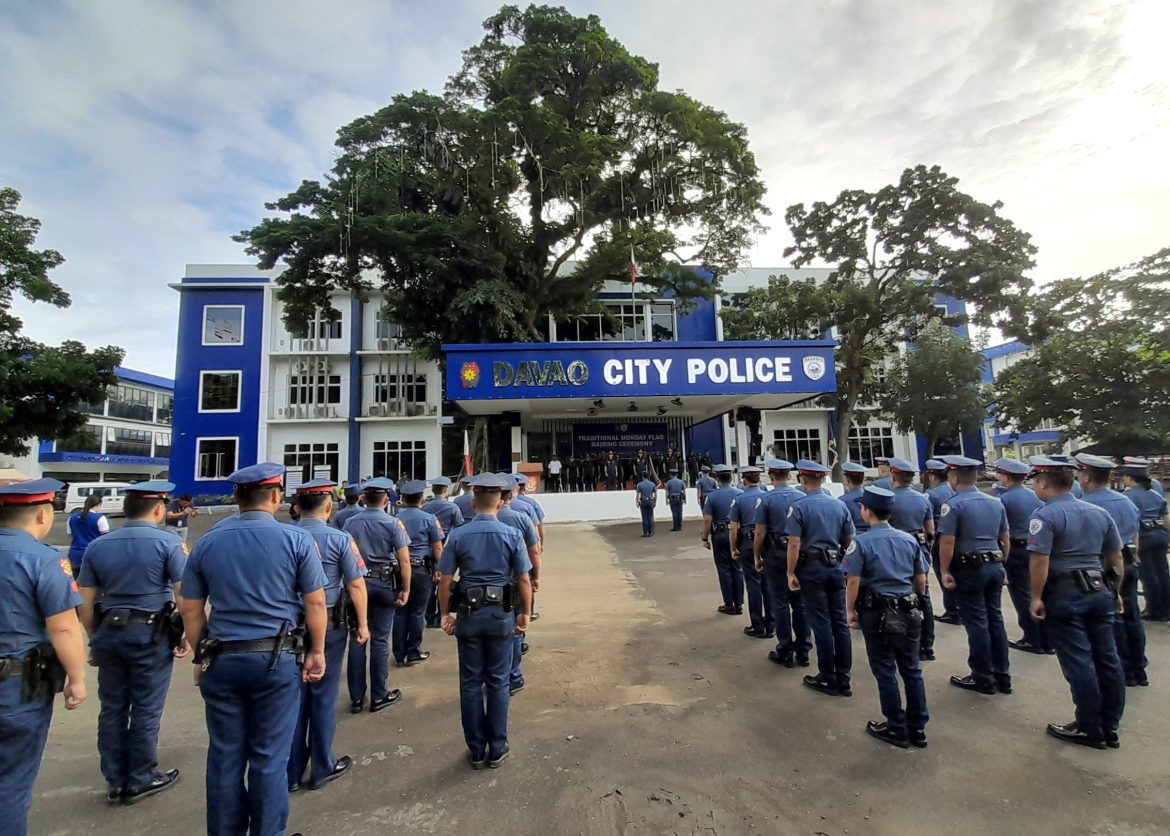
THE DAVAO City Police Office (DCPO) has arrested 86 individuals and seized over ₱1.2 million worth of illegal drugs in a week-long citywide crackdown from June 21 to June 27.
DCPO city director PCOL Peter Bauzon Madria said the law enforcement operations were heavily boosted by real-time intelligence and support from barangay officials and local communities.
Over seven days, police operatives launched 36 targeted stings, leading to the arrest of 43 drug suspects. The operations yielded 189.12 grams of Methamphetamine hydrochloride (shabu) with a standard drug price value of ₱1,286,016, alongside seven grams of marijuana valued at ₱840.
Police also filed 29 criminal cases in court against the apprehended suspects for violations of the Comprehensive Dangerous Drugs Act of 2002.
The DCPO also conducted separate manhunt operations and arrested 29 fugitives. Police confirmed that 10 of the apprehended individuals were on the city’s “Most Wanted Persons” list.
Firearms and gambling crackdown
Meanwhile, the DCPO carried out 17 operations targeting loose firearms. The campaign resulted in 1 suspect arrested and 1 illegal firearm confiscated, 12 firearms surrendered by residents, two firearms recovered from crime scenes, five firearms turned over to local stations, and one formal case filed for illegal possession.
Eleven operations resulted in the arrest of 13 gamblers, the confiscation of ₱8,805 in bet money, and the immediate filing of 11 corresponding criminal cases.
Madria reiterated that while the operational numbers demonstrate aggressive law enforcement, all 86 arrests were conducted in strict compliance with standard police operational procedures and human rights safeguards.
The DCPO command attributed the high success rate of the weekly sweep to an active, institutionalized security partnership linking the police force, barangay councils, and the local government unit.

AMBASSADOR of Finland to the Philippines Saija Nurminen said a Finnish educational delegation has commenced exploratory talks with universities in the country, including those in Davao, to establish bilateral academic partnerships.
In a sideline interview during the Breaking Barriers: Diplomatic and Dabawenya Leaders Shaping the Future on June 24, Nurminen told reporters the academic partnership talks have started in Davao, Cebu, and Manila.
“We are really starting to figure out how to cooperate, be it, you know, visiting professors or exchange programs or what would be the most pragmatic and suitable way,” Nurminen said.
The ambassador said the scope of the potential agreements can include teacher exchanges, visiting professor tracks, and student exchange programs.
The Embassy, she said, is currently acting as a “matchmaker” to align interested Filipino institutions with compatible Finnish counterpart schools.
“So, the plan is to try to get cooperation going in all of those three places. We need to find the right partner schools so that the Filipino schools find the right partner from the Finnish schools,” she stressed.
The initiative, however, is in its preliminary stages, with officials projecting that it will take at least a year to sort feasible options and institutional commitments.
” These usually take quite a long time, but it really depends on the schools what tools they have, also to sort of commit to the partnerships and how active professors or other people they have in the schools,” she said.
The ambassador stressed that Finland has expertise in the education sector and is looking into partnering with the Philippines for wider policies and supporting labor mobility between Finland and the Philippines.

INDIGENOUS farmers in Paquibato District learned ube production to capitalize on the growing demand for purple yams.
The Department of Agriculture (DA) XI, through its Kabuhayan at Kaunlaran ng Kababayang Katutubo (4K) Program, has launched the ube production initiative for IP farmers in the city to create a sustainable livelihood.
DA XI agriculturist Crystal Venus Santander noted that ube, locally known as kinampay or the “Queen of Philippine Yams,” is among the rising commodities under the High-Value Crops Development Program (HVCDP), driven by growing global appetite for ube-based products.
“With the increasing demand for ube-based products in both local and international markets, DA-11 continues to support Indigenous Communities by introducing high-value crops that can improve household incomes while promoting sustainable agriculture,” she said.
Members of the Ata Paraiso Tularo Association (APATA) in Sitio Paraiso, Barangay Tapak received hands-on training on ube propagation and management.
The training covers land preparation, selection of quality planting materials, proper planting techniques, and crop management practices aimed at improving yields, followed by a ceremonial planting that formally marked the start of APATA’s ube production.
The program was implemented in partnership with Market Reach International Resources, a Makati-based company that donated 850 ube setts to the association.
In return, the partnership provides APATA with a secured market linkage, ensuring that farmers will have a ready buyer for their harvest.
DA XI said this partnership strengthens the association’s livelihood opportunities while ensuring a steady supply of ube for local and international markets.
“Through this activity, we learned the proper techniques for planting ube, knowledge that will help us improve our production. We are deeply grateful to the DA-11 4K Program for this opportunity. We hope your support will continue, and we are committed to nurturing and expanding the planting materials provided so that this initiative will benefit not only our association but also our community in the years to come,” APATA chairperson Oliver Manlangan expressed.
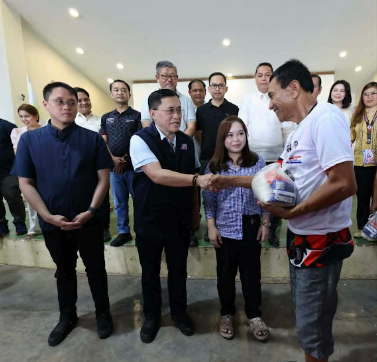
RECOGNIZING the challenges from high fuel prices and expenses, Senator Christopher “Bong” Go extended assistance to members of tricycle operators and drivers associations in San Isidro, Davao Oriental, on Wednesday, June 24.
The assistance is part of Go’s continuing efforts to support transport workers, whom he described as among the unsung heroes who keep communities moving despite economic hardships.
“Kayo po ang ating mga modern-day heroes na hindi napapagod sa pagsiguro na makarating ang bawat isa sa kanilang mga destinasyon, mula eskwelahan, trabaho, o anumang mahalagang gawain. Hindi matatawaran ang inyong sakripisyo, lalo na sa mga oras na kinakailangan ng mabilis at maaasahang transportasyon ng ating mga kababayan,” Go said.
A native of Davao Oriental, Go acknowledged the difficulties faced by tricycle drivers and operators, particularly the impact of fuel price hikes on their daily income.
“Alam ko po ang mga hamon na inyong hinaharap, tulad ng pagtaas ng presyo ng gasolina at mga gastusin sa inyong mga tricycle. Kaya naman, patuloy nating hahanapan ng paraan kung paano kayo matutulungan at masusuportahan,” he added.
To help ease their burden, Go provided assistance to 500 TODA Members.
Joining the senator during the activity were Board Members Don Montojo and Rotchie Ravelo, San Isidro Mayor Maria Angelica Go-Dayanghirang, Vice Mayor Sherlyn Marcojos-Casama, Lupon Vice Mayor Atty. Christian Lawrence “Chrence” Go, and members of the municipal council. Go expressed his gratitude for their continued support and partnership in serving the transport sector and the broader community.
Prior to the distribution, the senator visited local vendors and purchased kakanins as part of his continuing effort to encourage support for small entrepreneurs and local businesses. He also met a beneficiary who is a person with disability and personally provided him with a new walking cane.
As the activity concluded, Go reiterated his commitment to working closely with TODA members and local government officials to ensure that the transport sector remains resilient, productive, and adequately supported.
“Kasama ninyo ako sa pagsusulong ng mas maayos, mas ligtas, at mas maunlad na komunidad, dahil kasama ‘yan sa aking bisyo, ang magserbisyo. Magkaisa po tayo para sa mas maliwanag na kinabukasan hindi lamang para sa inyong hanapbuhay kundi para na rin sa inyong mga pamilya at mga mahal sa buhay,” Go said.
On the same day, Go also provided assistance to barangay functionaries in Banaybanay and assisted vendors in Lupon. Go also attended the inauguration of Maco, Davao de Oro Super Health Center.