



BY ARIEL JAMES P. MERO, KIRSON CASTAÑOS, LINDON ABAPO, AND JERRYHL LOQUINARIO | DSSC Interns
FROM EXCITING virtual adventures and strategic battles to connecting with friends across the globe, online games have become a regular, deeply integrated part of modern youths’ lives.
With just a smartphone, tablet, or computer and a stable Internet connection, young people can spend hours completely immersed in virtual worlds.
While many view online gaming as a valuable source of entertainment and cognitive skill development, others worry about its long-term effects on children’s behavior, academic performance, and overall well-being.
To explore these contrasting perspectives, we sat down with local students, parents, and community members to discuss whether online games do more harm than good.
The double-edged sword
For many older students, online games are far more than a simple distraction, offering a vital way to relax after school, socialize with peers, and build critical problem-solving skills.
Board exam reviewer Zarina Mae Dipamandan explained that gaming can be an effective stress-reliever when kept under strict control: “Para saakoa kanang ga review nako for board exam, di man jud ma-iwasan na maka-dula’g online games para pangpawala’g stress sa gamay na score (For me, as someone reviewing for the board exam, you really can’t avoid playing online games sometimes to relieve stress from getting a low score).”
Dipamandan also noted that tactical games can even align with real-world career paths, provided they do not interfere with daily responsibilities.
“Regarding sa skills, depende pud kung unsa na games ang iyang gina dula, kunyare siguro kung aspiring siya na maging police, so pwede siya makadula’g mga pusil-pusil, pero dapat to the point na dili na siya maka harm sa imoha and dili maka affect sa imohang activities of daily living (Regarding skills, it depends on the game, like if someone is an aspiring police officer, they can play shooting games, but it shouldn’t reach a point where it harms you or affects your daily activities).”
This perspective is strongly supported by a major National Institutes of Health (NIH) study, which found that children who play video games for three or more hours a day perform significantly better on cognitive tests involving working memory and impulse control compared to those who do not play (Chaarani et al., 2022).
The behavioral shift
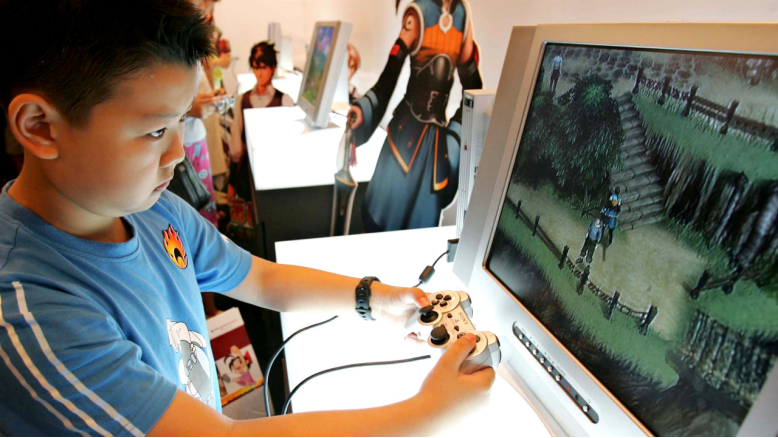
Despite these cognitive benefits, many parents observe a distinct, negative shift in their children’s behavior and temperament when screen time is not actively managed.
Parent Agnes Luna highlights how easily children can become completely absorbed, leading to daily friction and defiance.
“Usahay mag-away namo, kay kung imo siyang sugo-un mo raise naman ang voice kay wala padaw siya nahuman ug dula because kailangan napud nila kay championship na (Sometimes we end up fighting, because when you ask them to do chores, they raise their voice saying they aren’t done playing yet because it is already the championship round),” she said.
Grandmother Jeroline Rafill shared her deep worry after observing that excessive screen time directly alters a child’s character: “Online games man jud, mostly jud baya kanang makada-ot, maka pa usab sa batasan sa bata or character sa bata (Online games, for the most part, are really damaging and can change the behavior or character of a child).”
Psychologists warning about modern Internet gaming behavior note that sudden screen-time interruptions often trigger intense irritability, resistance, and emotional distress in children who struggle with gaming boundaries (Király et al., 2020).
The threat of early exposure
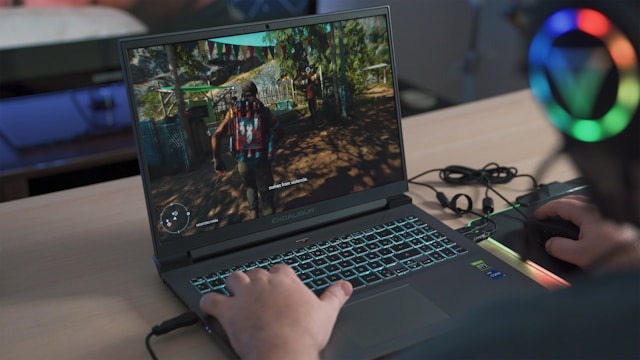
Beyond behavioral shifts, the age at which children are exposed to advanced, highly stimulating gaming environments is a major point of concern.
Zarina Mae Dipamandan cautioned against exposing very young minds to modern, high-tech game designs: “For me, kanang online games sakong perspective, dili dapat siya i-exposed early sa mga bata lalo na karon na high-tech ang mga gaming, dili na siya like katong mga traditional games, naa na’y mga virtual reality (For me, from my perspective, children shouldn’t be exposed to online games early, especially that gaming is so high-tech and unlike traditional games of the past, even featuring virtual reality now).”
Justine Cabriole agreed with this concern, emphasizing that adults must guide children to prevent virtual violence from spilling over into the real world:
“Sa mga games okay ra siya, naa man jud na’y mga violence, pero i-guide lang ang bata ba na dili na i-apply sa tinoud na buhay (With games, it is okay; they really have violence, but we just need to guide the child so they do not apply it in real life),” she said.
Recent developmental research highlights that early exposure to aggressive or mature digital content remains highly problematic, as young children lack the cognitive maturity to process violent themes, potentially leading to behavioral desensitization (Coyne et al., 2021).
Lost childhood: Physical inactivity and neglected health

The shift from outdoor physical play to sedentary indoor screen time has also created a quiet health crisis among today’s youth.
Agnes Luna recalled her own generation’s active childhood, contrasting it sharply with today’s indoor-centric lifestyles.
“Lagom kaayo ang mga bata sauna pero mga kusgan kay, naga-dula, naga sipa-sipa, naay exercise. Karon wala na, bata pa naa nay mga sakit kay wala man sila’y physical activities (Kids would get dark under the sun before, but they were very strong—playing, running around, and getting exercise. Now, that is gone, and even at a young age, they have illnesses because they lack physical activities),” she said.
Furthermore, extreme gaming often leads to the neglect of basic physical needs like eating and sleeping, as noted by parent Dhodz Dionaldo: “Pareha anang ML, di jud na maayo kay di naman maka ka-on. Hantod moabot sa oras na lampas na 12 to 1 na, maka daot jud sa tinoud lang walay maka-ayo (Like with Mobile Legends, it is really not good because they won’t even eat… up to the point that they stay awake past 12 or 1 a.m., which truly causes harm and does no good).”
A comprehensive meta-analysis confirms that high screen and gaming duration in children is directly associated with physical health risks, including severe sleep deprivation, poor sleep quality, and externalizing behavior problems (Eirich et al., 2022).
To address these growing challenges, community members and experts agree that strict time limits and active adult supervision are necessary.
Dhodz Dionaldo advised parents to maintain firm boundaries and avoid overindulging their children: “Atong jud ng i-minimize, dili nato babyhon ang isa ka bata (We really need to minimize it; we should not spoil a child),” he said.
Barangay peace officer Jim highlighted how much the media landscape has changed since the 1980s, urging both parents and educators to cooperate.
“Dapat unta more education sa mga bata ug ang mga teacher pud i-educate nila kung unsay bawal (There should be more education for children, and teachers must also educate them on what is harmful),” he told TIMES.
Contemporary pediatric research proves that active parental mediation—where caregivers consistently set rules, discuss content, and limit hours—is a powerful protective factor that improves overall adolescent well-being and reduces screen-related conflicts (Karaca et al., 2020).
Ultimately, online games are neither purely beneficial nor entirely destructive; rather, their impact is shaped entirely by how they are used, how much time is spent playing, and the quality of guidance children receive.
By working together, parents, educators, and communities can foster responsible gaming habits that support a child’s healthy growth while protecting them from the pitfalls of unregulated screen time.
REFERENCES:
Chaarani, B., Ortigara, J., Yuan, D., Alarcon, G., Owusu, P. N., Montgomery, A., … & Garavan, H. (2022). Association of video gaming with cognitive performance among children. JAMA Network Open, 5(10), e2235711.
Coyne, S. M., Stockdale, L. A., Warburton, W., Gentile, D. A., Yang, C., & Rogers, A. A. (2021). Pathological video game symptoms from adolescence to emerging adulthood: A 6-year longitudinal study of trajectory, predictors, and outcomes. Developmental Psychology, 57(7), 1098–1109.
Eirich, R., McArthur, B. A., Anhorn, C., McGuinness, C., Christakis, D. A., & Madigan, S. (2022). Association of screen time with internalizing and externalizing behavior problems in children: A systematic review and meta-analysis. JAMA Psychiatry, 79(11), 1105–1114.
Karaca, S., Karakoc, A., Can, G., Bektas, H., Okumus, F., & Kaya, M. (2020). The sibling bond, caregiver-child interaction, and parental mediation: Key elements in managing children’s excessive screen exposure. Journal of Pediatric Nursing, 54, e93–e101.
Király, O., Potenza, M. N., Stein, D. J., King, D. L., Hodgins, D. C., Saunders, J. B., … & Demetrovics, Z. (2020). Preventing problematic Internet use during the COVID-19 pandemic: Consensus guidance. International Journal of Environmental Research and Public Health, 17(10), 3679.
