
BY ALEX ALAGON

BY ALEX ALAGON
“IF THE purpose of American military bases is to strengthen American military posture in the Pacific, or in the Indian Ocean and throughout the world, does this not expose the Philippines to the animosities, suspicions, and conflicts arising out of this American military buildup— animosities and conflicts that we have no participation in making? And do not these bases endanger the safety of the Filipinos and the Philippines not only from conventional armed attack, but from possible nuclear attack?” — President Ferdinand Edralin Marcos Sr.
When great powers expand wars, smaller states connected to their military infrastructure discover a harsh geopolitical truth: alliances do not eliminate danger but often relocate it. For the Philippines, this reality is becoming increasingly urgent. The rapid expansion of U.S. military access under the Enhanced Defense Cooperation Agreement (EDCA) risks transforming the archipelago into a forward operating platform in Washington’s next major conflict in Asia.
In an era of long-range missiles, drone warfare, and precision strike systems, such positioning does not necessarily strengthen deterrence. It may instead place Philippine territory on the targeting maps of adversaries.
Recent events in the Middle East should serve as a warning. On Feb. 28, 2026, the United States and Israel launched large-scale military strikes against Iran, hitting strategic sites in Tehran, Isfahan, Qom, and other cities.
Iranian retaliation extended beyond Israeli territory to U.S. military facilities and allied states hosting American forces. The crisis quickly spilled into the Strait of Hormuz, where 20% of the world’s oil trade takes place. Shipping traffic was disrupted, halting the flow of millions of barrels of oil daily. The Iranians have also announced their closure.
According to analysis from the Geopolitical Economy Report, the widening war involving the United States, Israel, and Iran did not emerge in isolation.
The conflict is rooted in a long trajectory of escalating pressure on Tehran following Washington’s withdrawal in 2018 from the Joint Comprehensive Plan of Action (JCPOA), the multilateral nuclear agreement signed in 2015.
Prior to the U.S. withdrawal, international inspectors from the International Atomic Energy Agency (IAEA) repeatedly confirmed that Iran was complying with the agreement’s restrictions on nuclear activities.
Yet Washington abandoned the deal and pursued a “maximum pressure” campaign centered on sanctions, economic warfare, and military pressure.
That escalation eventually spilled into open military confrontation.
As reported by the same analysis, the conflict quickly expanded beyond isolated strikes to involve a broader regional confrontation.
Iran responded using a military doctrine built around ballistic missiles, cruise missiles, and drone systems capable of striking U.S. military facilities and allied infrastructure across the region.
The result was a widening conflict affecting multiple countries hosting American forces, threatening shipping routes, and destabilizing energy markets tied to the Persian Gulf. A report by PBS NewsHour revealed that several Gulf allies were frustrated after the United States launched strikes on Iran without prior notification, leaving countries hosting American forces exposed when Iran retaliated with missiles and drones across the region. The lesson is straightforward: when the United States enters a major war, the geography of that war expands to include the locations where American forces operate.
Which brings us to our beloved motherland.
Under EDCA, the United States has gained access to nine locations across the country, allowing rotational troop deployments, construction of military facilities, and the prepositioning of equipment inside Philippine bases.
These sites include locations such as Antonio Bautista Air Base in Palawan, Basa Air Base in Pampanga, Fort Magsaysay in Nueva Ecija, Lumbia Air Base in Cagayan de Oro, and additional facilities in northern Luzon facing Taiwan and the South China Sea.
Philippine officials maintain that these are not U.S. bases but Philippine facilities used for joint cooperation with American forces.
Legally, that distinction exists.
Practically, it may matter far less.
If such logic applies in the Gulf, why would it not apply in the Pacific?
To a rival state calculating retaliatory strike options during a conflict, a facility hosting U.S. military assets or supporting American operations becomes part of the battlefield regardless of its legal ownership.
In modern warfare, adversaries do not distinguish between sovereignty and treaty ally alignment. They simply neutralize targets that support enemy military capabilities. This is why calls to reassess EDCA deserve serious consideration.
In early March, Senator Erwin Tulfo called for a review of the agreement, warning that the Philippines could become a target if the United States became involved in major conflicts abroad.
Tulfo specifically pointed to the Middle East crisis, noting how American military installations overseas often become immediate targets when war breaks out. If such facilities exist within Philippine territory, nearby communities could face similar risks.
This concern reflects a fundamental reality of modern warfare.
Large-scale conflicts today rarely begin with conventional invasions.
They begin with precision missile strikes designed to cripple military infrastructure within minutes.
Airfields, bases, missile systems, and radar installations are targeted to degrade an adversary’s operational capacity before ground forces even move.
If EDCA locations function as staging grounds for U.S. military operations, then they become prime targets in the opening phase of any major war involving Washington. Supporters of EDCA argue that such arrangements strengthen deterrence against China in the West Philippine Sea.
But deterrence works only when it reduces the probability of conflict.
If the Philippines becomes deeply embedded in a great-power military architecture aimed at containing China, the country may instead find itself on the front line of a future confrontation. This is exactly why diplomacy remains indispensable.
The Department of Foreign Affairs (DFA) has recently emphasized its role as the Philippines’ authoritative voice on regional and international issues.
The newly appointed DFA spokesperson for Maritime Affairs, Rogelio Villanueva Jr., has stressed that diplomacy and dialogue remain essential tools in managing tensions, particularly in complex disputes such as the South China Sea.
At the same time, the Philippine government has continued maintaining diplomatic channels with Beijing.
In early March, Philippine officials held discussions with the Chinese envoy in Manila, reaffirming commitments to communication and peaceful engagement despite ongoing maritime tensions.
The DFA has also defended its diplomatic approach to managing incidents in the West Philippine Sea.
Responding to critics of a provisional understanding between the Philippines and China aimed at preventing confrontations at the Ayungin Shoal, the department pointed out that some critics had attacked the agreement without even seeing its contents, emphasizing that diplomacy seeks to prevent escalation and miscalculation.
These diplomatic efforts have not been universally welcomed.
An analyst has argued that excessive reliance on quiet diplomacy risks normalizing coercive actions by China in disputed waters. He warns that Manila must remain firm in asserting its rights under the 2016 arbitral ruling that invalidated China’s expansive claims in the South China Sea.
But framing diplomacy as weakness misunderstands the complex dilemma facing the Philippines.
The country must pursue two objectives simultaneously.
First, it must defend its sovereignty and maritime rights.
Second, it must prevent the archipelago from becoming a battlefield in a war between major powers.
These goals are complementary.
A nation cannot protect its sovereignty if it is drawn into a catastrophic war that devastates its cities, infrastructure, and economy.
Nor can diplomacy succeed if the country becomes militarily entangled in a geopolitical confrontation not of its own making.
The widening war in the Middle East demonstrates how quickly such confrontations can spiral. As highlighted by the Geopolitical Economy Report, conflicts involving U.S. strategic interests often expand across multiple regions and actors once hostilities begin.
Military escalation between Iran, Israel, and the United States has already produced ripple effects across energy markets, shipping routes, and regional security systems. The Philippines should study these developments carefully.
Countries that host foreign military assets often discover that they inherit not only the perceived benefits of alliance but also the dangers of retaliation.
When a superpower’s military infrastructure exists inside your borders, your territory inevitably becomes part of the wider battlefield.
This is the geopolitical trap facing Manila.
The Philippines should maintain alliances and partnerships. But those relationships must serve Philippine interests first, not subordinate them to the military objectives of another superpower. A sovereign nation must retain the ability to pursue diplomacy, de-escalation, and regional cooperation without automatically being drawn into military confrontations between larger states.
We should avoid the risk of becoming a frontline.
The archipelago sits in one of the most strategically important areas in the Asia-Pacific, connecting the South China Sea, the Philippine Sea, and other critical maritime trade routes. In the event of a major conflict between the United States and China, military planners on both sides would view Philippine territory as a crucial theater.
And in modern war, crucial theaters become targets.
This is why the debate over EDCA must move beyond slogans about alliances and accusations of malign foreign influence.
It is fundamentally a question of national survival.
The Philippines must ask itself whether expanding foreign military access strengthens the country’s long-term security or whether it quietly places Philippine cities, ports, and airfields onto the strike lists of future wars.
History shows that when great powers fight, geography becomes destiny.
The Philippines must ensure that its geography does not become someone else’s battlefield.
Daniel Long is an entrepreneurship student at Thames International and a Filipino writer contributing to the Asian Century Journal and The Manila Times. He is also a guest host of the “PH-China Talks” radio program on DWAD 1098 and a Youth Committee member of the Association for Philippines–China Understanding (APCU). He previously served as a speechwriter for Senator Imee Marcos and has represented the Philippines as a press and APCU delegate to China.
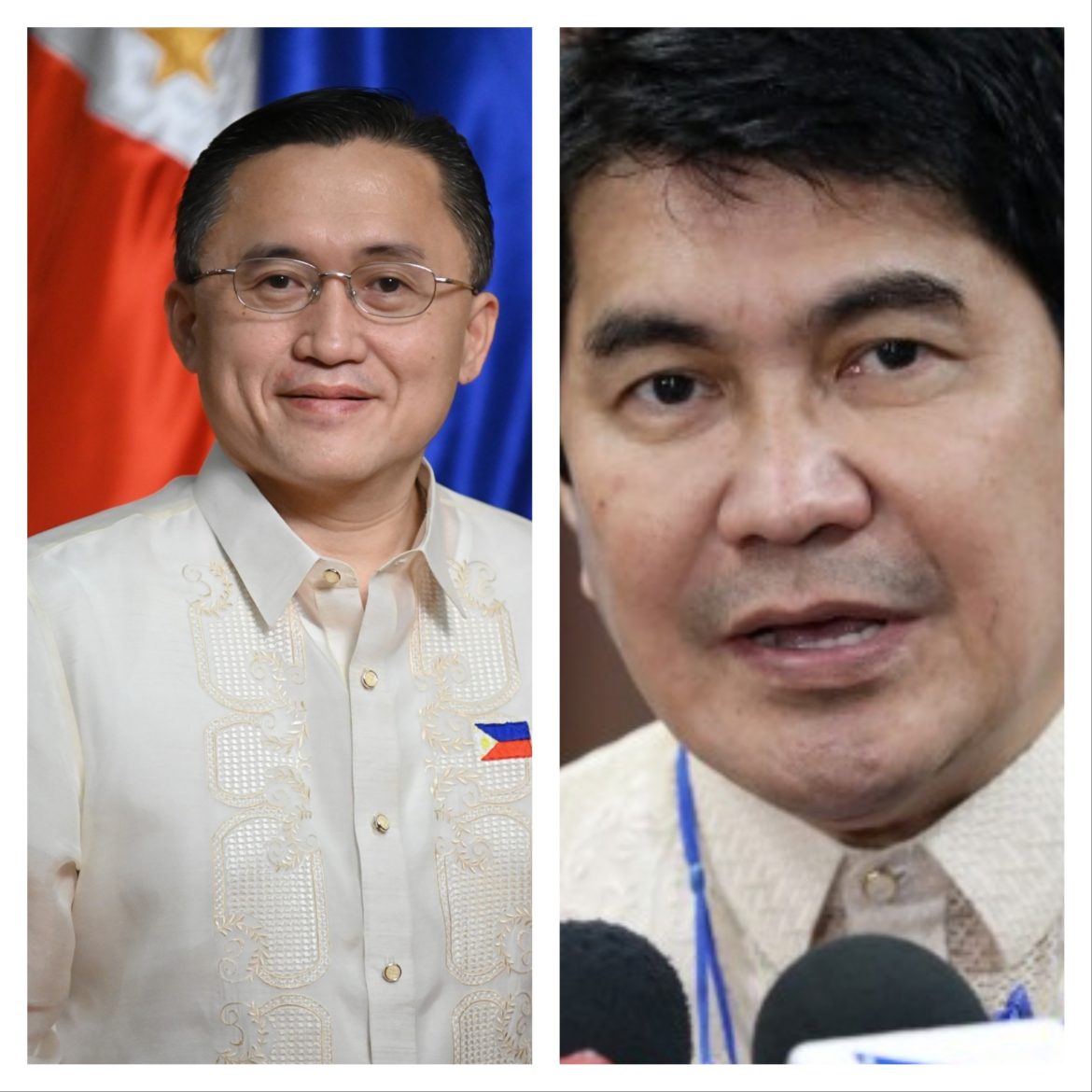
SENATORS Erwin Tulfo and Bong Go top Filipinos’ “nice list” of senators, while Senators Jinggoy Estrada and Imee Marcos land on the “naughty list” of senators, according to WR Numero November 2025 nationwide survey.
In the latest Philippine Public Opinion Monitor, Filipinos were asked to imagine themselves as Santa this Christmas and name which of the 24 sitting senators they would place on their “naughty” or “nice” list. Respondents were asked to identify as many names as they could.
‘Nice’ list of senators
When asked who among the senators they would place on their “nice” list, Sen. Raffy Tulfo emerged on top, with nearly half of Filipinos saying they would put him on their ‘nice’ list (47%). He was followed by Sen. Bong Go (37%) and Sen. Robin Padilla (33%).
The other senators who were also in the ‘nice’ list include Sen. Erwin Tulfo (27%), Sen. Tito Sotto (23%), Sen. Rodante Marcoleta (21%), Sen. Bam Aquino (20%), Sen. Bato dela Rosa (18%), Sen. Kiko Pangilinan (17%), and Sen. Risa Hontiveros (16%), all within the Top 10.
At the bottom of the “nice” list was Sen. Jinggoy Estrada, with only 5% of respondents citing him as “nice”.
‘Nice’ list by factional partisanship
Sen. Raffy Tulfo tops the “nice” list among Marcos supporters, with 56% citing him. He is followed by Sen. Sotto (40%), Sen. Go (36%), Sen. Erwin Tulfo (32%), and Sen. Lacson (27%).
Sen. Raffy Tulfo only ranked third among the ‘nice’ list of Duterte supporters (43%), following Sen. Go (60%) and Sen. Padilla (55%), who ranked first and second, respectively. Sen. Dela Rosa (36%) and Sen. Marcoleta (34%) were also identified in the list.
Meanwhile, Opposition supporters placed Sen. Aquino and Sen. Pangilinan highest on their “nice” list, with both receiving 42%. They are followed by Sen. Raffy Tulfo (41%), Sen. Hontiveros (37%), and Sen. Erwin Tulfo (28%).
Sen. Raffy Tulfo also emerged in the ‘nice’ list of independents (50%), followed by Sen. Erwin Tulfo (28%), Sen. Go (26%), Sen. Padilla (24%), and Sen. Aquino (23%).
‘Naughty’ list of senators
Respondents were also asked who among the senators they would place on their “naughty” list. Sen. Estrada topped the list, with 35% of Filipinos citing him as ‘naughty’. He is followed by Sen. Marcos (27%), Sen. Dela Rosa (25%), Sen. Sotto (25%), and Sen. Lacson (19%).
Other senators who were also cited in the “naughty” list include Sen. Hontiveros (18%), Sen. Escudero (18%), Sen. Villanueva (17%), Sen. Padilla (15%), and Sen. Go (15%).
At the bottom of the naughty list was Sen. Pia Cayetano, with only 6% saying they regard her as “naughty”.
‘Naughty’ list by factional partisanship
Sen. Estrada tops the “naughty” list for Marcos supporters (42%) while other senators tagged as “naughty” by Marcos backers include Sen. Dela Rosa (33%), Sen. Imee Marcos (32%), Sen. Escudero (31%), and Sen. Padilla (31%).
Independents also identified Sen. Estrada at the top of their ‘naughty’ list (35%), including Sen. Dela Rosa (32%), Sen. Marcos (25%), Sen. Sotto (20%), and Sen. Go (20%).
Sen. Estrada is second on the “naughty” list for Duterte supporters, trailing Sen. Sotto, who tops the list at 41%. Other ‘naughty’ senators among Duterte supporters include Sen. Lacson (29%), Sen. Hontiveros (27%), and Sen. Marcos (21%).
Meanwhile, Sen. Marcos emerged on the ‘naughty’ list of Opposition supporters (41%), followed by Sen. Estrada (39%), Sen. Dela Rosa (35%), Sen. Villanueva (26%), and Sen. Marcoleta (25%).
The nationwide survey, conducted from Nov. 21-28, was done through face-to-face interviews with a nationally representative sample of 1,412 Filipinos residing in the Philippines, at a ±3% margin of error and 95% confidence level. At the subnational level, the margin of error is ±7% for the National Capital
Region, ±4% for the rest of Luzon, ±6% for the Visayas, and ±5% for Mindanao, all at the same 95% confidence level. These findings form part of the WR Numero Philippine Public Opinion Monitor, Volume 2025, Issue 5 (November 2025 National Survey).
SOME lessons arrive quietly. I remember a fisherman from Carles, Manong Nardo, his palms rough as old rope. After Yolanda flattened the coast, he gathered planks that the sea had tossed onto the shore. Those boards could not be traced to anyone; they were wreckage in a landscape of loss. When responders saw him picking them up, there was no shouting, no lecture—only tired eyes recognizing a tired man. The law was clear, but life had been clearer. They allowed him to rebuild because storms do not come with receipts.
We grow up believing laws are anchors of order. Yet hunger and crisis test theories the way wind tests houses. What happened that day was not defiance—it was compassion choosing relevance. The law did not bend because someone felt entitled. It bent because survival demanded space to breathe.
That same tension echoed recently in the Senate when Senator Erwin Tulfo said, “Sometimes you have to bend the law.” Many understood his point as frustration over stolen public funds, especially in flood-prone communities. Others heard danger—because in this country, bending rules has saved the poor on one hand and shielded the powerful on the other.
Laws were not carved to replace humanity but to reflect it. From ancient principles of equity to modern restorative justice, societies have long recognized that punishment without proportion becomes harm. When the law humiliates more than it heals or protects only those who already sit above it, something is broken that no technicality can patch.
Daily life proves this. A mother arriving at the ER without cash but with a burning child is not a criminal. A jeepney driver caught between schedules and storms is not a threat to the State. A student selling bibingka to fund modules should not be treated like a smuggler. These moments are not loopholes; they are complexity wearing a face.
But here is the caution. Bending the law for those with little power is mercy. Bending it for those with influence is manipulation. We have witnessed the televised denials, the notarized explanations, and the well-lit press conferences. That is why the discussion on restitution struck a nerve. When Senator Rodante Marcoleta insisted that those seeking witness protection, like the Discayas, need not return any alleged stolen money, the public balked. Ordinary families return mismatched change and borrowed tools without lawyers or cameras. If accountability is heavy, why should it fall only on shoulders already burdened?
The test is simple: Does the flexibility lift the struggling or cushion the comfortable? If it shelters the corrupt, it is not compassion—it is convenience wrapped in legal language.
The most polished laws will fail if they abandon common sense. Rules that block a thirsty child from crossing a broken boundary after a typhoon may be lawful, but are not right. Rules that punish the farmer selling vegetables beside his land while large-scale anomalies are debated like theories only breed resentment. The question is not only what the law says but whether the result honors dignity.
Teachers know this well. We give second chances not because standards disappear, but because context speaks. A learner who walked kilometers under the heat sits differently from one driven to school. Extension is not favoritism; it is fairness recognizing uneven starting lines.
Years later, I met two of Manong Nardo’s children—grown, working, steady. “Kung ginpunish pa si Tatay, basi indi ko nakapadayon eskwela,” one said. A single moment of mercy skipped the family past years of delay. Had the law been rigid that day, the government might have claimed victory, but society would have carried the cost.
The law should protect people, not corner them. It must be firm, but not brittle; clear, but not cold. The blindfold of justice symbolizes neutrality, not numbness. A nation cannot preach discipline solely downward while negotiation happens upward.
We do not resent the law—we resent when it forgets us. We resent when technicalities become shields, when apologies cost nothing, when consequences belong only to those without connections. The true power of the law is trust, not fear.
In the end, bending the law toward survival and dignity is not rebellion—it is responsibility. Laws are tools, not trophies. They must walk with people, not ahead of them. Life bends us daily. The least the law can do is bend just enough to remain human.
***
Doc H calls himself a ”student of and for life” and, like many others, wants a life-giving, why-driven world dedicated to social justice and happiness. His views may not reflect those of his employers or associates.

DAVAO City Police Office (DCPO) spokesperson Captain Hazel Tuazon stressed the importance of strictly adhering to the legal rules following the “bend the law” statement of Senator Erwin Tulfo during the Senate hearing into flood control projects.
“The law is harsh, but it is the law,” Tuazon said. “We need to follow our laws first and foremost, because the law is meant to maintain order and peace. If we don’t have laws to follow and just want to please everyone, we will have chaos.”
Tuazon warned of the negative consequences of non-compliance: “If we don’t follow and respect our laws, chaos will happen in our country. This will exacerbate issues like the corruption that we are facing now.”
Also, retired Court of Appeals associate justice Loida Kahulugan criticized Tulfo’s statement, which was publicly supported by Justice Secretary Jesus Crispin Remulla.
During the Senate Blue Ribbon Committee hearing on flood control projects on Tuesday, Sept. 23, Tulfo stated, “Sometimes we have to bend the law to be able to please the people. Am I right, Secretary Remulla?” to which Secretary Remulla replied, “Yes, sir.”
Kahulugan described the exchange as misleading and dangerous for public consumption. “In law, we have what is called Dura lex sed lex — the law is harsh, but it is the law,” she said during the Davao Peace and Security press briefing on Wednesday, September 24, 2025.
Justice Kahulugan emphasized that the law exists to maintain peace and order, and suggesting it can be “bent” is incorrect.
“For ordinary people hearing that and coming from him or from somebody whom we have placed in that hallowed hall… they might think it’s true, but that statement is wrong,” she added. “If Secretary Remulla agreed to that statement, well, that is his opinion, but I believe that is not the law.”
Tulfo clarifies remarks
Senator Tulfo later clarified his remarks in an interview with Karen Davila on Wednesday, explaining that his comment was not a call to violate laws but to allow exceptions, specifically concerning the restitution of alleged ill-gotten wealth.
“I did not say we have to break the law, literally… What I meant was, in every rule there’s an exception, that’s bending the law,” the senator said. “It was just born out of anger… what I meant was bend the law for humanitarian reasons.”
Tulfo explained he was suggesting that individuals voluntarily surrender money or property without needing to go through a lengthy court process. “I was saying, perhaps we can set aside the law for a moment because the law requires due process for restitution. But I was saying, maybe we don’t have to… Maybe they can just voluntarily surrender it, and we won’t go through the court.”
Justice Kahulugan, however, maintained that legal restitution can only occur after due process.
“Restitution comes only after a decision is made,” she explained. “A complaint must be filed, it has to be tried, evidence must be scrutinized by the court… then if the decision says that the person is guilty and he has to return whatever has been taken, that is what we call restitution.”
She agreed that if the accused parties voluntarily surrender “illegally taken” items, it could be accepted. However, she warned against demanding restitution without proof.
“We cannot demand until such time that it is proven that it was illegally taken, and after the court makes a decision,” she said.
When asked if the law can be bent to ease requirements for state witnesses to facilitate restitution, Kahulugan was firm. “That is dangerous,” she replied. “There are requirements that have to be complied with before one can be a state witness… You have to pass those requirements before you can be a state witness.”
Photo courtesy of Rhoda Grace B Saron