

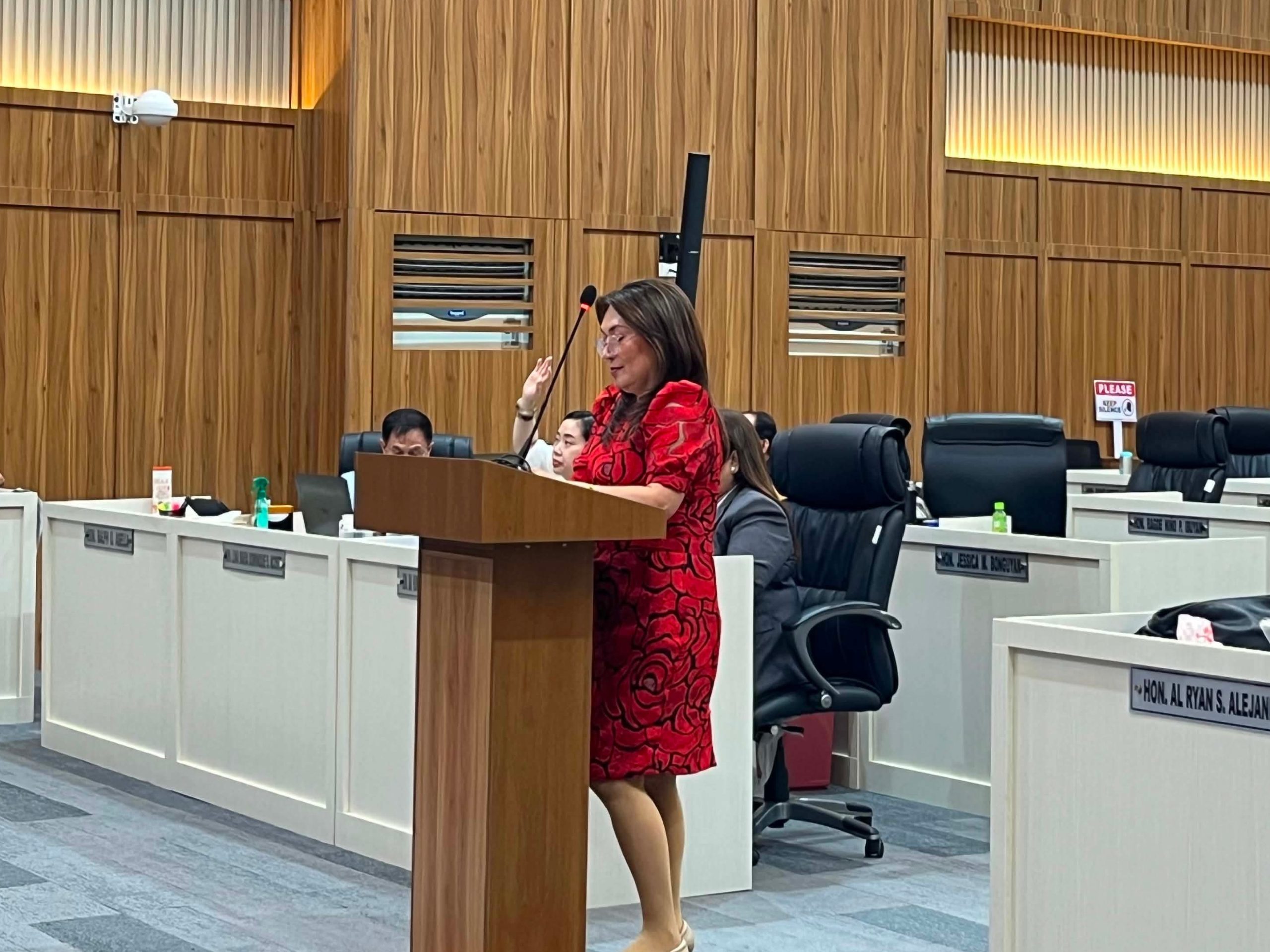
A LAWMAKER has filed a proposed ordinance to strengthen protection for overseas Filipino workers (OFWs) from Davao City, citing cases of illegal recruitment among migrant workers.
Proponent Councilor Rachel Zozobrado proposed the “Safe Migration Ordinance in Davao,” also known as the Kalinga sa Miranteng Dabawenyo Ordinance of 2026.
In her speech, Zozobrado said 72 human trafficking-related cases were recorded in Davao City in 2025, the highest in the entire Davao region.
She added that nearly two million Filipinos leave to work abroad every year, with their remittances holding up the national economy, but the system meant to protect them is reactive, rather than preventive.
“Investigations are done only after a complaint. Rescues are made after the abuse. Repatriations are executed after the crisis,” she said.
The ordinance establishes a “culture of safe migration” patterned after Executive Order No. 41, Series of 2020, anchored on four principles: verify, report, protect, and participate, to be practiced by every Dabawenyo, regardless of age.
The ordinance requires the “Apat Dapat” standard, a set of four conditions to be communicated in plain Cebuano and Filipino that must be true before an applicant pays any fee.
The Apat Dapat standards are: that the recruiter is licensed, the job offer is approved, the hiring is official, and the payment is correct (Lisensyado, Aprubado, Opisyal, Tamang Bayad).
The ordinance declares a month each year as Davao City Safe Migration and Anti-Illegal Recruitment Month, to be marked by an intensified information campaign across city channels, as well as public service announcements.
Zozobrado said the ordinance will make job fairs safer by requiring physically separate and clearly marked overseas and local job tracks, and verification of a Department of Migrant Workers (DMW) Job Fair Authority for every participating agency.
It will also require a 48-hour cooling-off period so that any applicant will not be pressured to sign a contract.
The fifth requires that disclosures already mandated under DMW rules, including who the actual employer is, the true salary, and an itemized breakdown of fees, be made so the applicants can understand.
Zozobrado said the ordinance will also institutionalize safeguards against recognized trafficking indicators, such as passport confiscation, contract substitution, coerced accommodation debt, tourist-visa deployment, and recruitment of minors.
A clear referral pathway through the proposed Davao City Safe Migration OFW Families’ Welfare and Crisis Center to the Local Committee on Anti-Trafficking (LCAT), the Inter-Agency Council Against Trafficking (IACAT), the DMW, the Overseas Workers Welfare Administration (OWWA), the Department of Social Welfare and Development (DSWD), and the PNP Women and Children Protection Desk.
The ordinance will also campaign “DCplinado OFW” to empower migrant workers on their rights and responsibilities, encouraging them to be informed, law-abiding, financially prepared, and professionally excellent.
It will also establish a voluntary, tri-lingual Pre-Migration Agreement that waives no rights, a multi-stakeholder Safe Migration Council, performance indicators and oversight by the city council, and penalty provisions.
Zozobrado said the committee is currently coordinating with the president of the Association of Barangay Captains to hold three separate meetings for the city’s 182 barangay captains, together with the DMW, OWWA, and the OFW Families’ Welfare and Crisis Center of the CSWDO, to discuss the proposed establishment of a Barangay OFW Help Desk.
She also cited ongoing digital initiatives — including TaraKabayan, Power Mims, and the KalingApp — as part of an ecosystem meant to detect early warning signs of abuse across a migrant worker’s entire journey, from recruitment to reintegration.
“Prevention rarely makes headlines. But it is the highest form of kalinga- of care, and that is what Davao City is all about,” Zozobrado said.
The council received her privilege speech along with the proposed Safe Migration Ordinance in Davao on first reading and referred it to the appropriate committees.