

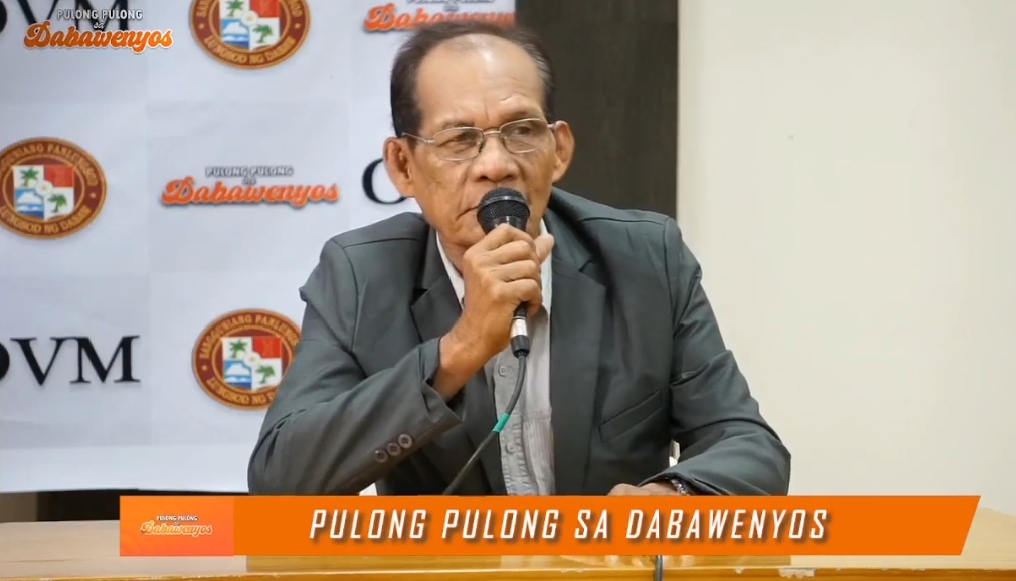
THE CITY’S Indigenous Peoples Mandatory Representative (IPMR) raised the alarm over the illegal sale of ancestral land in Marilog District.
Datu Pagdatua Demetrio B. Bolo Sr., the IPMR for Davao City, said the practice, compounded by cases of double-selling, has fueled boundary conflicts that turned to violence.
During the Pulong Pulong sa Dabawenyos on Tuesday, Bolo said tribal leaders have been the subject of complaints filed by migrant settlers seeking to recover lands they claim to have purchased.
“The main problem there is double sale. Unauthorized brokers often trick buyers into purchasing ancestral lands without verifying ownership with legitimate clan holders,” Bolo said.
He cited that, under prevailing legal frameworks, ancestral domains are non-transferable and cannot be outrightly bought or sold, but legitimate arrangements are strictly limited to long-term leases for 25-year agreements.
Under Section 57 of the IPRA Law, indigenous cultural communities (ICCs) or Indigenous Peoples (IPs) may enter into agreements with outside legal entities for the utilization or development of natural resources. These specific partnerships or contracts cannot exceed 25 years.
He traced the roots of the conflict to when he assumed his post in 2025, when the Public Safety and Security Office sought his assistance over a land and boundary dispute that claimed the lives of two barangay kagawad and a chairman.
Upon verification, Bolo said, investigators found that the land in question had been sold twice, a practice he identified as “double sale,” in which one tribe sells a parcel while another later moves to reclaim it.
Bolo stressed that tribal communities do have the right to recover ancestral land, but only for valid reasons, such as when land has been left idle or abandoned by its holder.
He said land cannot simply be taken back without cause, and that the interests of both the original landholder and the migrant occupying the land need to be reconciled.
“Some migrant settlers maintain that they had legitimately purchased the land, even where pertinent documents were lacking,” Bolo said.
Bolo estimated that only 50-60% of land parcels in Marilog currently have proper documentation.
He also cited a gap in the implementation of the Indigenous Peoples’ Rights Act (IPRA), which limits individual landholding to five hectares, noting that some landholdings in the area span 80 to 100 hectares that fall outside the law’s coverage.
Bolo called for an information campaign to raise awareness among tribal communities and migrant settlers alike on ancestral domain rules.
He said the process should involve calling clan members together, having them sign agreements, and requesting a “win-win” resolution to disputes.
Bolo reiterated that the tribal council remains opposed to the sale of ancestral domain land, calling on communities to report ongoing illegal land transactions to help curb further conflict in the ancestral domains.
The official said a meeting has been set for October to bring together the National Commission on Indigenous Peoples (NCIP) Region X and Region XI, public safety authorities, and tribal leaders to put a stop to the killings linked to land disputes.