

BY ALEX ALAGON
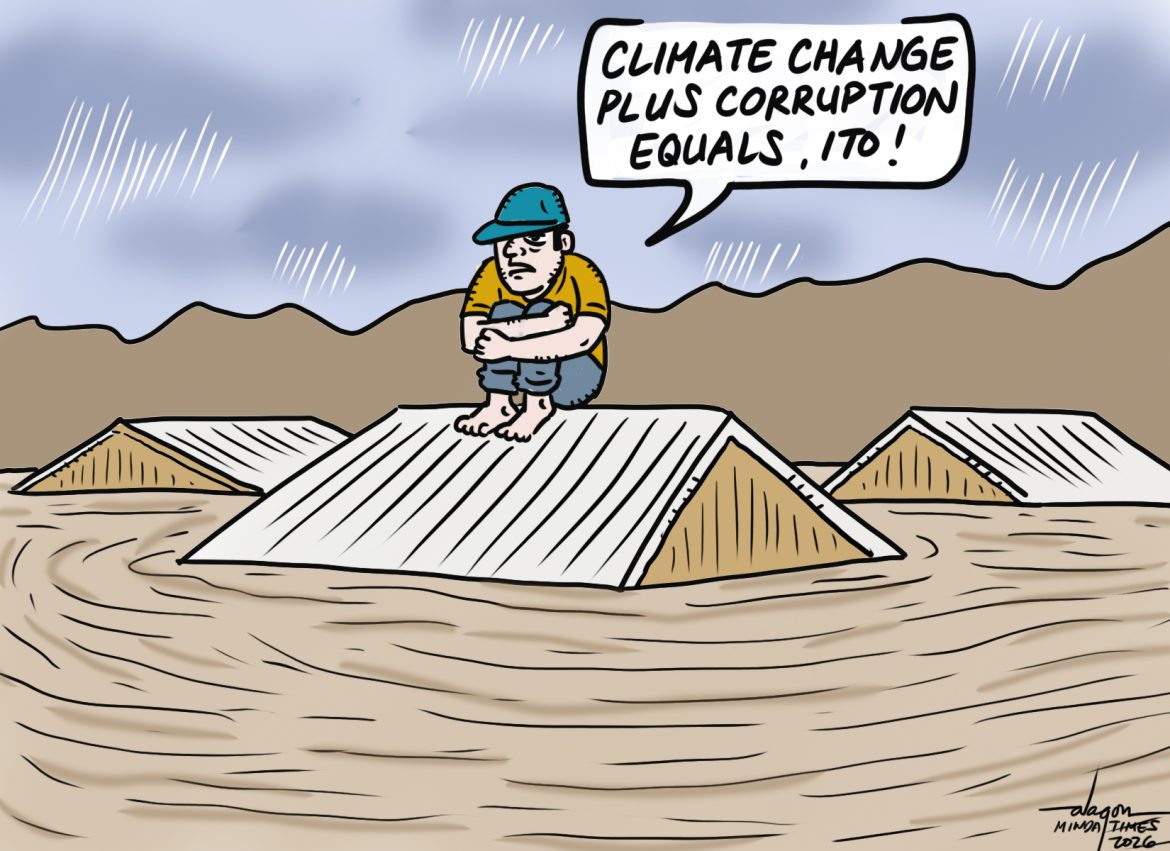
BY ALEX ALAGON

SENATE Minority Leader Alan Peter Cayetano on Thursday said his bloc will continue its push for nation-building and anti-corruption reforms despite its transfer to the minority following the recent Senate leadership reshuffle.
In a Facebook Live on June 18, Cayetano defended his group’s work during his tenure as Senate president, rejecting claims that his camp had been inactive or ineffective.
“Yung sinasabi nilang hindi nagtrabaho, walang katotohanan [iyon], panay kasinungalingan. Never naman tayo tumigil sa pagtatrabaho. Ang kwestyon, ano’ng trinatrabaho natin? [Iyon ay] nation building,” Cayetano said.
He framed the leadership changes in the Senate as part of a broader struggle over governance priorities, particularly in addressing corruption in government projects.
Cayetano also said corruption has weighed heavily on the country’s economy and underscored the need to strengthen governance foundations.
“Our economy is suffering; we have to recover. Iyong flood control scandal, iyon siguro ang pinakamalaki [na corruption]. Pero napakarami pa na systematic corruption na hindi na pag-uusapan,” he said.
He added that while both Senate blocs share the goal of nation-building, they differ in approach and priorities.
“Don’t take it away from us. Yung amin pong grupo wants to build a nation. Good faith tayo. Meron kayong vision of a nation you want to build. Meron kaming vision nung gusto natin i-build,” he said.
Cayetano stressed that nation-building must rest on strong institutions anchored in law and accountability.
“Saan natin [pwedeng] umpisahan yung nation building? Sa pundasyon [at] rule of law. ‘Di ba? Regime of justice and truth,” he said.
He urged the public to stay engaged amid political tensions and allegations of corruption.
“It’s time for real change. Mga kababayan, huwag po tayong susuko. Let’s all do our best and let’s keep praying… let us build this nation that we love and let us serve the God that we love,” he said.
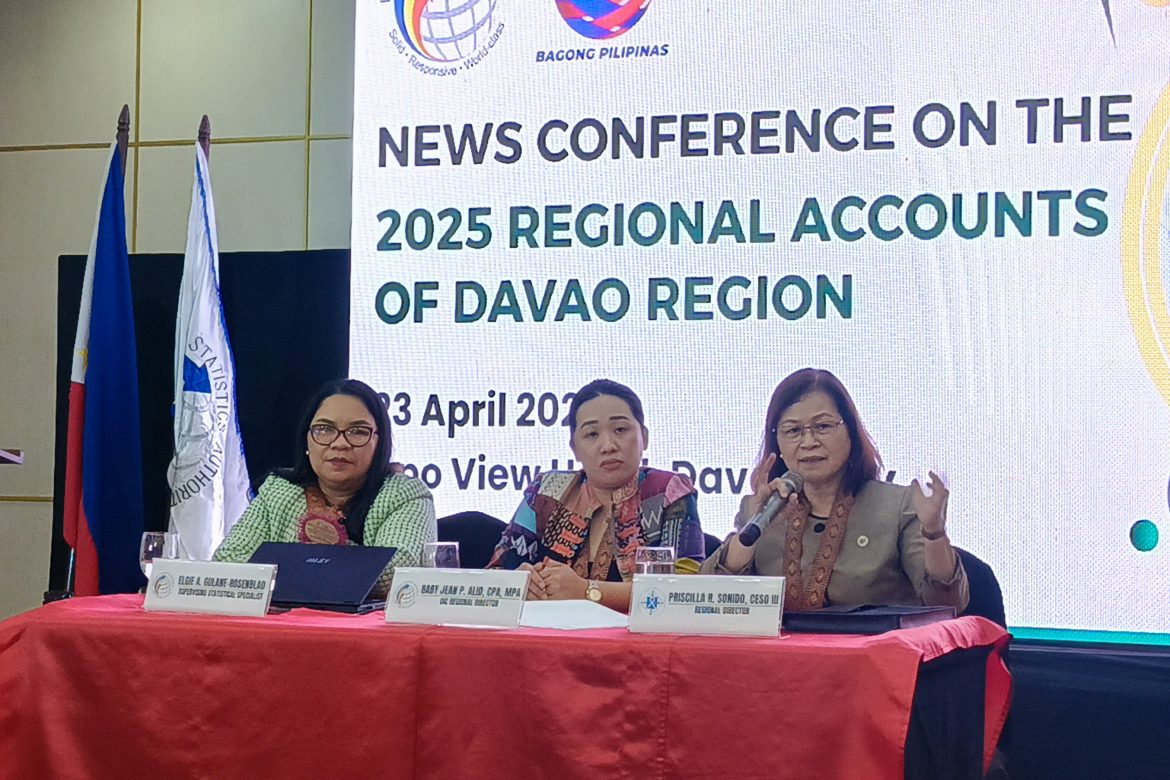
THE DEPARTMENT of Economy, Planning and Development (DEPDev) XI noted that the flood control scandal in 2025 affected the construction industry of Davao Region.
While the Philippine Statistics Authority (PSA) XI recorded a positive growth rate of the construction industry in 2024, it dramatically nosedived last year.
During the 2025 Economic Performance of Davao Region news conference last April 23, PSA XI reported that the construction industry grew from P124 billion in 2024 to P127 billion in 2025.
However, DEPDev noted that the industry itself nosedived from 15.5% in 2023-2024 to only 2.7% from 2024 to 2025.
“May suspension ng construction industry from the government side. That’s why our construction industry slowed down severely by 6%,” Priscilla Sonido, DEPDev XI regional director, said.
The flood control scandal broke out in the third quarter last year, where some processes of DPWH were reviewed to ensure infrastructure projects are within standard.
Baby Jean Alid, PSA XI OIC regional director, said public spending comprises 30% of the total construction volume, on top of the private and household construction.
“In total, nag-increase tayo, but on the government construction nag-decrease po siya,” Alid said, noting the value of the industry increased, but the growth rate decreased.
“Lumalaban ang private at household natin na construction kaya nag-increase pa rin tayo ng kunti, but malaki ang effect ng ating government construction,” she added.
Sonido said the domestic governance issues have “undeniably” dampened economic performance across regions.
The official called for stringent anti-corruption safeguards for transparent, high-quality project delivery to sustain the economic gains of the region.
“We must make 2026 a rallying point to accelerate critical reforms and revitalize our development strategies,” she stressed.
THE PHILIPPINES has seen many scandals over the years, but every so often, a moment arrives that captures the country’s attention in a way that cuts through political noise. The recent confession video of Congressman Zaldy Co, revealing stories about luggage filled with cash supposedly linked to high-ranking officials, is one such moment. Watching the video felt like watching a man trapped between fear and obligation. His voice trembled, his eyes shifted, and every word seemed to carry more weight than he intended to admit.
Whether he was telling the truth, whether it was rehearsed, or whether it was forced is not the point of immediate concern. What matters is how a single video triggered a national conversation about money, power, truth, and the machinery of political communication. It exposed the fragile world of political image-making, where narratives are crafted like merchandise and truth is treated like a negotiable asset.
In the Philippines, corruption not only thrives in hidden rooms or discreet transactions. It thrives in how stories are told, how narratives are shaped, and how information is controlled. This is why corruption is not just a financial issue. It is a communication crisis of the highest order.
The language of power
Whenever a scandal erupts, the first response from those implicated is almost always strategic silence. Long pauses, vague statements, and delayed press conferences often mean one thing: the story is being polished behind the scenes. Lawyers and advisers gather to decide which angle sounds sympathetic, which phrasing is safest, and which emotion should be performed.
This is image management at work. It is communication used not to inform, but to protect. Not to clarify, but to confuse. Not to serve the people, but to shield the powerful.
The public is eventually fed sanitized versions of events. Officials deny involvement, blame political opponents, or dismiss allegations as black propaganda. The truth becomes buried beneath layers of statements that appear official, yet lack authenticity.
People often say corruption is about money exchanged in secret. But the deeper form of corruption happens in plain sight, through carefully sculpted words meant to mislead. The manipulation of language becomes a form of moral laundering.
When truth is negotiable
Zaldy Co’s video is not just about potential corruption. It is about how truth has become negotiable in our political culture. If a confession can be made on camera, then quickly denied or clarified the next day, what does that say about how our leaders treat honesty?
In development communication, truth is the foundation of participation. A society cannot engage meaningfully in its own progress if the information it receives is distorted. When leaders treat truth as a flexible tool rather than a non-negotiable value, development halts. Policies become questionable. Public trust erodes. People stop believing in institutions that are supposed to serve them.
Corruption grows in the spaces where truth is twisted or withheld. It grows in silence. It grows in fear. It grows every time communication is used as a shield rather than a bridge.
Corruption as a communication crisis
We often hear citizens say, “Matagal nang may korapsyon sa Pilipinas.” True. But what makes corruption worse today is how quickly lies spread and how slowly accountability follows. Technology has made communication faster, yet transparency remains slow.
The problem is not only the act of corruption itself. The deeper problem lies in how leaders communicate when caught. They release brief statements written by public relations teams. They decline interviews. They redirect the blame. They create narratives that deflect attention rather than confront wrongdoing.
This is why corruption is a communication crisis. Every false narrative erodes public trust. Every evasive answer kills confidence. Every shallow apology deepens disillusionment. And every moment of silence in the face of wrongdoing becomes a loud confirmation of guilt.
In countries where accountability is strong, communication is clear, honest, and consistent. Leaders face the public, answer difficult questions, and stand by their statements. In the Philippines, communication often becomes a performance meant to appease, not enlighten.
The cost of narrative manipulation
When communication is abused, it shapes public perception in damaging ways. Narratives can be weaponized to make the guilty appear innocent and the victims appear unreasonable. Political machinery can repaint corruption as a misunderstanding or political persecution.
This pattern has real consequences. Development slows because resources meant for education, healthcare, infrastructure, and disaster response are siphoned off. Progress becomes delayed because decisions are influenced by personal gain rather than public interest.
Worse, citizens become cynical. When people begin to believe that all politicians are corrupt, they disengage. They stop participating in governance, community initiatives, and elections. Disengagement is the death of development.
The role of media and the unfiltered public
In the age of social media, narratives can be challenged immediately. Citizens are no longer passive consumers of information. They dissect, analyze, and argue. They hold leaders accountable with evidence, videos, screenshots, and crowdsourced information.
But social media is a double-edged sword. It can expose corruption, but it can also spread false narratives. It can empower, but it can also confuse. This is why development communication must evolve to meet the demands of the digital age. It must promote media literacy, fact-checking, and responsible storytelling.
Zaldy Co ‘s video is a perfect example of this. It circulated rapidly not because mainstream media highlighted it, but because ordinary people shared it, debated it, and demanded answers. It showed that the public can disrupt official narratives when truth is mishandled.
Silence as a strategy
One of the most dangerous tools in political communication is silence. Silence allows rumors to flourish, but it also buys time. Silence allows those involved to assess damage, coordinate responses, and rebuild their narrative.
Silence is not neutral. It is strategic. It communicates avoidance, control, or fear. When leaders refuse to speak, they are not protecting themselves alone. They are disrespecting the public that deserves the truth.
The longer the silence lingers, the deeper distrust grows. People are tired of waiting for honesty from those who promised to serve them. They are tired of vague statements that say nothing. They are tired of apologies that explain nothing.
Development communication as a path forward
Development communication teaches that dialogue, honesty, and participation are essential for progress. When leaders speak truthfully and listen sincerely, communities feel valued and involved.
Development happens when truth becomes the default, not the exception.
Spaces that speak of truth
Every scandal speaks not only of wrongdoing but of the spaces that allowed it. Zaldy Co’s video spoke of fear, pressure, and a system that relies on silence. The responses from involved officials spoke of narrative control rather than accountability.
These spaces reveal what our political culture values. They also reveal what it lacks.
If the Philippines wants to move forward, we must redesign these spaces. We must create spaces where citizens feel empowered to voice concerns, where leaders feel obligated to be honest, and where communication functions as a tool for development, not deception.
Corruption will not disappear overnight. But its power weakens every time truth is spoken clearly, every time silence is broken, and every time citizens demand transparency.
The currency of corruption is not money alone. It is dishonesty. It is silent. It is manipulation. And the only antidote is communication rooted in truth.
————————————————————————————————————————–
–
Kethelle I. Sajonia is a college instructor at the University of Southeastern Philippines, Mintal Campus. She is currently in the final phase of her Doctor of Communication degree at the University of the Philippines. Her research interests include inclusivity, education, communication, and social development. She actively engages in scholarly research and community-based initiatives that advocate for inclusive and transformative communication practices.

VICE PRESIDENT Sara Duterte on Thursday expressed confidence that she will not be implicated in the ongoing flood control projects controversy, even as she accused unnamed groups of attempting to link her and former President Rodrigo Duterte to the systemic corruption.
Speaking at a press conference for the World Pandesal Day celebration at Kamuning Bakery Cafe in Quezon City, the vice president acknowledged that the investigation’s scope would likely be broadened to include her and her father.
When asked directly if she thought investigators would try to link the former President to the controversy, she replied in Filipino, “Oo, at saka sa akin (Yes, and me, as well).”
The vice president believes the attempt to drag her name into the issue is politically motivated, specifically targeting her alliance with her father and Senator Christopher “Bong” Go.
“I think they’ll try to connect it to me because Senator Bong Go is an ally of former President Duterte. That’s probably where they’ll try to make up a story—me on one side, PRRD in the middle, and Senator Go on the other,” she said.
Despite believing some parties might try to create a narrative against her, she remains certain she will not face any legitimate charges.
“Sigurado ako hindi aabot sa akin ‘yung flood control scandal (I’m certain the flood control scandal won’t reach me),” Duterte asserted.
Duterte stressed that any attempt to link her to the anomaly is baseless, pointing out that neither the Office of the Vice President (OVP) nor the Department of Education (DepEd)—which she headed until July—handles flood control projects.
She cited statements from contractors and former Department of Public Works and Highways (DPWH) Secretary Manuel Bonoan, who have publicly confirmed she had no involvement.“
First of all, there are no flood control projects under the OVP or the Department of Education… Even the contractors and Secretary Bonoan have said I have no projects whatsoever with the DPWH,” she reiterated.
The vice president concluded by maintaining that despite her high-profile position, she has never participated in any dealings concerning such infrastructure projects. “Hindi ako sumasali sa ganyan (I don’t get involved in those things),” she added.
Screengrab photo TV5