
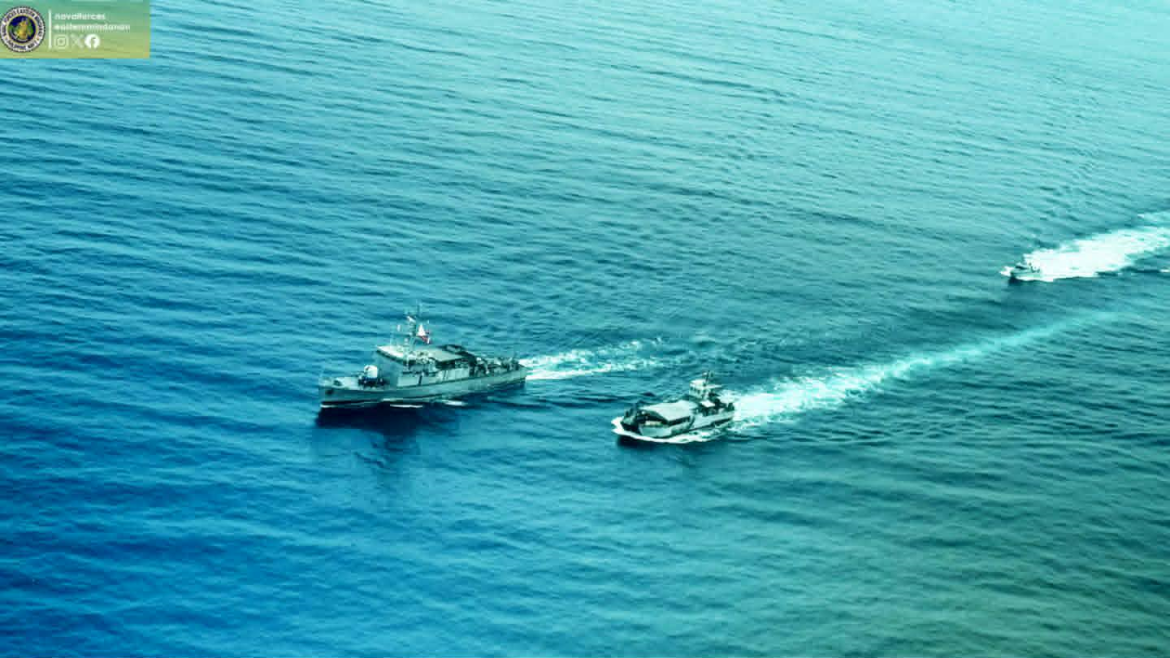
THE PHILIPPINE Navy subjected its floating and air assets deployed in Eastern Mindanao to a rigorous battle readiness evaluation (BRE) in a direct demonstration of maritime defense capabilities.
The evaluation, conducted on Sunday, July 12, 2026, was deliberately timed to coincide with the 10th anniversary of the landmark 2016 West Philippine Sea Arbitral Award, according to an official statement authorized by Commodore Ireneo D. Battung PN, commander of Naval Forces Eastern Mindanao.
Military officials stated that the maneuvers underscore the Armed Forces’ unwavering commitment to enforcing the country’s sovereign rights and protecting its maritime jurisdiction in alignment with international law.
Integrated drills at sea
The extensive combat readiness checks focused heavily on frontline vessels and specialized units operating under NFEM’s Naval Task Force 71 (NTF-71).
The deployment featured naval firepower, including:
- Offshore Patrol Vessel: BRP Artemio Ricarte (PS37)
- Landing Craft: BRP Tausug (LC803)
- Tactical Units: Elements from the 3rd Boat Attack Division
- Air Support & Special Forces: Naval Air Unit NV392 and the elite Naval Special Warfare Unit 7
While moving out toward the designated surface exercise (SURFEX) zones, the task force executed complex, real-time integrated surface, air, and special operations serials.
The drills were designed to test communication, strategic coordination, and rapid tactical interoperability under realistic, high-stress maritime conditions.
Sustaining a rules-based maritime domain
According to the NFEM leadership, the BRE successfully validated the fleet’s capacity to execute mission-essential tasks, manage shifting security threats, and sustain protracted naval operations in both peacetime and conventional wartime scenarios.
The evaluation also served as a diagnostic tool to pinpoint operational gaps and areas for future fleet modernization and training.
“The Philippine Navy continues to maintain a high level of operational readiness,” the NFEM command stated, emphasizing that the deployment ensures state assets remain fully capable of protecting the nation’s maritime domain while fostering a secure, stable, and rules-based maritime environment in the region.