

THE CENTRALIZATION of Davao City’s local government data infrastructure gained support from the City Council, but with operational considerations.
Proponent Councilor Bonz Andre Militar pushed for a centralized data center to streamline operations, enhance security, and integrate artificial intelligence (AI) tools into public service and policy-making.
Under the proposed centralization plan, all department servers will be consolidated into a unified central data center to allow easier management by the City Information and Technology Center (CITC) and establish stronger cybersecurity protocols.
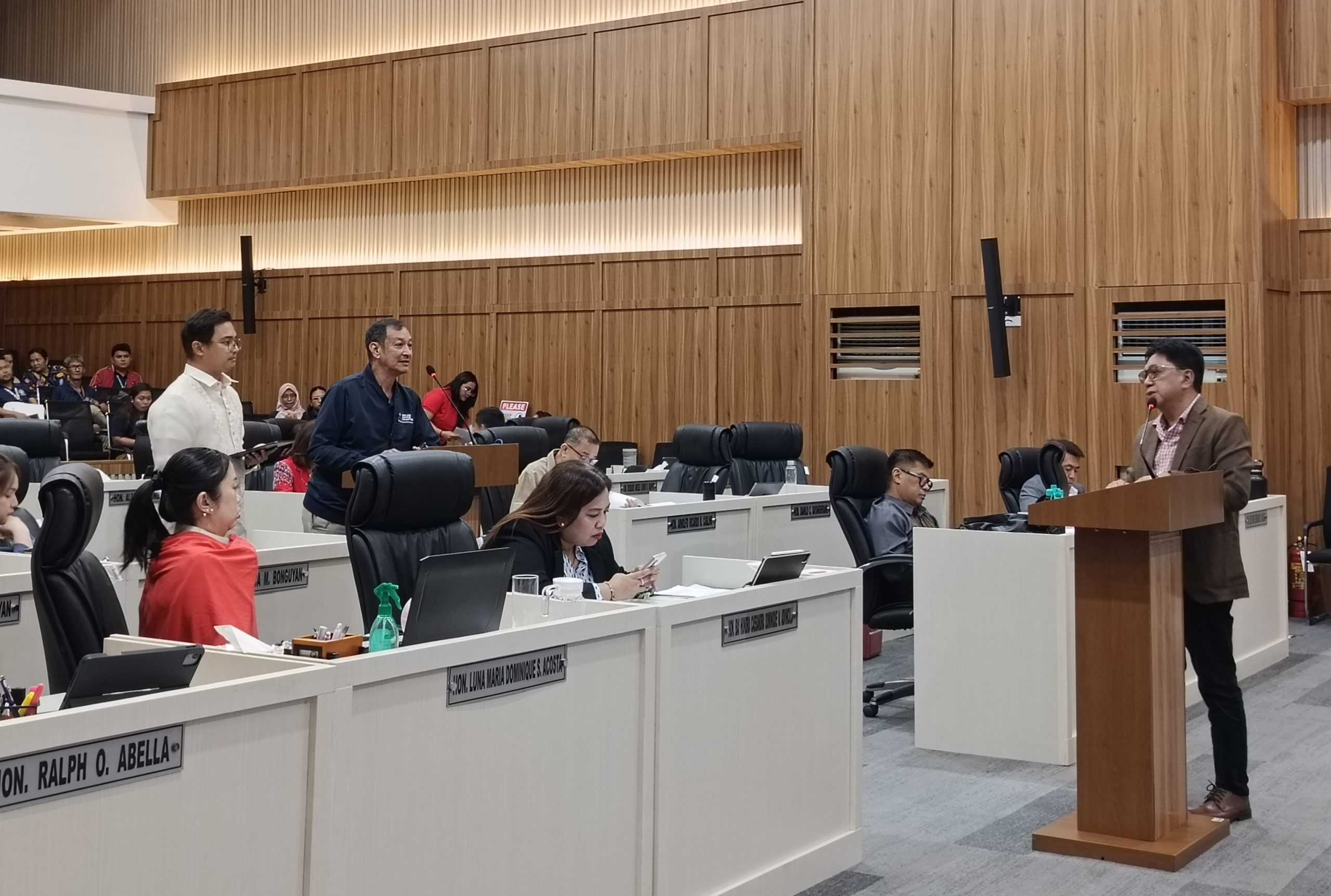
Speaking during the regular session on Tuesday, Aug. 25, Diosdado Lopez, CITC acting network head, revealed that the city currently relies on 17 to 19 server rooms scattered across various departments.
Lopez noted that while some systems currently maintain limited hybrid connectivity such as shared networks, centralization will improve security for sensitive records, including taxpayer information and civil registry documents under the Civil Registrar’s Information System (CRIS).
“Right now, developers are designing systems with security-by-design, incorporating multi-factor authentication, firewalls, and endpoint protection across workstations and servers,” Lopez said.
Addressing human resource capabilities, councilors questioned whether the CITC currently possesses sufficient expertise to manage a centralized data center, particularly in cybersecurity, network administration, database management, cloud computing, and disaster recovery.
Lopez explained that the unit has proposed right-sizing and applied for departmentalization to transition from its current division status.
Councilors strongly recommended elevating the CITC to a regular, permanent department under the city government. The CITC is currently operating as a division under the City Administrator’s Office.
He assured the existing staff is trained in network and database administration and handles cybersecurity penetration testing.
Militar revealed that proposals to departmentalize the CITC have been filed in the 20th council and remain under review by the city’s budgeting and right-sizing committees.
To prevent service disruptions during the transition, councilors inquired whether existing departmental systems would be replaced, migrated, or interconnected.
CITC developer Arthur Cariño assured the body that data migration will not interrupt ongoing public services.
“The agency is capable of developing new systems while current databases remain operational, utilizing Application Programming Interfaces (APIs) to integrate existing servers smoothly without disrupting day-to-day government operations,” he said.
Aside from cyber defenses, councilors emphasized the equal importance of physical security to restrict access to the central servers.
With this, the CITC disclosed plans to implement strict access controls, including primary and secondary biometric authentication systems such as facial or fingerprint terminals reserved exclusively for authorized data center personnel.
The planned facility will also feature dedicated security personnel, controlled split-type air conditioning systems tailored for server cooling requirements, and emergency response mechanisms for fire, earthquakes, and smoke detection.
Councilor Danilo Dayanghirang proposed constructing a dedicated, high-tech ICT building to house the centralized server infrastructure rather than adding equipment to existing City Hall facilities.
“Personally, what I wanted to see, having this framework, is to have a physical, separate high-tech building where all the data of the city were centralized. Meaning, meron talagang magandang separate structure,” Dayanghirang said.
He pushed for fast-tracking of the ordinance to avoid delays for another one year or six months, as October 15 will be the last submission of the budget.
“I think if we do not include any amount there, we will have a delay for another year or six months. So if you can fast-track this and discuss this with the Local Finance Committee, this can be a tangible, relevant, and significant project,” he stressed.
Councilor Enzo Villafuerte proposed incorporating provisions requiring continuous backup power systems, including Uninterruptible Power Supply (UPS) units, standby generator sets with fuel reserves, and solar energy storage to prevent data corruption during power outages or failures.
“The emergency power systems shall automatically activate upon loss of normal power supply, and shall be regularly tested and maintained to prevent service interruption, data corruption, or data loss. Adequate fuel reserves shall be maintained to support prolonged power outages, consistent with the city’s approved business continuity and disaster recovery plan and applicable national standards,” Villafuerte said.
The CITC assured that physical offline backups stored in safety deposit boxes are currently utilized as an added layer of redundancy.
At present, site selection and building plans for the permanent central facility undergo review for budgetary requirements.