
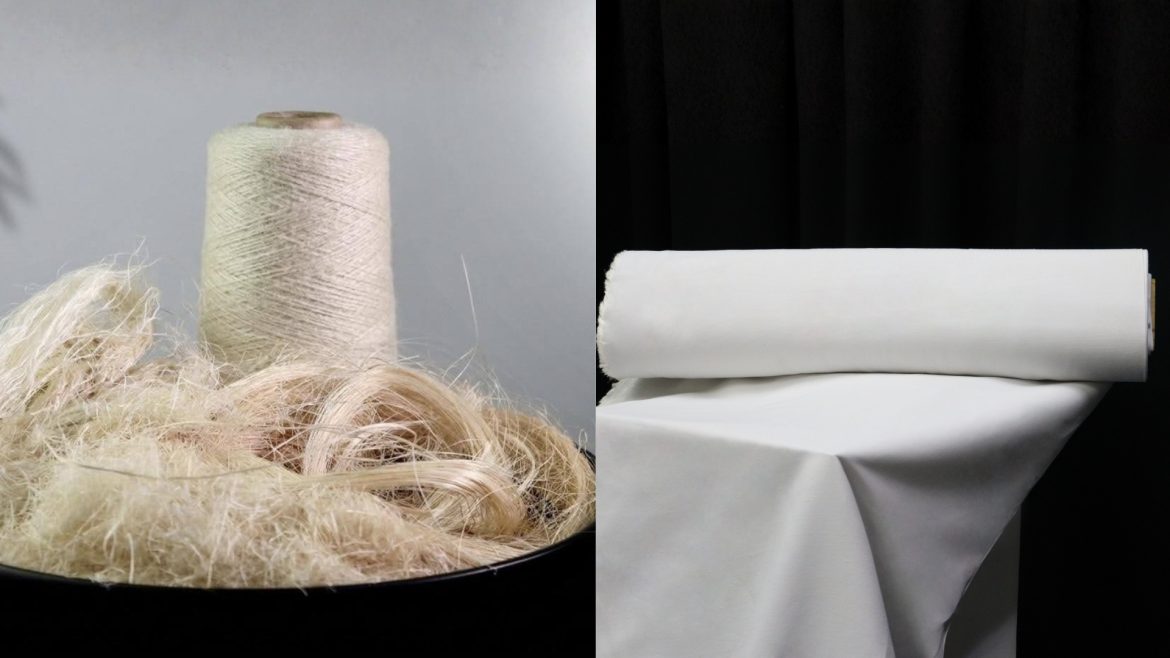
THE Department of Science and Technology–Philippine Textile Research Institute (DOST-PTRI) is stepping up efforts to strengthen compliance with the Philippine Tropical Fabrics (PTF) Law across government agencies, potentially opening a ₱17.8-billion annual market for locally made “Telang Pinoy” uniforms.
The push is part of DOST-PTRI’s ongoing efforts to strengthen the implementation of Republic Act No. 9242, which mandates that government agencies use Philippine Tropical Fabrics—locally sourced and processed natural fiber textiles made from abaca, pineapple, banana, bamboo, cotton, and silk—in official uniforms and government-issued attire. Despite the policy being in place, the institute noted that awareness and procurement gaps persist among some agencies and local government units.
Government data show that the annual Uniform or Clothing Allowance (UCA) for public employees amounts to approximately ₱17.8 billion. Around half of this is estimated to go directly to textile procurement, translating to a demand of roughly 30 million meters of fabric each year at an average cost of ₱300 per meter.

DOST-PTRI Director IV Dr. Julius L. Leaño Jr. said the scale of demand and full compliance with the law present a clear opportunity to activate the entire domestic textile supply chain.
“Government uniform requirements can drive production across the entire value chain—from fiber cultivation to yarn production, weaving, and garment manufacturing,” Dr. Leaño said. “Full compliance with the PTF Law can transform public procurement into a stable market for local producers.”
DOST-PTRI said local fiber supply is sufficient to support increased production when properly integrated into the value chain, citing that cotton farms covering 12,600 hectares can produce about 2,270 metric tons of cotton, while other natural fibers contribute around 1,000 metric tons, forming a domestic raw material base capable of meeting the estimated annual PTF demand.
The institute also underscored the sustainability benefits of shifting to locally produced natural fiber textiles, citing estimates that PTF-based fabrics can reduce carbon emissions compared with conventional polyester materials.
To support implementation, DOST-PTRI continues to provide technical standards, testing, and certification for compliant fabrics. The agency is working closely with partner agencies: the Civil Service Commission (CSC) for compliance enforcement, the Department of Trade and Industry (DTI) for expanding market opportunities for local manufacturers, and the Department of Agriculture–Philippine Fiber Industry Development Authority (DA-PhilFIDA) for support in fiber cultivation.
Through its Fostering the Revitalization of Nascent Textile Innovation Ecosystems in the Region (FRONTIER) program, DOST-PTRI is establishing textile innovation hubs nationwide. These hubs are designed to connect fiber producers, weavers, designers, and manufacturers to expand and strengthen local textile production capacity within a coordinated ecosystem.
DOST-PTRI is calling on government agencies and industry partners to accelerate full compliance with the PTF Law, framing it as both a legal obligation and a concrete economic opportunity for Filipino farmers, weavers, and manufacturers. The institute continues to advance its “Telang Pinoy” advocacy—its campaign label for government and public adoption of locally made Philippine tropical fabrics—as a platform for sustained demand across the domestic textile value chain.
For more information on Philippine Tropical Fabrics and DOST-PTRI programs, interested stakeholders may contact ptri@ptri.dost.gov.ph or visit ptri.dost.gov.ph.