

BY ARIEL JAMES P. MERO, LINDON ABAPO, JERRYHL LOQUINARIO, & KIRSON CARSTAÑOS/DSSC Interns
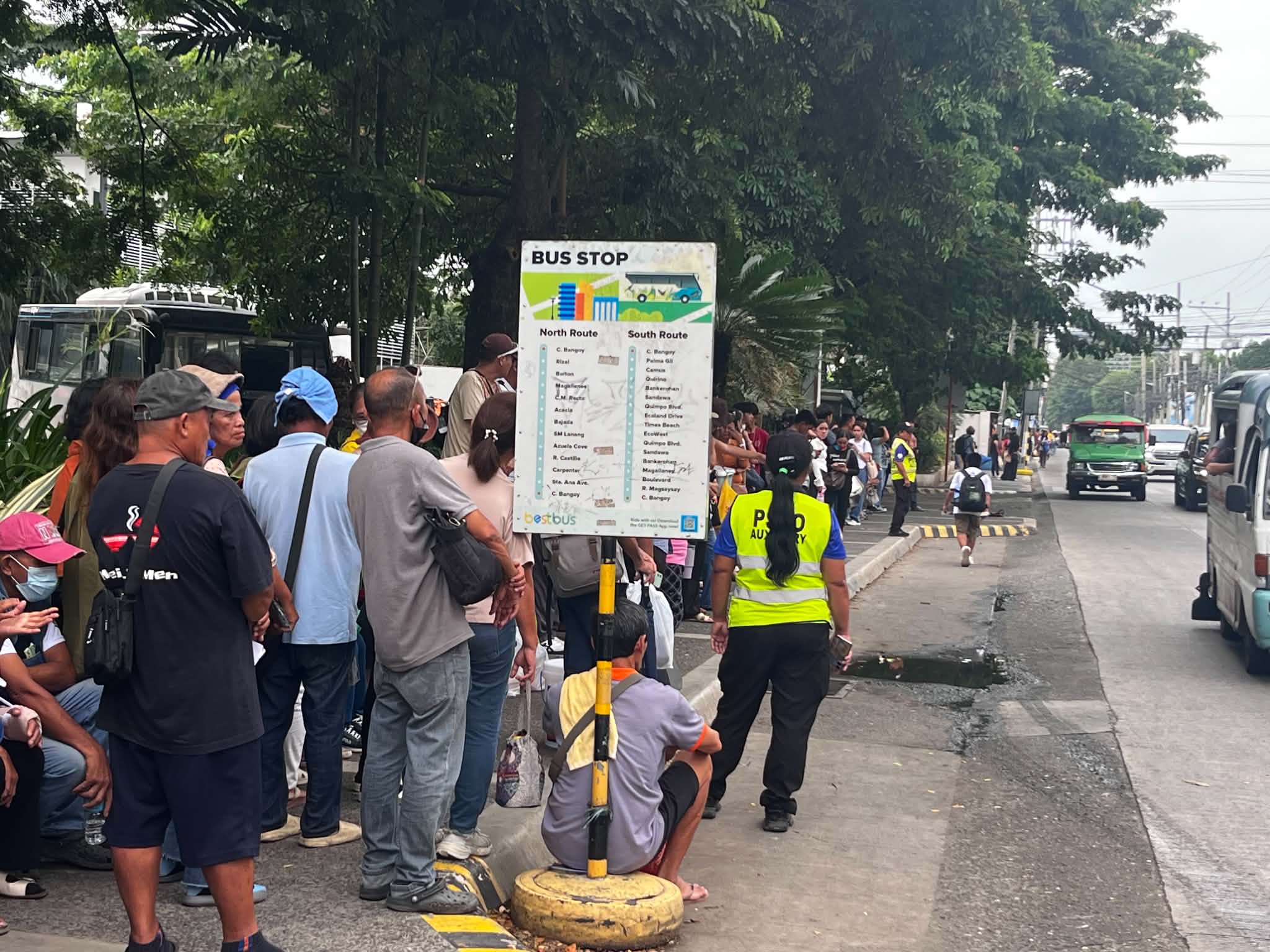
FUEL prices and worsening traffic gridlock on road chokepoints are forcing local commuters to alter their daily travel habits as the city prepares to transition to a modern, 1,100-vehicle bus network.
Every day, roughly 800,000 commuters navigate this changing landscape, including:
- Students: Thousands of Gen Z students and young adults under 25 years old travel daily to the downtown “university belt.”
- Commercial Workers: Retail, hospitality, and corporate employees flood rapidly growing commercial hubs
- Suburban and Rural Commuters: Low-to-middle-income families and agricultural workers travel long distances from outer districts like Toril and Calinan.
Residents are eagerly anticipating the Davao Public Transport Modernization Project (DPTMP), believing it will improve daily travel and ease traffic congestion. Also noted that affordable, accessible, and reliable public transport is especially important for lower-income commuters who depend on it for their everyday mobility. (Batican, 2023).
“The increase in transportation services helps people, especially students nowadays. It also addresses the concerns and transportation needs of many families and members of the community,” a 20-year-old local university student said.
However, rapid progress puts more vehicles on the road and creates chokepoints, particularly during rush hours. For instance, an office worker told TIMES that while free rides offer financial relief, the long queues and volume of cars cause havoc to their schedules.
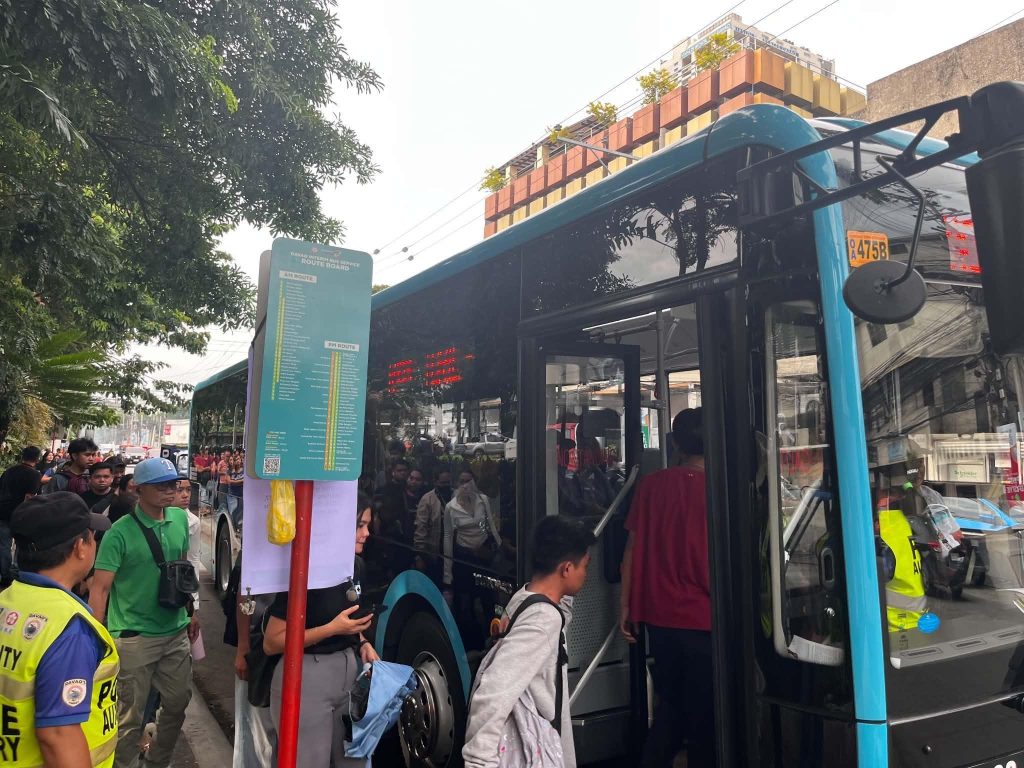
Ruby Raagas, a daily office commuter, said that although local programs like the Libreng Sakay have reduced transportation expenses, traffic has worsened because of the growing number of vehicles on the road.
“The area has become crowded because there are now so many transportation services. This causes more traffic, and many people arrive late because of it,” Raagas said.
In some instances, the savings from the free rides outweigh the delays.
For instance, she said the DC Bus and Libreng Sakay Program slashed her daily transit expenses from ₱110 to just ₱40. Saving ₱70 every day allows her to afford other basic needs, which greatly benefits students and low-wage workers.
Money issues, especially fuel costs, have also forced middle-class car owners to revert to public transportation despite the inconvenience and longer travel times.
“Traffic is almost everywhere now. The situation becomes difficult especially during rush hour,” a 28-year-old call center agent said, noting that the BPO sector—which relies heavily on night-shift and early-morning travel—is deeply affected.
They added that commuting is still more practical than driving because fuel has become too expensive for their monthly budget.
To address these systemic bottlenecks, the local government and the Department of Transportation are pushing forward with the P81.4-Billion DPTMP, up from the original P73.4-B budget.
Funded by the national government through a loan with the Asian Development Bank, with a local counterpart from the city government, the project aims to connect 672 kilometers of road network, served by at least 1,100 modern articulated buses.
The fleet will include 531 regular buses and 386 electric buses, along with 188 mini-buses.
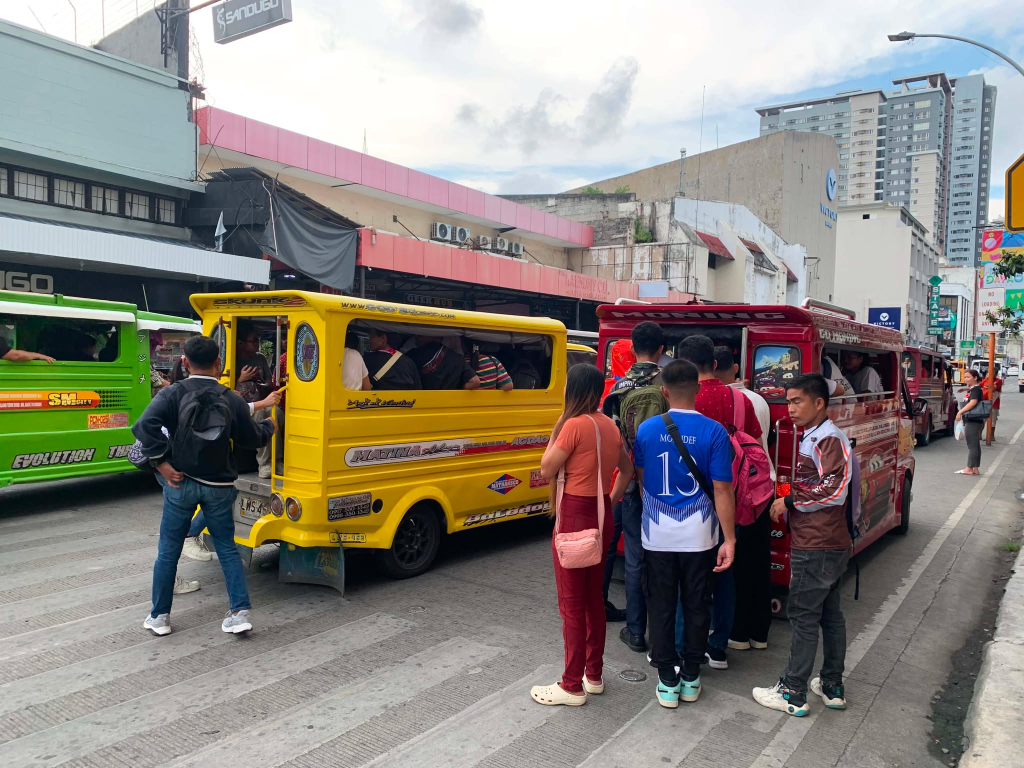
But while commuters look forward to better mobility, local jeepney drivers remain anxious about their future under the new system.
Transport and left-leaning groups held protest rallies against the planned Davao bus project, as it will reportedly squeeze out the small public utility vehicle operators who could not afford to invest in the modern fleet.
Larry Argilles, Transmission-Piston spokesperson, described the bus project as “anti-poor” and “anti-small operator.” He said that, unlike other local government units that only require rehabbing the gas-fed PUVs until they pass the standards, Davao City aims to eventually phase out the traditional jitneys and jeepneys.
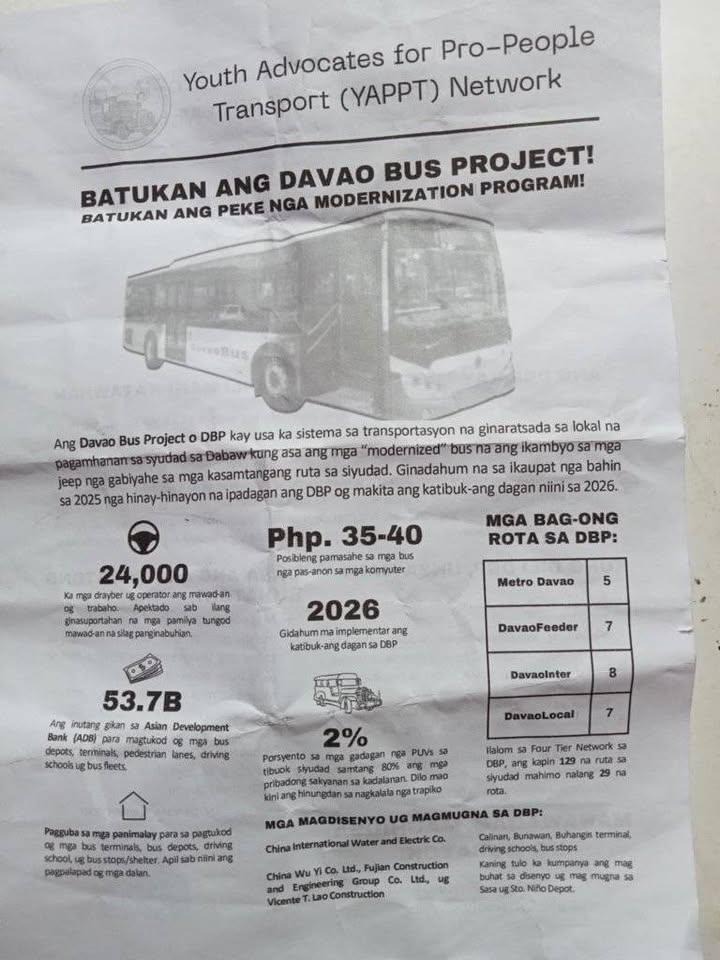
A group calling itself Youth Advocates for Pro-People Transport Networks continues to distribute flyers around the city, urging the public to join their cause to stop the project, alleging that 24,000 drivers and operators stand to lose their primary livelihood if the plan pushes through.
However, nothing seems to be stopping the rushing train as the construction of terminals and depots, vital cogs in the Davao Bus project’s artery, is already ongoing.
To provide immediate relief, Davao City has rolled out ten new units under the Davao City Interim Bus Service, offering free rides to commuters. The local government also earmarked P200 million to purchase 20 Yutong electric buses, expected by December this year, to ease commuter fatigue.
On the right track
For 16-year-old student Xianna Marie, the modernization project is a positive step.
“The DPTMP is a great project because it will give commuters more comfortable transportation options. The upcoming 20 electric buses will be a big help,” she said.
Regular commuter Dave Angelo also welcomed the project. He said the Libreng Sakay Program continues to ease transportation expenses for students, workers, and other commuters, while the introduction of electric buses will improve accessibility, particularly for older adults and people with mobility needs.
“The upcoming 20 electric buses will be a great opportunity, especially for older people, and they will be easy for everyone to access,” Dave Angelo said.
Dave Angelo acknowledged the cultural significance of traditional jeepneys but believes modernization will ultimately benefit the greater good.
“The modernization of public utility vehicles will replace traditional transportation, but it will also help our country become more progressive and recognized by other nations,” he said.
References
Batican, J. C., et al. (2023). Davao Public Transport Modernization Project: A perceptual study. International Journal of Innovative Science, Engineering & Technology, 10(11). https://ijiset.com/vol10/v10s11/IJISET_V10_I11_03.pdf
Bongato, J. R., et al. (2023). Public perception of the Davao Public Transport Modernization Project. International Journal of Engineering Technology Research & Management, 7(5). https://ijetrm.com/issues/files/May-2023-05-1683296250-MAY07.pdf
City Government of Davao. (2023, July 5). City Government of Davao ready to implement Davao Bus Project. https://www.davaocity.gov.ph
Department of Transportation. (2024, February 8). PBBM reaffirms commitment to develop Davao Region through Davao Public Transport Modernization Project. Philippine Information Agency.https://pia.gov.ph/press-release/pbbm-reaffirms-commitment-to-develop-davao-region-through-davao-public-transport-modernization-project/