
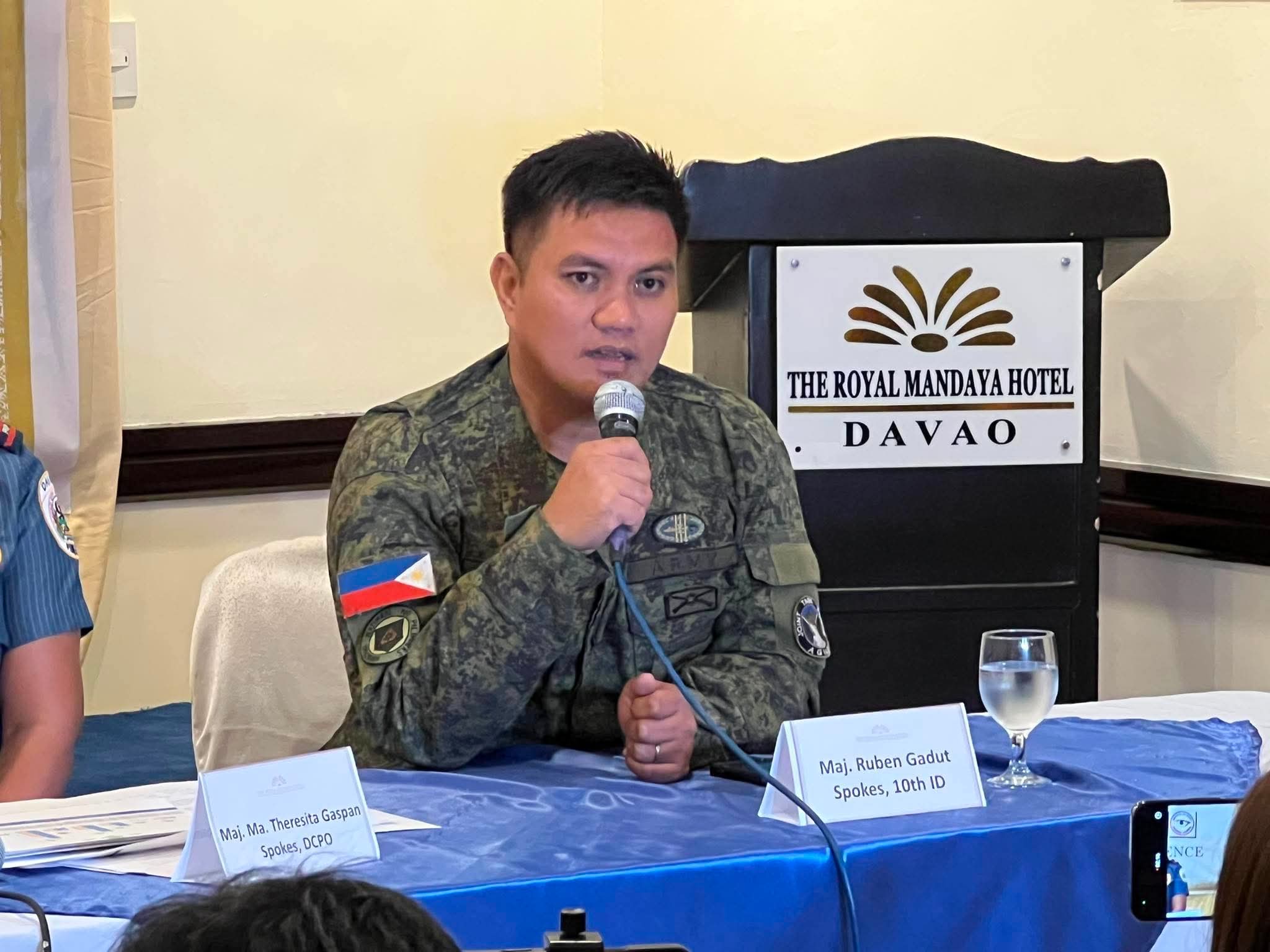
THE 10TH Infantry Division (10th ID) has facilitated the formal surrender of 300 “lie-low” or inactive members of the Communist Terrorist Group (CTG) since January of this year.
Major Ruben Gadut, chief of the 10th ID Public Affairs Office, disclosed the figures during the Davao Peace and Security press briefing at The Royal Mandaya Hotel on Wednesday, July 1, 2026.
According to Gadut, the mass surrenders—which included seven individuals just last week—were accompanied by the seizure of a substantial arsenal.
Since the beginning of the year, authorities have recovered 169 assorted firearms and 19 improvised explosive devices (IEDs).
While Davao remains cleared of active communist insurgency, the military is focusing heavily on former rebels who had gone into hiding or integrated quietly into communities.
The goal is to prevent them from being re-recruited into the underground movement.
“The region is insurgency-free, but we are seeing surrenders from lie-low members, not active NPA combatants,” Gadut explained. “They are hiding, and we are exerting all efforts to formalize their surrender to prevent them from regrouping or initiating new threats.”
Gadut emphasized that the military is actively tracking down these inactive elements to ensure they undergo the government’s comprehensive transformation initiatives.
“They have not returned to the movement. However, we are facilitating their formal surrender so we can identify, locate, and engage them for their transformation,” Gadut said.
A cornerstone of the 10th ID’s strategy is a rigorous deradicalization program aimed at completely shifting the mindsets of former rebels.
“Deradicalization is very important for former rebels. It helps redirect their ideology, and we prepare them to receive crucial government interventions like technical skills training and financial management,” Gadut added, noting that these programs are vital for setting up sustainable livelihood projects.
The military official added that empowering these individuals through economic stability and the government’s amnesty program serves as a permanent shield against future recruitment.
“With deradicalization and the livelihood programs keeping them busy with their families, alongside the amnesty program, they are given a solid reason to refuse if the NPA ever attempts to recruit them again. That is the most important part of this effort,” Gadut concluded.