

BY ALEX ALAGON
Contributor
Maxim Rides & Food Delivery Extends Support to Aeta Schoolchildren in Remote Pampanga Communities
Pampanga, Philippines – Maxim Rides & Food Delivery recently organized a series of charity events as part of a program aimed at supporting the younger generation of the Aeta indigenous people.
One of the events took place at Haduan Negrito Integrated School in Clark, Mabalacat City, where the Maxim team delivered essential goods — including food supplies, hygiene products, school materials, and clothing — to Aeta students and their families.
According to school faculty, this was the first time the school received such large-scale support from a private company. The school’s administration expressed heartfelt gratitude to Maxim for its generosity and compassion, emphasizing how meaningful the visit was to a community seldom reached by corporate outreach programs.
“We are so thankful to Maxim for how much they care about our students,” said the school principal. “This has made us very happy and gives us hope that initiatives like this will help even more children in need.”


The second event was held in Barangay Sapangbato, where local children enjoyed a day filled with games, activities, and gift-giving. Each child received food packs, drinks, and school supplies. In total, around 500 schoolchildren and their parents participated in the festivities. Teachers from the community also expressed appreciation, noting how the event provided both practical assistance and much-needed joy to the children.
Maxim remains committed to its social responsibility efforts, helping indigenous communities and supporting education initiatives all across the Philippines.
1,000 participants from 59 countries join Shincheonji peace-promoting Bible seminar
AMID wars and conflicts in many parts of the world, a peace-promoting Bible seminar concluded in South Korea, with over 1000 religious and social leaders in attendance, making it Shincheonji Church of Jesus, the Temple of the Tabernacle of the Testimony (SCJ)’s largest interfaith gathering for peace to date.
SCJ Chairman Lee Man-hee announced on the 6th that it had successfully concluded the “3rd Special Lecture on Revelation for All Nations, which ran for three nights and four days from October 30th.
The Special Lecture on Revelation for All Nations is an international exchange program that seeks interreligious dialogue and peace, focusing on the prophecies and fulfillment recorded in the Book of Revelation.
Beginning with the first session in February 2024, the program has expanded its participating countries and denominations with each session, establishing itself as a “platform for dialogue among global religious leaders.”
This third Special Lecture on Revelation for All Nations, themed “The Path of Understanding Guided by the Bible, the Path of Peace Walked Together by Religions,” attracted over 1,000 participants, including 440 religious leaders from 59 countries, making it the largest-ever event.

Last year, on the second Special Lecture on Revelation for All Nations, SCJ welcomed 120 religious leaders, while the first one was attended by approximately 80 leaders from 10 religious denominations in 28 countries.
Aside from the Revelation lecture, participants in the four-day event this year enjoyed the programs which include a joint prayer meeting praying for global peace, “Path to Heaven” ( True or False Bible Quiz), a “Biblical Time Travel” performance, where participants experienced the heart of a shepherd in the Bible, and a “Roundtable” event to promote a culture of peace. Religious leaders commented that these exchanges, filled with laughter and tears, fostered “empathy and harmony.”
Leaders from various religious denominations, including Christianity, Buddhism, Islam, Hinduism, and Confucianism, learned about the prophecies and fulfillment of the Book of Revelation and discovered similarities between scriptures and a message of peace.

The event also shared examples of “practicing peace,” the purpose of the Special Lecture. Venerable Sok Bunteuun, director of the Buddhist Higher Education Department of the Cambodian Ministry of Culture and Religion, who participated in the 2nd International Lecture, explained that he has been promoting interreligious exchange by hosting lectures on the Book of Revelation at Buddhist temples in his country.
“At this event, 215 people signed a pledge for religious peace and pledged to continue participating in future exchange programs. This was a historic moment where religious and social leaders made a tangible choice for peace,” he said.
He plans to build on this achievement by hosting a “Religious Peace Education Camp” in January next year to further expand the scope of peace cooperation.
Following the case presentations, all religious leaders who participated in the 3rd Special Lecture recited a resolution, vowing to “fulfill our mission of spreading peace and truth and guide humanity toward salvation,” pledging their commitment to peace.
A Shincheonji Church of Jesus official stated, “This special lecture confirmed that the Bible is not a scripture for a specific religion, but contains universal truth for humanity. It served as an opportunity to understand each other’s faith through the Word and restore peace and harmony, the inherent mission of religion.”
Chairman Lee Man-hee emphasized, “We must reflect on our past, when we criticized each other and strayed from God’s will, and be reborn as spiritual leaders who uphold the original values of spreading the truth and realizing peace. Let us achieve peace, which is both God’s hope and ours, through dialogue and communication.”
Weak enforcement—not high taxes—drives illegal cigarette trade: AER
MANILA, Philippines — A new nationwide study by Action for Economic Reforms (AER) and Economics for Health of the Johns Hopkins Bloomberg School of Public Health shows that illicit tobacco trade in the Philippines is being fueled by weak enforcement and governance gaps, not by high tobacco taxes as the tobacco industry has long claimed. The research was based on surveys of more than 1,000 sari-sari stores and an audit of over 7,500 cigarette packs in eight key cities—Dagupan, Navotas, Quezon City, Pasay, Batangas, Mega Cebu, Zamboanga, and General Santos.
The results found that due to weak enforcement and geographical location, Southern Mindanao, particularly Zamboanga and General Santos, has the highest prevalence of illicit tobacco trade. In Zamboanga City alone, nearly 80 percent of packs were priced below applicable taxes, while up to 96 percent of inspected packs had fake or missing tax stamps. Meanwhile, the results show that the prevalence of illicit cigarette sales in Luzon, Visayas, and Metro Manila is low.
These findings come after Congress debated proposals to reduce tobacco taxes in January of this year, a move public health experts warn would only worsen smoking rates and would be ineffective in curbing smuggling.“The results disprove the tobacco industry’s narrative that high taxes cause smuggling,” said Daffodil Santillan, AER lead researcher for the study.
“The evidence shows the real issue is weak law enforcement and regulatory oversight, especially at ports and borders. Lowering tobacco taxes will only make cigarettes cheaper and Filipinos sicker.”The study emphasizes that tobacco excise tax rates—applied uniformly nationwide—cannot explain regional disparities in illicit trade.
Instead, local political will, maritime governance, and enforcement intensity determine where illicit products thrive. Zamboanga City Vice Mayor Beng Climaco, who spoke at the launch, underscored the importance of local government action.
“During my term as Zamboanga City Mayor, I led an uncompromising campaign against smuggling in Zamboanga City, initiating investigations into Customs officials and over the disappearance of smuggled sugar and rice from warehouses, demanding full accountability,” Climaco said.
“As Regional Peace and Order Council Chair for two terms, I also coordinated with law enforcement agencies down to the Barangay and personally oversaw midnight operations and confiscations, underscoring my firm resolve to protect the city from illicit trade and corruption,” she added.
AER urged the government to reject proposals to lower tobacco excise taxes, such as House Bill 11360, which was hastily passed in the House of Representatives earlier this year with minimal deliberation and limited stakeholder consultation. AER also warned against House Bills 5207, 5212, and 5364, lowering taxes on vape and heated tobacco products. The group warned that tax rollbacks will reverse a decade of health and fiscal progress. Since 2012, tobacco tax reforms have reduced adult smoking prevalence from 29.7 percent in 2009 to 19.5 percent in 2021, a significant public health achievement, while significantly increasing revenue for health programs, demonstrating the effectiveness of the current tax system.
To address illicit trade and protect the gains of tobacco tax reform, AER recommends the following actions:
- Upgrading the current tax stamp system into a comprehensive, up-to-date track-and-trace system with physical and digital markers, independent of the tobacco industry;
- Licensing all tobacco retailers, including sari-sari stores, to ensure compliance;
- Empowering the Bureau of Internal Revenue (BIR) to suspend or close violators; and
- Tightening coordination among Customs, BIR, and local governments in enforcement hotspots.
- Stem illicit trade at the source by strengthening cooperation, especially with neighboring countries, through multilateral and bilateral means.
“Tobacco tax reforms save lives and fund the healthcare of the most vulnerable Filipinos,” said Senator Risa Hontiveros, Chair of the Senate Committee on Health and Demography, at the launch. “It’s time to protect public health and public revenues through stronger enforcement. Lowering taxes at this point, when our economy is struggling and (the) government needs revenues, may not be a good idea.”The full report, “Illicit Tobacco Trade in the Philippines: Findings from Sari-Sari Store Surveys and Empty Pack Audits,” was conducted by AER in partnership with Economics of Health of the Johns Hopkins Bloomberg School of Public Health. The Bureau of Internal Revenue validated the findings of the empty pack analysis. The report is now available on AER’s website at aer.ph.
St. Peter offers free funeral services for victims of Typhoon Tino
CEBU CITY, Philippines –With the death toll rising to 188, according to the Office of the Civil Defense on Friday morning, 135 of which are from Cebu province, St. Peter Life Plan and Chapels is offering free funeral services to the victims of Typhoon Tino in Cebu, to ease the burden of grieving families and provide support during this difficult time.
“St. Peter Life Plan and Chapels joins all Cebuanos in prayer and unity,” the company said in its official statement. “As we face the challenges brought by both the earthquake and Typhoon Tino, we remain committed to serving our communities with compassion, dignity, and care. Magkauban ta sa pagbangon.”
Families in need of assistance may contact St. Peter Chapels through Customer Support at (02) 8371-9999, (02) 7946-9999, or 0919-056-9999, or visit any of its chapels in Cebu City:
St. Peter Chapels Cebu City – Imus
New Imus St., Brgy. Lorega San Miguel, Cebu City
(032) 268-5601, (032) 268-4560, (032) 514-2732, 0997-204-4614, 0999-351-9528
St. Peter Chapels Cebu – Burgos
P. Burgos St., Cebu City
(032) 348-0739, 0968-596-7963
St. Peter Chapels – Talisay
Fidel Bas St., Upper Mohon, Talisay City, Cebu
(032) 268-9480, 0969-139-6504, 0915-192-0717, 0948-237-8967
GCash expands Filipinos’ access to investing with first follow-on offering on GStocks PH, starting with Megawide
Offered by broker AB Capital Securities Inc. via GStocks PH, the FOO subscription feature on GCash makes Megawide’s Series 7 FOO available to Filipinos, with fixed dividend rates up to 7.70% annually.
As part of its commitment to making investing more accessible to all Filipinos, GCash is expanding GStocks PH to include Follow-On Offering (FOO) subscriptions. Offered by broker AB Capital Securities Inc., the FOO feature allows everyday investors to easily participate in additional share issuances from listed companies, beginning with Megawide’s (MWIDE) Series 7 Preferred Shares.
Through GStocks PH, Filipinos can invest in Megawide’s Series 7 Preferred Shares, available in two tranches—MWP7A offering a fixed dividend rate of 7.31% per year for three years, and MWP7B offering 7.70% per year for five years—providing stable and attractive returns. The offer period opens on October 30 and closes on November 4, with the FOO directly accessible within GCash.
In the past, subscribing to FOOs was often a complex and fragmented process for retail investors, requiring multiple platforms and high minimum investment amounts. GCash aims to improve this by offering a fully-digital, seamless experience with added affordability.
The MWIDE FOO on GStocks PH comes with a minimum investment of Php 1,000 per order or equivalent to 10 shares at Php 100 per share, further easing retail access. Accessible 24/7 within the GCash app, GStocks PH allows investors to subscribe to the FOO anytime at their convenience. The platform also provides real-time transparency by immediately confirming allocation status while shares remain available through the broker.

Expanding access to investing
This latest development on GStocks PH strengthens efforts by GCash to make investing more inclusive for every Filipino, following the October launch of its in-app Initial Public Offering (IPO) subscription feature. Through GStocks PH, Filipinos can now easily open a stock trading account, fund it using their GCash wallet, and subscribe to both IPOs and FOOs all within one platform.
“Expanding GStocks PH capabilities to now include FOOs gives everyday investors even more pathways toward building their financial future,” said Winsley Bangit, Group Head of New Businesses at Mynt, the parent company of GCash. “This continues the momentum of the IPO subscription feature we introduced just last month and represents an exciting step in our mission to democratize investing for all Filipinos.”
“Through our continued collaboration with GCash, AB Capital Securities is thrilled to extend this innovation to more investors,” said Hazel Tanedo Tan, President of AB Capital Securities Inc. “The added digital FOO feature on GStocks PH brings us closer to our goal of championing stronger access to the capital markets and empowering more Filipinos to strive toward their financial goals.”
Fully verified GCash users can subscribe to FOOs through GCash by opening the app, going to GInvest and tapping GStocks PH. The feature is available during the Megawide Series 7 FOO and other Follow-On Offerings in the future.
GCash remains committed to providing accessible and inclusive financial tools that help Filipinos invest, build wealth, and secure a better financial future.
For more information, please visit the Help Center.
The information provided is for informational purposes only and does not constitute financial, investment, or professional advice. You should always consult a qualified financial professional before making any investment decisions. All investments carry inherent risks, including the potential loss of principal. Past performance is not indicative of future results. Any reliance you place on the information provided is strictly at your own risk.
Asia Brewery and PNB Holdings Extend Aid to Flood-Affected Families in Cebu
IN THE wake of Typhoon Tino’s devastating impact on Central Visayas, PNB Holdings Corporation (PHC) and Asia Brewery Inc., in partnership with the Philippine Red Cross, have mobilized the delivery of Absolute Pure Distilled Drinking Water to thousands of displaced families.
Initial distributions of 6-liter bottles of Absolute Drinking Water have reached evacuees at Dumlog Elementary School and Dumlog Sports Complex in Talisay, Cebu. Relief efforts will continue in the coming days, extending to communities in Liloan and Consolacion, where bottled water will be delivered alongside essential relief packs prepared by the Philippine Red Cross.
This initiative is part of Project Solicitude, a broader commitment by PHC to support communities in times of crisis and demonstrate compassion in action.
“We are deeply moved by the resilience of the affected families and grateful to our partners for enabling swift action. This is a testament to our shared commitment to uplift communities in their most vulnerable moments,” said Joselito R. Consunji, chief operating officer of PNB Holdings Corporation.
Both PNB Holdings Corporation and Asia Brewery Inc. are proud members of the Lucio Tan Group, whose legacy of corporate social responsibility continues to guide efforts that bring hope and help where it’s needed most.
DTI helps MSMEs recover through the Pangkabuhayan sa Pagbangon at Ginhawa (PPG) Program
CITY OF MATI, Davao Oriental – The Department of Trade and Industry Davao Oriental Provincial Office (DTI-DO) has continued to help local entrepreneurs recover from calamities.
The office, through the Pangkabuhayan sa Pagbangon at Ginahawa (PPG) program, distributed livelihood starter kits last November 5 to calamity-afflicted micro enterprises due to the shearlines in December 2024 and February 2025, as well as by the recent doublet earthquakes.
A total of 40 beneficiaries received starter kits amounting to P15,000 each. The kits varied according to the beneficiaries’ chosen livelihood, from sari-sari stores, eatery, gulayan, and fried chicken house.
The initiative aims to help affected microentrepreneurs recover and rebuild their businesses through the provision of starter kits.
“The PPG Program of DTI aims to teach the calamity-affected MSMEs to fish rather than just giving them one,” said Provincial Director Ma. Joycelyn F. Banlasan.
Meanwhile, Davao Oriental 2nd district Board Member Don Go Montojo encouraged micro, small, and medium enterprises (MSMEs) to be resilient, assuring them that the government supports the business sector, especially during times of crisis and recovery.
Brgy. Sainz, City of Mati Barangay Captain Ranila Zamora expressed his support and urged the beneficiaries to maximize the opportunities extended by the government fully, and hopes to see their businesses thrive again.
The beneficiaries are from the City of Mati and the municipalities of Cateel, Governor Generoso, Tarragona, Manay, San Isidro, Caraga, and Baganga.
Among the 40 MSME beneficiaries, 35 reported that they have incurred stock and building damages due to the recent doublet earthquakes with an estimated loss of Php300,000.00.
The activity also continued with a Business Continuity Planning Seminar that will help prepare the beneficiaries for future calamities and minimize potential damage to their businesses.
For more information about DTI Davao Oriental and its services, the public may visit the DTI Davao Oriental Provincial Office or contact them through their official Facebook page, DTI Davao Oriental. They can be reached, too, through telephone numbers (087) 388-3735/ (087) 811-7180, or email at r11.davaooriental@dti.gov.ph.
China scales up urban recycling in drive for ‘zero-waste’ cities
BY WU WEIZHENG, PEOPLE’S DAILY
IN TIANJIN Port Free Trade Zone, north China’s Tianjin municipality, the first 20 smart recycling stations built by a subsidiary of China Resources Recycling Group Co., Ltd., have recently entered operation.
These multifunctional “smart cabins” combine resource recovery, community services, and emergency power supply, improving front-end urban waste collection and supporting the development of zero-waste cities.
Across China, localities are actively piloting distinctive models to turn waste into value and expand recycling.
The term “zero waste” does not mean that solid waste will cease to be generated, nor can it be eliminated entirely. Rather, it represents a governance approach centered on continuous source reduction and the systematic promotion of recycling and reuse – an essential pathway for advancing green development.

(Photo/Chen Bin)
Turning waste into value requires removing bottlenecks across the recycling chain and converting materials into productive assets. As the adage suggests, waste is simply a resource in the wrong place. The practical question is how to realize resource circulation at scale.
One way is technological innovation. For instance, Moon-Tech, an environmental protection technology firm based in Yantai, east China’s Shandong province, has developed a technology that captures 97 percent of carbon dioxide in exhaust gas, and the resulting high-purity carbon dioxide extracted can be applied in food processing and other industries.
By converting waste into resources and consumption into added value, such innovations enhance resource efficiency and create new growth opportunities for enterprises.
Another approach is scenario-based innovation. At a new energy company in southwest China’s Chongqing municipality, retired power batteries undergo health testing, dismantling, and remanufacturing to become standardized battery packs. These packs are then applied in telecommunications base stations, smart streetlights, and other scenarios. Materials that are obsolete in one application can become valuable assets in another.

From technology to application scenarios, prioritizing efficient resource use and anchoring innovation enables idle or underutilized resources to be redeployed for greater value and broader public benefit.
Policy and regulatory frameworks are also critical to stimulating market vitality and transitioning recycling from being primarily government-driven to market-driven. In Shenzhen, south China’s Guangdong province, guidelines for the construction of recycling stations encourage companies to upgrade or build high-standard sorting centers and transfer stations, ensuring recyclables are properly collected and efficiently processed.
Policy instruments not only provide safeguards for implementation but also help shape public behaviors. Shanghai, for example, has issued a regulation on zero-waste city development that promotes wider public participation in zero-waste lifestyles. As a result, the city’s household waste-sorting compliance rate has remained above 95 percent, with an overall recycling rate of 43 percent. Well-designed policies can foster a culture of sustainability and support low-carbon living.
Effective green development further depends on coordinated governance. Ecological and environmental challenges do not conform to administrative boundaries. In construction waste management, for example, strict controls in one locality alongside law enforcement in another can lead to cross-regional dumping. Sustained progress from municipal zero-waste pilots to inter-regional collaboration requires systemic thinking and stronger coordination among government departments, regions, and policies.
By intensifying technological innovation, strengthening policy design and enforcement, and enhancing cross-regional coordination, the journey of building zero-waste cities can be transformed into a process that cultivates and expands green productivity while improving people’s sense of gain and fulfillment.
GLOBE delivered ₱121.7 billion in consolidated gross service revenues for the first nine months of 2025, slightly lower than the ₱124.0 billion reported in the same period last year. While inflation has eased and household spending capacity has generally improved in recent months, the operating environment remains challenging. Persistent industry competition and the localized economic impact of the typhoons that struck during the period added further pressure. Against this backdrop, Globe sustained the rebound that began in the second quarter, posting ₱41.5 billion in consolidated gross service revenues in the third quarter, a 3% sequential increase, underscoring operational resilience and improved market momentum. The revenue uptrend continues, posting the fastest sequential growth in 13 quarters.
Globe’s expanding digital portfolio drove growth, demonstrating its vital role in an increasingly connected economy. Mobile and corporate data services accounted for 83% of total consolidated service revenues in the first nine months of 2025, similar to last year. Meanwhile, data-centric products spanning mobile data, home broadband, and enterprise solutions rose to 88% of total consolidated service revenues from 86% a year ago.
Globe’s mobile business remained the main driver of topline performance, generating ₱86.2 billion in service revenues as of end-September 2025, down 2% from the ₱87.7 billion posted a year earlier. Mobile service revenues in the third quarter reached ₱29.1 billion, up 1% quarter-on-quarter from ₱28.8 billion in Q2, marking a second consecutive quarter of sequential improvement. This robust trajectory reflects stronger consumer activity and demand for mobile services. Performance was further supported by Globe’s consistent investments in its network, which enhanced service quality and reinforced its market position. By the end of September 2025, Globe’s mobile subscriber base stood at 63.1 million, 5% higher than the 60.2 million a year ago.
Within the mobile segment, mobile data revenues climbed to an all-time high of ₱25.2 billion in the third quarter of 2025, bringing total mobile data revenues to a record ₱74.0 billion for the first nine months of the year. This represents a 2% increase year-on-year from the previous record of ₱72.9 billion reported in the same period of 2024, as Filipinos continued to expand their use of apps for messaging, entertainment, and cashless transactions.
This was achieved even as total mobile data traffic held steady at 4,846 petabytes versus 4,843 petabytes in the same period last year, reinforcing Globe’s ability to drive higher value per gigabyte of data consumed. Following a muted first quarter in terms of traffic, usage showed an upward trend, rising by 8% from 1,537 petabytes in the first quarter to 1,659 petabytes by the third quarter. The average volume of use per subscriber remained stable at around 15 GB per month, supported by consistent engagement and rising 5G traffic, and its growing adoption across Globe’s customer base.
As of end-September 2025, Globe had 37.8 million mobile data users, up 2% year-on-year, highlighting the segment’s strength and resilience as consumer activity improved alongside easing inflation. Mobile data now accounts for 86% of total mobile service revenues, up from 83% a year earlier, showcasing Globe’s expanding digital scale and effective monetization as connectivity becomes even more essential to everyday life.
While mobile data posted a strong performance, traditional voice and SMS services, on the other hand, maintained their structural decline, consistent with the industry-wide pivot to data-centric usage. Average daily mobile reloads showed steady quarter-on-quarter increases throughout the nine-month period this year, with the third quarter delivering the highest level to date. This consistent upward trend shows strong consumer engagement and resilient spending momentum across the prepaid base.
Globe’s home broadband segment contributed ₱17.8 billion in revenues for the nine-month period ended September 2025, broadly flat year-on-year, as the ongoing tapering of the fixed wireless business was partly offset by the migration of subscribers to fiber. Home broadband revenues rose 4% quarter-on-quarter to ₱6.1 billion in the third quarter, signaling stabilization as fiber adoption deepened across the base.
GFiber Prepaid (GFP) continued to gain remarkable traction in the third quarter, solidifying its standing as the country’s fastest-growing prepaid fiber service. GFP subscribers hit 700K by end-September, up 28% quarter-on-quarter and over 3.7x from a year ago. The brand continues to resonate with households through its affordable and flexible fiber offers, driving wider adoption across segments. At the same time, higher-value reload activity pushed ARPU upward, with average daily top-ups surging more than 4.2x in 3Q25 versus the 2024 average. The outperformance of GFiber Prepaid highlights Globe’s successful execution in democratizing fiber access for more Filipino homes.
Fiber now makes up 91% of total home broadband revenues, compared to 86% a year earlier, underscoring the growing demand for GFiber Prepaid alongside postpaid plans. Total fiber revenues rose 5% year-on-year, while the fiber subscriber base expanded by 44%, bringing Globe’s total broadband subscribers to 2.1 million as of September 2025, from 1.7 million in the prior year.
To meet rising demand for flexible, high-speed connectivity suited to modern digital lifestyles, Globe expanded its product portfolio with the launch of a breakthrough offering: the Globe At Home 5G Loop. Since its launch in September, the Globe At Home 5G Loop has seen encouraging early take-up, signaling growing interest in flexible, high-speed connectivity. Available exclusively in select Globe stores, the 5G Loop offers fiber-like speeds, unlimited internet both at home and on the go, and an easy, plug-and-play setup perfect for today’s always-on digital lifestyles. A first in the world, the 5G Loop features a WiFi router with an Android touchscreen interface, high-quality speakers, and long-lasting batteries that keep users connected even on the beach or wherever they choose to call home. Globe continues to gather insights and enhance the 5G Loop experience to deliver a seamless and reliable connection for its customers.
Meanwhile, the corporate data business posted ₱15.0 billion in revenues for the nine-month period ended September 2025, a 3% year-on-year decline driven by a 13% drop in core data services amid more measured enterprise spending. However, this was partially offset by the 14% year-on-year increase in ICT-related services, fueled by sustained demand for Business Application Solutions, cybersecurity, data center solutions, Big Data, and IoT. Sequentially, corporate data revenues rose 13% quarter-on-quarter to ₱5.4 billion in the third quarter, signaling an emerging rebound in enterprise digitalization efforts. This improvement aligns with Globe’s strategy to evolve beyond connectivity and deliver innovative, technology-led solutions that address the rapidly changing needs of its enterprise customers.
Non-telco revenues amounted to ₱1.7 billion, down 4% from the previous year, with softer results from AdSpark partly balanced by stronger contributions from Yondu and Asticom. Similarly, the third quarter non-telco revenues dropped by 3% from the second quarter, mostly coming from Yondu.
Globe’s cost management initiatives delivered meaningful efficiencies, with total operating expenses and subsidy amounting to ₱57.5 billion for the first three quarters of 2025, down 3% year-on-year. The decline was led by a 29% reduction in marketing and subsidy expenses, a 7% decrease in staff costs, and a 4% drop in services and others. Utilities and administrative expenses remained broadly flat, rising just 1%. These efficiencies helped offset increases in interconnect costs (+16%), leases (+8%), and provisions (+6%). However, on a sequential basis, operating expenses and subsidy rose 3% to ₱19.4 billion in the third quarter, mainly on higher spending across many expense categories except for leases, repairs and maintenance, and provisions.
EBITDA (Earnings Before Interest, Taxes, Depreciation, and Amortization) over the same period reached ₱64.2 billion, a 1% decrease from the prior year. Even with this marginal dip, Globe posted a healthy EBITDA margin of 52.8%, again exceeding full-year guidance through prudent cost management.
Mynt, the parent company of GCash, delivered another strong performance in the first nine months of 2025, reinforcing its standing as the Philippines’ leading digital financial ecosystem. GCash continued to scale its user base and profitability, extending inclusive financial services to millions of Filipinos through constant innovation. For the nine-month period ended September 2025, Globe’s equity share in Mynt rose to ₱5.3 billion, a 52% increase from ₱3.5 billion in the same period last year. This contribution now accounts for 25% of Globe’s net income before tax, marking a sharp rise from its 14% share in 2024. Mynt’s growth complements Globe’s sustained investments in digital infrastructure and connectivity.
For the nine months ended September 2025, Globe recorded a net income of ₱17.7 billion, down 14% from ₱20.6 billion in the same period last year. This figure includes non-recurring items, such as gains from the deemed disposal of Mynt shares (related to MUFG’s equity investment in the first quarter) and higher equity earnings from affiliates. These helped partly offset increased depreciation, interest expense, and other non-operating charges. Excluding such one-off items, normalized net income reached ₱15.2 billion, down 15% year-on-year. On a quarterly basis, net income declined by 4% to ₱5.3 billion, from ₱5.5 billion in the previous quarter, as the increase in the topline was offset by higher depreciation and non-operating charges.
Core net income, which strips out non-recurring items including gains from asset disposals, forex movements, and mark-to-market adjustments, amounted to ₱15.5 billion, compared to ₱17.6 billion in the same period last year. On a sequential basis, core earnings declined to ₱5.0 billion in the third quarter of 2025 from ₱5.9 billion in the second quarter, primarily due to higher financing costs and lower equity contributions from affiliates.
Globe’s financial position stayed robust, with total debt at ₱253.5 billion as of September 2025, up 2% from ₱249.5 billion at year-end 2024, driven by prudent funding activities to support ongoing investments. Leverage metrics remained comfortably within covenant thresholds, with Gross Debt to EBITDA at 2.69x, Net Debt to EBITDA at 2.40x, and a Debt Service Coverage Ratio of 3.74x, highlighting the company’s disciplined capital management and strong balance sheet resilience.
“Our third-quarter results underscore Globe’s consistent performance and our ability to create impact beyond connectivity for more Filipino families and businesses. Mobile and broadband sustained their growth momentum in Q3, while Corporate Data revenues rose 13% quarter-on-quarter, signaling an emerging rebound in enterprise digitalization efforts, and EBITDA margins remained above target, highlighting the strength of our core operations. Mynt continued to be a key contributor to earnings, reaffirming the expanding role of our digital platforms. Together, these pillars demonstrate how Globe continues to drive sustainable growth and long-term value through innovation, disciplined execution, and a deep commitment to the communities we serve,” said Carl Raymond R. Cruz, president and CEO of Globe Telecom Inc.
“Looking ahead, our focus remains firmly on our customers, with our key differentiator being the ability to elevate their experience and strengthen loyalty. We view the accelerated B2B growth as the next engine of Globe’s sustainable expansion. We remain steadfast in our vision of becoming the most valuable, trusted, and admired operator in the country in the medium term, by investing in world-class connectivity and driving innovations that help build a more inclusive and digitally empowered Philippines.” Cruz added.
Cash Capex, Network and Infrastructure Updates
Globe’s cash capital expenditures as of end-September 2025 reached ₱31.4 billion, a 23% decrease from ₱41.0 billion in the same period last year. This reduction reflects the company’s sharper focus on strategic capital management while continuing to channel resources toward essential network improvements, in line with its full-year capex guidance of below US$1 billion. Notably, this level of spending is equivalent to 26% of the topline, further strengthening Globe’s positive free cash flow position and underscoring the company’s disciplined approach to capital efficiency. Globe remains steadfast in its goal of fortifying its financial position by further enhancing free cash flow generation.
Consequently, the cash capex-to-revenue ratio improved to 26% from 33%, while the capex-to-EBITDA ratio narrowed to 49% from 63%. These results demonstrate Globe’s increased investment flexibility, paving the way for targeted network initiatives over the rest of the year. As in prior periods, about 89% of capex was directed toward data-related projects, reaffirming Globe’s commitment to advancing digital capacity and expanding connectivity nationwide. By pursuing focused investments and innovation shaped around customer demand, Globe continues to empower more Filipinos to thrive in a digitally connected economy.
As of end-September 2025, Globe delivered significant progress in expanding and modernizing its network to address accelerating digital demand across the country. A total of 1,375 new cell sites were built, while 8,699 existing mobile sites were upgraded, enhancing reliability and service quality for mobile users. To accommodate rising requirements for fast and dependable internet, Globe rolled out 60,193 fiber-to-the-home (FTTH) lines during the nine-month period.
Globe also reinforced its 5G footprint, rolling out 877 new 5G sites across strategic locations across the country. By end-September 2025, outdoor coverage reached 98.71% of Metro Manila and 98.31% of key cities in Visayas and Mindanao. Internationally, Globe kept an extensive global presence with 168 inbound and 183 outbound 5G roaming agreements across 99 destinations, ensuring uninterrupted service for Filipino travelers.
These investments expand coverage, enhance service quality, and open greater access to education, commerce, and communication, reinforcing that stronger digital infrastructure is vital to securing the Philippines’ digital future and competitiveness in Asia.
Globe’s ongoing network improvements affirm its role in driving innovation, fostering inclusive growth, and advancing the United Nations’ Sustainable Development Goal No. 9, reflecting the company’s broader commitment to equitable progress and long-term nation-building.
Portfolio and Innovation Updates
Globe Fintech Innovations, Inc. (“Mynt”) is a strategic partnership between Globe, Ayala Corporation, and Ant International, a Singapore-headquartered leading global digital payment, digitization, and financial technology provider.
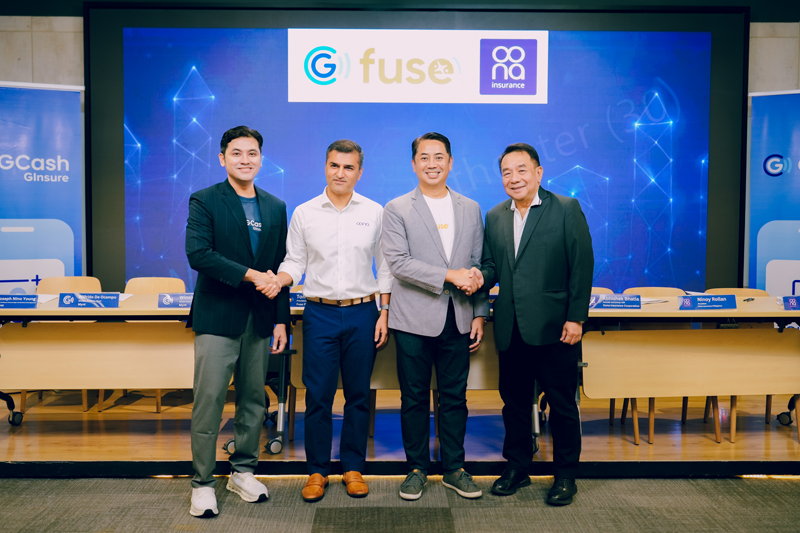
Mynt is a leader in mobile financial services focused on accelerating financial inclusion through mobile money, financial services, and technology. Mynt primarily operates through two wholly-owned subsidiaries: G-Xchange, Inc. (“GXI”), the mobile wallet operator of GCash, offering convenient financial services to Filipinos, and Fuse Financing Inc. (“Fuse”), a technology-based lending company, which empowers Filipinos with access to microloans and business loans.
Based on third-party provider data.ai, as of September 30, 2025, GCash remains the number one finance super-app in the country, bannered by ubiquity across its active user base. Under its Payments offerings, customers can easily send and receive money anywhere in the Philippines, even to other bank accounts, purchase prepaid airtime load, pay bills nationwide, and purchase from their partner merchants and social sellers.
In addition, Mynt has gone beyond the nation’s borders. As of September 30, 2025, it now offers payments in over 200 countries and territories with the GCash Visa Card and Global Pay, in partnership with Alipay+, to enable a seamless and secure payment experience across millions of merchants abroad through Scan to Pay. As of September 30, 2025, Mynt also empowers overseas Filipinos in 145 countries to manage their finances through GCash Overseas. They can now use the GCash app with their international mobile numbers, giving them access to services such as Send Money, Pay Bills, and Buy Load.
Beyond Payments, the GCash application also features a range of Digital Financial Services through its CreditTech and WealthTech products. On CreditTech, backed by a proprietary trust platform and credit scoring via GScore, Fuse has provided credit access to millions of borrowers, of which the majority are from lower socio-economic classes as of September 30, 2025. These milestones were achieved through innovative lending products covering credit lines (GCredit), cash loans (GLoan), buy-now-pay-later (via GGives), and micro-credit starter loans (Sakto Loan and Borrow Load), providing loans to more Filipinos who need it the most. The GCash application also provides a comprehensive suite of WealthTech services, covering savings (via GSave), investments (via GFunds, GStocks, GCrypto, and the newly launched GBonds), and insurance products (via GInsure).
Moving beyond transactions, GCash incorporates sustainability across its innovation initiatives. The GForest movement empowers users to accumulate green energy and plant trees by simply using GCash. As of September 30, 2025, more than 4.2 million trees have been planted, enabling GCash users to build a greener tomorrow.
STT GDC Philippines:
ST Telemedia Global Data Centres Philippines (STT GDC Philippines) is a joint venture partnership between Globe Telecom, ST Telemedia Global Data Centres, and Ayala Corporation. It is dedicated to providing state-of-the-art digital infrastructure and data center services, with a focus on operational excellence, sustainability, and innovation.
During the quarter, STT Fairview 1 successfully opened its first data hall and is now operational with a key 1MW customer deployment. The Level 2 fit-out is ongoing, and STT Cavite 2 has been energized, with testing and commissioning currently in progress. STT GDC Philippines continues to pursue high-visibility activities focused on industry advocacy through key events, engagements with relevant business organizations, and various sales campaigns.
Sustainability Highlights
Globe’s Sustainability practice is anchored on the Globe Purpose to “Uplift Filipino Lives Everyday”. By aligning with global sustainability frameworks, standards, and principles such as the United Nations’ Sustainable Development Goals (UN SDGs) and UN Global Compact and industry sustainability ambitions, the company is able to collaborate with its stakeholders to deliver positive societal and environmental impact. Globe is focused on addressing its material topics by scaling the integration of its sustainability practices within its business units and across the value chain.
The recently published 2024 Integrated Report <IR> is guided by the principles of the following frameworks:
● Reference to the Global Reporting Initiative (GRI) standards
● International Integrated Reporting Council (IIRC) Framework
● Sustainability Accounting Standards Board (SASB)
● Task Force on Climate-related Financial Disclosures (TCFD) recommendations
● United Nations Global Compact (UNGC) Principles
● United Nations Sustainable Development Goals (UN SDGs)
● Securities and Exchange Commission (SEC) recommendations
o Integrated Annual Corporate Governance Report (i-ACGR)
o Sustainability Reporting Guidelines
● GSMA ESG Metrics for Mobile
As of year end 2024, Globe has reached a 55.09% reduction in its Scope 1 and 2 emissions compared to its base year (2021) and 44.86% reduction in Scope 3 emissions (covered by SBTi near-term targets). Recalculation of base year GHG emissions inventory is ongoing until 2026. This process will incorporate updated emission factors and reflect changes in the business strategy, aligning with SBTi’s Corporate Net-Zero Standard and Near-Term Criteria.