




WATER is so fundamental to daily life that its importance is often fully recognized only when supplies become unreliable. Yet water security affects almost every dimension of development: public health, agriculture, food prices, industrial production, energy generation, tourism, and household welfare. When safe water is scarce or unaffordable, the burden falls disproportionately on poorer families, small businesses, farmers, and remote communities.
For the Philippines, water security deserves renewed urgency. The country must prepare for changing rainfall patterns, droughts, floods, growing urban demand, and unequal access to dependable water services. The challenge is not simply to find more water. It is to capture and conserve available supplies, reduce distribution losses, protect natural sources, ensure safe drinking water, and make infrastructure work reliably throughout the year.
A more fundamental change is also needed in how water is used. Agricultural production must be better aligned with local rainfall and water availability, while groundwater extraction must remain within sustainable limits. Without these changes, even new reservoirs, treatment plants, and water-supply projects may struggle to keep pace with growing demand.
The approaching El Niño makes this a particularly timely development priority. However, the response must go beyond emergency restrictions or the temporary search for alternative supplies. The Philippines needs a comprehensive, long-term water-security strategy, supported by stronger local implementation and practical regional cooperation through ASEAN.
The El Niño Warning: Prepare Before Scarcity Becomes a Crisis
On October 7, 2026, the Philippine Atmospheric, Geophysical and Astronomical Services Administration (PAGASA) reported that a strong to very strong El Niño was present in the tropical Pacific. Its outlook indicated that the phenomenon could persist into the first half of 2027 and peak before the end of 2026.
The Department of Environment and Natural Resources (DENR), in its October 5 announcement, called for renewed water conservation. It encouraged households and communities to collect rainwater and reuse water where appropriate, while urging the public to avoid unnecessary consumption.
These warnings should prompt action well before shortages become acute. Local governments, water districts, utilities, schools, hospitals, agricultural communities, and businesses need contingency plans based on their actual water sources, storage capacity, and likely demand.
Preparedness must also recognize that water security is not exclusively a drought problem. Intense rainfall and flooding can damage infrastructure, contaminate supplies, and send large volumes of water rapidly into the sea. A country exposed to both heavy rainfall and dry spells must learn to manage water across seasons, rather than merely respond to weather emergencies.
Capture the Rain Before It Runs Away
Rainwater harvesting should become a more systematic part of the Philippines’ water strategy. Rooftops of homes, schools, hospitals, public buildings, factories, and commercial establishments can be equipped with collection systems and storage tanks. Larger communities can develop retention ponds, small impounding structures, and reservoirs where technically, environmentally, and economically suitable.
Urban planning should also consider how to retain stormwater safely, restore wetlands, and protect natural drainage and groundwater-recharge areas. Rather than treating every downpour only as a drainage problem, cities should examine how a portion of that water can be stored or allowed to replenish aquifers.
This requires practical standards for collection, filtration, storage, and maintenance. Rainwater intended for drinking must undergo appropriate treatment and quality testing; untreated runoff should never be assumed safe. Harvested water can also be used for nonpotable purposes such as gardening, cleaning, and certain industrial activities, reducing demand for treated drinking-quality supplies.
Rainwater harvesting cannot replace large-scale public water systems, but it can supplement them, particularly in schools, public institutions, islands, and communities with unreliable supplies. Incentives, technical guidance, and local demonstration projects could encourage adoption while helping households understand both the benefits and the limitations of these systems.
Every Drop Counts: Reduce Losses and Reuse Water
Water security also depends on preventing avoidable waste. Leaking pipes, inefficient distribution networks, poorly monitored consumption, and inadequate maintenance can undermine the value of expensive water infrastructure.
Utilities should measure distribution losses, repair leaks promptly, modernize networks, and publish clear performance indicators. Water metering, efficient fixtures, and sensible pricing structures can encourage conservation, provided that essential water remains affordable for low-income households.
Households and institutions should also make more systematic use of recycled water. Water from showers, baths, handwashing, and laundry can, where suitable and properly managed, be collected as greywater, treated when necessary, and reused for gardening, toilet flushing, and some cleaning activities. Commercial buildings, hotels, schools, and residential developments could incorporate separate plumbing and storage systems to keep reusable water apart from drinking-water supplies.
Untreated greywater should not be used indiscriminately. Detergents, chemicals, and microorganisms can create health or environmental risks, while water from toilets must be handled separately as sewage. Clear standards, affordable technologies, and public guidance can make safe water reuse a practical part of everyday life.
Treated wastewater can also support landscaping and selected industrial activities, reducing pressure on freshwater sources. Commercial establishments and public facilities should use recycled water where technically, environmentally, and economically feasible.
Agriculture must also be part of the solution. Better irrigation management, improved soil-moisture retention, and water-efficient technologies can help farmers produce more with less water. But irrigation efficiency alone will not be enough if crops are cultivated in locations where their water requirements exceed what local rainfall and sustainable water supplies can support.
Grow the Right Crops in the Right Places
One of the most consequential but less discussed dimensions of Philippine water security is the geographical distribution of cropping patterns. Agricultural planning must take greater account of rainfall distribution, seasonal water availability, soil conditions, groundwater resources, and the water requirements of different crops.
A crop that is economically attractive in one province may be much more water-intensive than local conditions can sustainably support in another. Where farmers depend on scarce irrigation supplies or increasingly deep wells to sustain such cultivation, short-term production gains can create longer-term water stress.
Rice, for example, can require substantial irrigation under certain growing conditions, although its actual water requirements vary with rainfall, soil, crop variety, and farming practices. The answer is not to prescribe a blanket reduction in rice cultivation but to assess where and how different crops can be grown sustainably.
The Department of Agriculture already has a useful foundation for this approach. Its National Color-Coded Agricultural Guide Map identifies the suitability of 21 economically important crops using information on soil, elevation, rainfall, temperature, water availability, and climate-related hazards. This decision-support tool can help guide agricultural investment and adaptation planning.
The next step is to make such evidence a more decisive part of local agricultural policy. Provincial and municipal agricultural plans should identify where rain-fed cultivation is viable, where irrigation is dependable, and where alternative crops or adjusted planting calendars could reduce exposure to drought. Farmers should receive practical advice, access to suitable seeds and markets, and transition support where changes are warranted.
Crop choices must remain economically viable and sensitive to food-security needs. Farmers cannot reasonably be expected to change crops without reliable information, extension services, market access, and financial support. Nor should crop diversification compromise national food supplies. The aim is to match crops more closely to local agroecological conditions while protecting farmer incomes and food security.
This is where water management becomes agricultural development policy. Aligning cropping patterns with rainfall and sustainable water availability can reduce pressure on reservoirs and aquifers, lower farmers’ exposure to dry spells, and make agricultural production more resilient to climate change.
Groundwater Is a Reserve, Not an Unlimited Backup
Groundwater provides a vital source of drinking water and irrigation, particularly in places where surface-water supplies and piped networks are inadequate. But it is not an inexhaustible reserve. Aquifers must be replenished, and extraction that persistently exceeds recharge can lower water tables, raise pumping costs, increase the risk of saltwater intrusion in coastal areas, and undermine the long-term reliability of wells.
A Philippine Institute for Development Studies release in February 2026, discussing its study of groundwater, surface water, and water districts, reported that groundwater extraction had increased by an average of 3.8% annually between 2014 and 2023. The study also highlighted the risks of overdependence on groundwater, including falling water tables, pollution, and saltwater intrusion.
The Philippines should therefore treat groundwater management as a central element of water security. The easy response to a declining well is often to drill deeper. But deeper drilling is not a sustainable solution when the underlying problem is excessive extraction, inadequate recharge, or weak management of competing demands. It can increase energy and pumping costs while transferring pressure to deeper aquifers.
This does not mean that every deep well should be prohibited. Wells may be necessary for communities and farms that lack viable alternatives. However, drilling and abstraction should be governed by hydrogeological evidence, permits, monitoring, and sustainable extraction limits. Areas experiencing falling water levels or saltwater intrusion may require stricter controls, metering, and restrictions on new wells.
Authorities should monitor groundwater levels and extraction more systematically, identify stressed aquifers, and enforce rules against unauthorized abstraction. Rainwater retention, watershed restoration, permeable surfaces, and managed aquifer recharge—where technically appropriate—can help replenish groundwater. Improving public water networks and developing reliable surface-water supplies can also reduce excessive dependence on wells.
The policy principle is straightforward: groundwater should be used within the limits of sustainable replenishment, not treated as an unlimited substitute for conservation and investment in alternative supplies.
Safe Drinking Water Must Be a Public-Health Guarantee
Water availability and water safety are different challenges. A community may have a source of water but still lack reliable access to drinking water that meets appropriate safety standards.
The response must include effective treatment, regular water-quality testing, protection of wells and watersheds, safe storage, reliable disinfection, and properly maintained distribution systems. Sanitation is equally important: untreated sewage and poorly managed waste can contaminate water sources and expose communities to disease.
The World Bank’s work on Philippine water services highlights the importance of strengthening local water providers, improving financial sustainability, and ensuring that infrastructure can be operated and maintained over time. These institutional challenges are particularly important outside major urban centers, where service coverage and technical capacity can be weaker.
The Department of Finance’s October 9, 2026, announcement of €212.7 million—approximately ₱14.98 billion—in World Bank financing provides a timely example. The funding will support the Accelerated Water and Sanitation Project in Selected Areas, implemented by the Department of Public Works and Highways and the Department of the Interior and Local Government. Planned facilities include a bulk water-supply system, a septage treatment plant, and water, sanitation, and hygiene facilities in Bohol, Siargao, and Sulu.
This project matters not only because it will add facilities but also because it aims to improve access to safe water and sanitation in underserved areas exposed to climate-related risks. Its success will depend on reliable operations, effective local management, and services that remain affordable after construction is completed.
The World Bank’s Wider Water Program: Reform, Finance, and Delivery
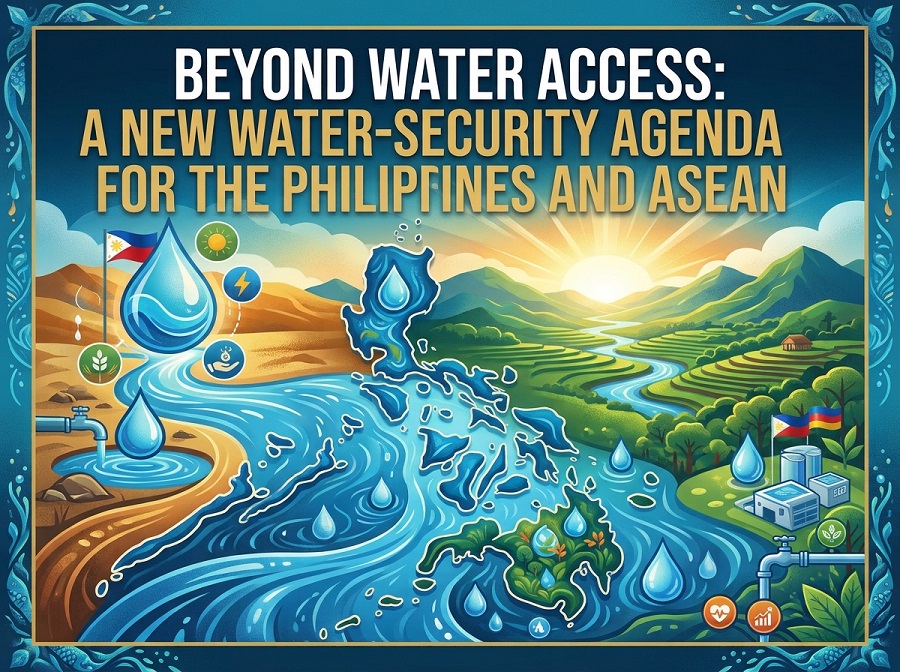
The Philippines should view the new water and sanitation project as part of a broader World Bank Group engagement that combines infrastructure investment with reforms intended to make water services more reliable and financially sustainable.
On June 25, 2026, the World Bank Group announced approval of the Second Energy Transition and Climate Resilience Development Policy Loan. Although the operation also addresses energy policy, it includes important water-sector reforms. These seek to strengthen financing arrangements for water services, improve bulk-water pricing rules, support cost-recovery tariff frameworks, and prioritize poor and climate-vulnerable communities. The program also aims to increase the number of local water providers with sustainable business plans from 10 to 100 by 2027.
This is significant because many local governments and water providers face financing and institutional constraints. Building a pipeline of capable, financially viable providers can help make water projects more attractive to investment and improve the prospects that systems will be maintained over time. Cost recovery, however, must be designed carefully: water providers need sufficient revenue to operate and invest, while low-income households must retain access to essential water at affordable prices.
The second major initiative is the Accelerated Water and Sanitation Project in Selected Areas (AWSPSA), approved by the World Bank in July 2026. The project is part of a wider World Bank program on water security and resilience in East Asia and the Pacific. It will support climate-resilient water supply, storage and distribution, sanitation infrastructure, and water, sanitation, and hygiene facilities in Bohol, Siargao, and Sulu. It also seeks to improve the performance and governance of local service providers and strengthen coordination between national and local governments.
The World Bank Group’s work in Metro Manila illustrates a complementary approach: mobilizing private capital for a major urban utility while supporting improvements in service delivery and sanitation. In November 2025, Maynilad Water Services launched an initial public offering that raised US$587 million. The International Finance Corporation (IFC), a member of the World Bank Group, invested US$100 million as a cornerstone investor, helping mobilize private investment for the company’s capital program. The proceeds are intended to support infrastructure improvements, including expanded wastewater-service coverage.
Taken together, these initiatives represent three connected priorities: strengthening the financial and regulatory framework for water services; investing in climate-resilient infrastructure in underserved communities; and mobilizing public and private capital to expand and improve service delivery. They should be judged by their results for households and businesses—not simply by the amounts approved or disbursed.
ADB’s Direct Interventions: From Metro Manila to Provincial Water Districts
The Asian Development Bank (ADB) has an important role in addressing the Philippines’ water and sanitation needs, both through direct investment and by strengthening the institutions that deliver services.
In November 2025, ADB announced a US$145 million investment in Maynilad Water Services, comprising US$100 million from ADB’s ordinary capital resources and US$45 million from the Leading Asia’s Private Sector Infrastructure Fund 2. The investment, made as part of Maynilad’s initial public offering, is intended to expand and modernize water and wastewater infrastructure in Metro Manila and nearby areas. Planned improvements include increasing water-treatment capacity, extending supply coverage, reducing water losses, upgrading conveyance networks, and expanding sewerage and sanitation services. These investments matter in a densely populated urban region where unreliable supply and inadequate wastewater services can affect public health, productivity, and climate resilience.
ADB’s work also extends beyond the capital. Its Water District Development Sector Project, supported by a US$60 million loan, is designed to help 12 provincial water districts expand and rehabilitate their water-supply systems. It also supports pilot sanitation facilities in selected districts and capacity development for the Local Water Utilities Administration and participating utilities. This is particularly relevant because water-service gaps are often more pronounced outside Metro Manila, where local providers may have fewer financial and technical resources. The project’s broader lesson is that extending infrastructure must go hand in hand with stronger utility management, sanitation, and long-term operational capacity.
Together, these interventions illustrate two complementary approaches: mobilizing investment to modernize a major urban water and wastewater network and strengthening provincial utilities so they can extend dependable services to communities beyond the capital. The impact will ultimately depend on effective implementation, maintenance, affordability, and measurable improvements in water quality and reliability.
ADB’s Regional Outlook and New Financing Opportunities
ADB’s Asian Water Development Outlook 2025, published in December 2025, assesses water security across 50 economies in Asia and the Pacific. It reports that about 2.7 billion people in the region moved out of extreme water insecurity between 2013 and 2025. Yet environmental degradation, rising water-related hazards, and inadequate investment threaten to reverse some of this progress.
ADB estimates that the region will need approximately US$4 trillion in investment in water, sanitation, and hygiene through 2040. The report’s central lesson is that infrastructure alone is insufficient. Sustainable progress requires sound governance, effective maintenance, environmental protection, inclusive services, and investment directed toward the people and places with the greatest needs.
In July 2026, ADB and Japan established the Water Initiative for Security, Efficiency and Resilience (WISER) Fund, with an initial US$10 million contribution from Japan. The fund can support water projects, technical assistance, capacity building, innovative technologies, disaster preparedness, and stronger water governance across ADB’s developing member economies. It is a regional financing mechanism, not a dedicated allocation to the Philippines, but it offers a potential avenue for future projects and knowledge sharing.
For the Philippines, the opportunity is to draw on ADB’s project-financing capacity and technical expertise to strengthen water supply, sanitation, irrigation, watershed protection, and resilience to water-related disasters. Any future support should be tied to clearly identified national and local priorities and should complement, rather than duplicate, existing World Bank and government programs.
These initiatives reinforce an important principle: water investment should be judged by the quality, reliability, and affordability of the services it delivers, as well as by its contribution to climate resilience.
ASEAN Can Help Turn National Efforts into Regional Resilience
The Philippines does not have to address every water challenge alone. ASEAN can help its members share experience, improve preparedness, and develop practical responses to common risks.
The ASEAN Strategic Plan of Action on Water Resources Management already provides a framework for cooperation on water access, quality, sanitation, integrated water-resource management, and water-related disasters. ASEAN’s broader 2045 vision also recognizes water and food security, climate change, and natural disasters as important regional concerns.
There is scope to translate these commitments into more visible, practical cooperation. ASEAN could strengthen the sharing of rainfall, drought, reservoir, and water-quality information; facilitate technical exchanges on rainwater harvesting, groundwater recharge, wastewater recycling, and desalination; and support training for local water operators and planners.
Regional cooperation could also encourage comparable indicators for safe drinking-water access, sanitation, water losses, and preparedness for droughts and floods. This would allow governments to assess progress more consistently and learn from approaches that have worked in other member states.
Agriculture should be part of this agenda. ASEAN members could exchange experience on matching crop choices and planting calendars to local water availability, improving irrigation efficiency, monitoring groundwater, and supporting farmers as they adopt more water-resilient practices. Regional knowledge sharing could also help governments anticipate weather-related risks to food supplies.
Development partners, including ADB and the World Bank, can support project preparation and financing, while ASEAN can facilitate collaboration and knowledge sharing. ASEAN cannot replace national governments or local utilities. The responsibility for implementing projects, maintaining systems, and ensuring safe and affordable services remains domestic. Regional cooperation can nevertheless reduce the cost of learning, improve preparedness, and make proven solutions easier to adopt.
Measure Success in Water Delivered, Not Projects Announced
A durable water-security strategy must connect investment with implementation. Every project should have clear objectives, realistic operating budgets, assigned responsibility for maintenance, and measurable service outcomes.
The Philippines should track whether more households receive safe and reliable water, whether distribution losses decline, whether wastewater is treated, whether rainwater is retained for useful purposes, and whether vulnerable communities are better prepared for drought. It should also monitor groundwater levels and abstraction, assess whether crop patterns are compatible with local water resources, and measure whether agricultural water productivity improves.
Projects should be assessed for affordability, environmental impact, and their ability to keep working after initial funding ends. Farmers should be supported in making evidence-based crop choices, and communities that rely on groundwater should have viable alternatives before restrictions become necessary.
Water security is not achieved by a single reservoir, desalination plant, funding agreement, or conservation campaign. It requires a connected system of infrastructure, technology, agricultural planning, groundwater management, environmental stewardship, sound governance, and public participation.
For the Philippines, the approaching El Niño is an immediate warning, but the policy horizon must be much longer. Rainwater harvesting, conservation, household water recycling, purification, wastewater reuse, water-efficient agriculture, sustainable groundwater management, and carefully selected desalination projects should form part of a sustained national effort. ADB, the World Bank, and ASEAN can help provide financing, technical expertise, and regional learning.
The ultimate measure of progress is straightforward: whether households, farmers, schools, hospitals, and businesses can count on sufficient, safe, and affordable water in both wet and dry seasons—without exhausting the groundwater reserves on which future generations will depend. Treating water as essential economic and social infrastructure would help the Philippines build a healthier, more productive, and more climate-resilient future.

