

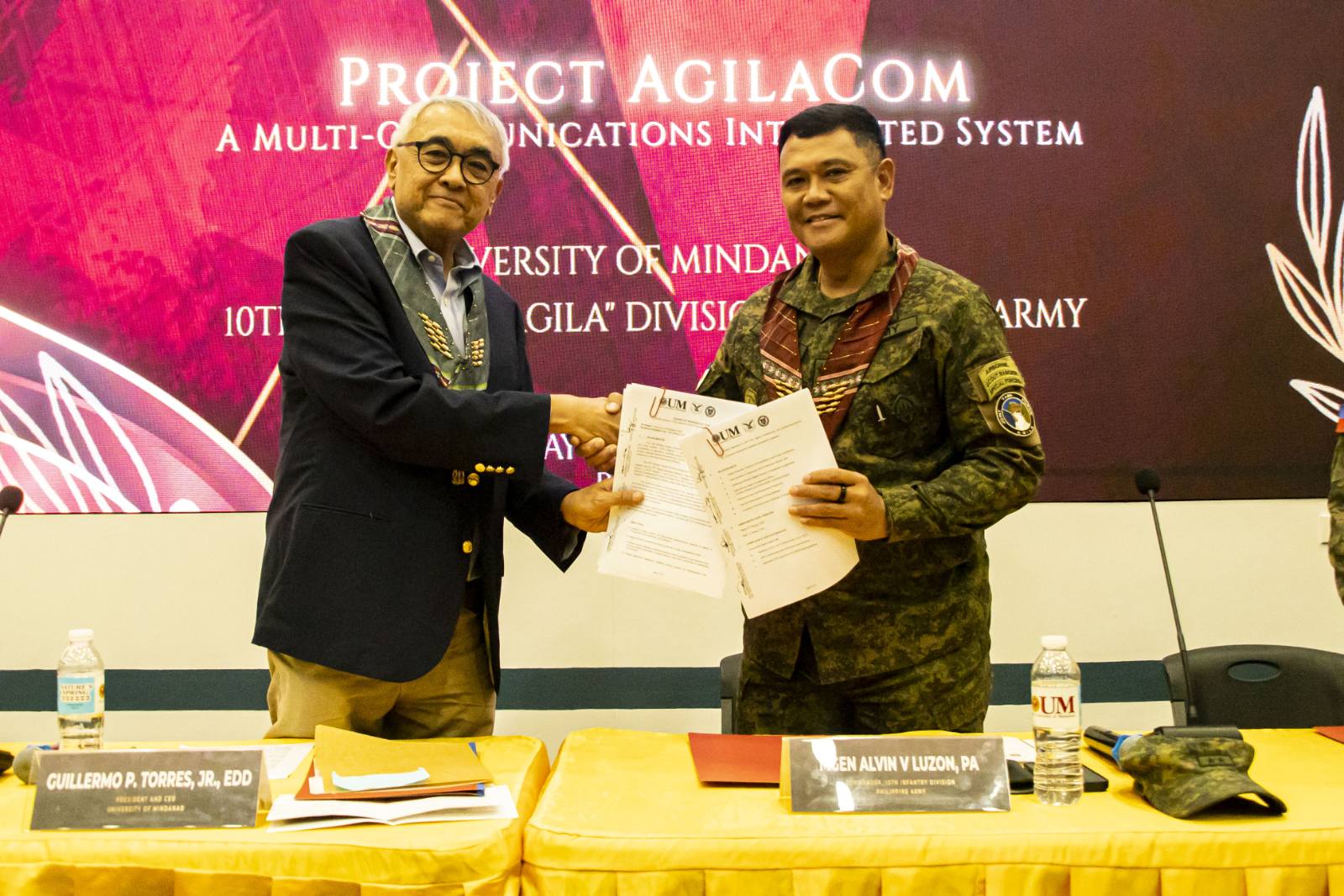
THE 10TH Infantry “Agila” Division is going high-tech to bridge the communication gap in Mindanao’s most rugged terrains.
Major General Alvin Luzon, 10ID commander, led the formal signing of a partnership with the University of Mindanao (UM) and the Department of Science and Technology (DOST XI) on May 6, 2026.
The collaboration centers on Project AgilaCom, an advanced integrated communications system designed to ensure soldiers never lose contact, even in the most geographically isolated and conflict-prone areas.
Unlike standard radio systems, Project AgilaCom features a single platform that connects different communication channels, live GPS tracking to monitor troop movements with precision, voice capabilities powered by WebRTC and military-grade mutual Transport Layer Security (mTLS) to prevent enemy interception.
The system is the brainchild of the University of Mindanao’s research team, funded by the DOST-PCIEERD Research and Development Initiative, and fine-tuned through the operational expertise of the 10th Signal (Masaligan) Battalion.
During the signing at the UM Matina Campus, University president Dr. Guillermo Torres Jr. and VP for Research Maria Linda Arquiza emphasized that academia has a vital role in national security.
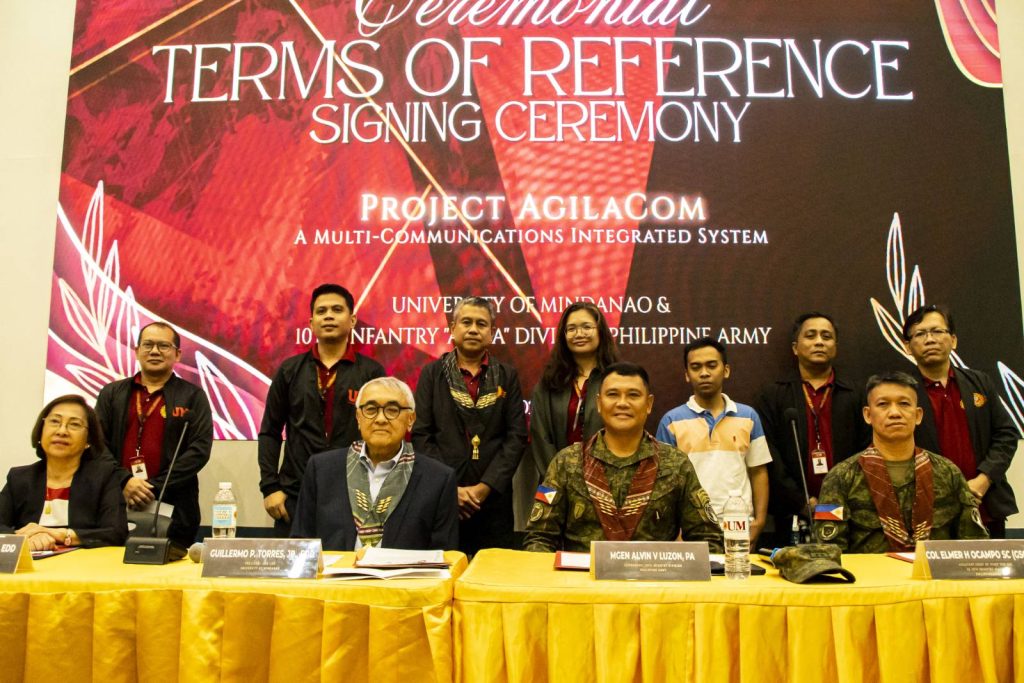
By lending their technical expertise, the university is helping create home-grown solutions for the Philippine Army.Major General Luzon hailed the project as a “best practice” for the division, noting that modern warfare is as much about data as it is about boots on the ground.
“Project AgilaCom demonstrates the importance of collaboration between the military, academia, and government agencies,” Maj. Gen. Luzon said. “We are developing mission-oriented technologies that will directly enhance the operational readiness and situational awareness of our troops.”
The initiative aligns with the broader Philippine Army modernization program. By involving the Department of Information and Communications Technology (DICT XI), the project ensures that the technology is not only secure but also compatible with national digital infrastructure.