
MORE THAN 500 former rebels (FRs) across three provinces and one city of the Davao Region can look ahead to better incomes and more economic opportunities with the implementation of the Cacaopreneur Livelihood Program and Forest Protection Program.
This developed as the Office of the Presidential Adviser on Peace, Reconciliation and Unity (OPAPRU) and the Provincial Local Government Units (PLGUs) of Davao del Norte, Davao de Oro, and Davao Oriental, together with the National Commission on Indigenous People (NCIP)-XI, forged a Memorandum of Agreement (MOA), a partnership that is expected to bring sustainable economic growth and strengthen peacebuilding efforts in the region.
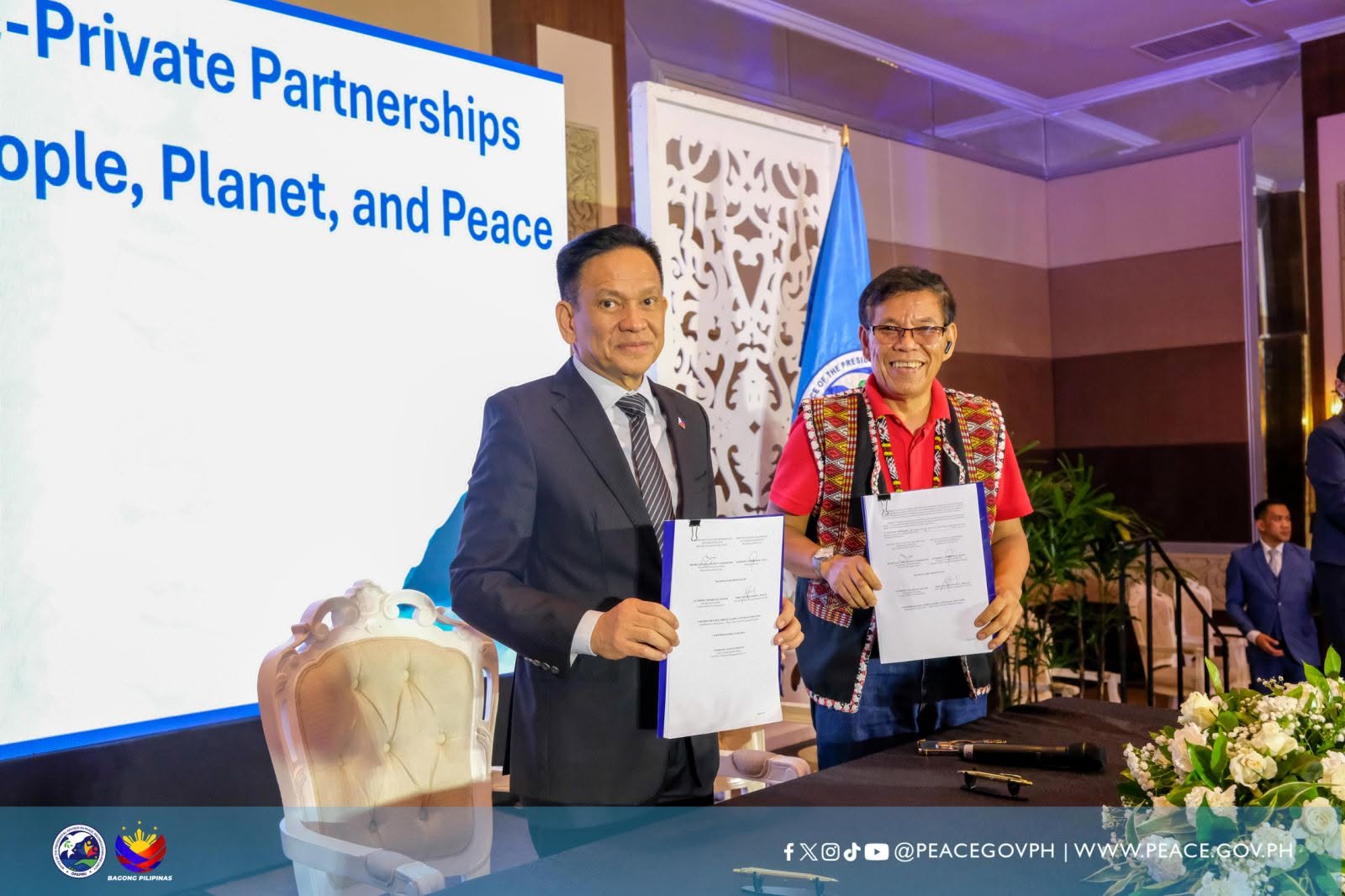
The MOA was signed by Presidential Adviser for Peace, Reconciliation and Unity (PAPRU) Secretary Mel Senen S. Sarmiento, Davao del Norte Governor Edwin I. Jubahib, Davao de Oro Governor Raul G. Mabanglo, Davao Oriental Governor Nelson L. Dayanghirang, and Atty. Geroncio R. Aguio, NCIP XI regional director, during the International and Private Partners’ Forum (IPPF) on June 5, 2026.
Public-private partnerships
The Cacaopreneur Livelihood Program leverages strategic public-private collaboration to uplift the socioeconomic conditions of FRs through cacao production and revitalize communities that have been affected by armed conflict, transforming them into productive agricultural and entrepreneurial hubs.
To realize these objectives, the OPAPRU has sought the technical expertise of a private firm and other concerned government agencies to implement the innovative program, particularly in providing technical assistance to the beneficiaries and helping them connect to global markets.
According to Sarmiento, the OPAPRU is providing Php 7.1 million in funding support to each of the Davao PLGUs and to the City of Davao to ensure that the program is effectively carried out and achieves its objectives.
“This initiative shall capacitate our LGUs to implement targeted economic and livelihood interventions that will provide sustainable sources of income for our FRs, drive agricultural innovation, and boost employment in rural communities across the region,” he explained.
Sarmiento said that the initial implementation phase of the program within the second half of this year is expected to benefit hundreds of FRs and their next of kin, as well as their communities that will be involved in the novel livelihood program.
“This is the essence of LGU-driven development wherein local governments are at the forefront of efforts to improve the living conditions of their people, especially for FRs who are in the process of rebuilding their lives,” he explained.
Sarmiento said that by harnessing the skills of FRs as farmers and entrepreneurs, they are being empowered to chart their future, while showing them that good things come to those who turn away from armed struggle and walk the path of peace.
“Through this program, the national government, under the administration of President Ferdinand R. Marcos Jr., is determined to help our FRs recover and build a better life for themselves and their families,” he stressed.
“This is the essence of positive peace, and that is, no one should be left behind in the peace and development process,” Sarmiento said.
In the Philippines, cacao production has been a thriving industry. According to the Philippine Statistics Authority (PSA), Filipino farmers harvested an average of 10,308 metric tons of cacao between 2020 and 2024, marking a significant leap of 44% compared to the previous years.
Furthermore, the PSA reported that the country exported a total of $9.88 million worth of chocolate and cocoa products to international markets in 2024, posting an increase of 32% from the previous year.
At the center of this dynamic performance is the Davao Region, which is considered the country’s cacao capital. Based on Department of Agriculture (DA) 11 data, the region produced 7,807 metric tons in 2024, contributing 72% to the total national output.
With the launch of the Cacaopreneur Livelihood Program, the Davao Region is anticipated to further enhance its competitive advantage in cacao production by capitalizing on the innate strengths and advantages of the area.
The program integrates its main beneficiaries — former rebels who are also members of People’s Organizations (POs) and their communities — directly into the high-value commercial supply chain.
Rather than focusing solely on raw farming, the program supports players across the entire value chain, spanning high-yield cacao cultivation and farm management, localized processing technologies to increase market value, and integrated commercial sale and trade distribution.
Another key component of the initiative is the Forest Protection Program, which seeks to bridge environmental stewardship with immediate cash generation. This strategy promotes a sustainable and eco-friendly approach while raising the incomes of beneficiaries.
Essentially, the FRs become environmental stewards wherein they receive reliable financial compensation for forest protection activities, creating a stable economic safety net while safeguarding the province’s natural resources and ecological equity.
A collaborative economic blueprint
To make sure that the funds allocated for the program are maximized and have the greatest impact among beneficiaries, they will be strictly managed under a specialized Project Management Committee (PMC) consisting of representatives from OPAPRU, concerned PLGUs, DA, and nominated private sector experts.
This set-up will ensure that agricultural resources, technical training, and market access complement each other and are synchronized during program implementation.
Meanwhile, OPAPRU’s Local Conflict Transformation-Field Implementation Support Office (LCT-FISO) Director, Atty. Elisa D. Evangelista expects the program to gain traction and have a significant impact on the lives of the FRs, their families, and communities.
“Socio-economic development is crucial for enduring peace and stability to take root,” Evangelista said, pointing out that this is the goal of OPAPRU’s Transformation Program, which is not only to help FRs make the successful transition to mainstream society but also turn them into agents of peace and development.
“By improving the lives of our FRs and transforming their areas into vibrant economic zones, we are building communities that are conducive to high-value agriculture production with the aid of our trusted private sector partners,” she added.