



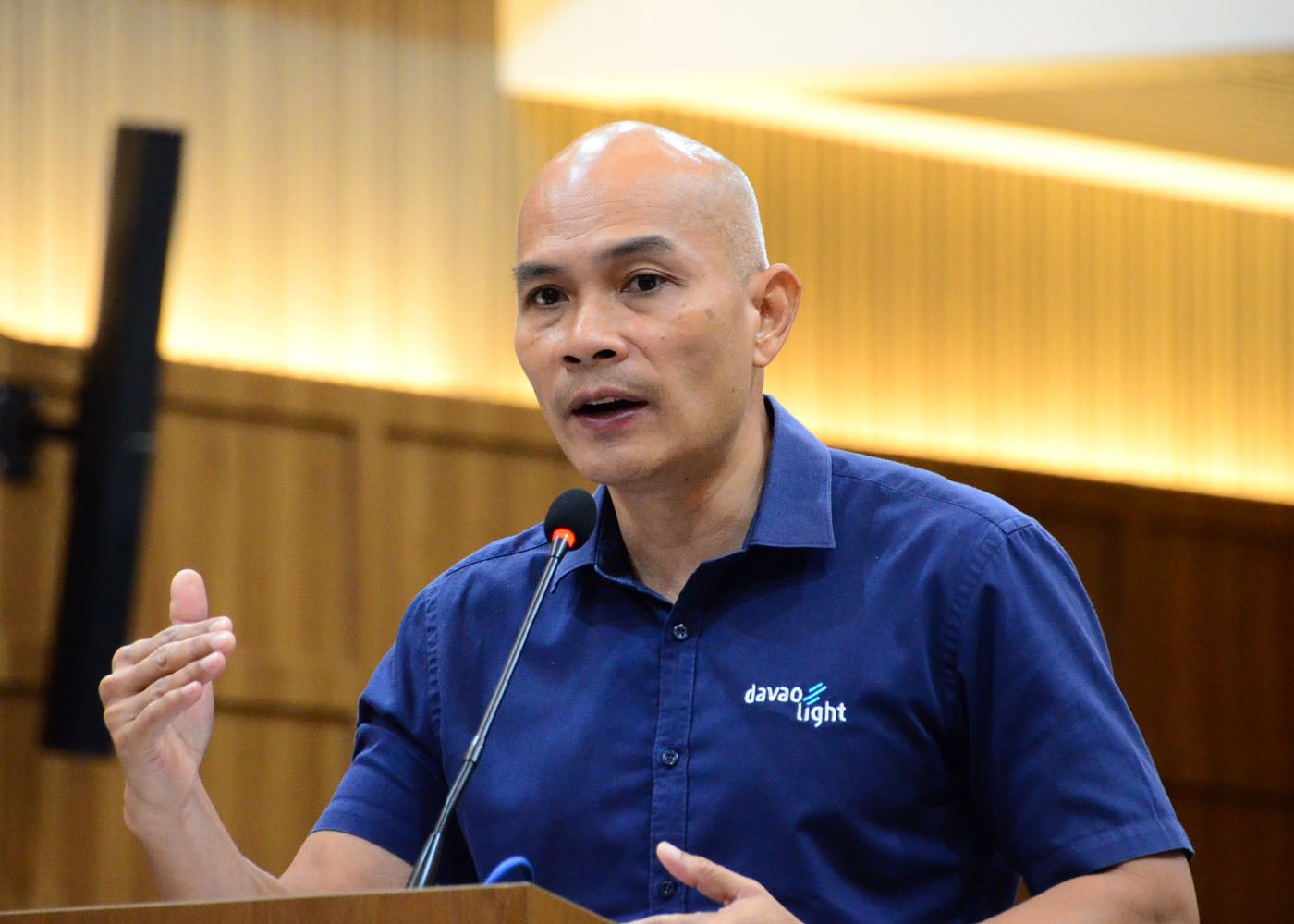
DAVAO Light and Power Company (DLPC) does not keep the amount it collects from electricity pilferers, but instead returns these to consumers in the form of rate reductions, DLPC president and COO Henrizar Tia said.
“It is important for us to understand that all system losses that we collect, we also give back to the consumers,” Tia told the City Council during the Aug. 5 session on the utility firm’s systems loss.
The clarification came after Councilor Arnulfo Cabling asked DLPC to account for how much it had billed Davao City residents for systems loss and how much it had recovered from illegal power connections, suggesting that any excess collected from pilferers be returned to paying customers.
Pilferage in a distribution utility means the theft, unauthorized use, or illegal tapping of a utility service which results in losses for the provider.
Tia said the company follows a legal procedure when apprehending pilferers, which requires the presence of a law enforcement officer.
“Meron po yang kasamang police, so kung sa far-flung areas na walang kasamang police, pwede na ang barangay officials for us to execute it properly,” he said.
Tia said any amount collected from systems loss out of pilferage is not retained by Davao Light but is remitted to the appropriate agencies and eventually returned to consumers through rate reduction.
He cited a hypothetical example of ₱200,000 collected in back-billing, saying the full amount would not go to the company but would instead be reflected in lower rates.
Cabling asked DLPC to submit a formal report and historical data on the matter for the committee’s review, which Tia agreed to provide.
In a follow-up question, councilor Louie John Bonguyan, committee chair on Energy, asked about the system’s loss cap set by the Energy Regulatory Commission (ERC).
Tia said the ERC has progressively lowered the cap over the years, recognizing that systems loss is an “inherent technical characteristic of power distribution from generation to end users.
The current cap for private distribution utilities such as Davao Light is 5.5 percent, while electric cooperatives are allowed a higher cap depending on their classification, with some allowed more than 10 percent.
Tia said DLPC’s systems loss has stayed slightly above 5 percent but below the 5.5-percent cap over the past 12 months.
Bonguyan noted that systems loss is generally categorized into two types: non-technical losses refer to illegal connections, jumpers, and pilferage, while technical losses occur naturally in the process of transmitting electricity from generation to distribution and are considered unavoidable.

