



BY ALEX ALAGON

BY ALEX ALAGON

There are island escapes that promise tranquility, and then there are destinations that completely redefine it.
Just off the coast of Davao de Oro, where emerald coconut groves meet crystalline waters, lies Dusit Thani Lubi Plantation Resort—an exclusive private island retreat where sophisticated luxury, immersive experiences, and sustainable living exist in perfect harmony. Accessible within minutes by catamaran from the resort’s welcome center, the journey itself signals a departure from the ordinary, transporting guests into a sanctuary where time slows and every moment is thoughtfully curated.
More than just a beachfront resort, Dusit Thani Lubi Plantation Resort invites travelers to embrace a slower, richer way of experiencing paradise. “At Dusit Thani Lubi Plantation Resort, we believe true luxury is about creating meaningful experiences that connect our guests with nature, local culture, and the people they travel with. Every stay is thoughtfully designed to deliver authentic Thai-inspired gracious hospitality while preserving the natural beauty of our island for future generations. We invite every guest to discover not just a destination, but a place where unforgettable memories are created,” said Thanthita Nithimetheesanont, General Manager, Dusit Thani Lubi Plantation Resort.


An Exclusive Island Designed for Meaningful Escapes
Surrounded by the calm waters of the Davao Gulf, the resort is home to just 77 elegantly appointed accommodations, from ocean-facing rooms to expansive private villas with their own pools. Spacious interiors, tropical-inspired design, and uninterrupted views create an atmosphere that feels both intimate and indulgent, allowing every guest to reconnect—with nature, loved ones, and themselves.
Whether waking up to the gentle rustling of coconut palms or watching the sky transform into shades of gold from a private balcony, every stay is defined by effortless luxury.

Meaningful Island Moments for the Whole Family
Dusit Thani Lubi Plantation Resort is a destination where families can create meaningful moments together while embracing the restorative rhythm of island life.
Whether spending leisurely days on the beach, exploring the island’s natural beauty, embarking on water adventures, or gathering over exceptional dining experiences, every generation can discover something to enjoy.
Adventure awaits at every turn—from kayaking through tranquil waters and paddleboarding along the coastline to snorkeling among vibrant marine life and setting sail on an island cruise. Younger guests and families can also enjoy an array of recreational experiences, including game zones, a recording studio, mini golf, and thoughtfully curated activity spaces that transform every stay into an unforgettable shared adventure.
Spend the afternoon by the Sunrise Pool, watch the horizon glow from the Sunset Pool, indulge in bespoke treatments at The Island Spa by Namm Spa, or sink into the rhythm of the sea. Here, every experience is designed around wellbeing rather than schedules.
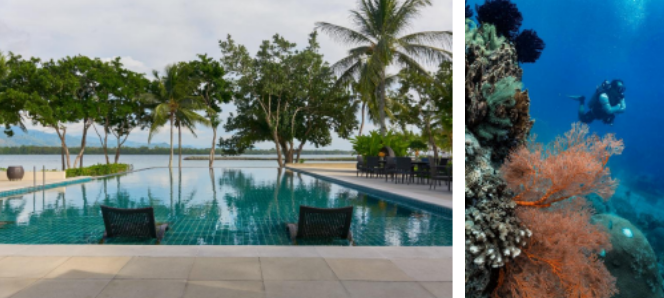
A Culinary Journey Across the Island
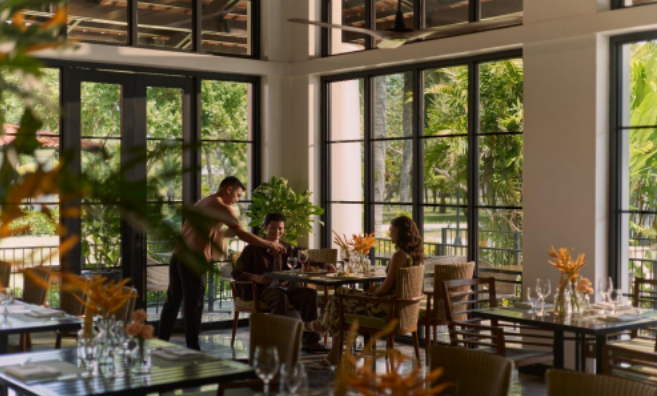
Dining at Dusit Thani Lubi Plantation Resort is as much about the setting as it is about the cuisine.
Authentic Thai flavors come alive at Ga-Ti, where Dusit’s celebrated culinary heritage takes center stage through expertly crafted dishes. At The Mill, guests embark on a journey across Asia with Filipino favourites, Southeast Asian classics, and Korean specialties served in a vibrant social atmosphere. Those seeking relaxed beachfront dining can savour premium steaks, handcrafted burgers, and comforting Western fare beside the pool, while al fresco evenings unfold over craft beers, curated wines, and island sunsets at Tarictic.
From sunrise breakfasts to intimate in-villa dining beneath the stars, every meal becomes part of the destination itself.

Sustainability as the Ultimate Luxury
What truly distinguishes Dusit Thani Lubi Plantation Resort is its belief that exceptional hospitality and environmental responsibility should never exist separately.
Sustainability is thoughtfully woven into every aspect of the Dusit Thani Lubi Plantation Resort experience, reflecting a long-term commitment to preserving the island’s natural beauty for generations to come. At the heart of this commitment is a 1-megawatt solar farm comprising 1,836 solar panels, which supplies approximately 50% of the resort’s energy requirements. This renewable energy initiative helps reduce the resort’s carbon footprint by an estimated 985 metric tons annually—the equivalent of planting around 45,000 trees each year.
Complementing these efforts are advanced desalination and reverse osmosis systems that provide sustainable water independence, on-site drinking water bottled in reusable glass containers, solar-heated swimming pools that reduce energy consumption, and an organic composting program that returns nutrients to the island’s lush tropical landscape.
Beyond infrastructure, the island protects what makes it extraordinary.
A dedicated turtle sanctuary safeguards endangered Hawksbill turtles, while protected coral reefs preserve the rich marine ecosystem surrounding the resort. Native landscaping, mangrove restoration, sustainable food production and strong community partnerships demonstrate that every stay contributes to a larger purpose.

Where Nature Meets Contemporary Art
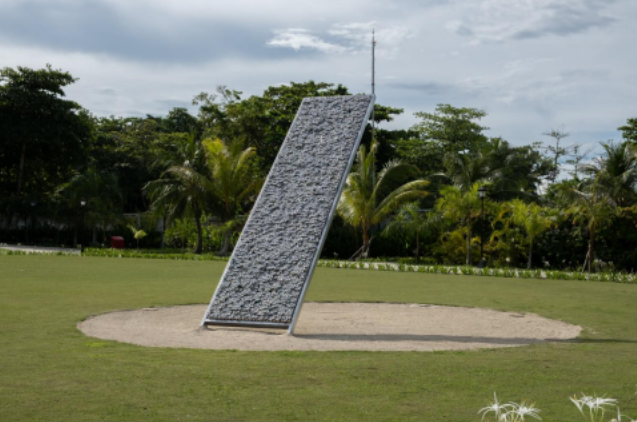
Scattered across the island are striking contemporary art installations created by some of the Philippines’ most celebrated artists. Thoughtfully integrated into the landscape, these works encourage guests to slow down, reflect, and engage with the island beyond its breathtaking scenery.
From sculptural installations that interact with wind and light to living artworks that evolve alongside nature, the resort transforms every walk into a cultural journey where creativity and the natural environment exist in quiet conversation.
The Celebration Destination Everyone Will Remember
The most memorable weddings aren’t defined by lavish decorations or elaborate programs. They’re remembered by the feeling of being somewhere extraordinary.
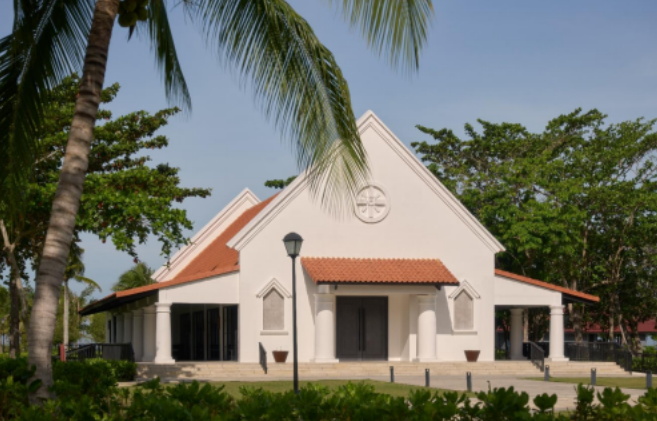
At Dusit Thani Lubi Plantation Resort, celebrations unfold on an exclusive island where nature becomes the grandest backdrop. Couples exchange vows in an elegant seaside chapel before celebrating beneath tropical skies, while guests enjoy an immersive island escape filled with exceptional dining, beachfront activities, relaxation, and luxurious accommodations.
Instead of a single day, weddings become an unforgettable weekend.
Instead of simply attending, guests experience paradise.
Long after the flowers have faded and the music has stopped, what remains is the memory of celebrating love on an island where every sunrise, every sunset, and every shared moment feels timeless.
More Than a Destination
For organizations seeking a destination that inspires both performance and connection, Dusit Thani Lubi Plantation Resort sets a new benchmark for corporate gatherings. The resort offers a distinctive setting for corporate retreats, executive meetings, incentive travel, and team-building experiences where the exclusivity of a private island enhances creativity, collaboration, and meaningful engagement. Complemented by gracious Thai-inspired hospitality, bespoke event planning, and enriching island experiences, every corporate event becomes an occasion that leaves a lasting impression.
Whether seeking a romantic escape, a family holiday, an inspiring corporate retreat, or an unforgettable celebration, Dusit Thani Lubi Plantation Resort welcomes guests to experience one of the Philippines’ most exclusive private island destinations, where luxury, sustainability, and gracious hospitality come together.
In an age where travelers seek meaningful experiences over mere destinations, this private island proves that true luxury isn’t about escaping the world.
It’s about finding a better way to experience it.

A BLACK/DEATH METAL band from a small town in eastern Germany did not expect to find some of its strongest listeners more than 10,000 kilometers away.
But as HKSPK prepared for the release of their second album “Heimkehr,” the band noticed something unusual in their streaming data: listeners from the Philippines had become an important part of their growing international audience.
Among the cities appearing particularly strongly were Cebu City, Quezon City and Davao.
For HKSPK, an independent three-piece from Brandenburg, Germany, the development came as a surprise. The band has never toured the Philippines, has no Philippine record label and has never worked with a local promoter there.
Yet Filipino listeners found the music anyway.
“We started looking at the numbers and suddenly saw cities in the Philippines appearing among our strongest locations,” says HKSPK. “Davao being there was especially fascinating because there was no campaign behind it. We had never specifically targeted the city. People simply discovered the music.”
The connection is particularly fitting as HKSPK prepare to release an album called “Heimkehr” – the German word for “homecoming.”
The album will be released independently on September 11, 2026.

Across eight tracks and just over 25 minutes, “Heimkehr” begins with short and violent bursts of Black and Death Metal before gradually changing its character. The songs become longer and more atmospheric, while the lyrics increasingly deal with memory, loss, comradeship and the question of what it means to return to a place after the person returning has changed.
The six-minute title track closes the record and represents the furthest point in that development.
HKSPK consists of Jim Tonik on vocals and lead guitar, Leon on rhythm guitar, and Arne on drums.
Although the band remains firmly rooted in the underground, its audience has increasingly crossed national borders. HKSPK currently reaches more than 12,000 listeners within 28 days on Spotify, with more than 1,600 followers and thousands of playlist additions.
The United States and the Philippines have emerged as two of the band’s strongest international territories.
That growth has happened without a major label behind the band.
HKSPK have also begun attracting international media attention ahead of the album release. Germany’s LEGACY Magazine has confirmed coverage including a review and a two-page feature, while US-based extreme-metal publication No Clean Singing will host the exclusive full-album premiere on September 10, one day before the official release.
For the musicians, however, seeing listeners connect with the songs in places they have never visited remains one of the most interesting parts of the album campaign.
Extreme metal might seem an unlikely bridge between rural Brandenburg and Davao City, but music does not always follow the routes its creators expect.
HKSPK’s songs are written in both German and English. Some listeners therefore connect with songs whose lyrics they may not fully understand.
The band believes atmosphere and emotion can travel beyond language.
“We never expected the Philippines to become such an important part of our audience,” the band says. “Knowing that someone in Davao can discover a song made in Brandenburg and connect with it is something we don’t take for granted.”
And that has already raised another possibility.
HKSPK have so far performed in Germany and the Czech Republic, including shows alongside Asagraum, Enisum and Waldgeflüster. There is currently no Philippine tour planned.
But after discovering how many listeners are already waiting on the other side of the world, the idea no longer feels quite as distant.
“If the opportunity ever comes to play in the Philippines, we would absolutely love to experience that audience in person.”
Until then, the connection exists through headphones, playlists and thousands of kilometers of distance.
For an album called “Heimkehr,” perhaps that is an appropriately unexpected beginning.
“HEIMKEHR” by HKSPK will be released independently on September 11, 2026.
Released track – “Rot In Despair”:
Spotify:
Website:

AN ESTIMATED 90,000 senior students from public schools across the country are expected to benefit from the ReviewLab scholarship program of AHEAD Review and Tutorial Center.
The first of its kind in the country, the ReviewLab scholarship program awards fully funded online review scholarship slots to deserving public senior high school students who are achievers and student leaders.
Rossana Llenado, founder of AHEAD Review and Tutorial Center, said that this is a completely free program and is part of AHEAD’s efforts to empower and enable talented Filipino students to help them study in their chosen state universities and colleges.
AHEAD is now collaborating with different public schools, academic institutions, and socio-civic associations to help disseminate information and to support the programme.
The ReviewLab is a brainchild of twins of Llenado, Nicolo and Paolo.
“I believe in harnessing the full potential of the Filipino youth”, she said. “When we invest in talented Filipino students, we are investing in future professionals, innovators, leaders and nation-builders”.
The long-term vision of this initiative is to help build a new league of well-educated leaders who would serve the country with integrity and honesty in their chosen fields after they graduate from top-notch universities in the Philippines.
During seminars for parents and students, the chosen scholars will also be guided to enable them to choose a path wherein they would be useful members of society, she added.
Interested schools may collaborate with AHEAD through reviewlab.ahead.edu.ph.

SENATE Minority Leader Alan Peter Cayetano on Sunday said the government stands to gain if allegations of illegally titled properties along Laguna Lake in Taguig are proven true, as authorities continue to scrutinize the questioned land titles.
Cayetano made the statement a day after Senator Panfilo Lacson alleged that there are four parcels of illegally reclaimed land in Taguig City covered by “fraudulently” issued titles, including a 181,077-square-meter property whose title originated from a homestead patent.
Lacson said the findings would form part of documents to be submitted to the Office of the Ombudsman.
Speaking at the 44th anniversary of Mandaport Apostolic Pentecostals (MAP) Church on August 30, Cayetano said the roughly 18-hectare property could ultimately benefit the government if the allegation surrounding its title is established.
“May isang nasa dyaryo kahapon na (nagsabi na may) 181,000 square meters o 18 hectares daw na ‘illegally titled.’ Sa isang banda po, nagho-hope din kami na totoo iyon. Bakit? Kasi kung totoong illegal iyon, sa gobyerno iyon [mapupunta], eh di may 18 hectares tayo ngayon para sa gobyerno,” he said.
Cayetano also welcomed the scrutiny of land titles in the area, noting that City of Taguig Mayor Lani Cayetano had long wanted the properties examined.
“Katulad ngayon na gusto nilang tingnan lahat ng titulo, matagal na pong gusto ni Lani iyon,” he said.
Lacson earlier asked the Land Registration Authority (LRA) to trace the origins and history of titles covering properties in areas he linked to alleged illegal reclamation in Taguig. He said those responsible could face charges should authorities establish that the titles had been manipulated.
Cayetano, meanwhile, recalled that MAP Church had previously held one of its anniversary celebrations at the Lakeshore Tent, which has since been drawn into allegations involving supposed illegal reclamation.
“Natandaan ninyo po na doon kayo nag-anniversary isang beses sa Lakeshore Tent? Iyon po ang iniintriga ngayon,” he told the congregation.
“Iyon ang pinapalabas na illegal reclamation at pinapalabas na kinakamkam ko rin daw po y’ung iba para sa aking sarili. Pero ang blessing po ay marami kasing gumagamit at alam naman po na hindi amin iyon,” he added.
For Cayetano, the continuing scrutiny could ultimately result in additional land for the government should the allegations be substantiated.
“Ipag-pray nyo lang mga kapatid na ang mini-mean ng iba na harm ay mini-mean ni Lord para sa good,” he said.

A WEEK-LONG anti-criminality drive across Davao City resulted in the arrest of 103 individuals and the confiscation of nearly ₱1.97 million worth of illegal drugs, local police authorities reported Monday.
The data, released by the Davao City Police Office (DCPO) director PCOL Peter B. Madria, covered law enforcement operations under the PNP’s four focused directives from Aug. 23 to Aug. 29, 2026.
These include:
“These achievements reflect not only the dedication of the men and women of DCPO but also the strong partnership with the community, barangay officials, and the local government unit,” the DCPO command statement read.

FLAG-CARRIER Philippine Airlines (PAL) is celebrating 85 years of connecting Cebu to destinations across the Philippines and beyond with a special 3-Day sale that highlights the airline’s enduring role in linking generations of Cebuanos to more opportunities, reunions, and memorable journeys.
Running from Sept. 1 to 3, 2026, the promotion offers exclusive discounts on select domestic and international routes from Cebu, giving travelers more opportunities to explore PAL’s expanding network from the country’s second-largest hub. International base fares are discounted by up to 45%, while domestic base fares offer savings of up to 50%.
As PAL commemorates 85 years of growing with Cebu, the flag carrier is sharing the occasion with Cebuanos through special fares, honoring the community that has been at the heart of its story for generations and helping make more journeys possible.
Over the decades, Cebu has also grown into a vital gateway for tourism, business, and family travel, with PAL connecting the island to destinations across the Philippines and the world. Whether for a food trip in Iloilo, a reunion in Bacolod, or an island escape in Siargao, travelers can conveniently access a wide range of destinations through PAL’s extensive network from Cebu.
Available for a limited time, these special fares allow more Cebuanos to take part in a milestone that reflects 85 years of shared journeys between PAL and Cebu. Those looking to travel in the coming months are encouraged to book within the three-day promo period to enjoy the exclusive fares.
Bookings may be made through the PAL website (www.philippineairlines.com), PAL mobile app, PAL hotline (+632 8855 8888), PAL ticketing offices, and accredited travel agents.

DAVAO City posted 1,045,854 tourist arrivals from January to June 2026, marking an 11.70% increase over the same period last year, according to data from the Davao City Tourism Operations Office (CTOO).
CTOO said the figure represents the city’s strongest first-half tourism performance since the pandemic.
The first-half figures are up significantly from the 936,474 recorded during January-June 2025 and the 816,477 arrivals posted in January-June 2024.
Domestic travelers accounted for the bulk of arrivals at 989,241, followed by foreign tourists at 44,424 and overseas Filipinos at 12,189.
CTOO monthly data showed arrivals climbing steadily through the first quarter, with January posting 165,867 arrivals (up 18.07% year-on-year), February recording 173,344 (up 22.06%), and March logging 186,131 (up 17.38%).
Meanwhile, growth slowed down in the second quarter with April posting 161,532 arrivals, a 6.37% increase from 2025, and May recorded 174,911 arrivals, up 3.38 percent.
June 2026 closed out the first half with 184,069 arrivals, a 5.55% year-on-year rise.
The CTOO attributed the sustained growth to continued interest in Davao’s culture, cuisine, and hospitality. The increase in visitors translated into business for hotels, restaurants, tour operators, and small and medium enterprises across the city.
CTOO said the city aims to surpass its pre-pandemic tourist arrival levels, citing the first-half 2026 performance as a sign of progress.
“Davao City’s goal remains clear: to bring Davao back to its pre-pandemic tourist arrival numbers and reach even greater heights. And with this strong start to 2026, we know we are moving in the right direction,” CTOO said.
Photo CTOO

THE LOCAL government here paid tribute to historical figures and modern-day heroes on National Heroes Day on Monday, Aug. 31.
Vice Mayor Rodrigo Duterte II and COMMO Irineo Battung, Naval Forces of Eastern Mindanao commander, led the commemoration at The Unknown Soldiers’ Monument at Osmeña Park.
In a message delivered by the vice mayor, Mayor Sebastian Duterte said that the understanding of heroism has evolved over time.
“In the past, heroes were often defined by those who stood on battlefields, led resistance, or made the ultimate sacrifice for the country,” Duterte said.
Heroism today, he said, can also be found in “the courage to serve, to uphold what is right, and to place the welfare of others before one’s own interest.”
Duterte lauded those who work for the safety and well-being of communities “even when the work is difficult and unseen.”
He called on residents to continue the values of service and cooperation for the benefit of Davao and the country.
“Sa atong panumduman sa atong mga bayani karong adlawa, hinaot nga atong ipadayon ang ilang kaisog, sakripisyo, ug gugma alang sa atong nasud,” he stressed.
Meanwhile, Battung highlighted the legacy of Datu Bago, described as a local leader who resisted foreign intrusion and fought to protect Davao and its waters before the city’s founding.
He said Datu Bago’s example showed that heroism is deeply rooted in the courage to defend “what we value.”
“Datu Bago did not fight for recognition; he fought because he believed that his people and their homeland were worth protecting. That is the essence of true heroism,” he stressed.
His message also cited national heroes including Jose Rizal, Andres Bonifacio, Apolinario Mabini, Emilio Aguinaldo, Gabriela Silang, Melchora Aquino, and Teresa Magbanua, alongside Filipinos whose names were not recorded in history but who served in various capacities.
The naval officer recognized unnamed present-day figures including soldiers, sailors, police officers, coast guard personnel, firefighters, health workers, teachers, and volunteers.
He noted “heroism did not end with the sacrifices of our ancestors” and continues “wherever there is duty, courage, and selfless service.”
The Naval Forces Eastern Mindanao, he said, carries forward the obligations inherited from past heroes, citing the unit works with other government agencies and stakeholders to keep communities in the area safe and secure.
The officer urged young Filipinos to see themselves as capable of heroism in their own time, and not wait for history to be called a hero.
“Your battlefield may not look like the battlefields of Datu Bago, Bonifacio, and other heroes. Your weapons may be knowledge, discipline, compassion, integrity, and responsible citizenship,” he stressed.

PUBLIC confidence in law enforcement across the Davao Region remains high, with overall police performance and safety scores ranging from 86.5% to 89%, according to recent regional perception assessments released by Police Regional Office (PRO) XI.
The assessment highlighted particularly strong ratings in the southern and coastal provinces.
Davao Occidental, Davao Oriental, and Davao del Sur recorded public confidence levels reaching between 92% and 98% across indicators covering community safety, respect, trust, and public security.
Meanwhile, Davao City, Davao del Norte, and Davao de Oro demonstrated second-quarter performance gains, helping sustain the region’s overall public trust metrics.
The high confidence scores came as PRO XI recalibrated its tactical deployment to address a minor uptick in the overall regional crime rate, which rose slightly from 6.38 to 6.43 incidents per 100,000 population.
The police leadership is prioritizing operational adjustments in growing economic corridors, commercial centers, and expanding urban zones.
The Strategic adjustments include:
PRO XI regional director PBGEN Leon Victor Z. Rosete emphasized that high perception ratings reflect an ongoing obligation to maintain operational responsiveness, not a reason for complacency.
“Peace and security are a shared responsibility. We can do our part as police officers, but we also need the cooperation and trust of our communities,” Rosete said. “When people feel safe, they have greater confidence to work, do business, send their children to school, and go about their daily lives.”
