



BY ALEX ALAGON

BY ALEX ALAGON

REGIONAL law enforcement and military commanders have finalized synchronized security and contingency operations to guarantee a peaceful and orderly conduct of the 2026 Bangsamoro Parliamentary Elections (BPE) across the region.
The Police Regional Office Bangsamoro Autonomous Region (PRO BAR) convened the Regional Task Group (RTG) meeting on Monday, Sept. 7, at Camp BGen Salipada K. Pendatun in Parang, Maguindanao del Norte.
The session was presided over by PRO BAR regional director and RTG commander PBGEN Christopher M. Abecia, bringing together key commanders from the Philippine National Police, Armed Forces of the Philippines, and partner electoral agencies.
Discussions focused on finalizing joint troop deployment maps and movement schedules, establishing secure communication links, and safeguarding vital infrastructure, including power supply sources and transport hubs leading to polling centers.
The task group also established contingency protocols for emergency logistics, troop billeting, and helicopter landing zones for rapid response teams in remote or high-risk sectors across the autonomous region.
Joining the session virtually, Maguindanao del Sur Police Provincial Office director PCOL Michael John C. Mangahis presented his province’s localized readiness posture and ground-level deployment strategy aligned with regional directives.
“Maguindanao del Sur PPO remains fully committed to unified command and strict inter-agency collaboration,” Mangahis reported, assuring the task group that ground forces are prepared to secure voting centers and protect voters across the province.
The synchronized security posture forms part of broader multi-agency preparations involving the Commission on Elections (Comelec) to mitigate political tension and prevent election-related violence ahead of BARMM’s landmark parliamentary polls.

THE DAVAO City Police Office (DCPO) outlined its latest crime prevention strategies and security interventions during the 3rd Quarter Meeting of the City Peace and Order Council (CPOC) held Wednesday at the Arcadia Event Center along Quimpo Boulevard.
DCPO director PCOL Peter Bauzon Madria delivered a comprehensive report on the city’s current peace and order landscape before local chief executives, law enforcement heads, and representatives from partner government agencies.
Davao City Vice Mayor Rodrigo Duterte II presided over the session.
During his presentation, Madria underscored the command’s ongoing programs to lower crime incidence, maintain proactive police visibility, and strengthen community-based intelligence networks.
The meeting served as a venue for local government officials and law enforcement agencies to realign inter-agency coordination, evaluate current security protocols, and address emerging public safety concerns across the city.
In a statement, the DCPO reiterated its commitment to working alongside the city government and regional security partners to ensure sustained peace and stability for Davaoeños.

IN A sweeping crackdown on dangerous motorists, the Land Transportation Office (LTO) Central Office has ordered the revocation of 13 driver’s licenses in Region XI for severe traffic violations, while the local regional office pushes to cancel another license following a fatal motorcycle crash.
The central mandate, announced on Sept. 7, officially stripped the driving privileges from 13 individuals involved in road rage, driving under the influence (DUI) of alcohol, and reckless driving.
The LTO stated that the mass revocation formed part of a continuing nationwide enforcement effort to hold erring motorists accountable.
Meanwhile, LTO XI is reviewing whether or not to revoke the license of a Honda motorcycle rider involved in a deadly collision.
LTO XI regional director Atty. Ernesto Raphael V. Robillo confirmed that proceedings are underway against the motorcycle driver after an investigation determined that severe reckless driving directly led to the crash and the loss of a victim’s life.
“LTO XI reiterates its firm commitment to enforcing traffic laws and holding accountable motorists whose actions put the safety of other road users at risk,” he said, emphasizing that reckless driving endangers both motorists and pedestrians.
The agency reminded the public that holding a driver’s license is a privilege, not an absolute right, and it carries the strict responsibility to observe traffic laws at all times.
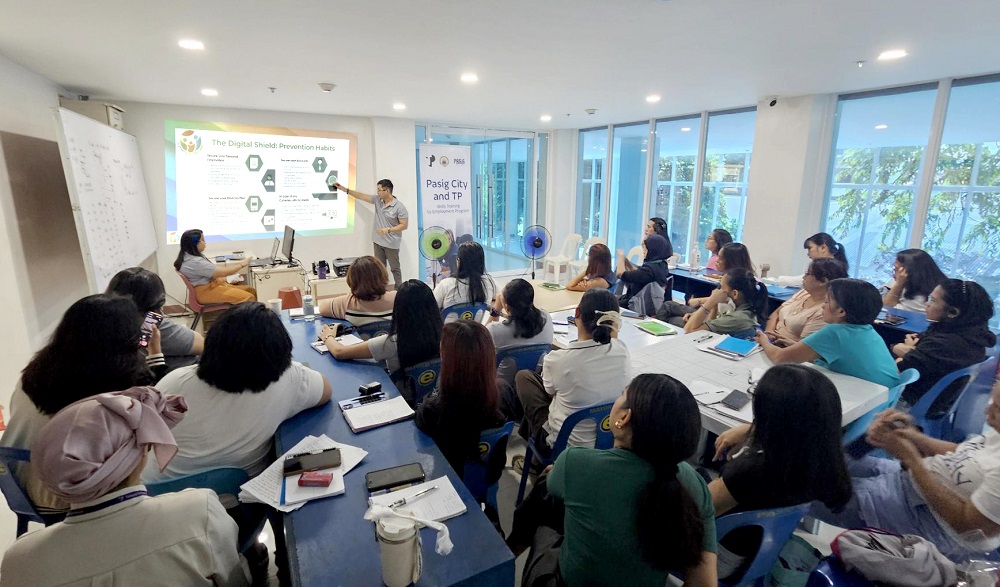
PASIG CITY, Philippines – TP in the Philippines, a global leader in digital business services, launched an expanded Artificial Intelligence (AI) Literacy Training component under its Skills Training to Employment Program (TP STEP), reinforcing the company’s commitment to preparing near-hires for the changing demands in the business process industry.
The enhanced learning track is being implemented in partnership with CyberGuardiansPH, a non-profit organization dedicated to co-creating a safer cyberspace through collaborations with both the public and private sectors. Through the integration of AI Ready ASEAN training modules and learning sessions, TP STEP participants will gain foundational and practical knowledge on artificial intelligence, digital responsibility, and emerging workplace technologies.
Under TP STEP, trainees are required to complete a comprehensive 15-day learning journey with TP, which now includes AI literacy and readiness modules alongside core employability and customer experience training. Participants who complete the program will graduate with enhanced exposure to digital tools, equipping them with skills increasingly relevant in today’s technology-driven business environment.
In partnership with the Pasig LGU, the program has helped improve employability among aspiring professionals and members of local communities by providing industry-relevant training and pathways to careers in the IT-BPM sector. The inclusion of AI-focused learning reflects the growing importance of digital transformation across industries and the increasing integration of AI-powered solutions within the workplace.
“As AI continues to reshape industries globally, it is important that workforce development programs evolve alongside these advancements,” said TP in the Philippines VP for Human Resources Rachel Cacabelos. “By integrating AI literacy into TP STEP, we are helping ensure that more applicants gain meaningful exposure to the technologies that are becoming part of everyday operations in the customer experience and business services sector.”
The program enhancement also mirrors how TP’s own operations increasingly incorporate AI-enabled tools and systems in delivering services to clients and improving internal efficiencies, combining technological innovation with human expertise, empathy, and critical thinking to deliver better outcomes for customers and organizations alike.
AI Ready ASEAN is a regional initiative launched by the ASEAN Foundation, with CyberGuardiansPH as one of its local implementing partners, with support from Google.org. It aims to equip individuals from ASEAN Member states with essential AI skills. “AI readiness and cybersecurity awareness are becoming essential competencies in today’s digital economy,” said CyberGuardiansPH Executive Director Paolo Sangil. “Through this partnership, we hope to help empower more Filipinos with practical knowledge that will support both their employability and responsible participation in an increasingly AI-enabled world.”
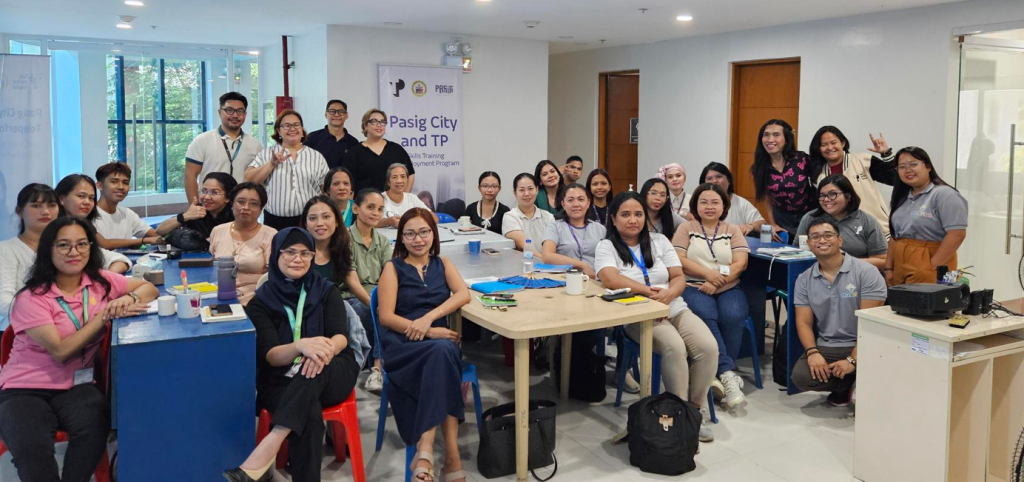
The rollout of the enhanced program forms part of TP in the Philippines’ continuing efforts to support inclusive talent development, digital upskilling, and future-ready workforce initiatives as the company marks 30 years of operations in the country.
TWO SONGS prominently feature September in their lyrics. One talks about seeing you when summer is gone, and the other reminds us to wake up when it ends.
While the first song hit the airwaves in the mid-60s, the second only became a hit in ’04, although it was written in 1982. To add to this continuing trivia, there’s a third song which heralds the start of the Christmas season in this country. And no, there’s not even a mention of the month of September in its text.
Up till now, I’m still unsure whether to treat this fancy with the start of brr months as a good or a bad thing. In this age of social media, the artist who wrote and popularized the said third title is endlessly (if not eternally) promoted and featured months prior as the topic of countless memes that warn (or rather inform) us that whenever September comes, it’s time to decorate the tree.
This phenomenon must have seen countless discussions at our breakfast table and during the last one, it led me to proclaim, finally, ‘one of the best marketing ploys so far, and nobody’s still on to it!’
Depends on how one looks at this whole love affair with September. For one, the business people always view it as an extended holiday period to sell their wares. A Strike-while-the-iron-hot kind of thing. After all, it’s a fact that people tend to spend more during holidays.
For the many consumers, however, toiling from January to August merits one a wellness boost. I wrote in one article: “Here, most of us Pinoys believe that, despite all the struggles we faced from the months of January up to August, come the first of September, things will slowly begin to take on a new (and more positive) turn somewhat.
For one, Christmas songs will begin their gradual takeover of the airwaves and every shopping mall’s house music. The establishments’ facades will likewise undergo a slow transformation as the days roll on.
In fact, the city’s foremost malls, SM, Abreeza, Vista, and the Gaisanos, have already begun installing Christmas lights and displays in their stores. D
All these, to lighten up our mental pathways somewhat with the thought that better times are definitely up ahead. Never mind that here, Christmas starts in September and ends mid-January.
Never mind that it’s a profiteering ploy by business. What’s to see is this: as a people, we always look forward to celebrating, and doing so with loved ones, family, and friends. Perhaps this is the greatest passion ever for us Filipinos.
Have you ever counted how many holidays we celebrate in a year? There are fiestas, festivals, foundation days, heroes’ birth and death anniversaries, and so on, not to mention Holy Week and Muslim holidays.
Truth is, we always find hope, joy, and happiness in little things, and hearing Christmas carols and welcoming the cooling breeze are just some of them. Who cares if many of us use these as excuses for R & R or respite from the day-to-day undertakings; this is a good thing, right?
In the end, just accept we’re nothing but a unique bunch of happy, smiling, and sturdy people who know how to appreciate a good thing and anticipate an up-and-coming good time.
As a dear friend used to say, work hard and rest easy. Let September be our downfall when it comes to thinking because we’ve worked hard the whole year round; it’s time to ease on up ahead. At least until January comes. Wake me up by then.

GRAB Philippines has partnered with the National Commission on Muslim Filipinos (NCMF) XI to make halal food discovery easier, more transparent, and more accurate for online food delivery consumers.
Piloted in Davao City, the collaborative initiative equips the Grab app with enhanced search and filtering features, allowing users to confidently locate halal-certified and Muslim-owned establishments tailored to their dietary requirements.
The partnership was formalized through a memorandum of understanding signing on Sept. 9 at Bajada Suites in Davao City. The event brought together key stakeholders from the Consulate Office of Malaysia, the City Government of Davao, NCMF XI, and Grab Philippines.
“Our vision is to build an inclusive platform that empowers consumers to make food choices with absolute confidence,” said RJ Cabaluna, vice president for cities at Grab Philippines. “That means going beyond basic food delivery and equipping our app with the right filters and verification systems needed by the Muslim community. We are proud to partner with NCMF XI in taking this practical step toward strengthening the local halal food ecosystem and ensuring Grab remains a trusted partner for diverse dietary needs.”
To preserve platform credibility, an NCMF endorsement is required before Davao City–based halal merchants can be tagged on GrabFood. The policy ensures that in-app searches for “halal” exclusively yield merchants verified by recognized halal certification bodies. As a visual identifier, the universal “Philippine Halal” logo will be displayed on certified merchant icons.
Following NCMF verification, Muslim-owned establishments also have the option to feature a dedicated “Muslim-owned” tag to improve classification and visibility in relevant search queries. Furthermore, Grab is actively auditing and removing inaccurate or unsupported uses of the word “halal” in restaurant listings to safeguard platform integrity.
Beyond immediate digital enhancements, Grab and NCMF XI plan to pursue broader initiatives under the MOU to support the local halal ecosystem, including merchant education, consumer awareness campaigns, and capacity-building sessions.
“This partnership goes beyond just an app feature—it is about respecting traditions and building a community where Muslim Filipinos and travelers can order food without worry or hesitation,” said Arch. Sherrila Porza-Sawah, regional director of NCMF XI.
“By working directly with a platform like Grab, we are reducing the barriers to discovering certified halal food and ensuring that our Muslim merchants and consumers are supported.”
By aligning NCMF’s regulatory guidance with Grab’s technology, both organizations aim to establish a stronger foundation for an inclusive and credible halal ecosystem across Davao City and the broader region.

MILITARY personnel and emergency responders teamed up to suppress and contain a wildfire that broke out in a remote area of Barangay Osmeña, Compostela, Davao de Oro.
Troops from the 25th Infantry Battalion and the 534th Engineer Construction Battalion under the 10th Infantry Division (10ID) joined forces with the Bureau of Fire Protection (BFP) and local emergency teams to battle the blaze at Purok Ambawan on Tuesday, Sept. 8.
The joint response focused on establishing containment lines, suppressing active embers, and preventing the fire from advancing further through the steep, inaccessible terrain.
Fire authorities and military responders continuously monitored the perimeter to manage hot spots and protect adjacent community areas.
In a statement, the 10ID leadership reaffirmed the military’s commitment to providing immediate troop assistance and disaster-response capabilities to partner civilian agencies during environmental emergencies and natural disasters.
Investigation into the exact cause of the wildfire and the total land area affected remains ongoing by local fire officials.

THE OFFICE of the Prosecutor of the International Criminal Court (ICC) has formally asked Trial Chamber III to reject a Defense request seeking stricter, systematic authentication rules for open-source and user-generated digital evidence in the case against former President Rodrigo Roa Duterte.
In a public redacted document dated Sept. 9, 2026 (based on an initial September 4 filing), ad interim Prosecutor Mame Mandiaye Niang argued against amending the court’s E-Court Protocol to require mandatory expert verification for all online materials submitted into evidence.
The Defense team had pushed for heightened verification safeguards—including systematic technical screening—for digital content such as social media posts, videos, photographs, and online articles to guard against potential tampering, editing, or artificial intelligence (AI) manipulation.
Pushing back against the proposal, the Prosecution argued that imposing mandatory expert reports for every piece of open-source material would be “unhelpful and unduly burdensome,” warning that a blanket mandate could cause unnecessary trial delays.
Instead, prosecutors maintained that digital authentication should be evaluated on a flexible, case-by-case basis as items are formally introduced during trial.
“Whether a party adduces an expert report alongside open source or user-generated evidence that it seeks to formally submit in the trial will become clear upon the party’s application to the Chamber,” the Prosecution stated, adding that creating a rigid checklist within the court’s Nuix Discover system would not benefit the Chamber or the participants.
While opposing universal expert verification, the Prosecution acknowledged that certain anonymous digital materials or complex multimedia items may indeed require forensic examination to detect potential AI generation or digital alteration.
Prosecutors also conceded that relying solely on a web URL is insufficient to authenticate open-source digital evidence.
Trial Chamber III, presided over by Judge Joanna Korner alongside Judge Keebong Paek and Judge Nicolas Guillou, will issue a ruling on whether to amend the E-Court Protocol or maintain the existing evidence submission rules.
Millions of Filipinos live with overlapping heart, kidney, and metabolic conditions – often without knowing it until the disease has already advanced. These interconnected illnesses, collectively known as cardio-renal-metabolic (CRM) diseases, share common risk factors, frequently occur together, and place a growing health and economic burden on patients, families, and the healthcare system.
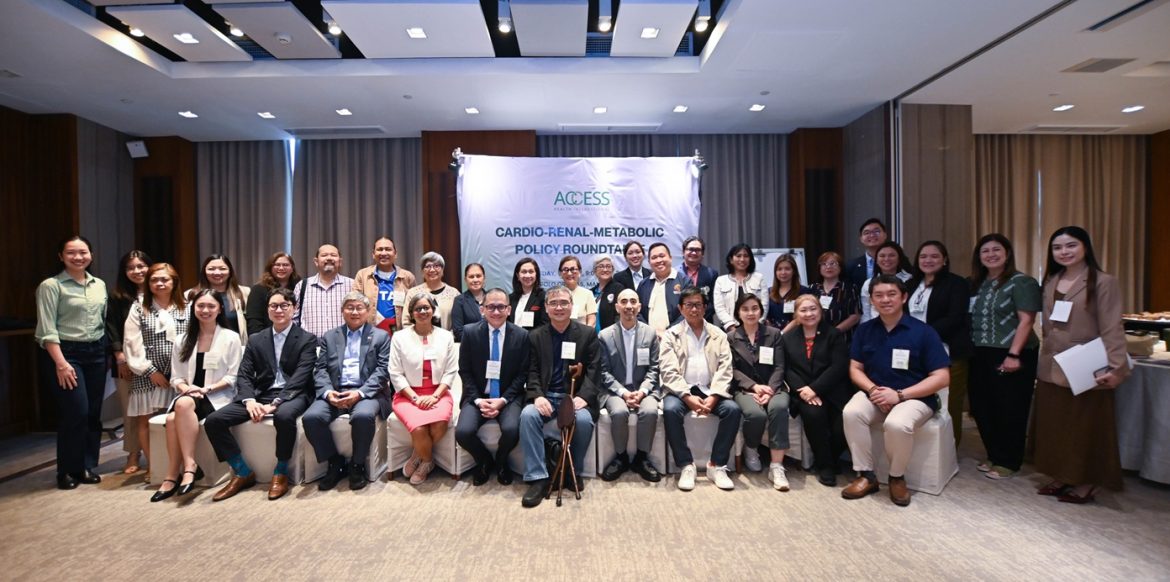
Recognizing this challenge, ACCESS Health International (AHI) convened the Cardio-Renal-Metabolic Policy Roundtable on July 30, 2026, together with the German-Philippine Chamber of Commerce and Industry (GPCCI) and the European Chamber of Commerce of the Philippines (ECCP), with support from Boehringer Ingelheim Philippines.
The forum brought together leaders and representatives from government, healthcare organizations, patient organizations, academia, and the private sector—including the Philippine Health Insurance Corporation (PhilHealth), the National Kidney Transplant Institute (NKTI), the Philippine Alliance of Patient Organizations (PAPO), and the Ateneo Policy Center, among others, to identify policy opportunities for strengthening integrated CRM care in the Philippines.
“Because these conditions do not exist in isolation, protecting our citizens requires investing in early primary care. PhilHealth stands firm in its commitment to expanding financial risk protection, strengthening primary care financing, and ensuring the long-term sustainability of chronic disease management,” said Atty. Eli Dino D. Santos, Executive Vice President and Chief Operating Officer, PhilHealth.
In the Philippines, about one in five Filipinos aged 15 years and older lives with at least one chronic condition, including hypertension, chronic kidney disease (CKD), diabetes, or cardiovascular disease.
The economic impact is equally significant, with CKD alone costing an estimated PHP 593.7 billion in 2023, equivalent to 41% of the country’s total healthcare expenditure. Because CKD often occurs alongside other CRM conditions, these interconnected diseases place a compounding strain on patients and the healthcare systems, reinforcing the need for coordinated action to strengthen prevention, early detection, and long-term CRM care.
“The burden of chronic kidney disease extends beyond direct healthcare costs. It affects patients’ ability to work, creates productivity losses, and impacts families and the healthcare system. Understanding these costs can help inform interventions and policies that support earlier detection, prevent disease progression, and improve patient outcomes,” said Dr. Anthony Russell Villanueva, Consultant Nephrologist, NKTI.The roundtable identified key opportunities to strengthen integrated CRM care, with discussions centered on prevention, early detection, patient access, coordinated care, and evidence-informed policymaking. Participants underscored the importance of helping people receive earlier diagnoses, more connected care, and better long-term health outcomes through collaboration across sectors. They also highlighted opportunities to further integrate CRM priorities into national health policies and programs, including strengthening health information systems, disease registries, and sustainable financing mechanisms.
Reinforcing these priorities, the Department of Health (DOH) highlighted ongoing efforts to bridge gaps and expand access to chronic kidney disease care, while PhilHealth reaffirmed its commitment to strengthening financial protection for sustainable chronic disease care.
The forum featured a presentation from ACCESS Health International on CRM policy gaps and opportunities in the Philippines, alongside insights from the National Kidney Transplant Institute, the Philippine Alliance of Patient Organizations, and the Ateneo Policy Center on the economic burden of chronic kidney disease and key policy recommendations. Boehringer Ingelheim also shared regional health systems perspectives on integrated CRM care across Asia Pacific.
“No single institution can advance integrated cardio-renal-metabolic care alone. The next step is translating evidence into action by identifying shared priorities, defining responsibilities, and sustaining collaboration across sectors. Through this dialogue, we hope to build consensus on practical steps that can help advance integrated CRM care in the Philippines,” said Dr. Rohini Omkar Prasad, Regional Director and Director for Research and Advisory, ACCESS Health International.
As part of its long-standing commitment to improving outcomes for people living with interconnected heart, kidney, and metabolic conditions, Boehringer Ingelheim continues to support initiatives that strengthen prevention, enable earlier detection, and promote more coordinated care.
