

BY ALEX ALAGON

BY ALEX ALAGON

THE INTERNATIONAL Criminal Court (ICC) has released the “Lesser Redacted” version of the Document Containing Charges (DCC) against former President Rodrigo Duterte, naming high-ranking Philippine officials as “co-perpetrators” in the bloody war on drugs.
The 16-page document, made public on Feb. 13, 2026, alleged that between Nov. 1, 2011, and March 16, 2019, Duterte and several allies shared a “common plan” to “neutralize” suspected criminals through murder and other violent crimes.
The prosecution identified several current and former high-ranking officials as co-perpetrators:
Meanwhile, TIMES tried to reach out to some of the former PNP officials and secretaries and is still waiting for their response regarding the matter.
The ICC prosecution is pursuing charges of crimes against humanity, murder, and attempted murder, specifically focusing on three key periods:
The Feb. 23 hearing
Despite defense efforts to delay the case due to the 80-year-old former president’s health, Pre-Trial Chamber I ruled on Jan. 26 that Duterte is fit to stand trial. The Confirmation of Charges hearing is scheduled to begin on Feb. 23, 2026, in Courtroom I at The Hague.
During this four-day proceeding, judges will determine if there is sufficient evidence to establish “substantial grounds” that Duterte committed these crimes. If confirmed, the case will officially move to a Trial Chamber for a full trial.
The Philippine government has recently reiterated that it will not interfere with the ICC’s judicial processes.
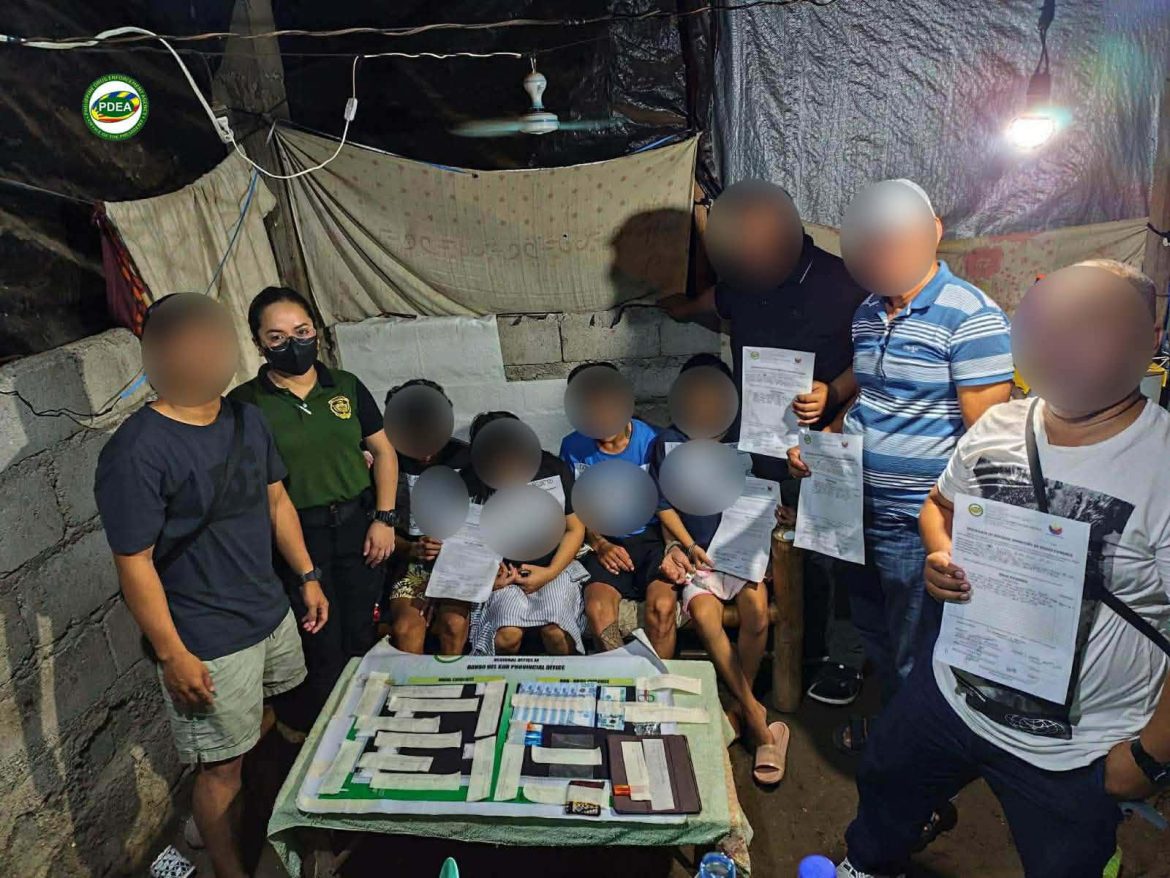
THE PHILIPPINE Drug Enforcement Agency (PDEA)-Davao del Sur Provincial Office dismantled an alleged drug den and arrested four suspects in Purok 1, Kanahay Village, Upper Matti, on the afternoon of February 13, 2026.
The operation, done in coordination with the Davao del Sur Police Provincial Drug Enforcement Unit, took place at approximately 5:50 p.m., targeting the facility’s alleged maintainer, identified by the alias Migo, 26.
Migo was taken into custody after he reportedly sold one sachet of suspected methamphetamine hydrochloride (shabu) worth ₱8,000 to an undercover PDEA agent.
Also apprehended during the raid were an alleged employee of the den, identified as “Neriza,” and two visitors, identified as “Nica” and “Niknik, according to the PDEA XI spokesperson.
During the subsequent search, authorities seized six heat-sealed transparent plastic sachets containing approximately 30 grams of suspected shabu with an estimated street value of ₱240,000.
In addition to the bulk drugs, agents recovered several sachets containing drug residue, various drug paraphernalia, and the marked buy-bust money used in the sting. The suspects are currently in custody and will face formal charges for violations of Republic Act No. 9165 (Comprehensive Dangerous Drugs Act of 2002).

THE CITY government reminded all entities and organizations currently operating or wishing to implement transport initiatives to comply with the preconditions before securing their licenses.
In a statement, the local government emphasized that transport operations must be backed by appropriate transport studies.
“This is essential to ensure that any proposed system or scheme genuinely addresses the needs of the city,” it said.
It added that any transport initiatives must serve the public effectively and supplement the overall transport plan of the city.
“The local government emphasized it welcomes constructive inputs, proposals, and transport studies from stakeholders,” it said. “We remain open to collaboration and dialogue aimed at improving mobility and addressing the concerns of the public.”
Transport firms seeking formal discussions or an official audience regarding transport-related initiatives must coordinate directly with the City Mayor’s Office.
To note, the city government called on the Land Transportation Office (LTO) and the Land Transportation Franchising and Regulatory Board (LTFRB) to look into the operations of Green GSM Taxis following their launch on Dec. 15, 2025.
The city government released a statement as the operator of Green GSM Taxis reportedly has yet to comply with all necessary permits from government agencies before operating within the City of Davao.
For instance, the company allegedly has not yet secured a business permit, locational clearance, and a building permit for its facilities.
In December, the LGU ordered the immediate closure of Green and Smart Mobility Philippines Inc. (Green GSM) at the Davao depot in JFM Sasa Property.
The Land Transportation Franchising and Regulatory Board (LTFRB) XI reported GSM franchise application is still pending as its entry to the city was hampered by the multiple petitions from a group of taxi operators.
LTFRB said other parties have the right to file an opposition against an application for a certificate of public convenience (CPC).
A CPC is an authorization issued by the LTFRB for the operation of land transportation services for public use.

THE PHILIPPINE Drug Enforcement Agency (PDEA) XI is calling on the public to actively participate in the government’s anti-illegal drug campaign through “Operation: Private Eye,” a reward program that offers cash incentives for actionable information.
PDEA XI regional director Atty Benjamin Gaspin emphasized on Wednesday, Feb 11, that the program is designed to encourage ordinary citizens to report suspected drug personalities and activities within their communities while ensuring their total anonymity and safety.
The program operates under Dangerous Drugs Board (DDB) Regulation No. 6, Series of 2023, and is anchored on Section 22 of Republic Act 9165.
Informants can qualify for rewards by providing timely information that directly leads to the arrest of drug personalities or “high-value targets,” the seizure of illegal drugs (shabu, marijuana, etc.) or precursor chemicals, and the dismantling of clandestine drug laboratories.
The reward amount is calculated based on the quantity and purity of the confiscated drugs.
Recent payouts nationwide have reached as high as ₱2 million for single informants who facilitated major hauls, with total regional and national distributions occasionally exceeding ₱11 million to ₱16 million per quarter.
“We guarantee that your identity will be hidden and protected,” the PDEA XI leadership stated, noting that informants are assigned codenames and wear masks during ceremonial handovers to maintain secrecy.
Additionally, informants may be eligible for protection under the Witness Protection Program, if necessary.
To prevent abuse of the system, all reward claims undergo a rigorous vetting process by the Private Eye Rewards Committee.
This body includes representatives from the academe, religious sectors, and non-government organizations (NGOs) to ensure transparency and integrity in the distribution of funds.
Citizens are encouraged to report via the “Issumbong Mo sa PDEA” project by submitting intelligence reports directly to regional or national headquarters for evaluation.

THE PHILIPPINE Coast Guard Auxiliary (PCGA) 802nd Squadron expects to gather 600-700 runners as it launched the Community Fun Run on Apr 19 to be held at Freedom Park along Roxas Avenue to support the cleaners of coastal areas.
Malou Pelletier, marketing consultant of the Philippine Coast Guard Community Run, said the event is a fun run for a cause to provide gear and life jackets to the Coastal Community Auxiliary Division (CCAD).
“So, if everybody joins in, it means that you’re helping to protect our shores,” Pelletier said during the PEP Talks on Feb 13.
“They [participants] will not only be joining a fun run, but rather they’re joining a cause. The cause is for them to be able to help fund our CCAD”, she added.
Pelletier shared that there are more or less 500 registrants for now. Registrations are available via a QR code provided on the (PCGA) 802nd Squadron official Facebook page.
Open to ages five to 65 years old, race categories and fees include 3KM (for the families) at P800, 5KM for P900, and 10KM for P1,100, with each route going to Bajada, Aeon Towers, and Toyota Lanang.

THE EMBASSY of Argentina in the Philippines and the Department of Economy, Planning, and Development (DEPDev) XI linked for potential areas for technical cooperation and priority development initiatives.
The Embassy of Argentina in the Philippines, represented by Secretary Gabriel Rivera and Secretary Fabricio Sordoni, paid a courtesy visit to the DEPDev office on Feb. 12.
During the meeting, DEPDev XI regional director Priscilla R. Sonido discussed Davao Region’s socioeconomic landscape, key economic drivers, and priority development initiatives.
“Particular focus was also given to the status of Infrastructure Flagship Projects across the Region, as well as the ongoing development of the Comprehensive Sustainable Urban Development Master Plan (CSUDMP) for Metropolitan Davao and its priority projects,” DEPDev in a statement.
The agency added that both parties exchanged insights on key sectors such as agriculture, trade and investments, tourism, education, health, and disaster risk reduction and management.
“The Embassy of Argentina in the Philippines and DEPDev XI expressed interest in exploring areas for technical cooperation, underscoring their mutual commitment to advancing sustainable and inclusive regional development,” DEPDev said.
The Embassy of Argentina continues to strengthen partnerships in and outside of the region.
To note, on December 3- 4, 2025, Deputy Chief of Mission Minister Leandro Waisman visited Northern Mindanao to strengthen Argentina’s cooperation with the region’s livestock sector, promoting initiatives aimed at improving local genetics.
During the meeting, Argentina presented opportunities for technology transfer and genetic innovation that the country can offer, focusing on the sustainable development of the livestock sector.
“Through this initiative, Argentina continues to strengthen strategic partnerships to share its experience in agriculture and livestock with both the public and private sectors in the Philippines, promoting productive growth and international cooperation,” the Argentine Embassy said in a press release.
FOR DECADES, the Philippines has quietly positioned itself as a serious player in the global Halal economy — an unexpected trajectory for a Muslim-minority country. Since the late 1990s, the government has pursued regulatory reforms to support domestic Halal industries, particularly by aligning local standards with international requirements that enable Philippine exporters to access key Muslim markets abroad.
After two decades, in 2022, the prestigious Global Islamic Economy Report (GIER) finally recognized efforts by Philippine-based Halal stakeholders by identifying the Philippines as one of the strongest Halal industry performers among non-OIC economies.
In a previous column, I wrote the undocumented role of Filipino Muslims in shaping the trajectory of global Halal trade since the early 2000s. Key among these contributions is the role of Filipino-owned Halal certification bodies (HCBs) and Filipino bureaucrats as pioneer architects of the leading global Halal regulatory networks presently governing the flows of global Halal trade through mutual recognition agreements (MRAs) among members dispersed across the globe, namely, the World Halal Council (WHC) and the International Halal Accreditation Forum (IHAF). These developments took place from 1998 up to 2016.
However, many are unaware that 2025 is also a year when the Philippines again proved its relevance by hosting significant global Halal gatherings. By serving as a venue for global Halal events, the Philippines in 2025 reaffirmed its role not only as a participant but also as a convening hub for the rapidly growing, global faith-based economy. Industry.
On 28-29 October 2025, the Philippines hosted the following events: (a) the International Halal Conference, and (b) World Halal Food Council (WHFC) Second Assembly.
Graced also by Filipino government officials and members of the diplomatic corps, the joint event organized by the WHFC and its local member, the Halal Development Institute of the Philippines (HDIP), underscored the importance of alignment and collaboration between the government and other Halal stakeholders from the private sector to cultivate the importance of Halal industry in the everyday lives of Muslims across the world and the industry’s ancillary developmental promises, regardless whether a country has a major or minor Muslim population.
The World Halal Food Council is one of the largest Halal networks across the globe. Primarily based in Indonesia, the WHFC was born in the mid-2000s after the split of the World Halal Council (WHC) in 1998.
The split of the original WHC in 2007 resulted in the emergence of the WHFC and the new WHC, where each group imposes its own regulatory standards for HCB-members to follow and own mutual recognition arrangements (MRAs) for HCB-members to recognize and acknowledge. At present, the WHFC has more than 50+ members across the globe.
Hence, if a Halal exporter avails the Halal certification from one of WHFC’s members (e.g. HDIP), then the goods are guaranteed to have access to more than 50 foreign markets, regardless of whether these markets are from Muslim majority or minority states.
By conducting the 2025 conference in the Philippines, the WHFC views the Philippines as a reliable partner and vital Halal market necessary for the smooth flow and operations of the global Halal industry.
Unfortunately, many stories about the Philippines’ quiet yet significant role in shaping the global Halal industry remain underreported and insufficiently documented. Few realize, for instance, that the first ASEAN Halal conference, the 1st BIMP-EAGA Islamic Business Summit, was hosted in General Santos City in 2002.
Equally notable is the role of the Islamic Da’wah Council of the Philippines (IDCP), which served as secretariat of the original World Halal Council (WHC) until its organizational split in the mid-2000s, reflecting the depth of Philippine engagement in the formative years of global Halal governance.
Beyond high-profile events, Philippine-based Halal certifiers continue to sustain the everyday infrastructure of global Halal trade through extensive mutual recognition arrangements (MRAs) with partners abroad.
By providing accessible certification services to foreign farms, manufacturing plants, and production facilities, particularly in Latin America and East Asia, these actors help overseas firms save time and resources while maintaining compliance with international standards.
In this sense, Philippine Halal stakeholders function not merely as local certifiers but as institutional brokers, quietly facilitating the steady and reliable flow of Halal goods across international markets.
As the 2026 ASEAN Chair, these milestones by the Philippines in the global Halal arena carry strategic significance beyond symbolism. Hosting major Halal gatherings and shaping regulatory networks positions the country to advance regional cooperation on Halal standards, trade facilitation, and inclusive economic development within ASEAN.
If leveraged effectively, the Philippines’ convening role in the Halal industry can complement its diplomatic agenda by transforming past achievements into a forward-looking platform to advance deeper economic integration across the Southeast Asian region.

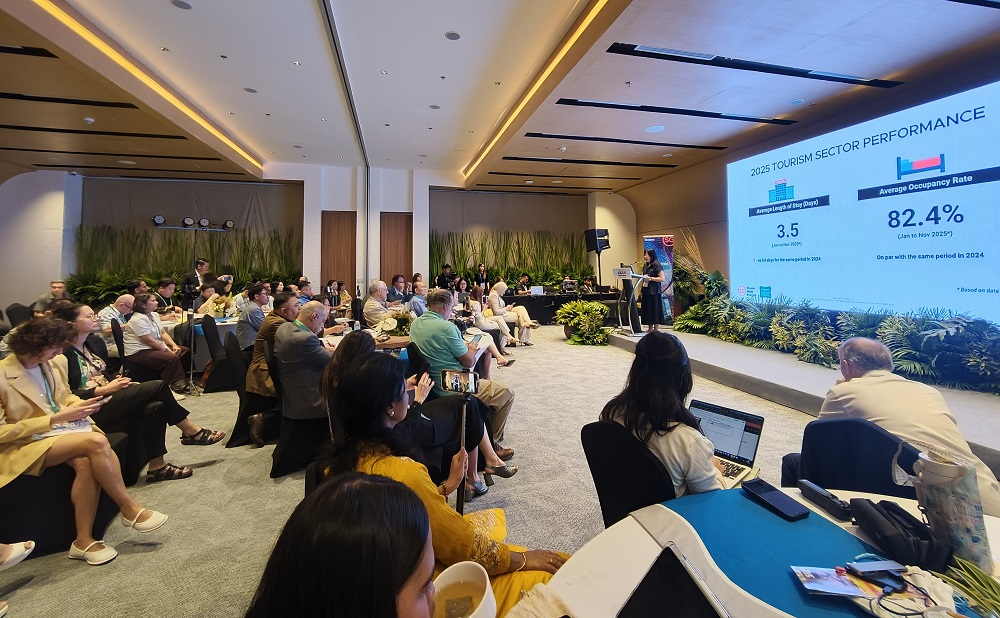
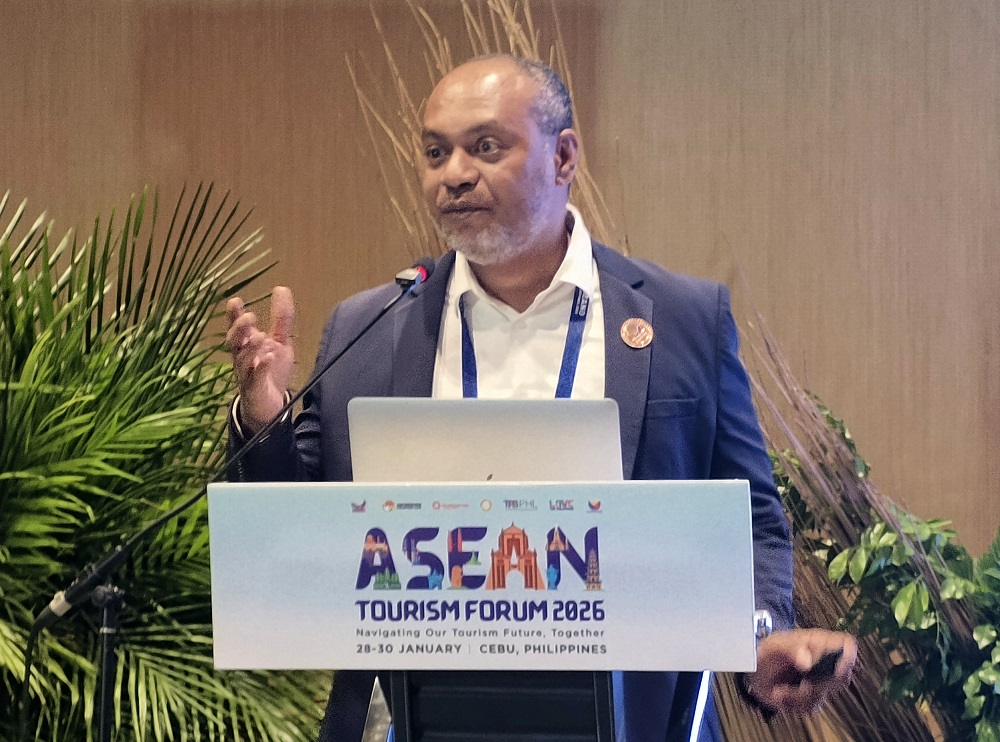
THE MACTAN Expo Centre at the New Mactan Newtown became the epicenter of Southeast Asian diplomacy and economic planning from January 28 to 30, as tourism ministries gathered for a series of media briefings and updates during the ASEAN Tourism Forum.
The event underscored a historic turning point for the region, which collectively welcomed a record-breaking 144 million international visitors in 2025, finally eclipsing pre-pandemic benchmarks.
Among the standout performers, Malaysia solidified its status as the most-visited in the region, recording 42.20 million foreign visitors in 2025—an 11.2% increase over the previous year. Baizuri Baharum, senior director at the Malaysia Tourism Promotions Board, attributed this dominance to robust regional connectivity and visa-free travel for major markets like China and India.
Looking toward the Visit Malaysia 2026 campaign, the nation plans to further increase flight frequencies and develop unique tourism products to extend the average length of guest stays.
Vietnam followed with its own record-breaking milestone, as Nguyen Quy Phuong of the Viet Nam National Authority of Tourism reported 21.2 million arrivals.
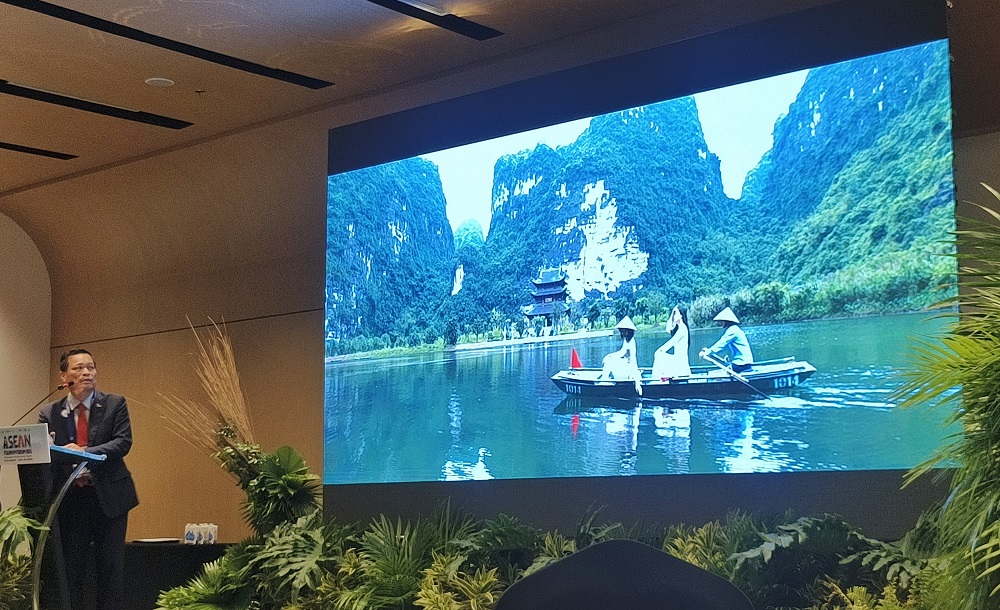
This 20.4% surge was fueled by eased visa policies and a significant rise in high-value demand from Russia, Western Europe, and India.
Indonesia also celebrated a triumphant 2025, with Ni Made Ayu Marthini, deputy for marketing, announcing 15.39 million arrivals. This figure exceeded national targets and marked a six-year high, with the UAE emerging as a rapidly growing market alongside the steady backbone of ASEAN visitors, which account for over 40% of the total.
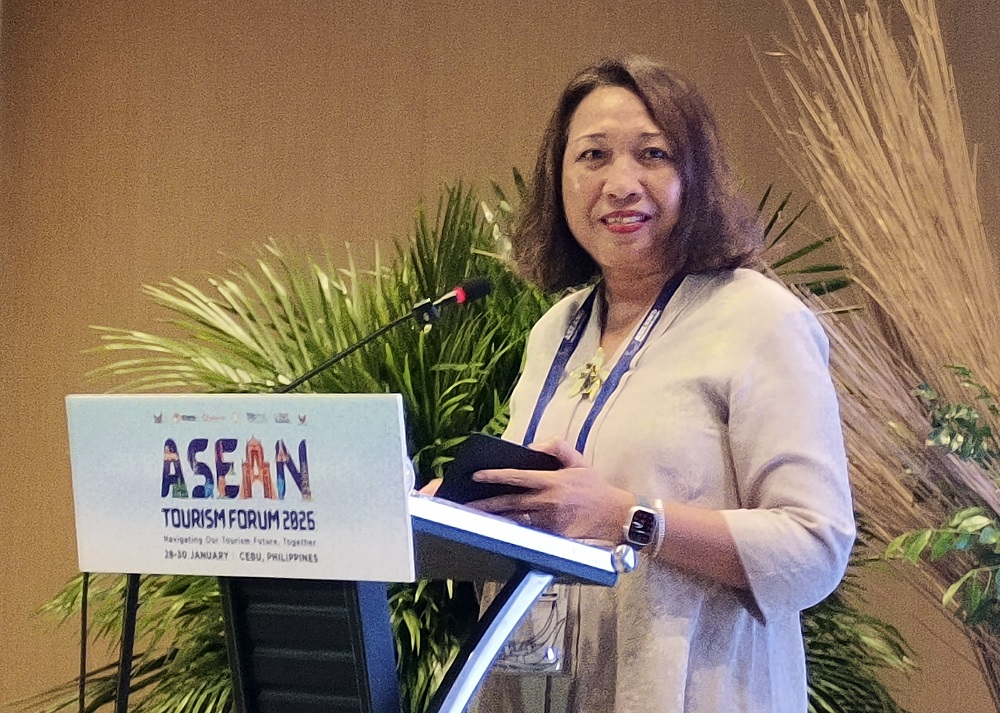
Indonesia has now set its sights on 16 million visitors for 2026, focusing on “quality tourism” and deeper regional collaboration.
Singapore, represented by Kwan Su Min of the Singapore Tourism Board, reported a steady 16.9 million arrivals.
The island nation is playing a long game, projecting tourism receipts of up to $50 billion by 2040 and aiming to triple its MICE revenue by 2030. Strategic investments, such as the upcoming Changi Airport Terminal 5, are designed to handle 50 million passengers, ensuring Singapore remains a premier global hub.
The briefings also highlighted the transformative power of infrastructure in the region’s emerging markets. Phouthone Dalalom of the Lao People’s Democratic Republic reported that Laos surpassed its annual goals with 4.5 million visitors, an 11% increase driven largely by the China-Laos Railway.
Similarly, Antonio da Silva, director general of Timor-Leste’s Ministry of Tourism, spoke on the nation’s historic accession to ASEAN in October 2025. As the 11th member, Timor-Leste plans to eschew mass tourism in favor of authentic, untouched nature and cultural discovery, leveraging its new membership to gain regional market access and investment.
However, the forum was not without its narratives of struggle and transition. Cambodia faced a difficult year, with Prak Vuthy reporting a 16.9% drop in arrivals to 5.54 million, a decline largely blamed on the Cambodia-Thailand border conflict and lingering connectivity issues.
Despite this, the nation pins its hopes on the new $2.3 billion Techo International Airport to revitalize its global reach.
The host nation, the Philippines, also faced a period of modest growth. Undersecretary Verna Buensuceso and COO Marga Nograles reported 6.48 million arrivals, a 0.76% increase that lagged behind regional peers despite generating ₱694 billion in receipts.
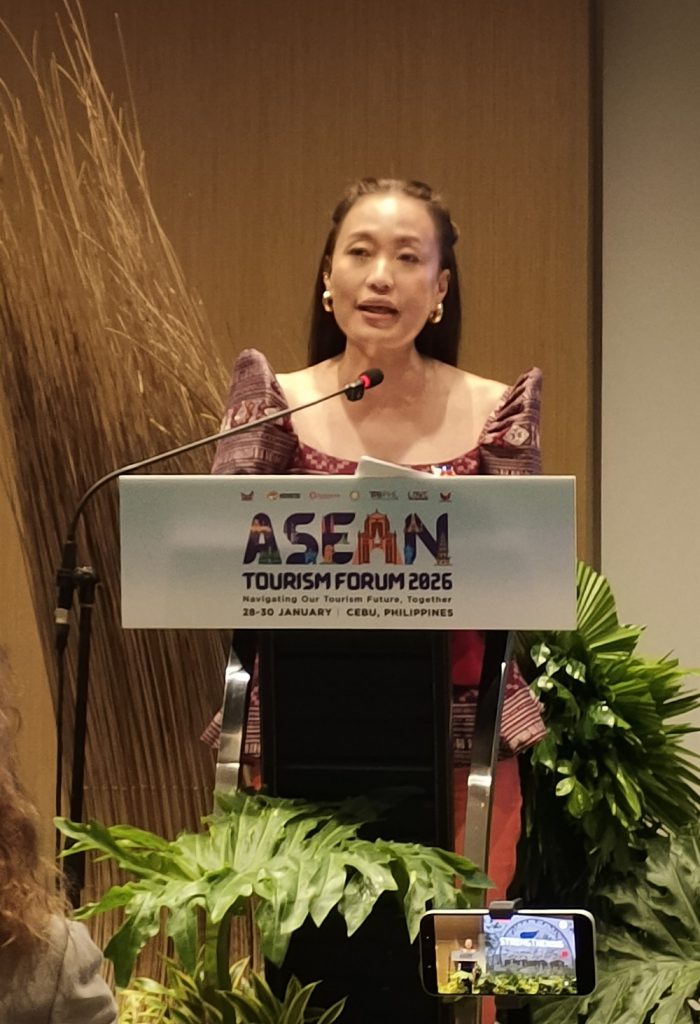
To bridge this gap, the Philippines is pivoting toward digital nomad visas, VAT refunds for tourists, and the promotion of Muslim-friendly destinations and gastronomy.
In a surprising turn, the briefings were marked by the absence of representatives from Thailand and Myanmar. Thailand saw its arrivals dip by 7.2% to 32.9 million, while Myanmar recorded a slight decline to 973,000 visitors amid ongoing internal challenges.
Despite these outliers, the prevailing sentiment was one of collective strength. The consensus among the ministers remains clear: the future of Southeast Asian tourism lies in a borderless approach where competition gives way to a “unified destination” identity, ensuring the 2025 record is merely the baseline for future growth.

By JOREYLENE ROJO/DNSC Intern
THE CITY Social Welfare and Development Office-OFW Families’ Welfare and Crisis Center, is encouraging overseas Filipino workers (OFWs) to join this year’s Model OFW Family of the Year Award (MOFYA), which honors their dedication, sacrifice, and contributions.
During the iSpeak Media Conference on Feb. 12, Jackilou Bandao, CSWDO Development Management Officer I, said that to qualify for the search for MOFYA, they must be a resident of Davao City and a registered member of the Overseas Workers Welfare Administration (OWWA).
Also, they should be the head of the family, a parent, or the breadwinner of the family, and must have at least four years of overseas work experience. The OFW must not be an elected official and should either still be working abroad or have returned to the Philippines within the last 10 years.
She added that only non-government organizations, the Office of the Senior Citizens Affairs (OSCA), religious groups, and OFW Family Circles are allowed to submit nominations.
“Only the NGO can nominate, second is the people’s organization, or our OSCA, PWD sector or women sector, third is the religious groups, fourth is the community-based social civic organization or our OFW family circles,” Bandao said.
The winner will receive P20,000 and a plaque of recognition and will represent Davao City in the regional contest organized by OWWA. The top five nominees will each receive P5,000 as a consolation prize.
Through the MOFYA, CSWDO hopes more OFWs will take part in the program and be recognized for their hard work and contribution to their families and the community.