
BY ALEX ALAGON

BY ALEX ALAGON

THIS TIME, the Police Regional Office (PRO) XI announced that its combined elements confiscated several cartons of smuggled cigarettes. And the confiscation was made in a series of operations in only a matter of one day. That is, from 6 in the morning of February 6 up to 5:59 in the morning of February 7. The total value of the catch was placed at P22,736,820.
Does it seem to solidify the position of the Davao Region (or specifically Davao City) as the smuggling capital of the Philippines?
For this accomplishment of the police, the Davaoeños owe them a heartfelt congratulations. Our take on the matter, however, is that such an accomplishment is somewhat hollow. Our reason is simple. We believe it is because the persistence of the smugglers to carry on their trade in Davao City is their seeming assurance that the place is still lucrative for their illegal business, despite apprehensions of their men and confiscation of their merchandise every so often.
And we also believe that the smugglers have a much bigger market in Davao City for their illegally bought cigarettes, despite the perceived strict implementation of the cigarette-smoking ban ordinance in the city in public places.
Or, are the smugglers assured of protection when the volume of their merchandise is much bigger than that announced to have been apprehended?
By the way, what happened to the confiscated cigarettes? Are these being burned, auctioned, or “gone with the wind” after a period where many seem to forget that there were confiscations made?
***************************
Well, if there is one good project the city government is set to undertake, it is the restoration of the current Davao City Hall to its original neoclassical façade.
Yes, it is a welcome development that, if pursued, will further give more meaning to this year’s Araw ng Dabaw celebration scheduled for next month. Moreover, it is also the 100th anniversary of the construction of the neo-classical-designed City Hall of Davao.
Honestly, we believe that the city’s seat of government has been left behind by other newer cities’ seats of governance. But while the newer cities are highlighting modern designs, it is still our take that the present Davao City Hall cannot be left behind.
Unfortunately for Davao City, the various extensions made on the original building altered the neoclassical design. And the apparent neglect of the past many administrations to enhance the building’s façade, such as keeping it clean to make it soothing to the eyes of those who come for a visit or do official transactions, further diminishes the viewer’s appreciation.
We are hoping that the planned restoration will be pursued to the fullest so that those who are not aware of what buildings or edifices from the neo-classical times look like will have their opportunity to see one in the Davao City Hall.
And we are eagerly anticipating having the restoration project done in time for the week when the Araw ng Dabaw activities will be at their peak.
***************************
Last Saturday, the City Government of Davao, through the City’s Social Services and Development Office (CSSDO), released the P1,500 subsidy for qualified seniors in some barangays.
While it was supposed to be a happy day for many who were among the recipients, it became a day of frustration for some. And who will not be frustrated when, in the previous year, many who were among the beneficiaries but in last Saturday’s payout, their names were nowhere to be found in the payroll.
True indeed that each barangay was made to submit an updated list of recipient seniors because the previous list had to be cleansed from those who have already died or have transferred residence to other places.
The sad thing, though, is that the list, already purged of those who should not be included anymore, ended up with several missing names after it was encoded at the CSSDO for payroll purposes.
The non-inclusion of several beneficiaries’ names is clearly a mess created by those tasked to re-encode the names in the list submitted by the barangays.
This omission could have surely been detected had the immediate supervisor of the ones encoding done their job of reviewing the encoder’s output. But apparently, there was no review. Thus, the omission persists.
So the expectation of many senior citizens was “gone with the wind.” Now the excluded seniors will have to wait for an indefinite period before the possibility of their being given their due will be realized.

JERRY NIEL M. LORA & DWIGHT GUMAHIN/DNSC Interns
THE DAVAO City Office for Culture and the Arts is gearing up to become the first to receive the Creative City entitlement in Mindanao.
Office head Oscar Casaysay affirmed the city’s efforts in carving its name in the roster of creative cities in the country.
The city’s cultural advocates and performing artists are strengthening preparations for a possible bid to join the UNESCO Creative Cities Network and become a future Creative City of Crafts and Folk Arts.
Casayasay said their community is preparing for the upcoming UNESCO application period, which will create chances for cities to receive global recognition.
“We are preparing for next year, which would be the year for UNESCO to open for new Creative Cities. That’s why I want us to be prepared right now because we have a lot of performing artists here in Davao City, so we are bidding for folk arts,” Casaysay said.
Local governments that want to become members of the UNESCO Creative Cities Network must complete an international application process before they can start their membership application.
Davao’s strong community of performing artists, indigenous traditions, and cultural festivals could support a potential bid under the folk arts category.
The Philippines currently has five cities recognized under the UNESCO Creative Cities Network, including Baguio City for Crafts and Folk Art (2017), Cebu City for Design (2019), Iloilo City for Gastronomy (2023), Quezon City for Film (2025), and Dumaguete City for Literature (2025).

THE POLICE Regional Office (PRO XI) has launched an investigation into the officer who was found dead inside his quarters at Camp Sgt. Quintin M. Merecido in Buhangin on Monday morning.
“Paiimbestigahan natin today (We’ll investigate it today). He was seen dead. Full blood. At about 7 a.m. Just in time when I arrived at the airport, I was informed,” PNP Director General Jose Melencio Nartatez said in a press conference with the media on Monday.
Nartatez was in Davao City to visit the regional police command on Monday, Feb. 9.
“I gave a directive to investigate kasi hindi naman basta basta nangyayari yun (it just doesn’t happen that way),” Nartatez said.
When asked if there was foul play, he said, “We are investigating this incident.”
The Philippine flag at Camp Merecido was flown at half-mast in mourning for the death of its officer.
In a statement released on Monday, Feb. 9, the PRO XI leadership expressed their “sincere condolences” to the family and colleagues of the deceased officer, whose identity is being withheld.
The regional command confirmed that “proper authorities” are currently looking into the circumstances surrounding the incident.
While initial reports from earlier today indicated the officer held the rank of lieutenant colonel, the official statement focused on the gravity of the loss to the police community rather than specific rank or cause of death.
“We are deeply saddened by this loss. His passing is felt by the entire PRO 11 community, and we stand in solidarity with his family and fellow personnel during this difficult time,” the statement read.
Recognizing the sensitive nature of a death occurring inside a secure police camp, PRO XI issued a plea to the public and the media to avoid spreading unverified information.
“PRO 11 respectfully appeals to the public to refrain from speculation and to allow the bereaved family the privacy, respect, and compassion they need as they mourn,” the statement said.

A TOTAL of 316,074 children aged 6-59 months have been vaccinated under the measles-rubella supplemental immunization activity (MR-SIA), translating to a 61.61% completion rate.
During the Kapihan sa PIA on Monday, Feb. 9, Dr. Grace Amistoso, DOH XI OIC assistant regional director, said that only 196,935 remain unvaccinated of the target population of 513,009 children.
As of Feb. 8, Davao City recorded the lowest turnout with 91,877 vaccinated out of 167,192 eligible children, representing a 54.95% coverage. Davao Occidental recorded 19,407 vaccinated and 15,700 unvaccinated among 35,107 eligible children, achieving 55.28%.
In Davao del Sur, 40,054 out of 67,039 children were vaccinated, leaving 26,985 unvaccinated and resulting in 59.75% coverage.
Davao del Norte posted a 63.21% accomplishment with 70,764 vaccinated and 41,195 unvaccinated out of 111,959 eligible.
Meanwhile, Davao de Oro vaccinated 50,870 of its 75,610 target, with 24,740 still unvaccinated, reaching 67.28%.
On the other hand, Davao Oriental showed the highest performance in the region, with 43,102 vaccinated out of 56,102 eligible children, leaving 13,000 unvaccinated and reaching 76.83% accomplishment.
“As we move into the last week, our focus is clear to reach every remaining eligible child, especially those hard-to-reach areas and those who missed earlier vaccination days,” she said.
Dr. Janis Olavides, DOH XI Medical Officer IV, said the agency continues to reach out to the grassroots to reach the 95% herd immunity target.
To meet the 95% regional target of 487,359 children, an additional 171,285 vaccinations are still needed.
Olavides stressed that the deferrals and refusals from the parents are a challenge to the program. Deferrals are those parents who wish to postpone the vaccination as the child is sick, while refusals refer to parents who still exhibit fear of the vaccine.
However, about 25% of the previously deferred children were eventually vaccinated as the assigned health workers continued to monitor these children.
Olavides said refusals this year are not high due to the series of vaccinations that the agency implemented.
“The supplemental immunization is necessary because we have not reached our herd immunity of 95%, so the target eligibles might still contract measles,” she added.
With the supplemental immunization campaign ending on Feb. 13, the agency urged parents to have their children undergo routine immunization.

THE 4TH floor of the National Museum of the Philippines-Davao will be temporarily closed due to ongoing maintenance beginning Feb. 9 until further notice.
The 4th floor houses the Kabilin: Enduring Textile Traditions of Mindanao and Ang Kiukok galleries.
NMP-Davao advised the visitors that all other exhibits on the lower floors remain open to the public.
“We appreciate your patience as we work to improve your museum experience,” NMP Davao said in a statement.
On Feb. 2, NMP-Davao, in collaboration with the Ugnayan ng Pahinungod of the University of the Philippines Mindanao, launched a special art exhibit featuring the winning works from the Mindanao Week of Peace Art Workshop in line with the National Arts Month celebration.
The exhibit features visual narratives created by young Mindanaoan artists with themes of peace, identity, and shared humanity.
A total of nine winning artworks produced from 2023 to 2025 are on display at the First Floor of NMP-Davao from Feb. 2 to Feb. 28, 2026.
After a three-month hiatus, the NMP-Davao, with its iconic durian-inspired facade, recently reopened its doors to the public on January 11.
The museum was temporarily closed on Oct. 10, 2025, following the 7.4 magnitude earthquake that struck the Davao Region on the same day.
While the strong tremor caused visible cracks on several wall surfaces due to stress absorption, the Office of the City Building Official confirmed that the structural integrity of the building remains secure.
NMP, on the other hand, reported that the collections remained safe and intact.
At present, except for the 4th floor, the museum is on its regular schedule: Tuesday to Sunday, from 9 a.m. to 5 p.m.
The museum entrance is free and is located inside People’s Park, J. Palma Gil Street, Davao City.
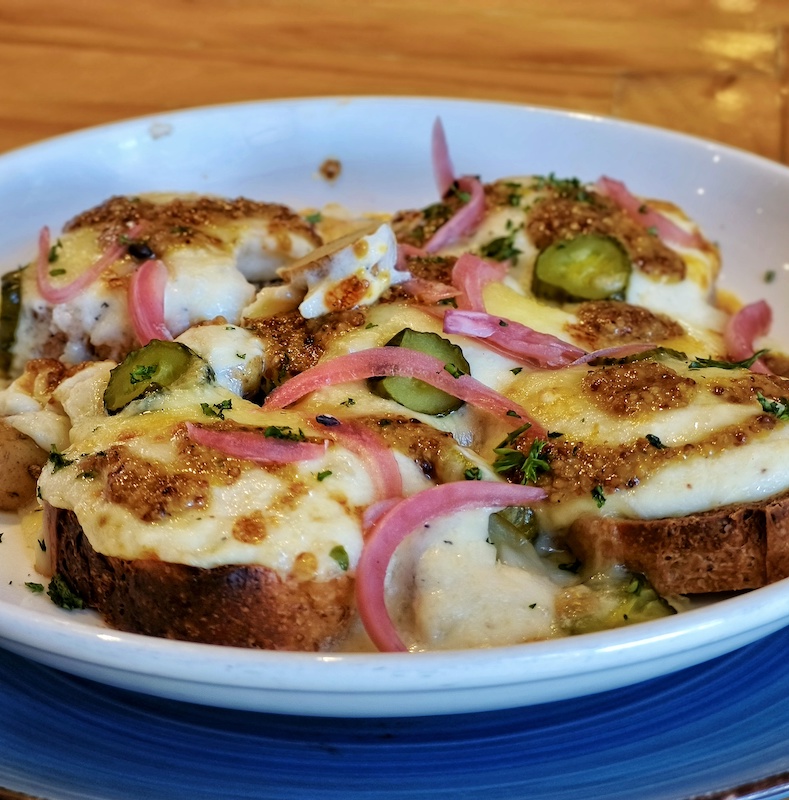
MR. & MRS. B, a beloved homegrown dining destination in the city’s north, is embarking on a sophisticated new chapter. Known for a menu that mirrors the personal travels of its owners, the restaurant hosted a gathering of media and content creators on Friday, February 6, to introduce the mastermind behind its latest culinary evolution: Chef Maverick Javier.
As the corporate research and development chef for Rekado Global Solutions in Manila, Chef Maverick brings a sophisticated level of expertise to the Mr. & Mrs. B kitchen. His credentials include being named the 2024 Philippine Culinary Cup Chef of the Year and representing the Philippines in prestigious international competitions in Singapore and Malaysia.
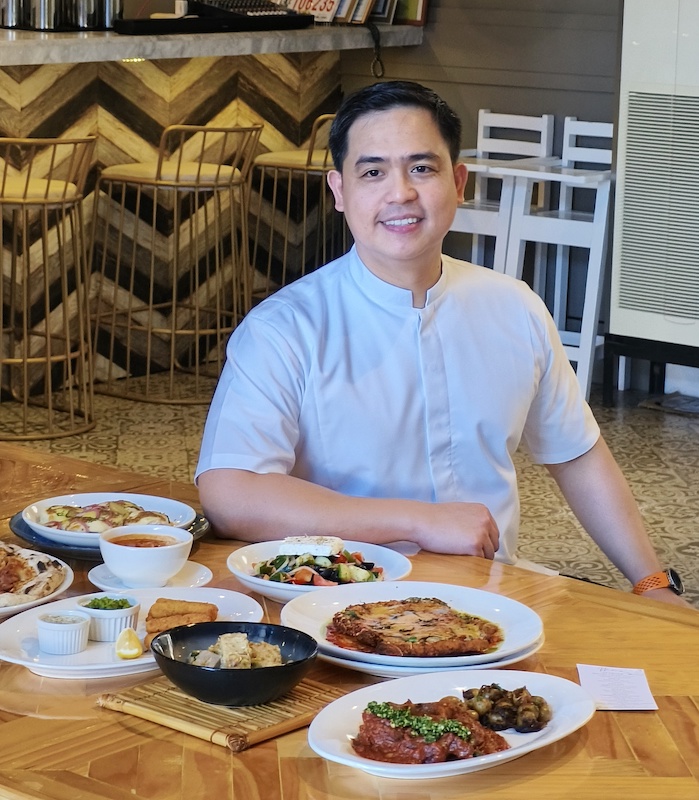
During the launch, Chef Maverick explained that this rollout of eight new dishes represents the first phase of a broader menu development project. He took the time to present each creation individually, emphasizing the importance of thermal precision in the dining experience.
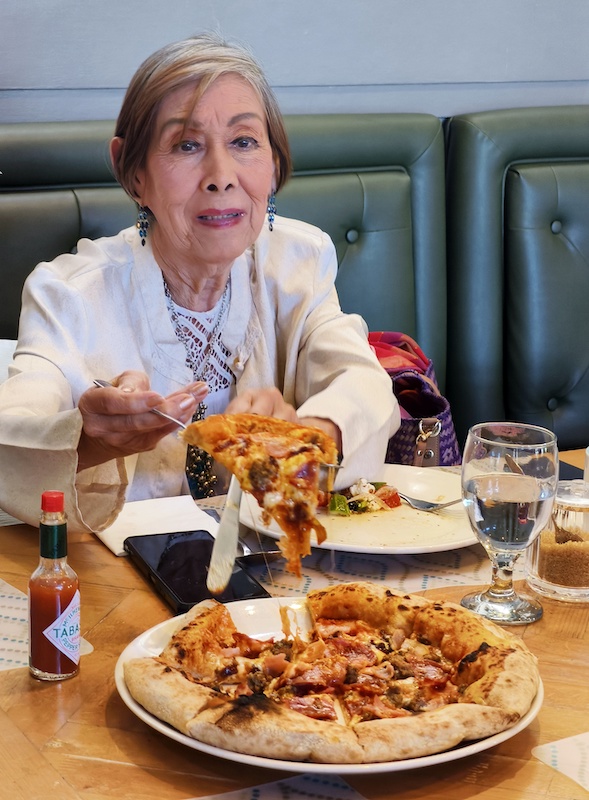
The new offerings began with the decadent Molten Cheese Plate, featuring a blend of seven cheeses accompanied by marble potatoes, cornichons, and toasted baguette. This was followed by a comforting Tomato Soup made from blended herbs and olive oil, and a refreshing Horiatiki Salata—a Greek-inspired salad composed of tomatoes, olives, cucumbers, capsicum, and onions tossed in a bright vinaigrette. For those seeking something heartier to share, the All Meat Pizza makes its debut, loaded with bacon, salami, fennel sausage, and the sweetness of caramelized onions.
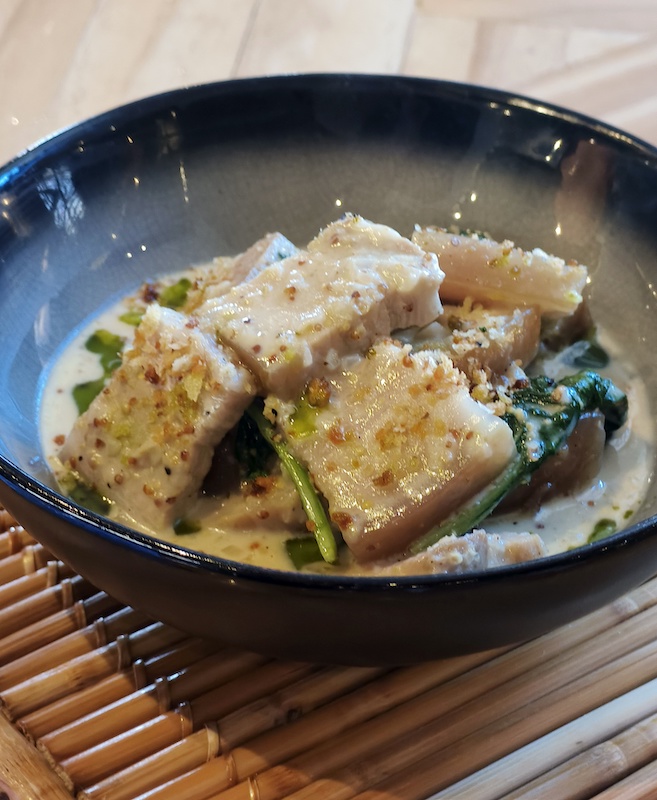
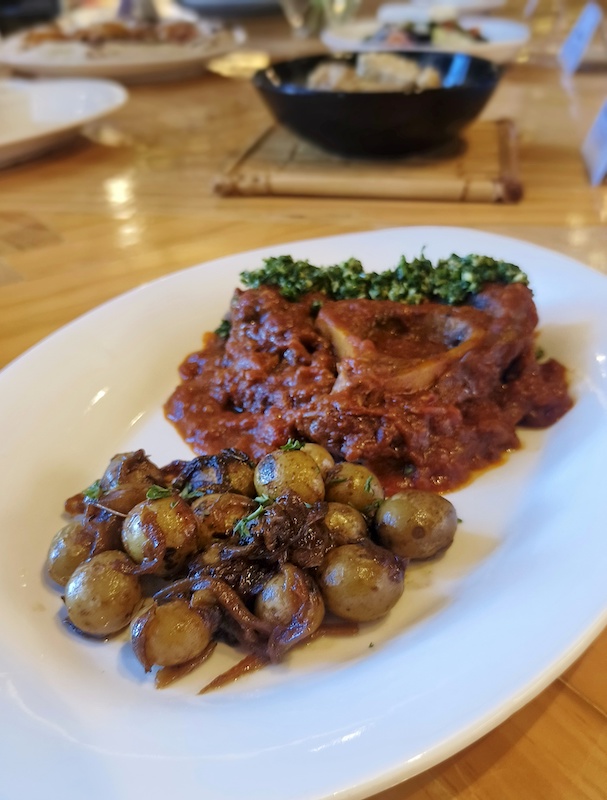
The selection of new main courses showcases Chef Maverick’s penchant for refined textures and slow-cooking techniques. Seafood lovers can enjoy the Parmesan-crusted Fish Stick served with mashed peas and a zesty caper-lemon dip, while fans of classic comfort can opt for the Chicken Parmigiana. The menu also highlights rich, braised meats, including a Pork Belly in Mustard Cream with Dijon and arugula, and a traditional Osso Buco featuring slow-braised beef shanks finished with gremolata and potato lyonnaise.
According to the chef, the soul of these dishes lies in their timing, noting that “hot selections must be enjoyed while steaming, and the chilled items must be tasted while they remain at their peak freshness.”
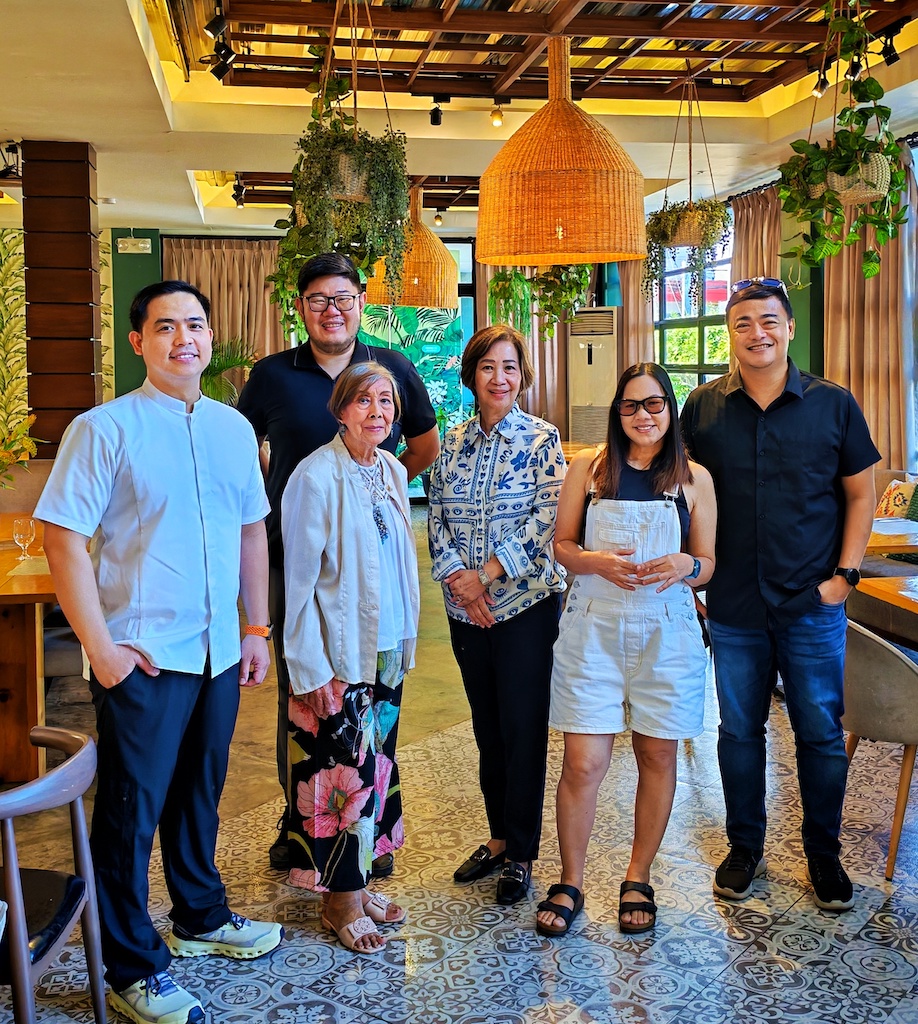
Mr. & Mrs. B owner Lena Benedicto shared her excitement regarding the collaboration, noting that Javier’s visit has “infused the restaurant with a fresh wealth of creativity”. She believes guests can look forward to a thoughtfully curated experience that delivers truly refined flavors.
This partnership marks a significant step in elevating the restaurant’s travel-inspired identity through world-class culinary craftsmanship.
Whenever Philippine–China relations turn tense, familiar calls resurface urging the Philippines to distance itself economically from China and look elsewhere for trade partners. These appeals often lean heavily on trade figures—especially the country’s persistent trade deficit with China—to argue that disengagement is not only possible but overdue.
This pattern is not new. During the Aquino administration, at the height of tensions in the West Philippine Sea, some local officials openly floated calls to boycott Chinese-made products. Similar arguments have returned under the Marcos administration, now reinforced by comparisons between Philippine exports to China and Chinese exports to the Philippines. Today’s “word war” between the Chinese embassy and Philippine officials has once again brought these claims to the fore.
While these concerns are understandable, they are ultimately grounded in a surface-level reading of trade statistics. It is true that the Philippines imports more from China than it exports. Yet treating this imbalance as a stand-alone verdict on the relationship misses the bigger picture. Trade figures do not exist in a vacuum. They are shaped by decades of policy choices, development paths, and the very different ways states manage their economies.
As a political economist and international relations analyst, I argue that a more meaningful assessment of Philippine–China trade must proceed in the following steps. It begins by revisiting how both countries opened their economies in the late 1970s—and how those choices still shape what we trade, and with whom, today.
Same timelines, different directions
China’s rise as a major trade power in the global economy is widely attributed to the series of policy reforms introduced in the late 1970s. In 1978, the Chinese government embarked on what has often been described as a strategy of “selective liberalization.” Rather than pursuing wholesale market opening, Beijing allowed limited and carefully managed forms of privatization, foreign ownership, deregulation, and decentralization, while maintaining state control over sectors deemed strategic or closely linked to national security. These sectors largely remained under the supervision of state-owned enterprises (SOEs).
The cumulative effect of these reforms was transformative—not only for the Chinese economy but also for the Chinese state itself. One of the most visible outcomes was the rapid development of China’s southeastern provinces, which became major recipients of foreign direct investment from firms based in Taiwan, Hong Kong, the United States, and Western Europe.
As China consolidated its manufacturing base through these reforms, it earned the label of the “factory of the world.” The country emerged as a key supplier of intermediate and manufactured goods, embedding itself deeply within global supply chains. Consequently, the transformation of the Chinese economy not only involves participating more fully in international trade through the reduction of tariffs and non-tariff barriers, but also involves shaping global trading regimes. A pivotal milestone in this process was China’s accession to the World Trade Organization in 2001.
The Philippines is no stranger to the economic transformations that propelled China’s rise. During the same decade that China initiated its reform agenda, the Philippines also embarked on liberalization under the administration of Ferdinand Marcos Sr., following policy prescriptions advanced by the United States (US), the World Bank (WB), and the International Monetary Fund (IMF). Unlike China’s selective approach, however, the Philippine government pursued rapid and relatively comprehensive trade liberalization in the hopes of capturing the promised gains of free trade.
This shift was implemented through a combination of executive orders, legislation aimed at reducing tariffs, state support for export-oriented firms, and participation in regional and global trade arrangements. These included the General Agreement on Tariffs and Trade (later the WTO), the Asia-Pacific Economic Cooperation forum, and a range of multilateral and bilateral trade agreements within ASEAN. Collectively, these reforms unfolded from the 1970s through the early 2000s, spanning both the Marcos and post-Marcos Sr. administrations.
Beyond export-import trade volumes
The 1990s marked a consequential decade for both countries as they began to experience the long-term effects of liberalization. In the Philippines, the period coincided with economic recovery under post-authoritarian democratic governments following the ouster of Marcos Sr. It was during the administrations of Corazon Aquino and Fidel Ramos that the Philippines deepened its engagement with the WTO and the ASEAN Free Trade Area.
In China, the 1990s were defined by the leadership of Jiang Zemin, under whom the continuation and expansion of the 1978 reforms became a defining feature of state policy. The resulting economic growth lifted millions out of poverty within two decades—an achievement that many developing economies continue to aspire toward.
Against this background, relying solely on annual export-import figures to judge the Philippine–China trade is misleading. Doing so almost guarantees gloomy conclusions, especially when the focus is on deficits. Worse, this narrow view feeds narratives that turn economic debates into emotional ones, sometimes spilling into outright distrust or Sinophobia.
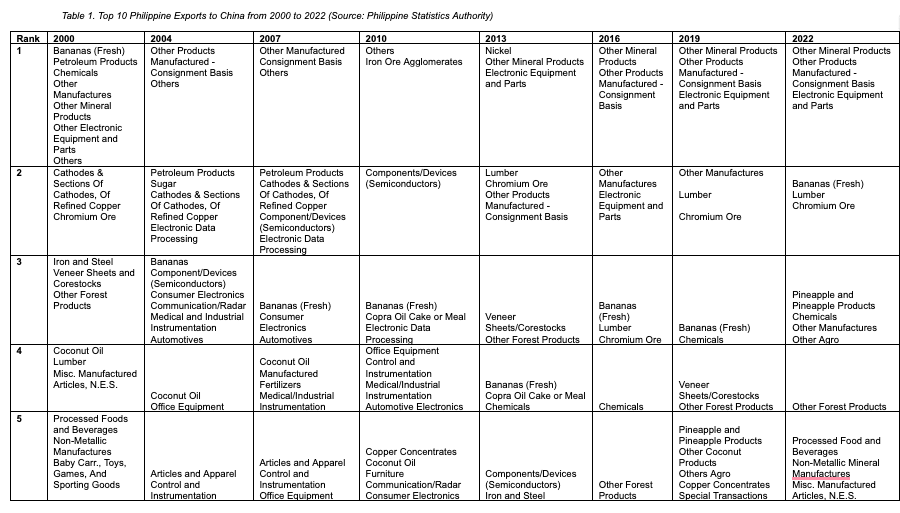
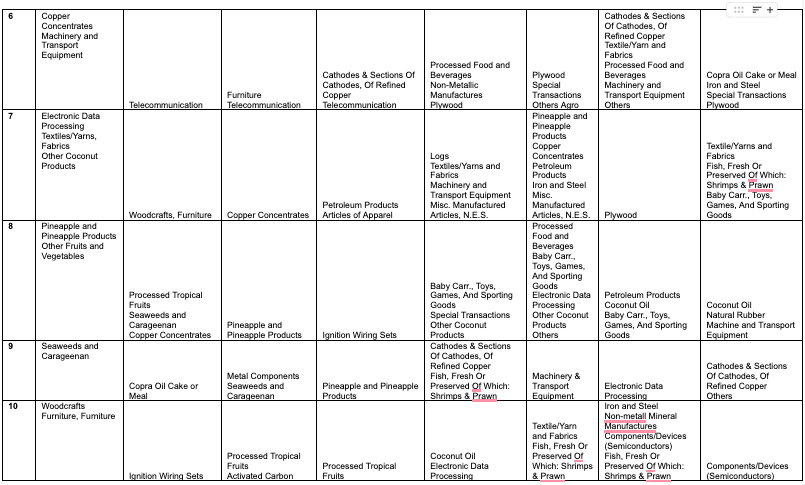
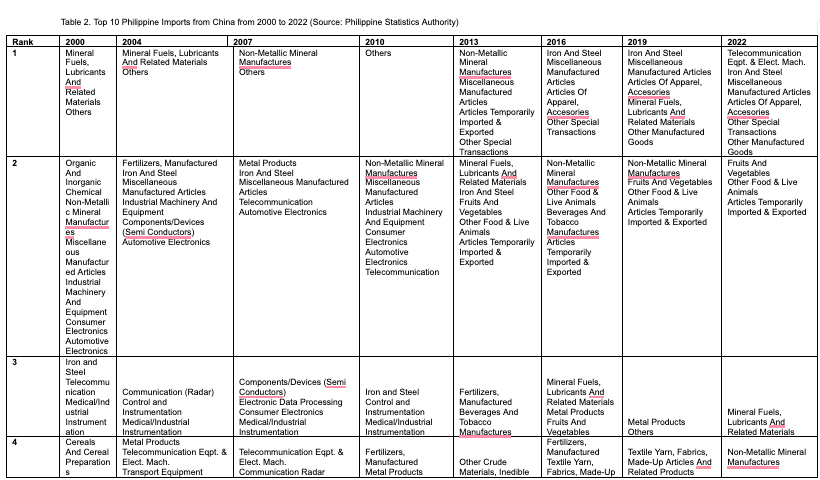
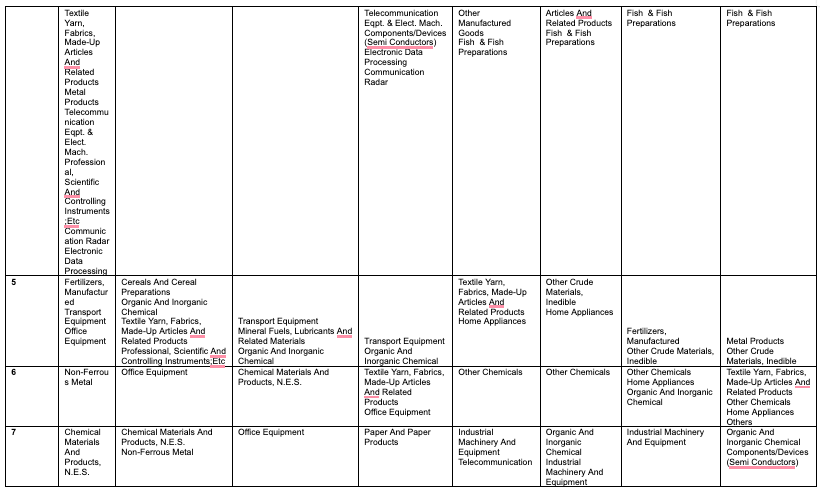
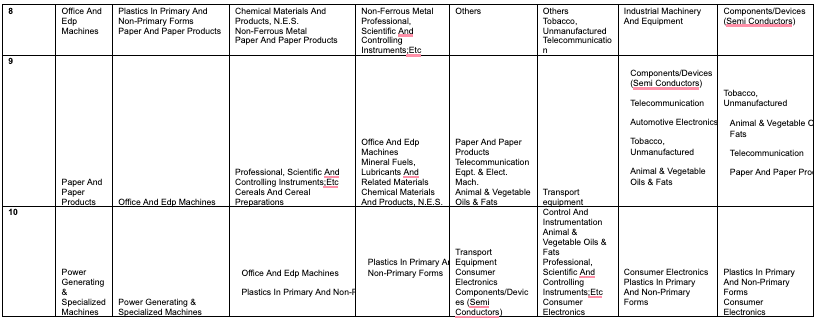
An alternative way of understanding Philippine-China trade relations is to look for the top 10 exports and imports of the Philippines to and from China and contextualize such data in light of Philippine development policies, particularly with the continuation of the export-oriented industrialization (EOI) strategy implemented because of the Philippines’ decision to engage in trade liberalization since the 1970s. Tables 1 and 2 below present a relevant picture of Philippine-China trade relations. Both tables are divided into eight columns which are significant years in the Philippine economic and political histories. For instance, 2000 is the entrance of the 21st Century and the year before China became a member of the WTO. Meanwhile, the remaining years from 2004 to 2022 span the presidencies of Gloria Macapagal Arroyo, Benigno Aquino III, and Rodrigo Duterte. Examining the Philippines’ top exports to and imports from China reveals patterns shaped by long-standing development strategies, not just recent political moods. (Note: The rankings presented below are derived from descriptive analysis and have not been subjected to peer review. The author welcomes comments, suggestions, and constructive feedback.)
What gets lost in the trade numbers
To understand these patterns, it helps to revisit the Philippines’ development history. From the 1950s to the 1960s, the country followed import-substitution industrialization (ISI), a strategy that protected local industries and limited imports. At the time, the Philippines was seen as one of the more successful cases in the region.
This approach changed in the 1970s, when the Philippines adopted export-oriented industrialization (EOI). The goal was to compete globally by promoting exports, especially manufactured goods. Over time, this divided exporters into two broad groups: traditional exporters, mainly in agriculture and raw materials, and non-traditional exporters, especially in heavy manufacturing and electronics. While both groups remained active, the latter received more policy support and attention from the Philippine government.
In this regard, based on the rankings present in both Tables 1 and 2, the following are five (5) untold stories behind Philippine-China trade relations buried because of the lack of attention given to the economic history of both the Philippines and China. Specifically, these stories affirm the indispensable role of China in Philippine economic development especially that the two Asian partners are no strangers but contemporaries in their quest for mutual prosperity through participation in free trade.
Conclusion
The renewed exchange of sharp words between Chinese diplomats and Philippine officials has once again pushed trade into the political spotlight. In moments like this, it is tempting to treat trade figures as straightforward proof of dependence or vulnerability.
But trade numbers are not self-explanatory. They reflect long histories of policy choices, development strategies, and economic priorities on both sides. Reading them without that context leads to conclusions that are easy to repeat but hard to defend.
If the Philippines wants a clearer view of its economic relationship with China—especially during periods of diplomatic strain—it must resist the urge to rely on quick comparisons and headline figures. A more careful reading, grounded in history and development experience, offers a steadier basis for debate and for policy decisions in an increasingly complicated regional environment.
Brian U. Doce is a scholar-practitioner with a background in politics and international relations. He lectures at several universities in Metro Manila and has extensive experience in business–government relations, policy advocacy, and diplomacy. He may be reached at scholarbud@gmail.com.

THE SOUTHERN Philippine Medical Center carried out its latest adaptive sensing deep-brain stimulation (DBS) procedure on Feb 7, 2026, to treat a patient diagnosed with X-linked dystonia-parkinsonism (Lubag disease).
The hospital utilized a state-of-the-art Medtronic deep brain stimulation system, the first in the Philippines, for patients with movement and neurological disorders, not only Lubag disease but Parkinson’s disease, tremors, or epilepsy as well.
DBS is a surgical procedure that uses a pacemaker-like device and implanted electrodes to send electrical impulses in the deep parts of the brain to modulate dysfunctional neural circuitry.
In an interview with Dr Jose Nicanor P. Del Rosario, M.D., chair of the Institute of Clinical Neurosciences, he explained that Lubag disease is a rare, disabling movement disorder that primarily affects Filipino men and originates from Panay Island.
He shared that the patient who underwent DBS at SPMC was working abroad and started to develop abdominal contractions and progressed to dystonia years ago.
The progressive disease is genetic, where symptoms occur at the start of adulthood, and is a unique disorder in the country.
Common early signs are involuntary pulling or twisting in the neck, painful muscle spasms, tremors, stiffness, slowed movements, speech changes, and swallowing difficulty.
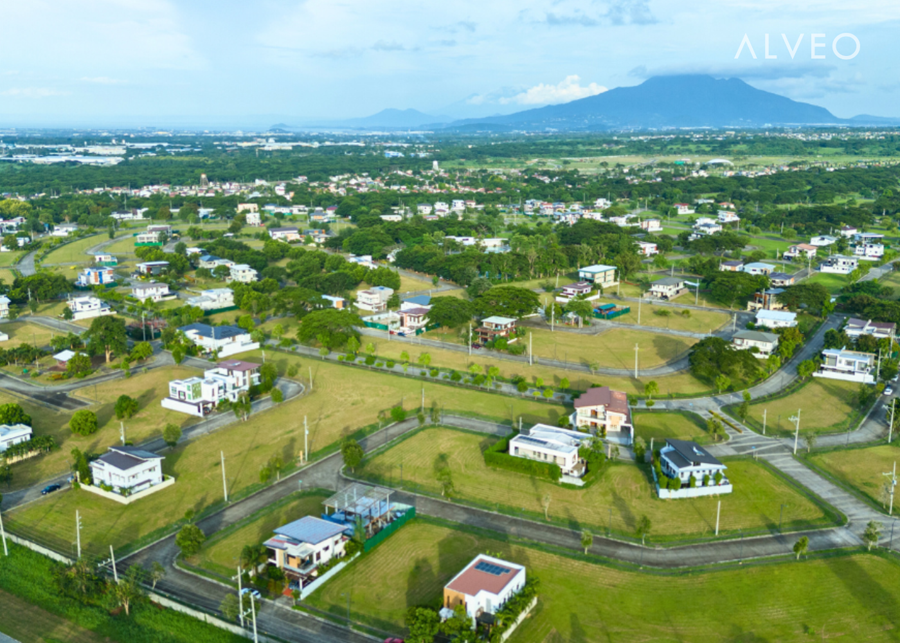
Manila, Philippines — With over 35 years of experience in enhancing land and enriching lives, Ayala Land, Inc. (ALI) has shaped some of the country’s most enduring master-planned estates. ALI developments integrate residential, commercial, institutional, and lifestyle components that create long-term value for communities and investors alike.
In Negros Occidental, Ayala Land’s presence has been instrumental in advancing key developments that support economic growth and improve everyday living. This deep familiarity with the province’s character and potential has laid a strong foundation for thoughtfully planned communities that are both sustainable and responsive to local context.
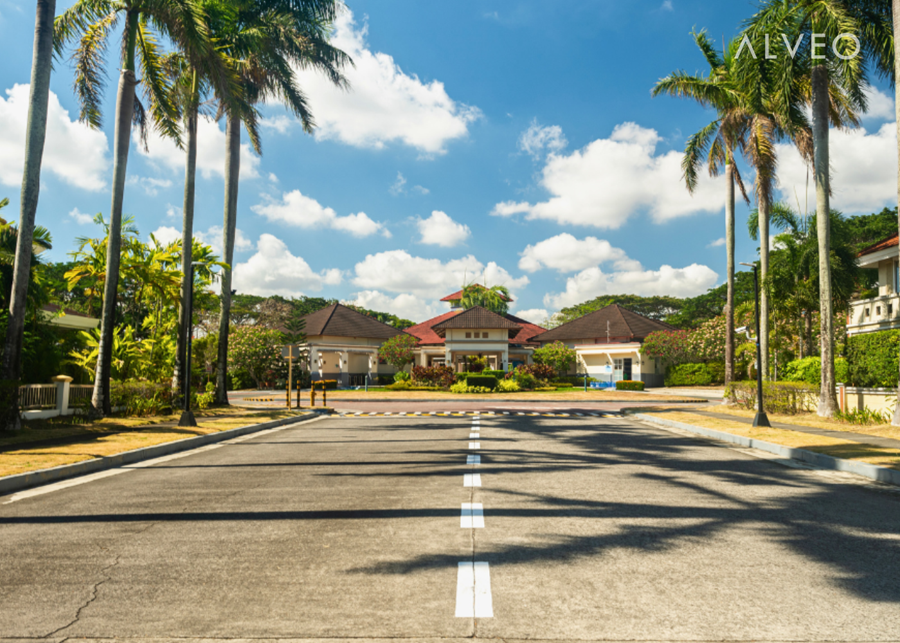
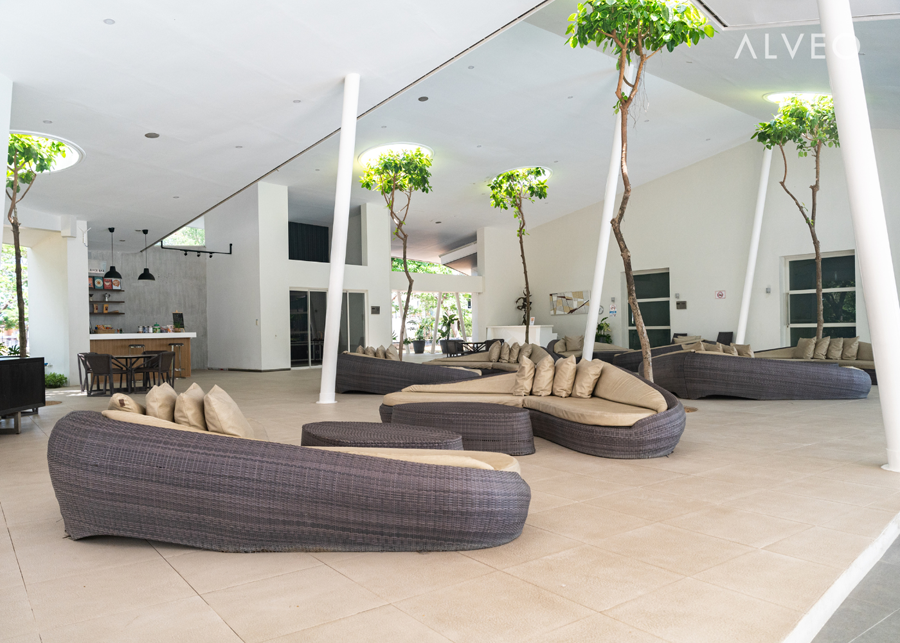
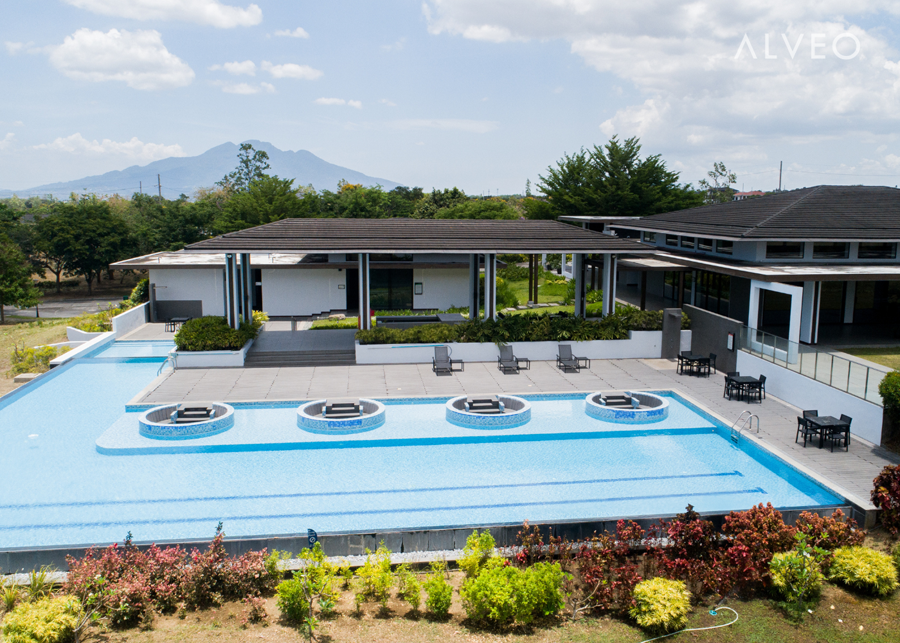
Alveo Land Corp., the upscale residential arm of Ayala Land, carries forward the Ayala legacy through a refined approach to premium residential development, with its portfolio of over 70 residential and mixed-use communities across 13 key growth centers nationwide. Spanning high-rise condominiums, suburban residential lots, and thoughtfully planned mixed-use developments in prime locations such as Nuvali, Bonifacio Global City, Makati, and Alabang, Alveo’s developments are defined by curated amenities, generous open spaces, and a strong sense of belonging.
Each Alveo community is carefully developed to balance privacy and openness, leisure and functionality—resulting in lifestyle-led, design-driven environments that continue to resonate strongly in the market and support a way of living that evolves with residents over time.
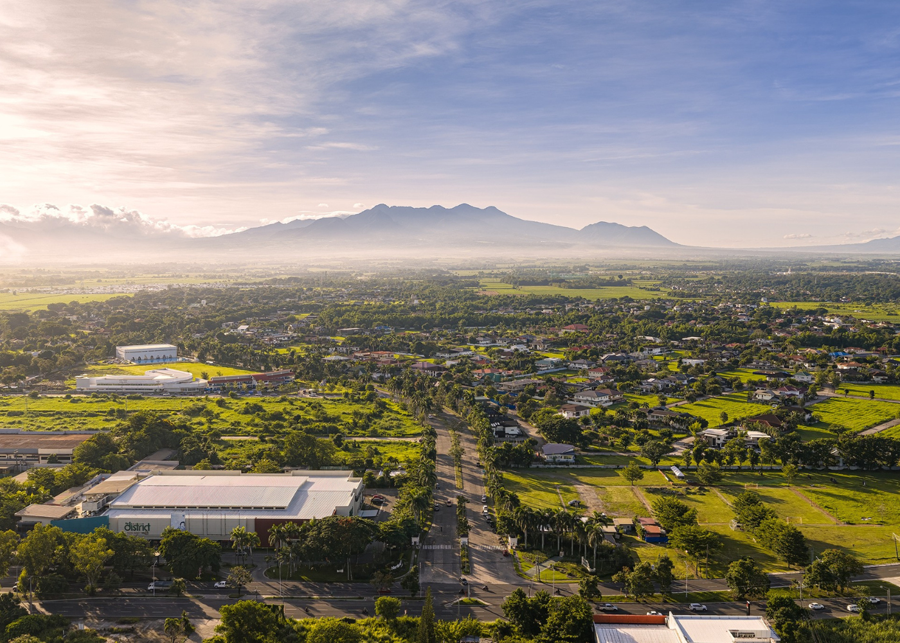
Building on this strong foundation, Alveo Land now expands its footprint in Visayas with the launch of its first residential village in Negros Occidental. Located within Northpoint, Ayala Land’s estate in Talisay City, this new development will reflect Alveo’s hallmark principles of sustainability, design excellence, and community-centric living—carefully attuned to the natural landscape, pace, and character of Negros.
This milestone signals Alveo’s confidence in the province’s long-term potential and its commitment to delivering communities that endure—places where families can grow,
connections can flourish, and a legacy can be built.
More details on the Alveo’s Northpoint residential village will be announced in the coming months.
Ayala Land. Building places people love.
Alveo Land. A life you love.