

BY ALEX ALAGON

BY ALEX ALAGON

A MAN wanted in the killing of a police officer in Malolos, Bulacan, has surrendered to authorities in Davao del Norte at the Tagum City Public Terminal in Barangay Magugpo West on Wednesday, Feb. 4, 2026.
The surrender was the result of a coordinated effort between a confidential informant and the Digos City Police.
According to the Police Regional Office XI report, the suspect reached out to a confidential informant known only as alias Jay.
After disclosing his involvement in the Bulacan killing, the suspect asked to meet Jay at the Tagum Bus Terminal.
Personnel from the Digos City Police Station immediately responded to the tip-off and traveled to Tagum to pick up the suspect. By 10 a.m., the individual was turned over to the Tagum City Police Station for formal documentation and processing.
With his surrender, the number of suspects in custody on the murder of Staff Sgt Renato Casauay Jr. climbed to seven. According to police, four more suspects are still at large.
The victim, a personnel assigned to the Philippine Drug Enforcement Group’s Special Operations Unit 3, was killed on Jan. 24, but his body was found stuffed inside a septic tank in Barangay Mojon, Malolos City, on Jan. 31.
BGen. Leon Victor Z. Rosete, PRO XI director, praised the swift coordination between the Digos and Tagum units.
“This voluntary surrender reflects the effectiveness of our continuous engagement efforts and the public’s growing trust in the police,” Rosete said.
The local police already coordinated with the Malolos, Bulacan police for his eventual transfer and the filing of appropriate charges.
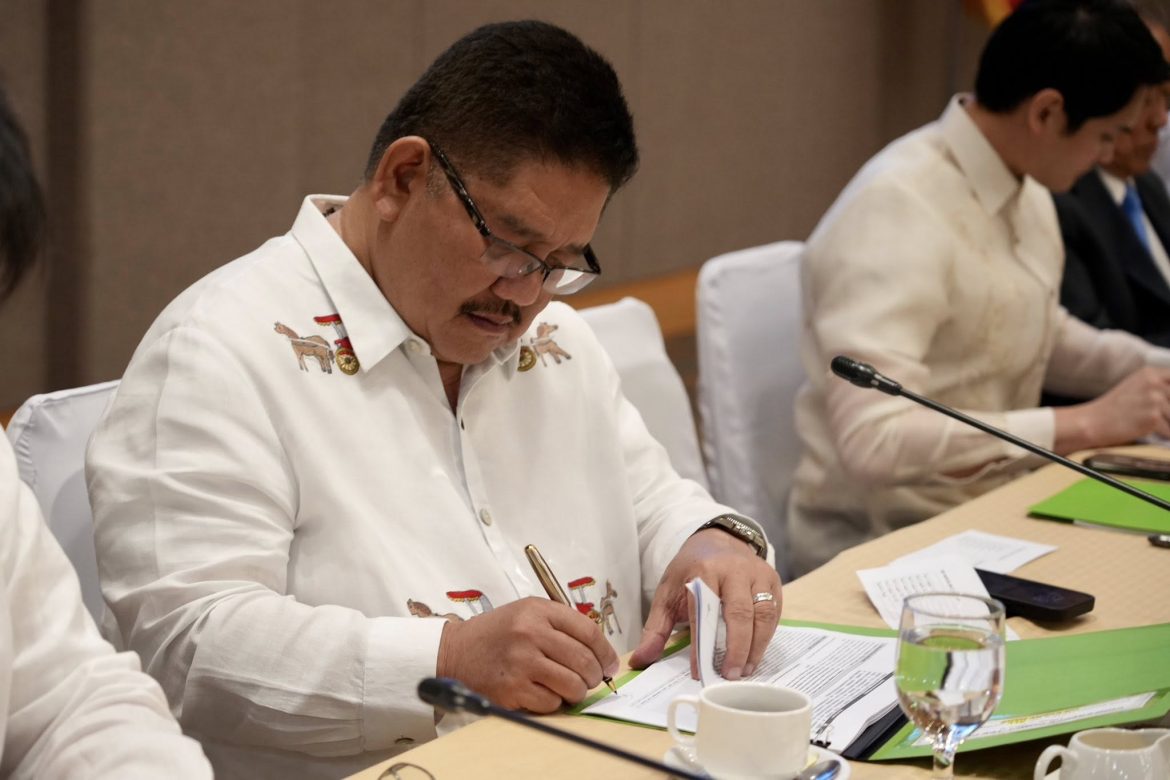
CONGRESS has earmarked another ₱2.5 billion in funding for cancer prevention and patient care, strengthening the country’s response to a disease that claims nearly 100 Filipino lives every day, House Minority Leader and 4Ps party-list Rep. Marcelino “Nonoy” Libanan said Sunday.
Under the 2026 General Appropriations Act, Congress allocated another ₱1.5 billion for the Cancer Assistance Fund (CAF) and ₱1 billion for the Cancer Control Program (CCP), according to Libanan.
“Both the CAF and the CCP are lifelines for cancer patients fighting for survival. This fresh funding means earlier detection, faster treatment, and better care—especially for patients who cannot afford it,” Libanan said.
Although a lawyer by profession, Libanan also holds a degree in medical technology. He is also a proponent of a House bill that would establish a Centralized Patient Record System to improve healthcare delivery nationwide.
The country is observing National Cancer Awareness Month this February.
The CAF provides direct financial support for cancer screening, diagnosis, treatment, and laboratory services, benefiting patients, survivors, and individuals at high risk.
The fund is accessible through Department of Health (DOH)-run hospitals and public cancer centers nationwide.
“No Filipino should have to delay cancer treatment because of cost. The CAF ensures that help is available when it’s needed most,” Libanan said.
Meanwhile, the CCP focuses on prevention and long-term care, including the procurement of medicines, supportive therapy, and palliative services.
“Cancer patients need continuous care, pain management, and dignity throughout treatment,” Libanan added.
The DOH has identified priority cancer types such as breast, lung, liver, childhood, gynecologic, head and neck, colorectal, prostate, kidney, and bladder cancers, which account for a large share of cancer-related deaths.
Cancer remains the country’s second leading cause of death, according to the Philippine Statistics Authority, with an average of 96 deaths daily and 184 cases diagnosed per 100,000 population.
Photo courtesy of Nonoy Libanan Facebook page

THE POLICE Regional Office (PRO) XI seized ₱22,736,820 worth of smuggled cigarettes and arrested 17 suspects in a coordinated region-wide sweep from 6 a.m. on Feb. 6 to 5:59 a.m. on Feb. 7.
According to the PRO XI report, authorities launched 13 simultaneous anti-smuggling operations across the region and confiscated 455 master cases, 1,424 reams, and 276 packs of assorted cigarette brands.
The single largest accomplishment occurred in Digos City, where the police station seized 440 master cases, accounting for the bulk of the total haul.
PRO XI regional director Brig. Gen. Leon Victor Rosete emphasized that the operation, conducted under the guidance of PNP Chief Gen. Jose Nartatez Jr., aimed to minimize the “economic sabotage” caused by illegal trade.
“Cigarette smuggling not only deprives the government of much-needed funds for public programs but also fuels illegal trade that can endanger communities,” Brig. Gen. Rosette stated.
“Our anti-smuggling operations will continue relentlessly. We are committed to apprehending those involved and stopping the illegal flow of these products in the region,” he further said.
The arrested individuals are in police custody and will face charges for violating relevant laws on smuggling and tax evasion.

THE ICONIC City Hall is set to be restored to its original neoclassical facade in line with its 100th year celebration this year, coinciding with the Araw ng Davao next month.
During the iSpeak media forum on Thursday, Feb. 5, Oscar G. Casaysay, head of the Office of Culture, Arts, and Heritage, said the restoration works will include painting the building, which was approved by Mayor Sebastian Duterte.
“We sought guidance from the National Historical Commission of the Philippines because it’s not as easy as just repainting. So, they allowed us, and they proposed to go back to the original,” Casaysay said.
He added that Davao City Hall will be painted back to its original white color.
Casaysay also noted that the redundant signs bearing “City Hall of Davao” will be removed and leave only one sign in white.
The office also proposed restoring the windows and installing lights to illuminate the building, which was already approved.
The building was designed in 1926 by renowned architect Juan M. Arellano, when Davao was still a municipality.
The building was destroyed during World War II and restored in 1947 to its original design, but underwent renovations in 2017.
Arellano’s design for the Davao City Hall also became a prototype for other municipal structures, such as the Tabaco City Hall in Albay and the Municipality of Concepcion in Tarlac.
Casaysay consulted architects and historians for the correct color and had it approved by the National Historical Commission of the Philippines. The official said the restorations will begin by the second week of February.
“The start of the repainting after a series of documentation and procurement will start next week, hopefully in time for the Araw ng Davao celebration,” he said.

AYALA Corporation has warned the public about a fake Spinneys Philippines Facebook page (@spinneysphilippines2025) and Viber account (@spineysph) using the Ayala name to lure people into a supposed investment scheme by Spinneys Philippines.
These unofficial accounts are asking people to send money to participate in investment opportunities with guaranteed returns. Ayala is not associated with, nor does it endorse, these fraudulent investment activities. The company only shares official communication through its verified channels.
For accurate information and updates, please refer to Ayala Corporation’s official website and authenticated social media pages.
The company reiterates its call for heightened vigilance as scammers increasingly use the names of reputable organizations to bait potential victims. Please be cautious of investment offers and online content that appear too good to be true.

A TOTAL of 66 heads of dogs and cats tested positive for rabies in 2025, an official from the City Veterinarian’s Office (CVO) said.
Dr. Gay Pallar, CVO acting head, confirmed this in the iSpeak media forum on Thursday, Feb. 5, noting the high incidence of rabies in the city.
Pallar reiterated that impounding stray animals from the streets continues to be a deterrent to the spread of rabies.
“When we say 66, if they bite (people or other animals), it will further spread rabies. There’s no treatment; once a person has rabies, the symptoms show in the terminal stage,” Pallar said.
The official said they recognize the concern of animal welfare advocates, but if these stray animals are not contained, they pose risks to the general public.
Ordinance No. 1457 mandates the impounding of stray and unattended animals as part of its rabies prevention efforts.
In 2025, a total of 6,957 animals were impounded last year at the local government’s impounding facility in Barangay Malagos, Baguio District.
Of the number, 4,139 unclaimed dogs and cats were euthanized through overdosage of anesthesia through intravenous and intracardiac injection before they are cremated.
Pallar said the agency impounds more or less 25 heads of dogs and cats daily.
The capacity of the facility is 12 cages, which can contain 25 heads; hence, euthanasia should be done every three days.
“As much as we want to shelter every impounded dog and cat, it’s unfeasible because we don’t have a budget, and maintaining them all can’t be sustained,” she said.
Pallar said the City Council is pushing for an ordinance requiring the mandatory leashing and licensing of pets through microchipping. This year, the city government has allocated a budget to CVO for microchipping 300 pets.
The ordinance also penalizes irresponsible owners who allow their pets to stray, with fines ranging from P1,000 to P5,000. Also in the proposed law is a monitoring system for registration of vaccinated pets in partnership with the University of Philippines-Mindanao.

THE DEPARTMENT of Transportation (DOTR) reported that the Bukidnon Airport would be able to accommodate turboprop commercial operations in December 2026.
DOTR gave the contractors until Nov. 30, 2026, to complete the construction of the whole airport to start servicing turbo commercial operations by December.
This pronouncement follows the probing flight in the runway of the airport led by Transportation Secretary Banoy Lopez to ensure a safe landing of aircraft.
The ₱2.816 billion airport is being built in Barangay Maraymaray in the municipality of Don Carlos.
Lopez also inspected the arrival area, passenger terminal building (PTB), runway extension, cargo building, and control tower.
“Our president directed us to hasten the construction of the airport since it’s significant for connectivity and the economic benefits of Mindanaoans,” Lopez said. “Like what we did in other regional airports, this Bukidnon Airport is also modern to be more comfortable, accessible, and convenient for our passengers and tourists.”
Following the turboprop commercial operations, the jet operations are set to follow in the first quarter of 2027.
Once operationalized, the airport will service 425 passengers and enable shorter travel times.
Traveling on land between Bukidnon and Cagayan de Oro takes more than two hours, and the trip between Bukidnon and Davao City takes 4-5 hours.
The airport is a priority infrastructure project in the expanded North–South Economic Corridor, which is for development in the BIMP-EAGA subregion covering mainland Mindanao and the whole of Sulawesi, Indonesia.
According to the Mindanao Development Authority, the economic corridor is eyed to open market opportunities, tourism, and facilitate trade and investments.

THE THIRD phase of the Underground Cabling System Project of Davao City, which traverses the corner of Suazo Street along Ramon Magsaysay Street going to Magsaysay Park, will be completed in the second quarter of the year.
Councilor Louie John Bonguyan, committee chair on energy and water, reported the developments during Pulong Pulong sa Dabawenyos on Tuesday, Feb. 3.
“By the second quarter of this year, we will already finish the whole stretch of Ramon Magsaysay,” Bonguyan told reporters.
The councilor said the next phase will be on Quirino Avenue.
To note, Davao Light officially switched on Phase 1 of the Ramon Magsaysay Avenue Underground Cabling Project in April 2025.
During the switching on, Davao Light president and COO Enriczar Tia said that Phase 2 is expected to be completed by December 2025.
Phase 2 of Ramon Magsaysay will extend from the Bureau of Fisheries and Aquatic Resources (Bfar) Office to the Unity Archway at the junction of Magsaysay Avenue and Quezon Boulevard.
However, in a Jan. 20 interview, Davao Light said the construction faced delays due to the late delivery of equipment.
The Underground Cabling Project was mandated under City Ordinance No. 0152-17, Series of 2017, requiring all telecommunication companies, Davao Light, and all other persons involved to convert overhead lines to an underground system.
The first phase of the Underground Cabling System—involving the removal of power lines, distribution transformers, and 64 poles—started in 2018 and was completed in 2021, covering C.M. Recto Street from corner San Pedro Street to corner Ramon Magsaysay Avenue.
Meanwhile, the second phase comprised 0.6 kilometers of San Pedro Street from City Hall Drive to corner Quirino Avenue. It started in March 2021 and was completed on Feb. 19, 2023, with the removal of its overhead lines and 50 poles.

AFTER a bruising 2025, many executives are entering 2026 with a familiar mix of caution and hope. Last year tested leadership teams on multiple fronts: domestic disruptions, corruption-related confidence concerns, weaker investment momentum, and renewed external pressure from global trade frictions, including the lingering threat of US tariffs. For many companies, strategy meetings became less about expansion and more about survival: particularly protecting margins, defending cash, and keeping operations stable amid volatility.
But here is the thing: 2026 does not look like a blockbuster year. It looks like something more realistic and more useful for disciplined operators. From a financial analyst’s lens, this is shaping up to be a “quiet comeback” year: steady growth, manageable inflation, and policy conditions that can support business. That is, if you translate macroeconomic signals into decisive execution.
A recovery, not a victory lap
Multilateral institutions are converging on a modest rebound. GDP growth forecasts cluster around the 5% to 6% range, anchored by resilient domestic consumption, easing inflation versus prior highs, and a more supportive monetary policy environment. The IMF sees a sub-6% growth through 2027. The World Bank expects above 5% until 2027, emphasising that household consumption remains a core stabiliser even as fiscal policy tightens. The BSP has also indicated growth potential within the 5% to 6% band, and the government has adjusted its own target to the same range, implicitly acknowledging that 2025’s turbulence still leaves aftershocks.
What does this mean for business? It means 2026 will likely be “steady but uneven”. Companies tied to domestic demand may see more consistent tailwinds, while export-linked and capex-heavy sectors remain more sensitive to external shocks, sentiment, and financing conditions. In practical terms, the market is not rewarding bravado; it is rewarding execution discipline.
Inflation is supportive until it is not
Inflation dynamics matter because they shape borrowing costs, wage pressure, and consumer confidence. After unusually low prints in 2025 (averaged around 1.7% to 1.8%), inflation is expected to edge up modestly in 2026 to roughly around 2.3% to 3.2%, influenced by base effects and commodity pressures, while staying within the BSP’s 2% to 4% target range. That is generally constructive: inflation low enough to preserve purchasing power but not so low that it signals weak demand.
Still, inflation risk is rarely theoretical. Food prices can swing, energy markets can surprise, and weather disruptions are a recurring reality in a typhoon-prone country. The takeaway is simple: do not just “monitor inflation”. Build triggers and playbooks around it. If your margin is exposed to fuel, logistics, or imported inputs, you need predefined actions, not debates, when indicators move.
The external risk remains the X-factor
Even if the domestic base is improving, global uncertainties continue to cast a shadow. Prolonged trade barriers and tariff-related uncertainty can weigh on exports and business confidence, and fiscal tightening limits the government’s ability to cushion shocks. This is why 2026 strategies cannot be decks full of aspirations. It has to be operationalised: measurable, owned, and executable.
In other words, 2026 will reward the companies that run like an analyst would run a portfolio: protect downside, preserve liquidity, and fund options that can scale when conditions improve.
The 2026 financial analyst playbook: five moves that change outcomes
Hold a quarterly two-hour “risk committee” using a simple dashboard. Track five indicators: CPI releases (PSA), PHP/USD movements, BSP policy decisions, key tariff/trade announcements relevant to your sector, and governance/corruption-related news that may affect sentiment or permits. Score each risk 1 to 5, assign an owner, and define triggers. For example, if inflation hits 3.2%, execute a pricing protocol within seven days (price resets, bundle changes, contract repricing, promo redesign, etc.).
Review your top 3 to 5 imported inputs by cost and operational criticality. Establish a strategic foothold with regional backup suppliers to cover a substantial segment (e.g., 20% to 30%) of mid-year requirements. For critical local items, consider shorter 3-to-6-month contracts to reset terms as conditions shift. Run one annual typhoon disruption drill to estimate lead times, rerouting, emergency procurement, and decision rights.
Target cash plus committed credit covering 4 to 6 months of core operating expenses. Secure revolving credit lines while conditions are favourable, and do not wait until the bank sees stress. Implement a weekly 13-week rolling cash forecast; the discipline matters more than the software. SMEs can explore SB Corp guarantees to improve access and pricing.
Allocate a certain percentage of payroll for training linked to measurable KPIs. Prioritise AI-enabled operations, data analytics, and energy management basics. Aim to certify a growing segment of the workforce by year-end via TESDA-supported programs or scalable platforms. Track impact through pre/post measures: cycle time, error rates, conversion rates, and turnaround time.
Move from annual “set-and-forget” budgets to rolling quarterly forecasts with ~10% reallocation flexibility. Hold 30-minute monthly pulse checks: what changed, what it means, and what actions follow this month. In uncertain environments, speed beats perfect models.
Execution is the advantage
The road through 2026 may still feel uneven, but it is far from unworkable. The Philippines retains strong underlying demand, a young and adaptable workforce, and meaningful upside in renewables and digital services. The companies that are expected to break out this year will not be the ones with the boldest narratives; they will be the ones with clear triggers, named owners, protected liquidity, and fast decisions.
Resilience in 2026 is not a slogan. It is a system. Build it now, and you will not just survive volatility. You’ll turn it into your edge.
Seb Serrano is a Director for the Advisory Services Practice Area at P&A Grant Thornton. One of the leading audit, tax, advisory, and outsourcing firms in the Philippines, P&A Grant Thornton is composed of 29 Partners and 1,500 staff members. We’d like to hear from you! Connect with us on LinkedIn and like us on Facebook: P&A Grant Thornton and email your comments to business.development@ph.gt.com. For more information, visit our website: www.grantthornton.com.ph.