
BY ALEX ALAGON

BY ALEX ALAGON

ZACK Tabudlo returns with “Tunay,” a heartfelt track that reframes modern panliligaw through sincerity, respect, and genuine intention. Known for his emotionally resonant songwriting, Zack takes a refreshing turn by highlighting a rarely discussed part of Filipino courtship—not just winning over a partner, but earning the trust and approval of their parents as well.
“Tunay” tells the story of courage and commitment, where love is proven not through grand gestures, but through honesty and acts of service. The song captures the vulnerability of stepping forward with nothing but pure intentions, emphasizing that real love shows up in effort, patience, and respect.
Joining Zack on the track are rising voices from the Gen Z hip-hop scene, Robledo Timido, Nateman, and Paul N Ballin—each adding their own perspective to the narrative. Their verses bring texture and realism to the story, blending melodic emotion with grounded, street-level storytelling that reflects today’s evolving idea of romance.
The collaboration is fully self-produced by Zack Tabudlo, who also handled the mixing and mastering of the track. This hands-on approach allows “Tunay” to feel personal and cohesive, staying true to the song’s message while seamlessly blending pop and hip-hop elements.
With “Tunay,” Zack continues to expand his artistry, bridging heartfelt storytelling with contemporary sounds and meaningful collaborations. The track stands as a reminder that love, when it’s real, is built on truth and that sincerity will always speak louder than promises.

THE NATIONAL Autism Care Plan Act, a bill sponsored by Senator Risa Hontiveros, represents a long-overdue step toward a Philippine policy that recognizes the rights and needs of individuals with autism.
There have been laws created and enacted for persons with disabilities (PWD); however, they exposed significant gaps in how we approach those for children, particularly autism and other developmental impairments.
The bill stated that it will promote rights and access to services and provide mechanisms for support across health, education, and community systems. For this to be effectively realized, the framework must be carefully organized to match identified needs with appropriate solutions and ensure that delivery systems are responsive.
Unlocking eligibility for autism care
For parents with a toddler, worries arise when their child is delayed in terms of speech. In current trends, 18-month-olds can be screened for autism. However, getting a diagnosis is expensive, especially for low-income families. Some families line up for financial assistance in government agencies just to get the assessment. The appointment time is definitely longer because there are very few providers.
Enhancing the framework for screening, detection, and diagnosis should not be the sole responsibility of the parents, but also for the schools, baranga,y and those in the health sector. In a nation where families often bear the immense financial and emotional burden of autism care alone, I expect that this bill affirms that no Filipino with autism should be neglected or left behind. And part of this is to recognize the essential need for diagnosticians.
Current numbers show discrepancies
The Philippines has approximately 100 board-certified developmental and behavioral pediatricians affiliated with the Philippine Society for Developmental and Behavioral Pediatrics (PSDBP), with a significant concentration in Metro Manila. It also shows a gap where many providers are visible in the capital as compared to the provinces.
Also, since these are expensive procedures done by specialists, only those who can afford it will get eligibility for autism care through a diagnosis. Remember that a diagnosis is a written medical report of tests and observations conducted only by a trained eye. With few specialists, I urged that the bill prioritize this critical gap.
In the 2025 report by EDCOM 2, it showed a DepEd data that revealed 62% of enrolled learners with disabilities are tagged without a formal diagnosis. Only 38% have received a diagnosis from developmental pediatricians. The DepEd tagging system only serves as a workaround for the severe shortage of medical diagnosis. It just allows schools to identify and provide initial accommodations based solely on teachers’ observations of a child’s special needs. The limited number of specialists is insufficient to meet the country’s autism diagnosis needs, as an estimated 1 in 100 Filipinos (around 1.2 million people) may be on the autism.
Bridging gap with involvement of key government agencies
The Professional Regulation Commission (PRC) implements and enforces regulatory laws for professions and maintains standards. I think it is about time that, through its Board of Psychology, they will incorporate standardized tools and coursework to make our Psychology graduates be involved in the Allied Health team and play a key role as Clinical Psychologists if they gain credentials. They should update psychology curricula in coordination with CHED to incorporate autism-related concepts such as Applied Behavior Analysis (ABA). I believe that they are better equipped to handle it than those certified by international certifying organizations.
I do not agree with international organizations dictating the fields of intervention in our country. They are certifying professionals to practice ABA in our country. Filipinos certifies its own citizens to practice in their homeland. That is the whole point of regulation.
The Filipino autism community prefers those with certifications because they feel these professionals have undergone training and expertise. But we have a government agency that can do that, such as the PRC. But right now, this ABA is totally unregulated. And intervention centers are requiring their staff to be certified technicians as well. It is high time that the PRC or other government body will look into this matter because our graduates are venturing into this very expensive process, thus, when they practice, services will not be cheap.
The consequences are stark for families with autism: high costs. Thousands of pesos per month make intensive ABA, occupational therapy, and speech therapy unaffordable for most families, particularly those from low- and middle-income backgrounds who stand to benefit most from early intervention.
A call for local oversight and accessibility
Strengthening local autism programs must create a clear connection between what individuals or communities require and the interventions designed to assist them. Barangay health centers should have a referral-ready system when they screen children at risk of autism. Local leaders also should continuously evaluate and upgrade systems like financial assistance, activities, and group homes that evolve due to societal demands. Systems that no longer respond to current needs should be strengthened, modernized, or restructured to ensure sustainability and long-term impact.
Despite prior laws on disabilities, a glaring implementation gap persists, particularly in the availability of qualified service providers in their locality. There is a lack of plantilla positions for essential therapists that could serve communities with a high incidence of autism. Transporting kids with autism is difficult.
As we stand on the cusp of its potential passage, the true measure of our progress as a society will be in its implementation—ensuring that every child and adult with autism can thrive, contribute, and live with dignity. The time for action is now—our children, our families, and our future demand nothing less.
Dr. Cai Polancos is a dedicated special education practitioner, physical therapist and a graduate school professor. He loves traveling with his family. As an introvert, he finds joy in quiet, reflective pursuits like reading, gardening and creative writing. Connect with him on X @cdpolancos!

TECHNOLOGY is moving quickly across the Philippine economy. From farm machinery and digital payments to artificial intelligence and automated systems, new tools are changing how businesses operate and how work gets done. For a country that wants to grow and stay competitive, this progress is important.
But progress is not just about better machines or faster systems. It is also about people.
In many parts of the country, including the Visayas and Mindanao, change is already visible. In agriculture, machines can now plant and harvest crops in a fraction of the time manual labor once required. In offices and stores, digital platforms make transactions quicker and record-keeping easier. These improvements help businesses save time and reduce costs. At the same time, they also change the kind of work people do.
When machines take over certain tasks, workers can feel uncertain about what comes next. This does not mean technology is the problem. In many cases, it reduces physical strain and improves efficiency. The real concern is whether workers are given the opportunity to adapt.
A machine in the field still needs someone who knows how to operate it, maintain it, and manage the overall process. Digital systems still require people who can interpret information, make decisions, and solve problems. Technology works best when it supports human skills, not when it sidelines them.
Across different industries, the same pattern appears. Businesses adopt tools to stay competitive. That is understandable. But when new systems are introduced without proper training or transition support, some workers are left behind.
The Philippine economy remains largely driven by labor. Many families depend on jobs that are vulnerable to rapid technological change. If innovation moves faster than skills development, gaps may widen—not only between companies, but between communities.
For Mindanao, where both agriculture and urban growth are expanding, this balance matters. Development will depend not only on investing in equipment and infrastructure, but also on investing in people.
Training programs, partnerships between schools and industries, and accessible reskilling opportunities can help workers move into new roles instead of being pushed out of old ones. Preparing people for change is not just a government responsibility. It is something businesses, schools, and communities can work on together.
Technology will continue to move forward. That is certain. The question is whether we move forward with it.
True progress is not measured only by faster systems or higher output. It is measured by whether ordinary workers, families, and communities can grow alongside innovation.
When technology advances, and people advance with it, the benefits are shared. And that is the kind of progress that truly lasts.
Mhel Cedric D. Bendo is a student researcher and opinion writer at the Polytechnic University of the Philippines (PUP). His research focuses on educational psychology, educational technology, and measurement. As of 2026, he serves on the editorial board of an international academic journal. He is also an invited peer reviewer for multidisciplinary journals indexed in databases such as ESCI, Scopus, and ERIC.

MANILA, Philippines — HUAWEI reaffirms its commitment to delivering innovation, craftsmanship, and intelligent technology to Filipino consumers with the unveiling of its newest lineup of fashion-forward devices, headlined by its latest flagship foldable offering, the HUAWEI Mate X7. Also among the devices introduced at the event were the HUAWEI MatePad 11.5 S 2026 and HUAWEI FreeClip 2.
Held last February 19 at The Fifth at Rockwell, Makati, the launch event was built around the concept “Technology x Fashion,” transforming the space into a futuristic runway where advanced technology met high-end aesthetics. The event featured a visually striking runway show, showcasing HUAWEI’s innovations and fusing fashion with technology.
The king of foldables: redefining smartphones with ultra durability and exceptional cameras

HUAWEI Mate X7 Product Presenter, Gino Avena
One of the event’s biggest highlights was the launch of the HUAWEI Mate X7, aptly crowned the King of Foldables. Filipino A-list actor Jericho Rosales graced the event to share how HUAWEI’s newest foldable innovation fits seamlessly into his lifestyle, balancing demanding shoots, creative pursuits, and everyday moments.
“What really stood out to me about the HUAWEI Mate X7 is its durability that exceeds my expectations,” said the actor. “Foldable phones are often seen as fragile because of their folding mechanism, but the HUAWEI Mate X7 boldly proves that perception wrong.” Designed with 360° protection, the HUAWEI Mate X7 is built with an industry-unique structure, using aerospace-grade materials engineered from the inner and outer screens, to the hinge and middle frame. This strengthens the HUAWEI Mate X7’s resistance to bending, impact, drops, scratches, dust, and even hot water. Its IP59 and IP58 water and dust resistance allows the phone to withstand hot water temperatures of up to 80°C and fresh water depths of up to 2 meters.
Aside from its toughness, the HUAWEI Mate X7 also becomes the industry’s first foldable with top-tier photography features that stand fully on par with flagship bar phones. “I love how it lets me capture scenes exactly how I see them,” Rosales said. Introducing an all-new True-to-Colour Camera, the HUAWEI Mate X7 renders lifelike color accuracy. Its 50MP Ultra Lighting HDR Camera offers increased light intake, while the 17.5 EV dynamic range allows users to film professional-grade content in any complex lighting or even in backlit scenes. The 50MP Telephoto Macro Camera offers great versatility, capturing crisp photos of expansive landscapes or intricate details up close.

HUAWEI chief product officer, Jericho Rosales
“The best thing about it is that all these groundbreaking features are housed in a sleek, fashionable profile that makes a statement,” stated Rosales. Wrapped in premium vegan leather, the HUAWEI Mate X7 unfolds a refined 8-inch large-screen experience. “The expansive screen is helpful for when I need to be productive,” he added. Through Live Multitask, users can run up to three app windows simultaneously, allowing them to work on multiple things at once. You can explore and use Google apps on the X7, while HUAWEI AppGallery offers access to essential apps, including local favorites like GCash, BPI, BDO, Facebook, YouTube, and Angkas. Powering the experience is a 5600mAh ultra-large battery with 66W Wired and 50W Wireless HUAWEI SuperCharge for all-day performance.
PC-like efficiency with paper-like experience for portable work and entertainment

HUAWEI MatePad 11.5 S 2026 product presenter, CK De Leon
Also unveiled at the event was the HUAWEI MatePad 11.5 S 2026, a 4-in-1 productivity companion designed for modern users. Popular content creator CK De Leon discussed how the tablet keeps up with her fast-paced workflow, allowing her to script, edit, and jot down ideas on the go. “This flexibility lets me answer emails with its HUAWEI Smart Magnetic Keyboard, sketch ideas with the HUAWEI M-Pencil 3rd Gen, edit content, and upload or post with the HUAWEI Bluetooth Mouse,” said De Leon.
The HUAWEI MatePad 11.5 S 2026 delivers PC-level productivity experience through its PC-Level WPS Office 3.0 suite, which now supports advanced math functions and inserting documents or links to make working on files using the tablet more seamless. With a PC-like accessory bundle powered by NearLink technology, including the HUAWEI M-Pencil Pro, the Smart Magnetic Keyboard, and the HUAWEI Bluetooth Mouse, the HUAWEI MatePad 11.5 S transforms into a mobile office. “One thing I value most is portability without sacrificing power.
That’s why this device has become part of my daily workflow. The HUAWEI MatePad 11.5 S 2026 is a 4‑in‑1 Better Than Ever Productivity Tablet—tablet, keyboard, mouse, and pencil in one system,” she claimed. Its eye-friendly, ultra-clear PaperMatte Display with 2.8K resolution and 144Hz refresh rate ensures smooth, comfortable viewing, perfect for extended hours of work or play. Beyond eye safety, the display also enhances the writing and drawing experience on the upgraded HUAWEI Notes and GoPaint app.
With its 8800mAh long-lasting battery, the HUAWEI MatePad 11.5 S 2026 is built to keep up with full workdays, keeping users like De Leon powered through long creative sessions, back-to-back meetings, or heavy editing work with minimal downtime. Additionally, the 40W HUAWEI SuperCharge brings the tablet’s battery back to full in no time.
Immersive listening you never feel and never falls
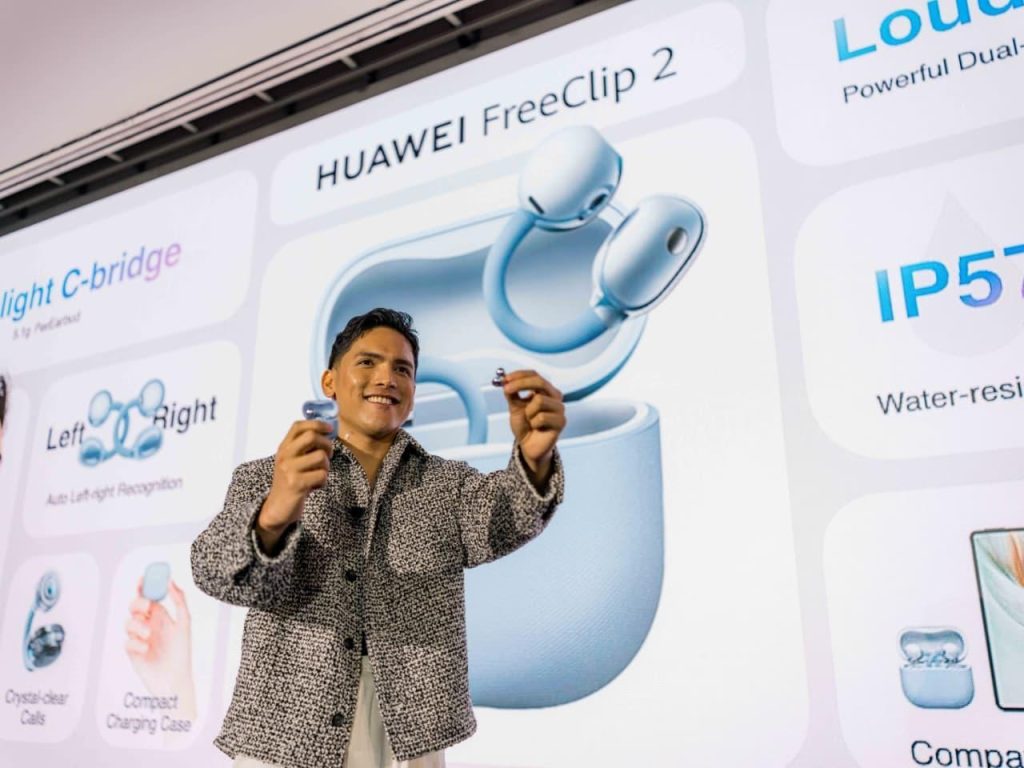
HUAWEI FreeClip 2 product presenter PJ Ragadio
To complete the innovative tech experience, HUAWEI also introduced its latest functional tech accessory — the HUAWEI FreeClip 2. Famed internet personality Kerwin King spoke about the device’s unique Airy C-Bridge design, which offers a secure, comfortable “open-ear” fit that feels weightless even after hours of use. “No matter how hard I move while working out or how long I wear it while I’m working, the HUAWEI FreeClip 2 really does not budge and always feels comfortable,” King said.
The earbuds were made with high-performance shape-memory alloy and skin-friendly liquid silicone, which makes it as fashionable as they are comfortable to wear. Internally, the HUAWEI FreeClip 2 is powered by an NPU AI Processor and a Dual-Diaphragm Driver, providing an unbeatable listening experience. Its 3-mic call noise cancellation system keeps calls crystal-clear on both ends, even when users are taking calls in the busiest settings. With an IP57 dust and water resistance, the HUAWEI FreeClip 2 can easily handle sweat and splashes. Plus, it’s 38 hours of battery life and 9 hours of listening time make these earbuds the perfect companion for all-day listening.
Upgrade your digital experience today with HUAWEI’s newest innovations
Uncover the future with the premium performance and refined innovation of HUAWEI’s newest devices. The HUAWEI Mate X7 is now available for pre-order at PHP 119,999 on Shopee, Lazada, TikTok, HUAWEI Online Store, and HUAWEI Experience Stores nationwide. For every pre-order, you can get freebies worth up to PHP 45,998, including a HUAWEI WATCH GT 5 (worth PHP 12,999), trade-in tokens worth PHP 12,000, and a 1-Time Accidental Screen Damage Protection (worth PHP 10,999) good for one year. Pay for your pre-order using select banks to get up to PHP 10,000 off. Pre-order period runs from February 19 to 26, 2026.
Starting February 19 until March 22, the HUAWEI MatePad 11.5 S 2026 will be available online and in-stores from PHP 31,999 to PHP 29,999 on Shopee, Lazada, TikTok, and HUAWEI Online Store. Early Bird Vouchers are also available, offering PHP 2,000 OFF on the HUAWEI Online Store and PHP 500 OFF on Shopee, Lazada, and TikTok. Pre-order buyers can get freebies worth up to PHP 19,896, including a HUAWEI Smart Magnetic Keyboard worth PHP 6,999, PC-level WPS Office worth PHP 4,999, a HUAWEI M-Pencil (3rd Gen) worth PHP 5,999, and a Bluetooth Mouse worth PHP 1,899.
Discover a comfortable and immersive listening experience with the HUAWEI FreeClip 2, now available for PHP 9,999 on Shopee, Lazada, TikTok, HUAWEI Online Store, and HUAWEI Experience Stores nationwide. Early Bird Vouchers are also available, offering PHP 1,000 OFF on the HUAWEI Online Store and PHP 500 OFF on Shopee, Lazada, and TikTok.

IN SUPPORT of ASEAN Foundation’s AI Ready ASEAN Programme, leading online job platform Jobstreet by SEEK joins forces with SmartCT and FilPass to help advance the Filipino workforce’s readiness and employability through free AI learning and upskilling.
The tripartite partnership, sealed through a recent memorandum of understanding signing, aligns with regional and local efforts of AI Ready ASEAN, a global initiative that seeks to empower job seekers to become future-ready and develop their digital and AI literacy in an evolving digital economy.
In a recent report released by the job platform, the majority (72%) of businesses in the Philippines now consider candidates with AI knowledge when hiring, with 36% of companies viewing AI knowledge as highly important. This underscores the need for upskilling among candidates and pursuing continuous learning related to AI.
Jobstreet by SEEK identified skills-to-jobs disconnect, AI skills gap, and trust and credential verification as critical barriers to building a future-ready workforce.
To address these barriers, each partner plays a distinct role: SmartCT, designated by the ASEAN Foundation, will deliver free specialized AI literacy training, modules, and curriculum to learners. Upon successful completion of the program, FilPass, the national strategic partner of SmartCT, will leverage its specialized technology to issue tamper-proof, verifiable digital certificates, serving as a secure proof of AI competence in the recruitment process.
AI Ready ASEAN-certified candidates can easily upload their verified credentials to SEEK Pass, Jobstreet by SEEK’s trusted digital career passport, ensuring that it is integrated into candidates’ profiles in the job platform. This not only helps candidates stand out but also enables employers to identify the right talent more efficiently. By linking verified credentials directly to profiles, the platform ensures security while significantly enhancing hirer recognition.
“SEEK Pass is one of Jobstreet by SEEK’s recent innovations designed to help Filipino job seekers stand out in a changing world of work. Through this platform, we at Jobstreet by SEEK aim to support the AI Ready ASEAN Programme by helping learners gain a clear path to meaningful opportunities,” shared Dannah Majarocon, Managing Director of Jobstreet by SEEK.
SmartCT is a trailblazing technology non-government organization that specializes in advancing digital transformation and empowering youth, women, MSMEs, and local governments across the Asia Pacific.
FilPass is a document issuance and verification system that creates and stores digital credentials for individuals, providing them with trusted proof of their skills.
The Department of Education (DepEd) also graced the MOU signing to recognize the vital role of the partnership in equipping Filipino candidates with AI literacy and how it aligns with the government’s current program, PROJECT AGAP.AI, the sector’s commitment to providing learners, teachers, and stakeholders access to innovative learning that will help them leverage artificial intelligence.

SAN FERNANDO & GUAGUA, Pampanga — A new chapter in cancer care begins with the opening of Beacon of Hope San Fernando and Beacon of Hope Guagua, two new chemotherapy facilities designed to expand access to compassionate, high-quality, and free cancer treatment services across the province of Pampanga.
From the moment patients step through its doors, they will notice the difference. The atmosphere is warm and welcoming, with friendly smiles, compassionate conversations, and a team of professionals who see each patient as a person first — not just a diagnosis. The center’s philosophy is rooted in holistic care, recognizing that healing is not only physical but also emotional, spiritual, and social.
The launch of these two branches marks a significant milestone in We Hope Medical Group’s mission to bring patient‑focused, affordable, and reliable healthcare closer to Filipino families. Beacon of Hope facilities are built to serve as safe, welcoming spaces where individuals and families can receive timely care, free treatment services covered by Philhealth, and health education.
“Beacon of Hope represents our commitment to uplifting communities through accessible and free, dignified healthcare. By opening branches in San Fernando and Guagua, we are strengthening our promise to deliver medical services that empower patients and support healthier futures for Kapampangans,” said Dr. John Paul Aclan, chairman and CEO.
The visionary entrepreneur who builds different health service verticals for LGUs, which include Chemotherapy Centers, Eye centers, Dialysis, Laboratory, and diagnostics, PT OT Rehabilitation centers, and addiction rehabilitation centers
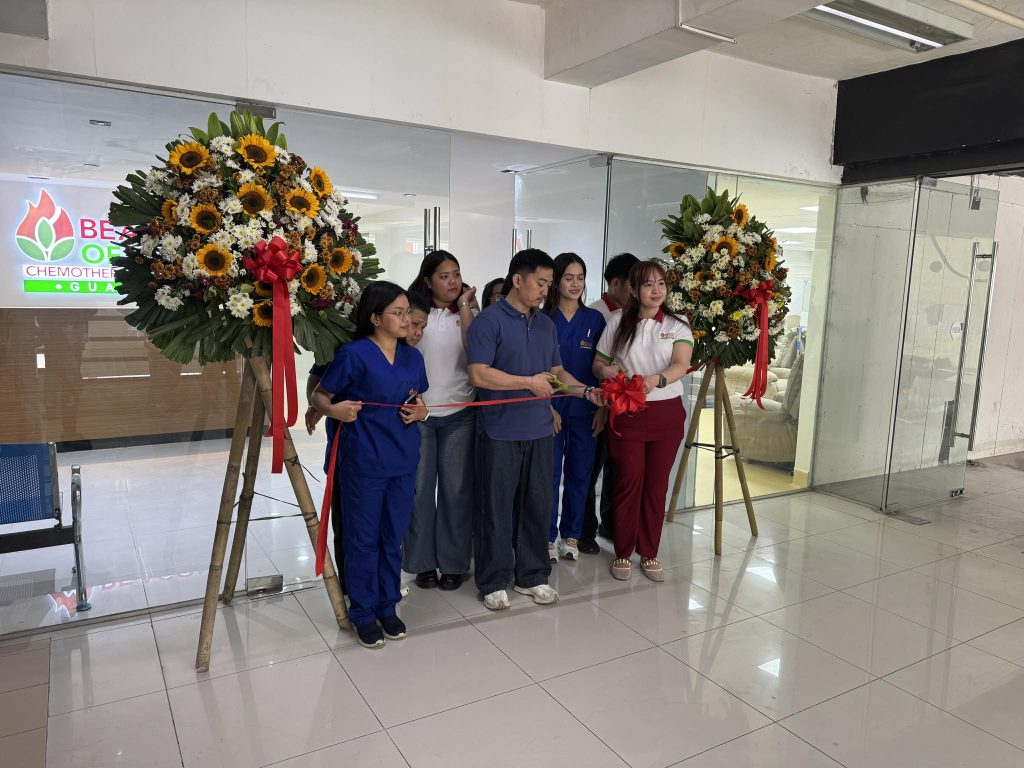
Both new branches will offer a comprehensive range of services, including:
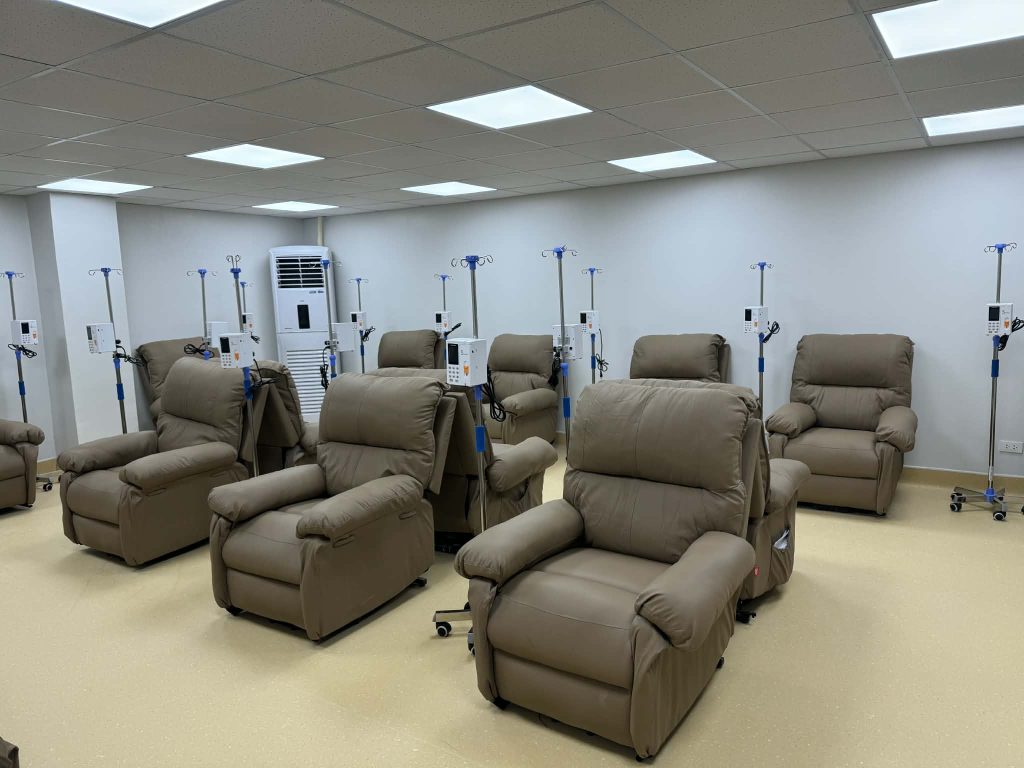
Each facility is staffed by licensed medical professionals trained to provide patient-centered care rooted in empathy, respect, and clinical excellence. For families facing the uncertainty of cancer, the Beacon of Hope Chemotherapy center offers more than medical expertise — it offers partnership in the journey toward healing.
The official opening marks the beginning of a new era in Pampanga’s healthcare landscape, one where advanced medicine meets boundless compassion.
With its blend of cutting‑edge technology, holistic care, and unwavering commitment to accessibility, the We Hope Medical group is set to become a beacon of hope — a place where every patient receives not only the best possible treatment but also the dignity, respect, and support they deserve.

INTEREST in cryptocurrency continues to grow among Filipinos, with 96% showing awareness and over half expressing intent to invest within the year, according to a 2025 Consensys survey. Despite this high curiosity, many remain cautious and unsure where to begin.
To help everyday Filipinos take their first confident step into the world of crypto, finance super app GCash launches “A Beginner’s Guide to Cryptocurrency”, a free and exclusive in-app introduction to cryptocurrency, written and illustrated by Luis Buenaventura, head of GCrypto. Buenaventura, a Filipino crypto author, artist, and entrepreneur, is widely recognized as a pioneer in the local and global crypto scene.
The Filipino-focused, narrative-style guide breaks down complex concepts like Bitcoin, wallets, and volatility through familiar and practical examples like inflation and daily budgeting, making the topic more approachable for crypto newbies.
“Storytelling makes learning personal and relatable. By grounding financial concepts into everyday examples, we aim to make complex topics like crypto approachable for anyone,” said Buenaventura.

Crypto: From making sense to making moves
Divided into eight chapters, the guide takes users through the fundamentals of crypto in a practical, easy-to-follow format that reflects the real financial experiences of Filipinos. It starts with why cryptocurrency was developed–tracing its roots to real-world economic challenges, particularly inflation and its impact on people’s savings and purchasing power. From there, it walks readers through Bitcoin’s rise and volatility.
“Understanding why crypto matters is the first step to learning how to use it wisely,” Buenaventura noted. “By helping them understand the balance of ‘high risk, high reward,’ we aim to set realistic expectations before they dive into actual investing.”
Once readers have a grasp of cryptocurrency, the book guides them towards taking their first careful step into investing. It emphasizes the importance of building traditional savings, maintaining diversified investments, and treating crypto as a complement—not a replacement—to other financial foundations.
The succeeding chapters explore the tools and mindsets needed to invest responsibly. It explains wallet apps, satoshis, and trading basics, and introduces other cryptocurrencies beyond Bitcoin, such as Ethereum, Solana, stablecoins, and high-volatility memecoins.
It also dives into the mindset behind investing, tackling topics like moments of doubt, the importance of discipline, and the value of long-term thinking. Ultimately, it brings the conversation back to purpose—that crypto should serve real-life goals, helping Filipinos fund dreams, support their families, and celebrate financial progress responsibly.
“Our goal is to educate Filipinos on the responsible use of cryptocurrency, enabling them to take confident, informed steps into the future of finance,” Buenaventura added.

Crypto na Gets Mo
Accessible with just a few taps, “A Beginner’s Guide to Cryptocurrency” is now available through GCrypto, a secure marketplace within the GCash app where users can buy, sell, and learn about crypto safely.
“By publishing the book directly on the GCrypto platform, users can learn and explore at their own pace within a secure environment. This helps Filipinos build confidence and make informed decisions as they navigate the world of crypto,” said Buenaventura.
With streamlined registration, low minimum investment options, and a curated selection of reputable coins reviewed by security experts, GCrypto aims to make cryptocurrency more accessible and less intimidating for Filipino users.
Users can register and begin trading with just their fully verified GCash account, with no separate onboarding required. With investment entry points starting at just ₱200, GCrypto lowers the barrier for participation in the digital economy.
The platform also offers a carefully curated portfolio of trusted cryptocurrencies, helping users make informed choices among reputable coins vetted for security and reliability. It also supports seamless conversion between pesos and crypto, as well as blockchain transactions for sending and receiving funds, all within the GCash app.
Users can access the book by opening the GCash app, tapping ‘Grow,’ and selecting GCrypto.

MANILA — The Philippines has emerged as Asia’s leader in sustainable food sourcing, with seven out of 10 major restaurant brands and nearly 80% of chain restaurant locations in the country now committed to eliminating the use of caged eggs, according to the 2025 Philippines Restaurant Industry Cage-Free Egg Scorecard, released by Lever Foundation.
Of 67 leading restaurant brands evaluated—representing the vast majority of the Philippines’ dining landscape—47 chains operating 11,277 locations have pledged to fully transition to cage-free eggs. This represents 78% of all chain restaurant locations nationwide—the highest concentration in Asia.
This total includes brands that have already completed their transition, such as Nanyang and Peri-Peri, along with many of the industry’s biggest names, which have set timelines to implement 100% cage-free sourcing in the years ahead. Filipino favorites, including Jollibee, Max’s, Chowking, Mang Inasal, Red Ribbon, Greenwich, and Shakey’s, have made pledges, alongside international giants such as KFC, Dunkin’, Pizza Hut, Subway, and Burger King.
“The Philippines restaurant industry has demonstrated remarkable leadership in adopting cage-free egg policies,” said Robyn Del Rosario, sustainability program lead at Lever Foundation, an international NGO that collaborated with all of the domestic restaurant groups and a number of international groups in developing their policies. “With 70% of major restaurant brands—representing 78% of chain restaurant locations across the country—already committed to cage-free egg sourcing, we’re witnessing the sector’s recognition that animal welfare, food safety, and sustainability are essential business priorities.”
The shift to cage-free eggs addresses both animal welfare and food quality. Cage-free systems allow hens to move freely and engage in natural behaviors such as nesting, perching, dust-bathing, and short flights in indoor barn environments—behaviors completely restricted in conventional battery cage systems where hens spend their entire lives in spaces smaller than a sheet of paper.
Dozens of peer-reviewed scientific studies have documented that hens raised outside cages produce eggs with improved food safety profiles, higher nutritional value, and better quality metrics. The Philippine government recognized this shift in 2020 when the Bureau of Agriculture and Fisheries Standards developed comprehensive animal welfare guidelines for cage-free eggs. Meanwhile, an increasing number of consumers are opting for plant-based alternatives, choosing to leave eggs off their plates entirely as the best way to support hen welfare.
The momentum in the country’s restaurant sector accelerated significantly over the past year, with three major restaurant groups setting cage-free egg policies for a combined 2,140 locations. These groups are 333 Foods (operating BreadTalk, Nanyang, and Banana Leaf), Max’s Group (operating Pancake House and Yellow Cab), and Century Pacific Food, Inc. (operating Shakey’s, Potato Corner, and Peri-Peri).
Only 20 of the leading chain restaurant brands in the country still serve caged eggs to their customers, with no timeline for shifting to cage-free. These include Goldilocks (which publicly pledged to set a cage-free egg policy by the end of 2025, but failed to do so), Army Navy, Wildflour, Nono’s, Italianni’s, McDonald’s, and Starbucks.
The 2025 Philippines Restaurant Industry Cage-Free Egg Scorecard evaluates companies on a four-tier scale: A (100% cage-free egg implementation achieved in the Philippines), B (global cage-free egg commitment and timeline), C (Philippines-specific cage-free egg commitment and timeline), and F (no cage-free egg policy in the Philippines).
“The transformation we’re seeing is remarkable, and we’re eager to collaborate with the remaining companies and share the learnings from industry leaders who’ve already made successful commitments,” said del Rosario. “The path forward is clear, and we’re confident more brands will catch up with this industry-wide shift in the year ahead. Cage-free sourcing is not just a more ethical choice—it’s becoming the baseline expectation from consumers and the competitive standard in the Philippines.”

MAWAB, Davao de Oro — The Municipal Government of Mawab continues to strengthen and bring essential health services closer to the people, with postpartum care now delivered directly to households across the municipality.
The Municipal Health Office (MHO) has been conducting sustained medical outreach services in various barangays to ensure that every Mawabeño has access to quality healthcare. A key component of this initiative is the home visitation of mothers who have recently given birth, ensuring proper medical attention, guidance, and regular monitoring under the municipality’s Postpartum Care Program.
This people-centered health initiative is carried out in close coordination with various local offices and community partners. The local government also acknowledged the dedicated efforts of Bob Mirasol, the Anti-Drug Abuse Council (ADAC) Coordinator of Mawab, whose commitment and hard work have contributed to strengthening community-based programs, including support systems that promote healthier and safer families.
Mayor Myrill Apit emphasized that accessible healthcare is a priority of his administration and should reach families where they are most needed.
“Our goal is simple: to ensure that no mother, no child, and no family in Mawab is left behind. By bringing health services directly to our communities and households, we make healthcare more responsive and compassionate. This is made possible through the dedication of our health workers and coordinators like Bob Mirasol, who work tirelessly at the grassroots level,” Apit said.
The initiative follows the mayor’s directive to decentralize and strengthen health services, making them available beyond health facilities and into barangays and homes. The postpartum home visits help ensure early detection of complications, proper recovery of mothers, and the overall well-being of newborns.
The Municipal Health Office clarified that this is not a one-time activity but a sustained and regular program, ensuring continuous medical support down to the household level.
Through the collective efforts of local health workers, program coordinators, and community partners, the Municipality of Mawab reaffirms its commitment to delivering inclusive, accessible, and people-centered healthcare — reaching every home and caring for every Mawabeño.