

BY ACE CYRELLE PAGLINAWAN/CMU Intern
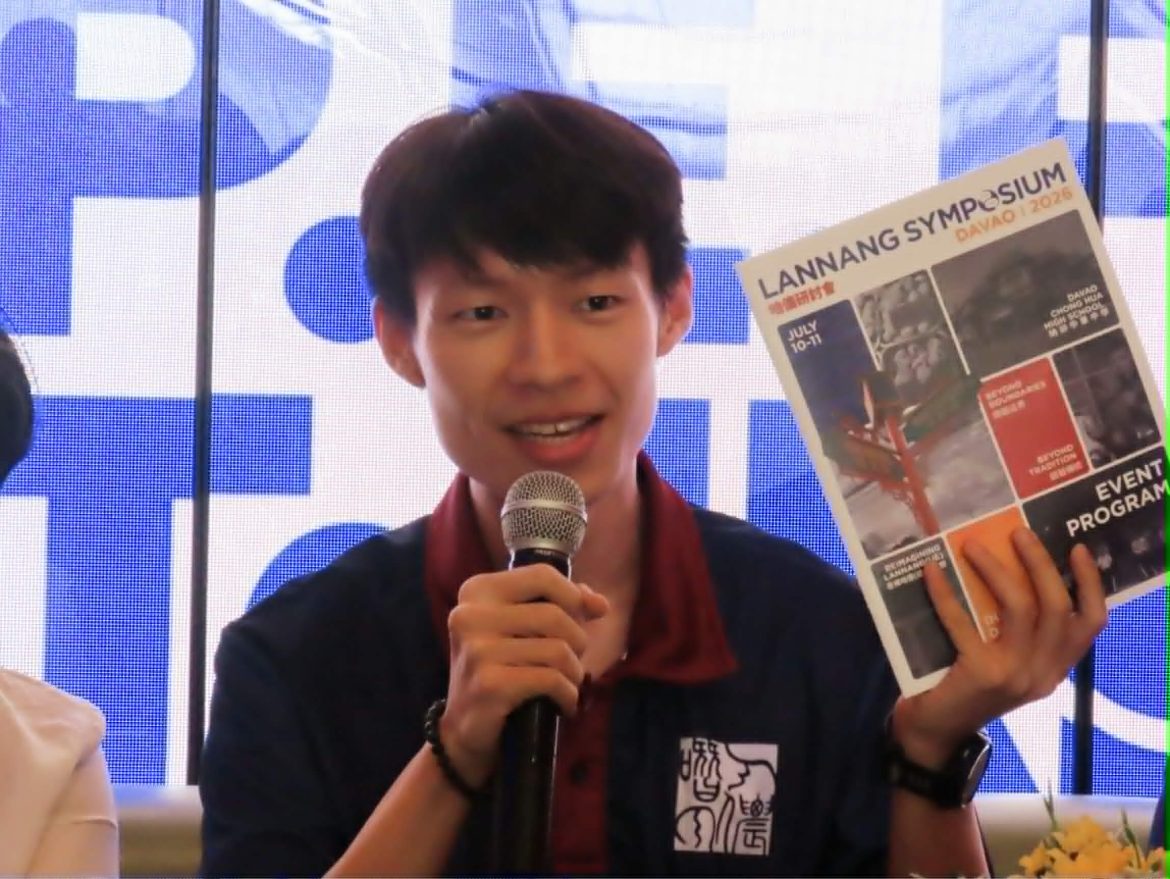
THE LANNANG Symposium will be held in Davao City for the first time this year as organizers continue their efforts to preserve and revitalize the Lánnang language (Philippine Hokkien) and strengthen cultural ties within the Chinese-Filipino community.
Speaking during a session of PEP Talks at SM Lanang on June 26, Laurence Lu said the two-day symposium is scheduled on July 10 and 11 at Davao Chonghua High School. The event is organized by Lannang Archives in partnership with Kaisa Para sa Kaunlaran and Davao Chong Hua High School.
“Lannang” refers to the Chinese-Filipino, or Chinoy community, particularly Hokkien-speaking people in the Philippines, Lu explained. The term is also used by members of the community to refer to themselves and their language, Lánnang-uè, also known as Philippine Hokkien.
Lu said the symposium, which began in 2024 at the University of the Philippines Diliman and was held in Manila in 2025, is making its first stop in Davao this year.
“We’re excited to bring this here in Davao for the first time,” Lu said.
The symposium will feature 14 workshops over two days, covering language learning from beginner to advanced levels, alongside discussions on identity, belonging, family language practices, and issues affecting the Lannang community.
“Everyone is welcome, whether you have Chinese heritage or not, or if you are just interested and want to learn the language or reconnect to your roots. Everyone is welcome,” he said.
He also shared that the presence of a unique Chinese language in the Philippines reflects the country’s long history of Chinese migration and cultural exchange. Many Filipinos with Chinese ancestry have become deeply integrated into local communities, while retaining elements of their linguistic heritage.
“There are a lot of people here who have Chinese surnames but are very much Bisaya. That’s really the reality—we have a lot of people with Chinese heritage,” Lu said.
He added that the relationship between Filipino languages and Lánnang-uè has been shaped by years of interaction, with Chinese words becoming part of everyday Filipino vocabulary and Filipino words likewise being incorporated into the Lannang language.
Beyond language instruction, he said the symposium aims to encourage dialogue, strengthen community ties, and inspire participants to help preserve the language and culture for future generations.