BY ALEX ALAGON
the hague
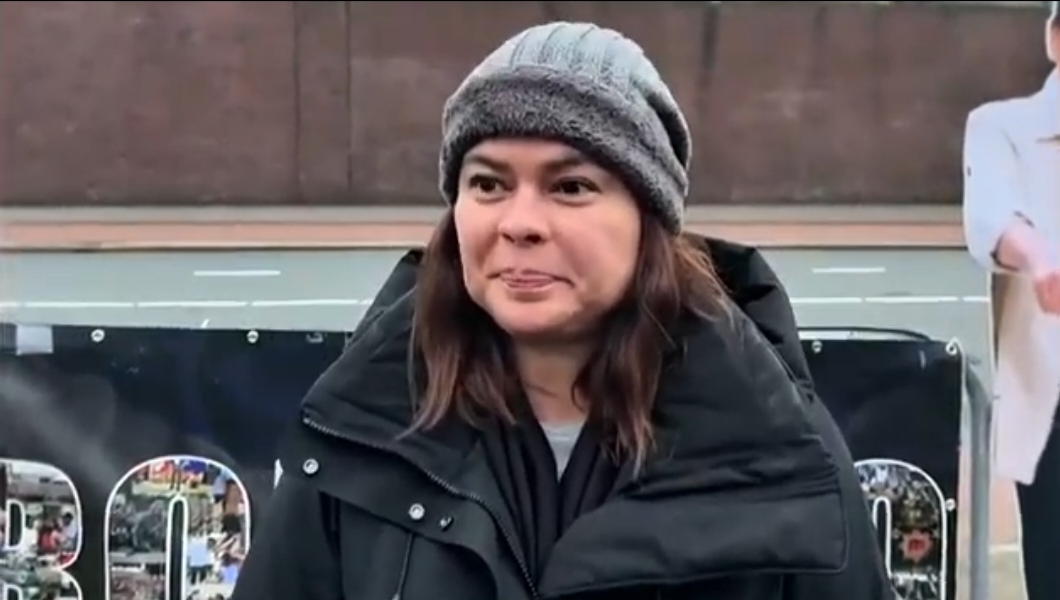
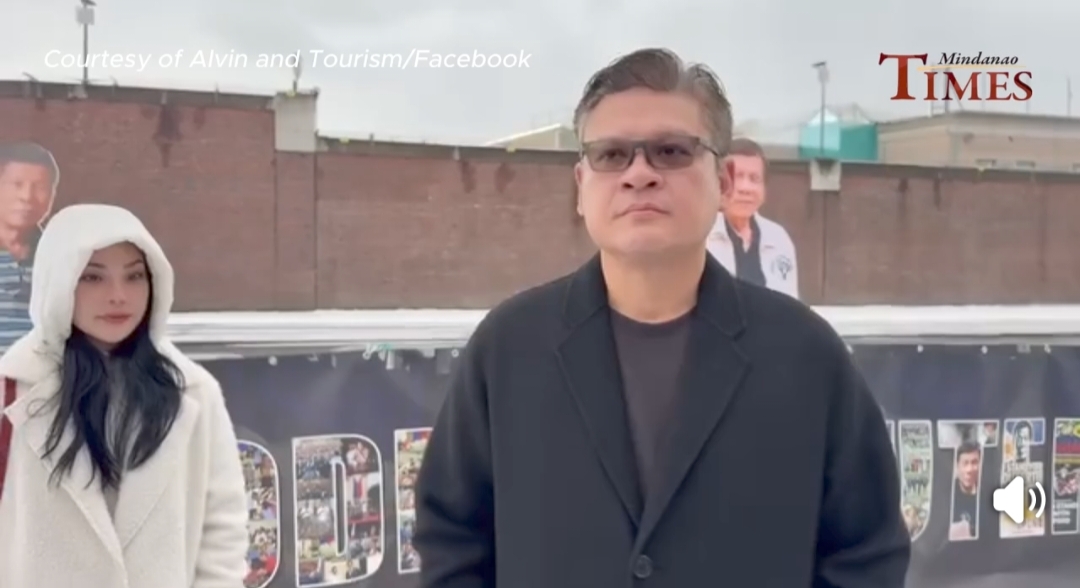
VICE PRESIDENT Sara Duterte refused to dignify the allegation that she threw a laptop at a colleague, specifically Atty. Michael Poa, calling it “trash gossip” and “disinformation” orchestrated by political opponents.
In an interview held in The Hague, the Vice President asserted that such an incident had never occurred in her professional history.
Duterte claimed that she rarely uses a laptop because she is not tech-savvy.
“I don’t use a laptop because I don’t know how to… use a computer,” Duterte said in Filipino.
She explained that she relies on her office staff for document processing, only utilizing a laptop for Zoom meetings to maintain a professional image.
The Vice President further noted that the laptop she owns is a personal purchase, claiming it was “too expensive” for the government to afford.
“The government couldn’t afford the laptop I wanted… so I bought it myself,” she said. “I don’t throw things at people, and secondly, I wouldn’t throw my laptop because it’s personal; if it breaks, I’m the one who has to pay for a new one.”
Duterte said this is part of a broader campaign to paint her as unstable or incompetent. She listed several labels she claims have been unfairly pinned on her, including “crazy,” “pro-China,” “corrupt,” and “a brat.”
“They want to push a narrative that I’m unstable,” the Vice President stated, adding that while the rumors are “baseless,” they are being consumed on social media to favor her political enemies.
Duterte is currently in the Netherlands for a tourism-related engagement, even as political tensions remain high back in the Philippines.
‘The money is gone’
Meanwhile, Duterte warned that the Philippine government is on the brink of a functional collapse as its national coffers are so depleted that district allocations for lawmakers are already effectively “zero.”
Addressing rumors that lawmakers fear losing their local funding if they side with her, Duterte said they are worried about losing something that does not exist.
“It’s really zero now. There’s no money left,” Duterte said in Filipino. “Whether there is an impeachment or not, there is no more money that can be given.”
mOOE vs. essential services
The Vice President cited the Maintenance and Other Operating Expenses (MOOE) typically allocated to individual congressional districts. She suggested that prioritizing these “parked” funds over the broader needs of the bureaucracy is a recipe for disaster.
“If they still give congressmen their MOOE funds [at the expense of others], the government will no longer be able to function,” she warned, adding that legislators may be chasing “phantom” budgets.
The statement comes as the 2026 national budget faces intense scrutiny, with a widening deficit reported in the first quarter of the year and ongoing debates over “unprogrammed appropriations” and congressional insertions.
Meanwhile, the government has yet to respond to the said statement.
Duterte defense team rallies supporters for ‘greatest’ 81st birthday celebration for FPRRD
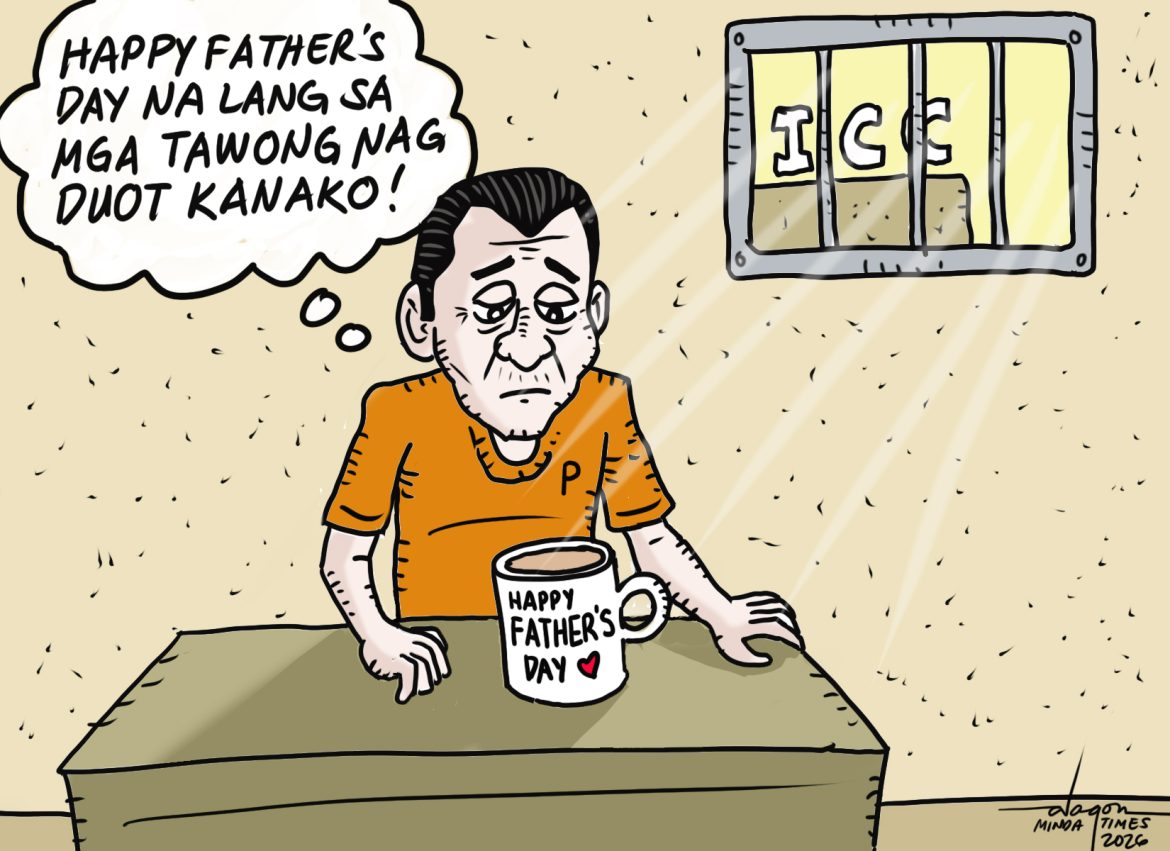
THE LEGAL defense team of former President Rodrigo Roa Duterte asked supporters to join the detained leader’s 81st birthday celebration at The Hague on March 28.
In a statement, the defense team sought to reassure the public that Duterte remains informed of the outpouring of support from the Philippines.
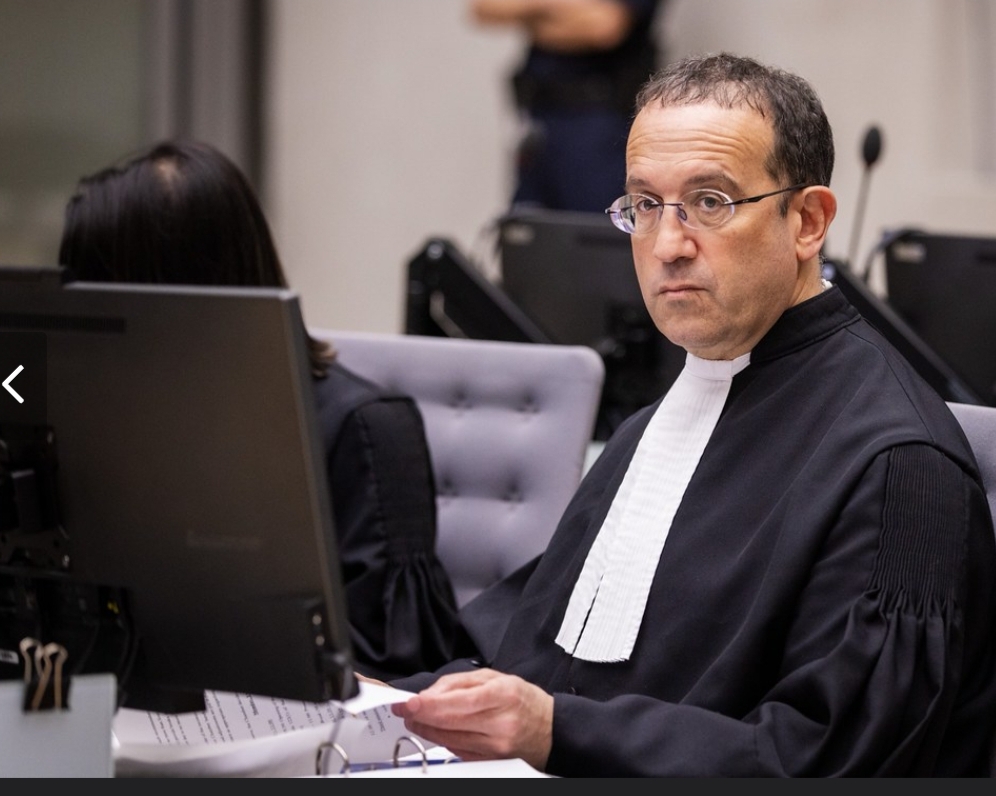
“The Duterte defense wants the former President’s supporters to know that not one greeting goes unnoticed and every one is brought to his attention,” Lawyer Nicholas Kaufman said. “We are providing just a small selection, and we hope that 28 March 2026 will be the greatest birthday celebration anyone has ever had.”
A Birthday behind bars
The message comes as Duterte marks his second birthday since being detained at the International Criminal Court (ICC) detention facility in the Netherlands.
The former president is currently awaiting a decision from the Pre-Trial Chamber on whether there is sufficient evidence to proceed to a full trial regarding his administration’s anti-drug campaign.
Coinciding with Araw ng Davao
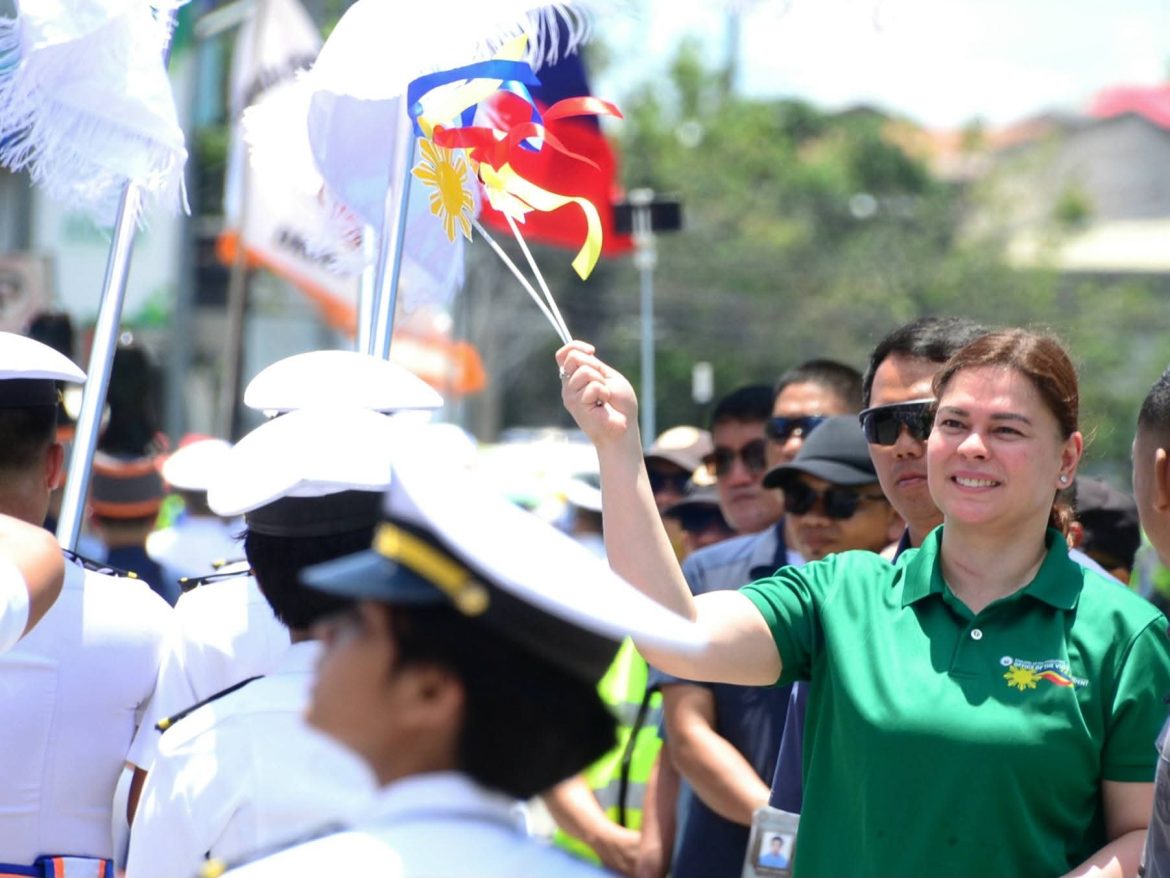
In his hometown, the celebration carries extra weight. March 28 coincides with the grand Parada Dabawenyo, a centerpiece of the 89th Araw ng Dabaw festivities.
Vice President Sara Duterte previously confirmed her attendance at the parade, noting that her presence in the city is a dual commitment to the community and her father’s milestone.
Davao City officials have clarified that the scheduling of the parade was incidental, driven by the logistics of the Ironman 70.3 event this week. However, supporters are expected to turn the civic parade into a massive show of force for the elder Duterte.
PNP on high alert
The Philippine National Police (PNP) has already shifted to a heightened security posture in different areas in the country, particularly in Davao and Metro Manila.
With the defense team’s call for a “greatest celebration,” authorities are preparing for large crowd dispersals and rallies calling for the former President’s return to the Philippines.
As of press time, the defense team continues to review “thousands” of digital and physical messages from supporters to be shared with the former President during his scheduled visitation hours in Scheveningen.
Duterte legal team withdraws bid to appeal confidential ICC ruling on victims’ counsel
THE DEFENSE team for former President Rodrigo Duterte has formally withdrawn its request to appeal a confidential decision by the International Criminal Court (ICC).
In a notification filed on March 16, 2026, lead counsel Nicholas Kaufman informed the Pre-Trial Chamber I that the defense would no longer pursue an appeal of an order dated March 13.
While the specific March 13 decision remained confidential, it was linked to the defense’s persistent efforts to disqualify the Common Legal Representatives for Victims (CLRV).
The defense had previously raised concerns over a “conflict of interest” regarding Filipino lawyers, Atty. Joel Butuyan and Atty. Gilbert Andres, as well as their case manager, Atty. Nicolene Arcaina.
Kaufman’s team had argued that the current legal representation for the victims posed an “impediment to representation” and potentially compromised the fairness of the proceedings.
Without prejudice
The withdrawal is notably “without prejudice,” a legal term meaning the defense reserves the right to raise these concerns again in the future.
The Pre-Trial Chamber noted that the notification was made:
“…without prejudice to any further recourse available to the Defense in order to raise the issue of what it perceives to be an impediment to representation on the part of the Common Legal Representatives for Victims.”
Context of the case
This procedural movement comes as the ICC continues to evaluate the confirmation of charges against the former president for alleged crimes against humanity during his administration’s “War on Drugs.”
Duterte, who has been in ICC custody in The Hague since March 2025, has consistently challenged the court’s jurisdiction and the impartiality of the personnel involved.
Observers suggest the withdrawal of this specific appeal may be an attempt to streamline the defense’s focus as the court nears a decision on whether the case will officially proceed to a full trial.
IF PRRD were still here leading the Philippines today, how different would things be?
March 11th marks a date that many Filipinos who supported Rodrigo Roa Duterte will never forget. It has been one year since the former President was brought to The Hague to face proceedings before the International Criminal Court. For his critics, it was a long-awaited moment of accountability. For his supporters, it felt like something far more painful — the sudden removal of a leader they believed fought fiercely for the country.
One year later, the world continues to face uncertainty. The geopolitical tensions in the Middle East are once again pushing global oil prices upward. For a country like the Philippines, which relies heavily on imported fuel, every increase in oil prices quickly finds its way into daily life. Transportation fares rise. Food prices follow. Electricity costs creep upward. For ordinary Filipinos already trying to stretch every peso, the impact is immediate and real.
At the same time, the Philippine peso continues to feel the pressure of a strong U.S. dollar. The exchange rate fluctuations remind us how interconnected our economy is with global forces beyond our control. When the peso weakens against the dollar, imported goods become more expensive, businesses struggle with rising operational costs, and consumers carry the burden through higher prices.
In moments like these, it is natural for people to look back and ask questions about leadership. During the height of the pandemic, Duterte governed during one of the most chaotic periods in modern global history. The COVID-19 crisis disrupted economies, strained healthcare systems, and challenged governments worldwide. Whether one supported or opposed his policies, it cannot be denied that his administration faced a crisis that tested every leader across the globe.
Today, as oil prices rise again and the peso continues to fluctuate against the dollar, some Filipinos quietly wonder how he might have responded if he were still in office. Duterte was known for speaking bluntly about global politics and for projecting a leadership style that emphasized decisiveness and national sovereignty. His supporters often recall how he confronted international pressures head-on and framed economic challenges as matters requiring firm political will.
But beyond economics and politics lies something deeper, memory. Leadership, after all, is not measured only by policy outcomes or exchange rates. It is also measured by the emotional imprint a leader leaves on the people. For many Filipinos, Duterte was not simply a president. He was “Tatay Digong,” a figure who spoke in the language of ordinary citizens and who projected the image of someone willing to take risks for what he believed was right.
One year after The Hague, the debate around Duterte remains intense. Critics continue to demand accountability and justice. Supporters continue to defend what they see as a misunderstood presidency. Between these opposing views stands a nation still navigating its own questions about governance, sovereignty, and the kind of leadership it wants in times of crisis.
History has a way of revisiting these questions whenever new challenges emerge. Oil prices rise. The peso weakens. Global tensions escalate. And inevitably, the public reflects on past leaders and wonders how different decisions might have shaped the present.
Whether one views Duterte as a controversial figure or a steadfast defender of national interest, his impact on Philippine political life remains undeniable. A year after his transfer to The Hague, his name still surfaces in conversations about leadership, crisis, and the direction of the nation.
Perhaps that is the enduring power of political legacy. Even after the office is gone, the questions remain.
And now, the question naturally lingers in the hearts of many: What would Tatay Digong do if he were still in Malacañang? Would he confront the crisis with the same firmness? Would he speak directly to the people and assure them that the government is working for their welfare?
Kethelle I. Sajonia is a college instructor at the University of Southeastern Philippines, Mintal Campus. She is currently in the final phase of her Doctor of Communication degree at the University of the Philippines. Her research interests include inclusivity, education, communication, and social development. She actively engages in scholarly research and community-based initiatives that advocate for inclusive and transformative communication practices.
LAST Friday, the International Criminal Court concluded the confirmation of charges hearing in the case against Rodrigo Duterte. Now, we wait. Sixty days. Sixty long days for a decision that will not only shape a legal outcome but also stir the emotional landscape of a nation deeply divided.
When I listened to Atty. Nicholas Kaufman’s closing statement, I felt something crack open inside me:
“And we hope that when you conclude your deliberations, your honors, and you will dismiss these grievously misplaced and politically motivated charges, we ask you to send Rodrigo Duterte back to his family, and we will ask you to give back to the Filipino people their Tatay Digong.”
I had to pause the video.
Not because I am blind to the gravity of the accusations. Not because I dismiss the rule of law. But because of the weight of memory. Because of the spaces in my heart that speak.
For many of his supporters, he is not just a former president. He is Tatay Digong — the father-figure leader who spoke in rough edges but carried what they believed was fierce love for the country. The language was raw. The tone was unfiltered. The policies were controversial. But for millions, he represented decisive action in a country long tired of paralysis.
And now, to see him in a courtroom far from home, elderly, silent, under international scrutiny, evokes a different image than the one burned into the memory of his supporters. The strongman persona is replaced by something more fragile: a man waiting for judgment.
I am not writing this to argue jurisprudence. Lawyers will do that. Judges will deliberate. International law will take its course. The International Criminal Court exists precisely for moments like this, to determine whether charges meet the threshold for confirmation, whether evidence sustains allegations, and whether a trial should proceed.
But beyond legal thresholds are emotional ones.
For supporters, this moment feels like a loss. It feels like humiliation on the world stage. It feels like a father being questioned before strangers. That is the language they use — and language matters. I know, because I have written poems before about him. I have written about the iron in his voice, the weary tenderness hidden in harsh rhetoric, the paradox of strength and vulnerability.
When Atty. Kaufman said, “Give back to the Filipino people their Tatay Digong,” It was not merely a legal plea. It was a symbolic appeal. It acknowledged that beyond the docket numbers and procedural motions lies a constituency that feels personally wounded.
Yet this is also a moment for reflection.
Leadership invites loyalty. It also invites accountability. A democracy — even a flawed one — must be mature enough to hold both truths at the same time. We can feel pain while respecting the process. We can grieve while acknowledging that institutions exist to examine allegations, not to persecute blindly nor to absolve sentimentally.
The waiting will be difficult. Sixty days can stretch into an eternity when emotions are involved. Every headline will reopen wounds. Every commentary will polarize timelines. Every social media thread will divide families and friendships.
But perhaps this is also a space that speaks to who we are becoming as a nation.
Are we capable of allowing due process to unfold without tearing each other apart? Can we hold empathy for supporters without dismissing the voices of victims? Can we sit with discomfort instead of weaponizing it?
I do not pretend neutrality of emotion. I feel the ache that many supporters feel. I feel the heaviness of uncertainty. I feel the memory of poems once written in conviction. And I feel the trembling hope embedded in that courtroom plea, that history will be kinder, that deliberations will be fair, that whatever decision comes will not fracture us beyond repair.
In the end, the decision will arrive.
Either the charges will move forward to trial, or they will not. Either way, the Philippines will continue. What remains to be seen is whether we emerge smaller in bitterness or larger in maturity.
For now, we wait.
And in the quiet of waiting, the spaces speak.
Kethelle I. Sajonia is a college instructor at the University of Southeastern Philippines, Mintal Campus. She is currently in the final phase of her Doctor of Communication degree at the University of the Philippines. Her research interests include inclusivity, education, communication, and social development. She actively engages in scholarly research and community-based initiatives that advocate for inclusive and transformative communication practices.
VICE PRESIDENT Sara Duterte has called on Filipinos to continue their moral support and prayers for her father, former President Rodrigo Roa Duterte, as his legal battle before the International Criminal Court (ICC) enters its second year.
In an interview conducted on Jan. 29, the Vice President confirmed that she remains in close contact with the former leader, who has been in ICC custody since March 2025.
Addressing rumors regarding dissatisfaction with the former president’s defense team, VP Duterte clarified that there are no plans to replace his current lawyers. She noted that while her father has provided specific instructions to the team led by Atty. Nicholas Kaufman, those details remain confidential.
“He said it’s not about replacing them,” the Vice President shared, explaining that her father remains engaged with the legal process despite the ongoing jurisdictional challenges being reviewed by the Appeals Chamber.
A message to supporters on ‘Duterte Street’
The vice president expressed deep gratitude for the “Duterte Street” supporters—Filipinos living in or traveling to the Netherlands who gather to show moral support.
“I am thankful because it’s been almost a year, and I’m sure it will go beyond another year,” she said. “They spend their own money to come here and show support to the whole world, not just here in the Netherlands”.
She emphasized that this presence significantly impacts the former President’s morale:
The Vice President noted that the daily presence of supporters helps maintain her father’s spirits while in detention.
She shared a lighthearted moment where the former president asked if the people outside still greet her, to which she confirmed that the Filipino community remains warm and welcoming.
As the ICC Appeals Chamber, presided over by Judge Luz del Carmen Ibáñez Carranza , considers new defense submissions regarding the Court’s authority to exercise jurisdiction after the Philippines’ withdrawal, the Vice President urged supporters to stay grounded in faith.
“The most important thing is prayer, because the power of prayer is very strong when many people pray together,” she concluded.
1ST DISTRICT Rep. Paolo “Pulong” Duterte said on Tuesday, Jan. 6, that the family is prepared for a renewed wave of attacks against Vice President Sara Duterte as the Feb. 6 deadline looms—the date when the “one-year bar rule” for impeachment expires.
Under Article XI, Section 3(5) of the 1987 Philippine Constitution, impeachment proceedings cannot be initiated against the same official more than once within a period of one year.
In 2025, the Supreme Court nullified previous impeachment attempts against VP Sara Duterte, ruling that the House of Representatives had violated this rule and the respondent’s right to due process.
The Court explicitly set Feb. 6, 2026, as the earliest date any new complaint could legally be filed.
Speaking from The Hague, where he is currently visiting his father, the congressman dismissed the potential complaints as “recycled” political maneuvers.
“If they have an attack planned for us, we are ready. Just ready. If they have a tank for war, we have a wall. That’s just how it is,” the lawmaker said. “The world will turn back around in a few days.”
He maintained that the Commission on Audit has already cleared the vice president of allegations related to the use of confidential and intelligence funds—a key focal point of previous impeachment efforts.
Rep. Duterte is expected to return to the country shortly to resume his legislative duties while his father remains in the Netherlands under the jurisdiction of the International Criminal Court.
THE YEAR 2025 will be etched into the history of the Davao Region as a period of unprecedented seismic shifts—political, legal, and literal.
For Davaoeños, it was a year where the headlines didn’t just report on the world; they brought the world’s most intense scrutiny to the city’s doorstep.
The Hague: A former president behind bars

The most tectonic political event occurred on March 11, 2025, with the arrest of former President Rodrigo Duterte. The 79-year-old leader was apprehended at Ninoy Aquino International Airport upon his return from Hong Kong and whisked off to the International Criminal Court (ICC) detention facility in The Hague.
As the year ends, the Duterte family remains vocal in their grief.
On Dec. 22, Veronica “Kitty” Duterte stood outside the detention center, revealing a “no-visit” policy for the holidays.
While his new legal team, led by Nicholas Kaufman, prepares for a January 2026 fitness hearing citing “cognitive decline,” the city he built remains deeply polarized between those demanding international justice and those who remain fiercely loyal.
The Manila-Davao rift: Impeachment and nullification
Political instability rippled from Davao to the capital. On Feb. 5, 2025, Vice President Sara Duterte became the first VP to be impeached by the House of Representatives. However, the legal victory for her detractors was short-lived.
In a landmark 13-0-2 decision on July 25, the Supreme Court nullified the impeachment, ruling that the House violated the “one-year bar rule” and the VP’s right to due process.

The decision proved to be a temporary reprieve; as the constitutional ban expires on Feb. 6, 2026, civil society groups are already sharpening their pens to refile.
IGlobal terror, local shadows: The Bondi Beach link
Security became a front-page concern in December when a tragic mass shooting at a Hanukkah festival in Bondi Beach, Sydney, was linked back to Davao.
Sajid and Naveed Akram, the father-and-son duo who killed 15 people in Australia, were confirmed to have stayed at a GV Hotel in Davao City for nearly a month (Nov. 1–28) before their attack.
While Brig. Gen. Leon Victor Rosete (PRO-XI) launched intensive “backtracking” operations; the Australian Federal Police later suggested the pair acted alone.
Still, the incident reignited debates over Mindanao being a potential ISIS “training ground”—a claim the Eastern Mindanao Command (EastMinCom) continues to deny vigorously.
Tactical Wins: A region declared ‘NPA-free’
Amid the security anxiety, the military recorded its most significant victory in decades.
On June 18, 2025, the 10th Infantry “Agila” Division officially declared its entire operational area free of active New People’s Army (NPA) combatants.

Following the arrest of the last Southern Mindanao Regional Committee (SMRC) remnants in Agusan del Sur, Major Ruben Gadut, the 10th Infantry Division Public Affairs Office chief highlighted that Davao had transitioned from harboring 16 guerrilla fronts to zero.
The military now shifts its focus to monitoring “lie-low” members and preventing recruitment, maintaining a “Whole-of-Nation” approach to sustain the hard-won peace.
Discipline and development: vices and vital roads

On the home front, local enforcement and infrastructure development struggled to keep pace with the holiday rush:
- Vices Regulation: In a dramatic series of raids on Dec. 28, the Vices Regulation Unit (VRU) used decoy tactics to infiltrate bars along Cabaguio Avenue. The operation resulted in 74 citations for Liquor Code violations, with two bars now facing permit cancellation.
- Infrastructure: Segment B of the Davao City Coastal Road finally opened to 24/7 traffic on Dec. 19. While intended as a holiday gift to motorists, the premature opening—marked by a public spat between the DPWH and Acting Mayor Baste Duterte over safety concerns—has resulted in massive bottlenecks at the Roxas Rotunda.
The October doublet
No report on 2025 would be complete without the Oct. 10 “Doublet” earthquakes. The magnitude 7.4 and 6.8 tremors claimed 10 lives and injured over 1,000 people.
With ₱2.26 billion in damages and nearly 40,000 homes affected, the disaster served as a final, cruel reminder of the region’s vulnerability.
ICC appeals chamber orders further submissions in Duterte jurisdiction challenge
THE INTERNATIONAL Criminal Court (ICC) Appeals Chamber has issued a new “Order for Further Submissions” in the ongoing legal battle over whether the court has jurisdiction to investigate alleged crimes committed in the Philippines during the administration of former President Rodrigo Duterte.
The order, dated December 16, 2025, follows Duterte’s appeal against a previous Pre-Trial Chamber decision that upheld the court’s authority despite the Philippines’ withdrawal from the Rome Statute.
The Appeals Chamber determined that critical legal issues regarding the court’s jurisdiction were not sufficiently addressed in prior submissions or decisions.
To gain clarity, the Chamber has invited additional written observations from the Deputy Prosecutor and the Office of Public Counsel for Victims (OPCV).
The Chamber specifically requested the parties to address:
- Interpretation of Articles 12(2) and 13(c): How these articles should be understood within the Court’s legal framework on jurisdiction.
- Interaction of Articles 12, 13, and 127: The legal consequences of how these articles interact, both generally and specifically, regarding the Philippine situation.
While the order allows for further legal debate, it was a mixed result for Duterte’s legal team.
The Appeals Chamber rejected the Defense’s specific request for leave to reply to the Deputy Prosecutor’s previous response to their appeal brief.
However, the Defense will still have an opportunity to respond to the new observations submitted by the Prosecutor and the OPCV.
Key deadlines
The Chamber has set a timeline for the next phase of the appeal:
- Jan. 16, 2026 (4:00 PM Hague Time): Deadline for the Deputy Prosecutor and OPCV to file their observations.
- Jan. 23, 2026 (4:00 PM Hague Time): Deadline for the Defense to file its response.