BY ALEX ALAGON
senate blue ribbon committee
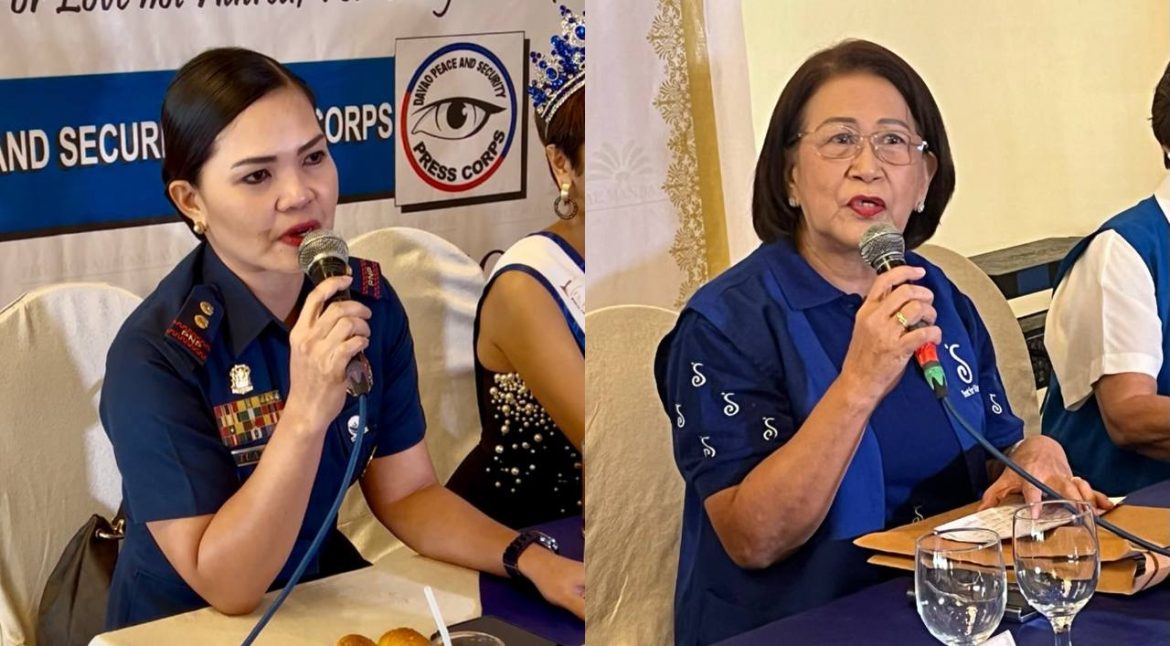
DAVAO City Police Office (DCPO) spokesperson Captain Hazel Tuazon stressed the importance of strictly adhering to the legal rules following the “bend the law” statement of Senator Erwin Tulfo during the Senate hearing into flood control projects.
“The law is harsh, but it is the law,” Tuazon said. “We need to follow our laws first and foremost, because the law is meant to maintain order and peace. If we don’t have laws to follow and just want to please everyone, we will have chaos.”
Tuazon warned of the negative consequences of non-compliance: “If we don’t follow and respect our laws, chaos will happen in our country. This will exacerbate issues like the corruption that we are facing now.”
Also, retired Court of Appeals associate justice Loida Kahulugan criticized Tulfo’s statement, which was publicly supported by Justice Secretary Jesus Crispin Remulla.
During the Senate Blue Ribbon Committee hearing on flood control projects on Tuesday, Sept. 23, Tulfo stated, “Sometimes we have to bend the law to be able to please the people. Am I right, Secretary Remulla?” to which Secretary Remulla replied, “Yes, sir.”
Kahulugan described the exchange as misleading and dangerous for public consumption. “In law, we have what is called Dura lex sed lex — the law is harsh, but it is the law,” she said during the Davao Peace and Security press briefing on Wednesday, September 24, 2025.
Justice Kahulugan emphasized that the law exists to maintain peace and order, and suggesting it can be “bent” is incorrect.
“For ordinary people hearing that and coming from him or from somebody whom we have placed in that hallowed hall… they might think it’s true, but that statement is wrong,” she added. “If Secretary Remulla agreed to that statement, well, that is his opinion, but I believe that is not the law.”
Tulfo clarifies remarks
Senator Tulfo later clarified his remarks in an interview with Karen Davila on Wednesday, explaining that his comment was not a call to violate laws but to allow exceptions, specifically concerning the restitution of alleged ill-gotten wealth.
“I did not say we have to break the law, literally… What I meant was, in every rule there’s an exception, that’s bending the law,” the senator said. “It was just born out of anger… what I meant was bend the law for humanitarian reasons.”
Tulfo explained he was suggesting that individuals voluntarily surrender money or property without needing to go through a lengthy court process. “I was saying, perhaps we can set aside the law for a moment because the law requires due process for restitution. But I was saying, maybe we don’t have to… Maybe they can just voluntarily surrender it, and we won’t go through the court.”
Justice Kahulugan, however, maintained that legal restitution can only occur after due process.
“Restitution comes only after a decision is made,” she explained. “A complaint must be filed, it has to be tried, evidence must be scrutinized by the court… then if the decision says that the person is guilty and he has to return whatever has been taken, that is what we call restitution.”
She agreed that if the accused parties voluntarily surrender “illegally taken” items, it could be accepted. However, she warned against demanding restitution without proof.
“We cannot demand until such time that it is proven that it was illegally taken, and after the court makes a decision,” she said.
When asked if the law can be bent to ease requirements for state witnesses to facilitate restitution, Kahulugan was firm. “That is dangerous,” she replied. “There are requirements that have to be complied with before one can be a state witness… You have to pass those requirements before you can be a state witness.”
Photo courtesy of Rhoda Grace B Saron
A few days ago a brutal crime happened in Tagum City, Davao del Norte.
Yes, a freshman college student at the University of the Philippines in Mintal who graduated with honors in her senior high school year at Ateneo de Davao University was murdered – stabbed 38 times inside her home. The victim’s name is Sophia Marie Coquilla, 19 years old.
It was not expressly reported whether her home in Tagum City was robbed or whether she was molested. What is clear, however, is that the perpetrators are reportedly all minors. Luckily, the suspects are reportedly arrested by the police. The news report said they owned up to the crime. That development in solving the crime against a young woman is one very laudable feat of the police organization in Tagum City.
Unfortunately however, the exceptional speed in arresting the suspects is marred by the very legal system that is supposed to punish those who committed serious infractions of the law.
Imagine, just because the alleged criminals are minors, they cannot be detained in a regular jail! They are instead protected supposedly for the purpose of their easy rehabilitation, by Republic Act 9433 primarily authored by now come backing senator Kiko Pangilinan.
Instead, the young murderers are currently in the custody of the Department of Social Welfare and Development (DSWD). Under the same law, these criminals can only be moved to permanent jails once they reach the age of 18, and there are no signs that they are changing their characters for the better.
After knowing substantial information related to the Coquilla murder, it is our take that our national lawmakers, both in the House of Representatives and the Senate, must take a serious look at this particular law. They should make some comparison between the advantages and disadvantages of applying the said law to serious crimes involving minors as suspected perpetrators.
And should the lawmakers most of whom are members of the younger generation, find the law now unresponsive to the very objective that it was passed and adopted, then perhaps now is the time that this must be amended.
For this purpose, we challenge the young congressman from Tagum to spearhead in the Lower House the efforts to amend the law. Perhaps it would be even better if he enlists the support of the other congressmen in the Davao Region.
We also dare the father and daughter leaders of the Province of Davao del Norte, where Tagum is a component city, to trigger relevant activities that will guide the Davao Region lawmakers to seriously look into the law so they will join their peers from Tagum in initiating much-needed amendments.
Or will they just wait for several other Sophia Marie Coquilla to get victimized by professional criminals shielding their activities under the aegis of being minors?
*****************************
The Office of the Ombudsman has recommended the filing of graft and corruption cases against former Department of Education (DepED) Secretary Leonor Briones, former Department of Budget and Management (DBM) Procurement Service Loyd Christopher Lao, and several other officials of the two government agencies.
The cases emanate from the alleged anomalous purchase by the DBM Procurement Service of a huge number of laptops for the DepEd.
With the filing of the cases, it means that the Ombudsman has found enough evidence that indeed anomalies tarnished the more than P2 billion peso transaction.
The purchase transaction was done in 2021, yet months later, this was investigated by the Senate Blue Ribbon Committee, then headed by former Senator Richard Gordon. The probe was an aside of the more than 40 billion pesos Pharmally deal for the purchase of the alleged overpriced supply for the government’s response to the COVID-19 pandemic.
And it is only this week that the Ombudsman has eventually filed the cases against the personalities allegedly involved.
Wow, what a web the Ombudsman probers could have encountered in their investigation. Imagine it took the probe team almost five years. And this is despite what is supposed to be overwhelming evidence of the anomalous processes with which the transaction was done!
What happens to the cliché “justice delayed is justice denied?” Did the Ombudsman really probe the alleged anomalous deal? Or is the act of the office one way for the outgoing Ombudsman to make a “statement?”
Many among us should indeed not be surprised if some of the charges brought before the Ombudsman, and even in regular courts, outlived either the accusers or the accused.