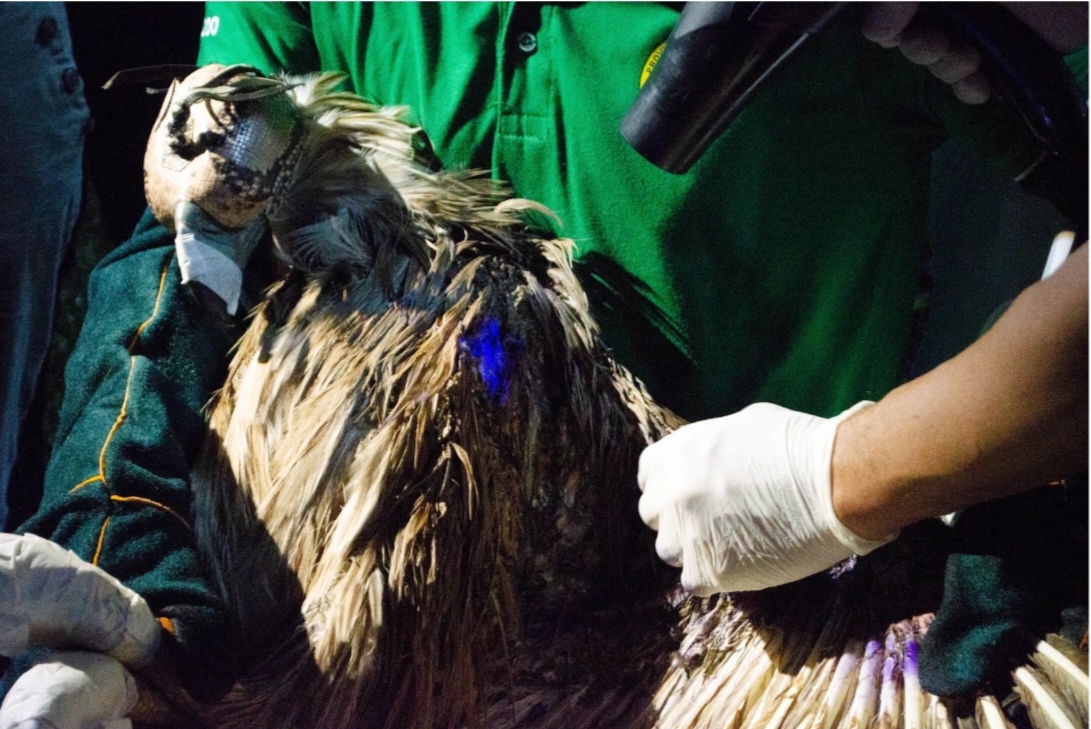

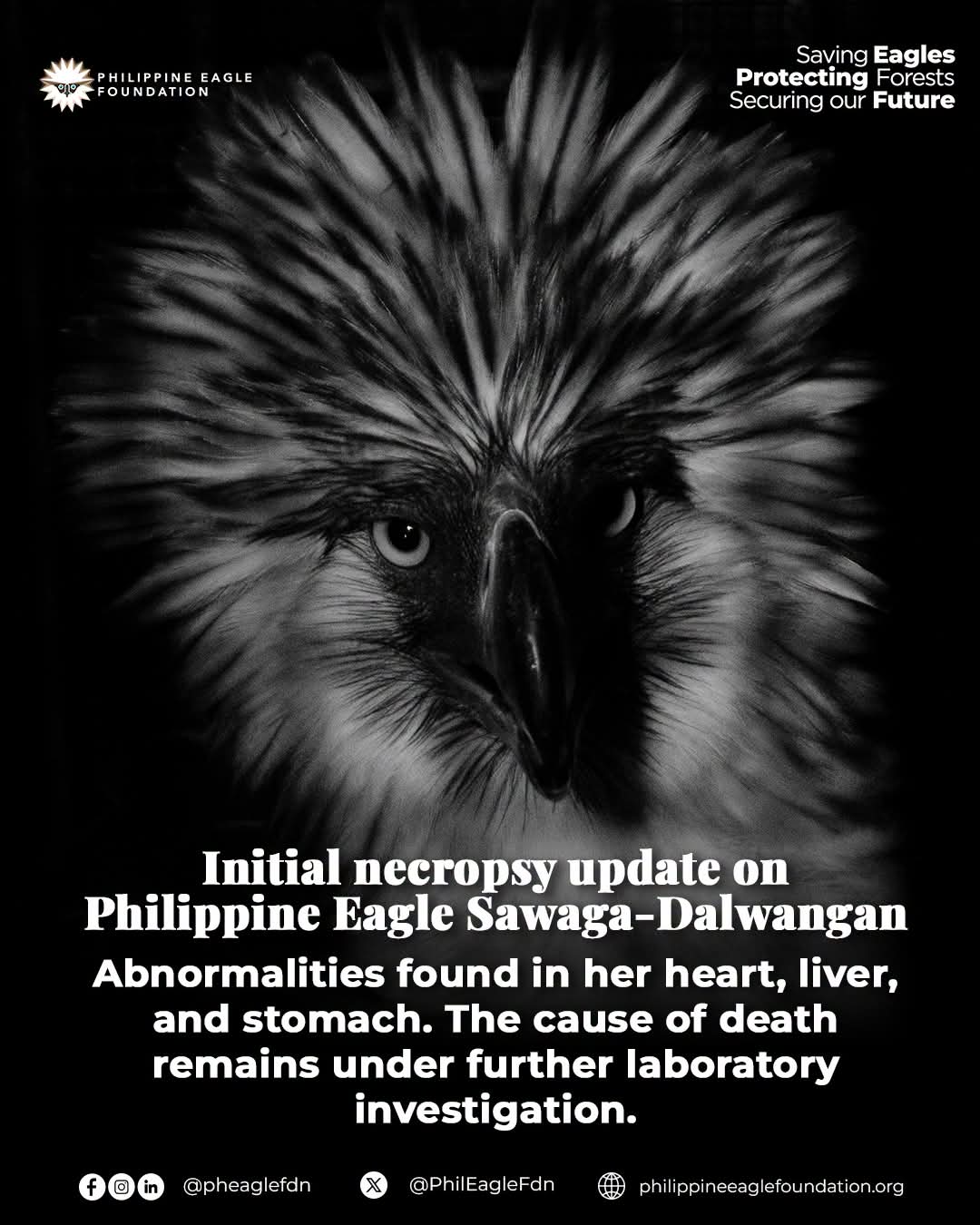
RESCUED Philippine Eagle Sawaga-Dalwangan passed away while undergoing rehabilitation, the Philippine Eagle Foundation (PEF) announced on Saturday, July 18.
PEF said in a press release that Sawaga-Dalwangan was showing real signs of improvement, became stronger and more alert, ate on her own, and responded well to treatment.
These observations were the basis of the earlier recovery updates published last July 15. A day prior to her transfer from Doc Bayani Vandenbroeck Animal Wellness Clinic to the PEF Center on July 16.
“Sadly, she later suffered a sudden medical crisis and could not be revived,” the PEF said.
The foundation said the initial necropsy has been completed, while histopathological examinations remain ongoing.
In the report published later on July 18, PEF said Sawaga-Dalwangan had been showing encouraging signs of recovery before her death.
PEF reported that her wounds were healing, hydration and appetite had improved, and she was displaying normal behaviors such as preening and casting food remains.
But on the morning of July 18, she suddenly experienced seizures and passed away shortly afterward, despite immediate emergency intervention.
PEF said the initial examination found no evidence of new external trauma or internal bleeding, but the veterinarians observed that her heart was thickened and unusually firm, her liver was enlarged, and her stomach was greatly enlarged and contained a large amount of compacted prey fur.
“These findings do not yet establish the cause of death. Tissue samples from her organs have been collected for microscopic examination and further laboratory analysis,” PEF said.
It added that a consolidated report will be published once the remaining veterinary and laboratory results have been completed.
“We understand that many people followed Sawaga-Dalwangan’s recovery and shared our hope that she would survive. We remain grateful to the communities, government agencies, veterinarians, supporters, and partners who helped rescue and care for her,” it stressed.
PEF also recognized the Daraghuyan community, rescuer Marven Linoy and his companions, DENR, the Malaybalay City Government, the Provincial Zoo, and the veterinary teams who helped rescue and care for her.
PEF pushed for a multi-agency investigation of the rescue of the Philippine eagle, as X-rays of her body showed two metal pellets in her body, one in her right wing and another in her left thigh.
The eagle was found near the Sawaga River in Barangay Dalwangan in Malaybalay City.
Barangay Dalwangan lies within the Mount Kitanglad Range Natural Park, which holds the second-oldest known breeding territory for the species, with nesting activity documented continuously since 1986, making it one of the longest-monitored Philippine Eagle nesting territories in the world.
PEF reported that there are an estimated 400 breeding pairs of the Philippine eagle left, emphasizing its strengthened protection.
“Her death is a painful reminder of the serious threats Philippine Eagles continue to face and of the importance of preventing shooting, trapping, and other harm to wildlife,” PEF said.
Photo Philippine Eagle Foundation