

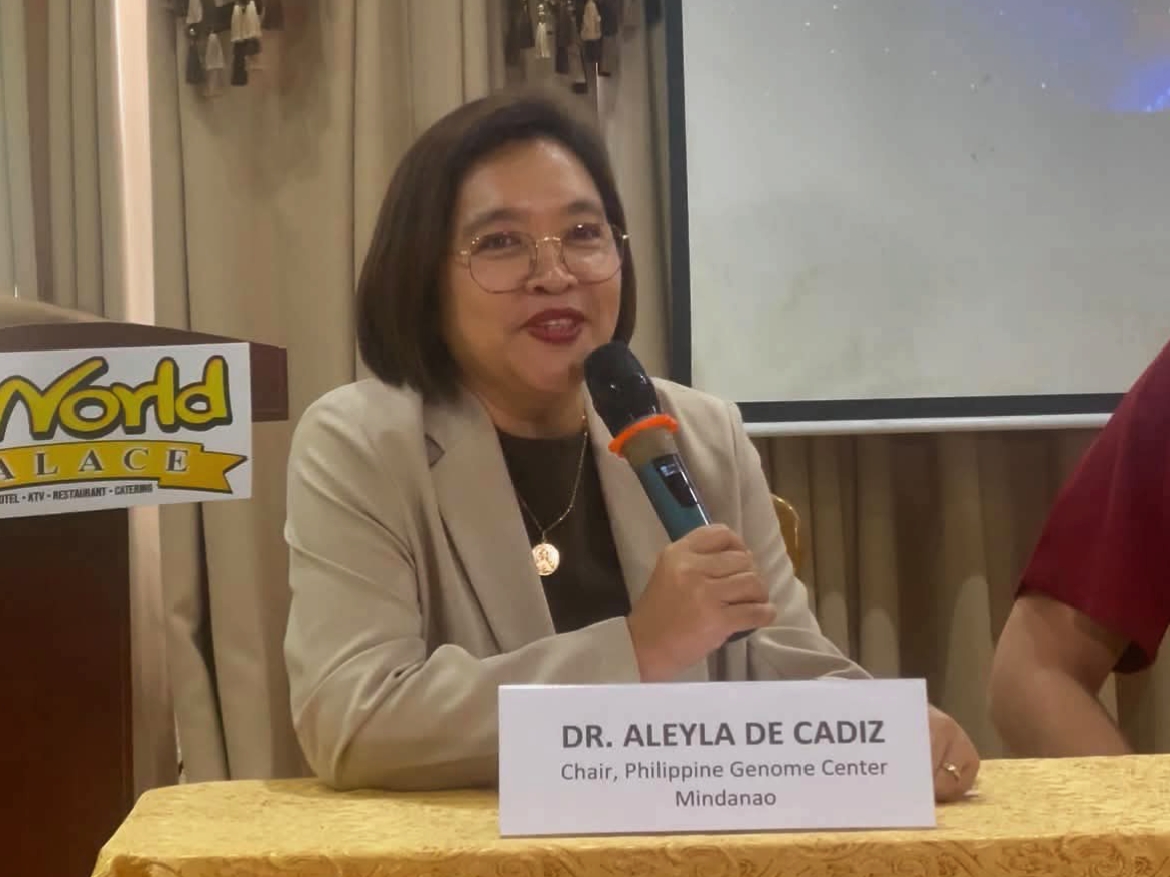
THE PHILIPPINE Genome Center Mindanao is conducting genomic surveillance to address the transmission and changing demographics of Human Immunodeficiency Virus (HIV) cases in the Davao Region and Mindanao.
During the press conference of the 16th Health Research and Development Expo on Monday, Dr. Aleyla De Cadiz, PGC Mindanao chair, said a two-year genomic surveillance aimed to establish the genetic makeup and geographic transmission patterns of local HIV strains.
The genomic surveillance has two study sites: Davao City and Tawi-Tawi, running from 2025 through 2026.
“Gusto naming malaman kung saan talaga galing ang HIV natin dito, pwede mo kasing i-track yung transmission saan galing, dito lang ba sa Mindanao o sa ibang countries,” Cadiz said, noting they are looking into the “spread and transmission.”
She said the samples are primarily sourced from naive patients recruited through facilities such as the Southern Philippines Medical Center (SPMC).
The genome center is currently doing the sequencing and genetic makeup, so the results are yet to be released.
Cadiz said this was a solicited project in response to a request from Tawi-Tawi to conduct genomics on HIV cases, considering the high incidence in the area.
The center expects the genomic sequencing results to be finalized by next year, citing delays in optimizing protocols, but so far “it is working already.”
“Hopefully, the results of that can also be utilized by DOH for policy recommendations,” Cadiz said.
The results are expected to provide empirical data to inform healthcare policies such as monitoring of HIV patients and disease surveillance in terms of epidemiology of the virus across the Philippines.
Cadiz noted some cases of HIV are “familial,” and youth are “liberated,” so the genomic study is expected to help intensify safe-sex drives and be useful not only for adults but also for the youth.
Meanwhile, Dr. Jasmin Pasia, Regional Health Research and Development Consortium XI (RHRDC XI) research utilization committee chair, urged more researchers to study youth behavioral patterns.
Pasia said the Philippine Statistics Office requested the Department of Science and Technology to explicitly articulate HIV as one of the regional priorities, as data indicates that individuals contracting HIV in Davao City and surrounding regional pockets are getting younger.
She added that Davao City currently records some of the highest HIV incidence rates in the country within younger population brackets.
The consortium is also interested in looking into how many of those who are HIV positive have crossed the line of senior citizenship.
Cadiz said many, upon recognizing that they are engaging in high-risk behavior and seeking treatment at the different facilities in the region and Mindanao, have enjoyed quality of life and reached senior citizenship.
She added this despite others thinking that it would be an end-game once diagnosed with HIV.
“This is a great achievement in the health sector as well as research when we encourage more people to seek medical advice, especially in high-risk behavior,” she said.
The April-June 2026 Philippine HIV and AIDS Surveillance reported 2,994 confirmed HIV-positive individuals reported to the One HIV/AIDS & STI Information System (OHASIS).
Of the recorded cases for this quarter, 828 (28%) had advanced HIV disease at the time of diagnosis.
Of the newly reported confirmed HIV cases this period, 2,865 (96%) were males, while 129 (4%) were females.
By age group, 10 (<1%) were less than 15 years old; 918 (31%) were 15-24 years old; 1,294 (43%) were 25-34 years old; 509 (17%) were 35-49 years old; and 81 (3%) were 50 years and older.
Over half (54%) of new cases were concentrated in five regions: National Capital Region (NCR): 19% (567 cases); CALABARZON (Region 4A): 11% (338 cases); Central Luzon (Region 3): 9% (280 cases); SOCCSKSARGEN (Region 12): 8% (235 cases); and Western Visayas (Region 6): 6% (189 cases).