


BY DIMA H. ADLOK
BEFORE the nation mourned the death of Rene Clert “Mr. MVP” Baterbonia, there was Kean Chace, who died in a drowning incident in Surigao City just over a year ago.
The outpouring of love and sympathy over Rene’s death has continued for weeks as the nation grieves the loss of a young and promising talent who symbolized hope and embodied the belief that dreams can come true.
Yet that dream came to a tragic and abrupt end. A future was taken away, prompting calls for justice, accountability, and a meaningful response from Ateneo de Manila University, an institution known for its commitment to fairness and justice.
Now, the values and principles it professes are being put to the test. The same may be said of Saint Paul University Surigao, where Kean Chace studied—a Catholic institution regarded as a safe haven, or so many believed.
Academic excellence means little when an institution’s moral foundations exist only in words and fail to manifest when those values are most needed.
More than a year has passed, yet no resolution has been reached, and those who may bear responsibility remain shielded by silence.
By all accounts, Kean Chace was the kind of child who made people believe in the future. The kind of son every parent would wish to have in their midst.
Excitedly, he prepared his toga and readied his shoes as graduation day approached. Only a few days remained before one chapter of his young life would close. One final year-end activity awaited him at the school’s swimming pool. Soon, he would have begun a new chapter—his high school years—a journey he would never have the opportunity to undertake.
Because on that fateful day of May 9, 2025, he, sadly, passed away.
At twelve years old, he had already accomplished more than many do in a lifetime of youth. An honor student. An outstanding campus journalist. A gifted chess player. An avid football enthusiast. Bright, articulate, curious, and fiercely alive. The sort of child whose presence filled a room before he even spoke.
Teachers admired him. Classmates gravitated toward him. His mother built her world around him. Today, all that remains are photographs, memories, and an unbearable silence.
More than a year after Kean drowned during a school activity at Saint Paul University Surigao, the questions surrounding his death continue to ripple through the consciousness of those who refuse to forget. This is not only untimely but a wrongful death. By all accounts and circumstances, there was wanton disregard of those who were supposedly in charge.
This should not simply be dismissed as an unfortunate incident. While the school may wish to avoid turning the matter into a public spectacle, the circumstances raise questions that deserve public attention. The community deserves transparency, and the institution must address concerns regarding responsibility and accountability.
For a mother who raised her son largely on her own, every morning begins with the same devastating realization. Her son is gone.
Every night ends with the same agonizing truth – he is not coming back
And while the world has moved on, she remains trapped in a moment she never chose.
Yet what makes this tragedy particularly painful is not merely that a promising young life ended too soon. It is that the life ended while under the care and supervision of the very institution entrusted with his safety.
Parents do not entrust their children to schools merely for education. They entrust them with something infinitely more precious: their lives.
According to the in-house investigation done by the institution, lapses were identified surrounding safety measures at the swimming facility, including the absence of a lifeguard and emergency response capability, among others. Such findings inevitably raised questions that refuse to disappear.
The report stated that certain individuals identified as bearing responsibility were reportedly terminated, while others were suspended. Only to learn that those who are thought to have been terminated were actually retained and are still employed by the institution. What message is the school sending to the families and to the community?
However, this administrative action by the school does not translate to accountability and justice. A life has been lost, and it cannot be mitigated by such actions. Asking forgiveness is not mutually exclusive with demanding accountability. In fact, it is an implied admission of guilt.
Transparency helps in order to learn from what happened, but more than just the bitter lessons, justice cannot be set aside – it should not be ignored.
Yet for all the findings, many continue to ask where accountability begins and where it ends.
Because investigation may produce reports, but reports do not comfort a mother crying alone at night. It cannot provide justice for those who were injured by the presumed negligence of those entrusted with Kean’s life
The tragedy of Kean Chace cannot be measured merely by the circumstances of his death.
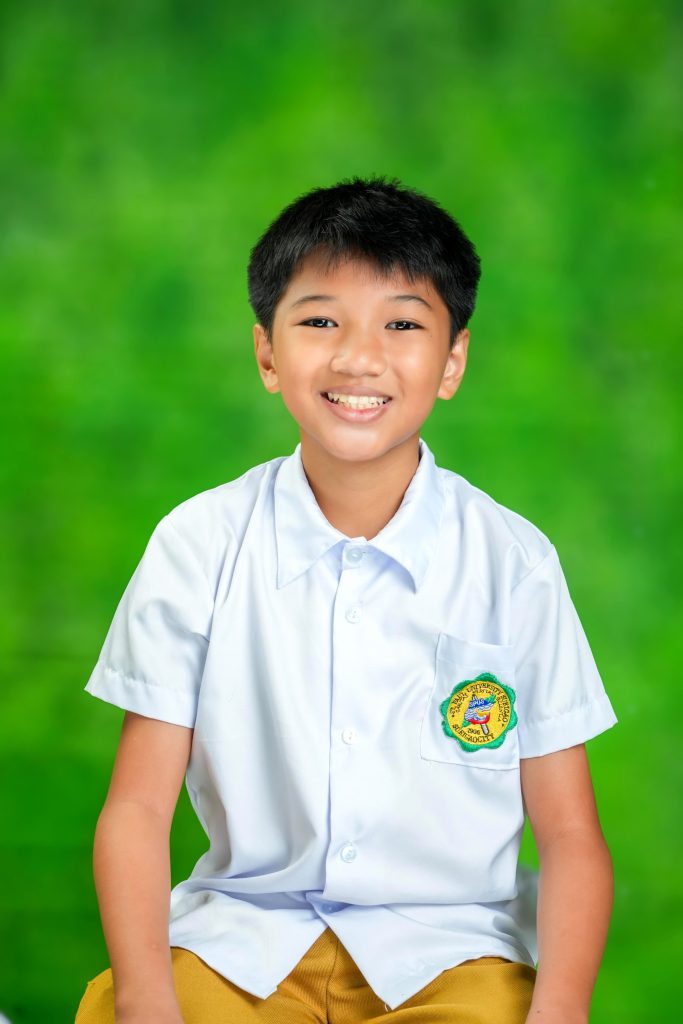
It must be measured by the future that died with him. Perhaps he would have become a journalist whose words changed minds or a lawyer who fought for justice.
Perhaps an educator, a leader, a scholar, or a public servant.
Perhaps one day he would have cared for the mother who sacrificed everything to raise him. Now those possibilities exist only in imagination.
A universe of “what could have been” is buried beneath a single tragedy, and therein lies the deepest cruelty.
The loss of a child is not merely the loss of a life. It is the loss of every tomorrow attached to that life.
While those connected to the incident have returned to their routines, resumed their careers, and continued with the ordinary rhythm of existence, Kean’s mother remains where grief left her.
At the edge of a swimming pool. Waiting for answers, accountability and waiting for justice.
Compounding the sorrow is the spectacle that often follows tragedy. Voices emerge. Narratives compete. Attention shifts. Individuals seek to define the story.
But amid the noise, society must remember a simple truth – without justice, society fails.
This story is not about institutions. It is not about public relations, it is not about personalities, not even about the adults. It is about a twelve-year-old boy who should still be alive. A boy who should be preparing for another school year. A boy who should be making his mother proud.
Instead, a grave stands where a future once stood.
The true measure of any society is not how it celebrates its successes but how it responds to its failures.
Being a Catholic institution that speaks of justice, fairness, and equality as pillars of a society, they are expected to observe these virtues when they are the ones expected to do so. Or should they end up with only words?
Equally important is the response of the community. The society must rally and take a stand to ensure justice will be served in this wrongful death. It should not be veiled with indifference. Until now, the young life that was unjustly wasted gains insignificance as his death is slowly buried into oblivion and the culprits get to live their lives like they are guilt-free and obviously free from any form of punishment they so deserve
It is not a vengeful act to demand accountability, but it is a societal suicide if we ignore these glaring affronts to the rights, especially of pupils inside their campus.
When a child dies under circumstances that raise serious questions, silence cannot be the answer. Indifference cannot be the answer.
Because every unanswered question sends a dangerous message that the lives entrusted to our institutions are somehow expendable. They are not.
Kean Chace was not a statistic.
He was not a case number, NOT an unfortunate incident.
He was a loving and kindhearted grandson to his maternal grandparents, who helped his mother raise him to be the exceptional child that he became. He was a brother to his younger sibling, a perfect model who created a pathway for his brother to traverse smoothly. A student. A friend. A dreamer. A child whose life possessed immeasurable value.
Most importantly, a loving Son, raised by the hands of a single mother who nurtured him virtually on her own, as his father, who is absent for most of his life, has already been married to someone and is now in another country. Kean Chace was under the custody and care of his mother. Both Kean and his younger brother are protected by maternal love and affection.
He was a reflection of millions of children raised by a single mother without regular support from their fathers, who took a different path and left, creating a scar that shall forever be worn like a birthmark of pain and longing. But despite these circumstances, he still managed to excel and have a positive disposition.
That is the lesson and example left by Kean Chace, so powerful that those who knew him cannot ignore. But then, his death is about to become meaningless, and the cries of the mother are in danger of falling on deaf ears.
His mother continues to cry not because she refuses to move forward, but because part of her moved into that coffin with her son and never returned.
That is the reality of parental grief.
It does not fade with headlines. Nor can it be measured with a publicity stunt.
Now, justice has still not been served. Many may try to position themselves to advance their own interests and ulterior motives surrounding the circumstances of his death, but nothing can supersede or take away the rights and interests of the grieving mother as stipulated in existing laws and common sense. This is more than a legal quest; this is a test of morals.
And so the cry for justice endures not only for Kean Chace but for his mother, brother, and loved ones.
Not out of vengeance.
Not out of bitterness.
But out of love.
The kind of love only a mother can understand.
The kind of love that refuses to allow a child’s memory to be buried beneath institutional silence.
More than a year has passed. Yet the water remains troubled. The tears continue to fall.
And somewhere in the heart of a grieving mother, the same question echoes with relentless persistence:
If those entrusted to protect a child failed, who will answer for the future that was lost?
Until that question is met with honesty, accountability, and justice, the swimming pool where it happened will remain more than a place of tragedy.
It will remain what it has become for a mother who lost everything. A pool of tears.
(The mother of Kean Chace, was an Alumna of the said University and had been an active member of its Parents’ Teachers’ Association being it’s PTA class president for consecutive years.)