QUEZON CITY — The EcoWaste Coalition lauded the Food and Drug Administration (FDA) for disseminating toy safety reminders well ahead of the toy gift-giving season, which typically peaks in December during the Christmas season.
On June 30, or several months before the Christmas shopping spree, the FDA released Advisory No. 2026-0705 highlighting the importance of musical toys to children’s development and providing tips on safe procurement and use.
“Supporting the FDA’s recent toy safety reminder, we urge consumers to remain vigilant. Although legal requirements mandate safe toys for children, dangerous products without market authorization still slip through,” said Aileen Lucero, national coordinator, EcoWaste Coalition. “It is therefore very important for consumers to be guided and make careful choices to keep children safe.”
“Musical toys are designed to introduce children to sounds, rhythm, and music through simple and interactive play. Unlike musical instruments, musical toys are generally made from plastic or lightweight materials and are specifically designed to be safe, easy to use, and appropriate for children,” the FDA said. “These toys help stimulate creativity, improve cognitive and motor skills, and nurture a better appreciation for music at an early age.”
Inspired by the viral hit song “Hawak mo ang beat,” which translates to “you hold the beat” (or figuratively “you are in charge”), the FDA reminded the public to keep the B.E.A.T. in mind when buying musical and other toys:
B – Buy Smart. Purchase only from trusted brands or toy stores to help ensure product quality and safety.
E – Examine Parts. Regularly inspect toys for loose, damaged, or detachable small parts that may pose choking or injury hazards. Properly store toys after use.
A – Age-Appropriate. Choose toys appropriate for the child’s age, as seen in the product’s age grading
T – Tag Check. Always read and follow the full labels, instructions, and safety warnings before use.
While generally safe, some musical toys may pose safety hazards, the EcoWaste Coalition said.
Among the potential hazards to watch out for, the group said, are lead exposure from the lead paint used in some xylophone bars, internal burns from accessible button batteries in battery-powered musical toys, choking from the accidental ingestion of detached small components of maracas or tambourines, strangulation from toy musical instruments with long strings, and laceration from broken parts of musical toys made of brittle plastic.
In particular, the EcoWaste Coalition warned against unauthorized toy xylophones with metallic bars coated with paints containing lead above the legal limit of 90 parts per million (ppm). In 2024, for example, the orange bar of a toy xylophone was analyzed and found to contain 5,710 ppm of lead. Previous analyses of these musical toys detected lead up to 14,100 ppm.
The group also cautioned against the presence of toxic brominated flame-retardant chemicals in black plastic recycled from electronic waste used in some musical toys. In 2020, the group detected 13,300 ppm of bromine in the black plastic component of a toy guitar.
To learn more about toy safety, the EcoWaste Coalition encouraged the public to get familiar with and apply the various toy safety awareness materials developed by the FDA, available on the FDA website.
Food and Drug Administration
Transfer of FDA functions to clear bottleneck, ease business compliance: senator
SENATOR Francis “Chiz” Escudero is eyeing a measure that will transfer several regulatory functions of the Food and Drug Administration (FDA) to other government agencies to make government approval processes more efficient and business compliance easier.
According to Escudero, FDA’s mandate is so broad that its functions have led to overlaps and delays, and the redistribution of its powers would allow specialized departments to handle regulation more efficiently and effectively in a timely manner.
“Sa tingin ko ay masyadong malawak ang kasalukuyang mandato ng FDA ngayon na nagiging dahilan para bumagal at maging kumplikado ang proseso. Mas mainam na ilipat sa tamang ahensya ang ilang mga responsibilidad nito para sa mas mabilis at malinaw ang regulasyon,” Escudero pointed out.
Under his proposal, key functions of the agency would be absorbed by appropriate government agencies. For example, he said the regulation of fresh food would be transferred to the Department of Agriculture (DA), processed food and cosmetics to the Department of Trade and Industry (DTI), and medicines to the Department of Health (DOH).
“Kung pagkain, sa DA. Kung processed food o cosmetics, sa DTI natin ilagay. Kung gamot naman, sa DOH. Hindi dapat lahat nasa FDA,” Escudero said.
Escudero argued that the redistribution would streamline government functions and reduce overlapping mandates. “Ang FDA ay naging catch-all agency sa mahabang panahon. I think it is about time that we fix this and move some of its functions to the right departments or offices.”
The Bicolano senator emphasized that his proposed bill aims to ease compliance for businesses while ensuring consumer protection remains intact, saying: “Hindi natin tinatanggal ang regulasyon. Ang ginagawa natin ay inililipat sa mas angkop na ahensya.”
Past efforts have already seen certain FDA functions transferred to other agencies through memoranda of agreement (MOA) and similar arrangements. Some regulatory responsibilities over agricultural products were already moved to the DA.
Escudero’s bill, however, seeks to institutionalize this through a law that would effectively transfer FDA’s vast functions to proper government agencies.
Furthermore, the FDA has also drawn concern from industry groups and oversight agencies over delays in processing applications, particularly for emergency medicines.
The Anti-Red Tape Authority, or ARTA, has reported that the FDA received a high number of complaints among government agencies, citing bottlenecks in its evaluation process.
Business groups have pointed to prolonged product registration timelines and complex regulatory requirements as barriers to market entry.
Several countries also operate without a single, catch-all FDA-type regulator. In Singapore, food oversight is handled by the Singapore Food Agency, while medicines and cosmetics fall under the Health Sciences Authority.
The United Kingdom likewise splits responsibilities among the Food Standards Agency, the Medicines and Healthcare products Regulatory Agency for medicines, and the Department for Business and Trade for cosmetics.
Environmental groups heighten advocacy for phthalates and bisphenols regulations
ECOWASTE Coalition and the Ateneo Center for Research and Innovation (ACRI) released a situation report exposing the health risks of phthalates and bisphenols in the daily lives of Filipinos.
The report, co-published by ACRI, EcoWaste Coalition, Interfacing Development Interventions for Sustainability (IDIS), and Arugaan, revealed that the two groups of chemical additives are known to be “endocrine-disturbing chemicals” (EDCs) that can change hormonal balance at minimal doses.
This is also in support of the International Pollutants Elimination Network (IPEN), contributing to a multi-country effort documenting situations on phthalates and bisphenol to push for stricter local and global regulations.
During the Kapehan sa Dabaw on Monday, Jun 1, Manny Calonzo, campaigner for EcoWaste Coalition, said they have observed the limitations of the current regulations on both chemicals in the Philippines.
Phtalates are found in toys, food packaging, medical devices, flooring, and construction materials, while bisphenols, the most common bisphenol A, are used in polycarbonate plastics, epoxy resin linings, and thermal paper coatings.
Exposures from these chemicals involve reproductive disorders, neurodevelopmental harm in children, metabolic disease, and cardiovascular mortality.
The Department of Health (DOH) and the Food and Drug Administration (FDA) had banned the use of BPA on infant products under FDA Circular No. 2019-004. However, alternatives such as BPS and BPF are overlooked or unmonitored.
EcoWaste Coalition urges FDA to test play sand products for asbestos after recalls in Australia and New Zealand
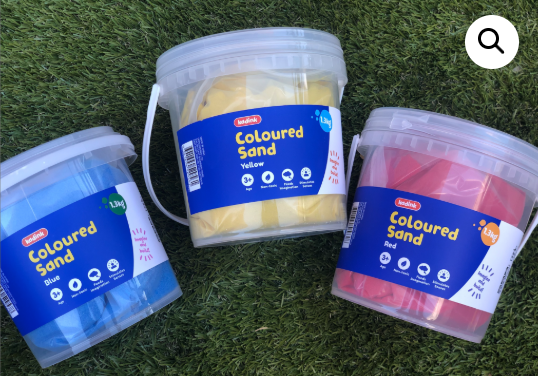
QUEZON CITY — The toxics watchdog group EcoWaste Coalition urged the Food and Drug Administration (FDA) to analyze colored sand play products being sold in the market after the regulatory authorities in Australia and New Zealand announced recalls due to potential asbestos contamination. Exposure to asbestos, a hazardous chemical, can cause serious long-term health problems.
“In the interest of children’s safety, we urge the FDA to conduct an immediate analysis of play sand products being sold in toy stores and assure the public that such products do not pose potential exposure to asbestos,” said Aileen Lucero, national coordinator, EcoWaste Coalition.
“Pending the conduct of asbestos analysis, we appeal to toy stores, including those online, to temporarily stop the sale of children’s play sands until such time their manufacturers, importers, or distributors have made available verifiable certificates of analysis confirming their products are free of any asbestos,” she said.
“The government needs to assure the Filipino people, especially the parents and their children, and the schools catering to very young students, that play sand products available in the market are asbestos-free in accordance with the law,” she further said.
DENR Administrative Order No. 2000-02, or the Chemical Control Order for Asbestos, bans “all forms of asbestos in toys,” among other products and applications.
Last November 12, the Australian Competition and Consumer Commission (ACCC) published a recall notice from supplier Educational Colours regarding play sand products that were found to contain tremolite asbestos, a naturally occurring asbestos.
“The products may cause a risk to health,” the ACCC warned, advising the public to “stop using the products immediately.”
“Although there have been early indications that the risk of exposure is low, it is important to take precautions with all potential exposures,” it explained.
New Zealand’s Ministry of Business, Innovation and Employment (MBIE) also announced that a recall is underway of some of the play sand products sold locally due to potential asbestos contamination.
“To prevent potential asbestos exposure among our children, we urge our government to act expeditiously on our request, ” concluded Lucero.
EcoWaste Coalition signals danger on toxic beauty kits with mercury
QUEZON CITY — The EcoWaste Coalition sounded the alarm against the sale of beauty kits consisting of unauthorized products, including a facial cream for lightening the skin tone with close to 30,000 parts per million (ppm) of mercury, a highly toxic chemical banned in such cosmetics
The group, which has been tracking mercury-added cosmetics since 2011 and promoting regulatory action to halt the unlawful trade, revealed that it has monitored product listings for 3-in-1 and 4-in-1 “made in Pakistan” Goree beauty kits that are being sold online.
As it has reported to the Food and Drug Administration (FDA) last week, the group monitored the online sale of Goree 4-in-1 beauty kit consisting of Goree Beauty Cream with Lycopene, Goree Whitening Soap, Goree Brightening Serum, and Goree Vitamin E – Niacinamide Capsule, as well as Goree 3-in-1 beauty kit comprising of Goree Gold 24K Beauty Cream, Goree Gold Beauty Soap and Goree Gold Serum.
None of the above Goree products has a valid certificate of product notification. In fact, the FDA has already issued multiple public health advisories warning the public against the purchase and use of unauthorized and mercury-containing Goree products.
To demonstrate how toxic Goree products are, the group bought a Goree Beauty Cream with Lycopene and a Goree Whitening Soap from an online seller and had them screened for mercury using a handheld X-Ray Fluorescence (XRF) analyzer.
While mercury was not detected on the analyzed Goree Whitening Soap (flagged by the FDA in 2018), mercury measured at 29,850 ppm was detected on the Goree Beauty Cream with Lycopene (flagged by the FDA in 2017 and again in 2023).
Aside from FDA-Philippines, health product regulators in countries like Brunei, China (Hong Kong), New Zealand, Singapore, Sweden and the USA have flagged Goree beauty products for being contaminated with mercury.
Swedish authorities in April 2025, for example, rejected the importation at the border of Goree Beauty Cream with Lycopene for containing mercury, noting “mercury accumulates in the body and can damage the kidneys, brain and nervous systems (and) may affect reproduction and the unborn child.”
As mercury-added products such as Goree continue to proliferate online, the EcoWaste Coalition renewed its call on the management of digital and social media sites to ban the use of their platforms to peddle dangerous articles adulterated with mercury in line with the Internet Transactions Act, which aims to “guarantee effective regulation of e-commerce to protect consumer rights.”
Last July 12 to 31, the group combed Lazada, Shopee, Facebook, Instagram and TikTok and identified 1,146 product listings for mercury and mercury-added products, including 1,057 for FDA-flagged skin lightening products with mercury content; 53 for mercury-based medical devices such as sphygmomanometers, thermometers and dental amalgam; 34 for liquid mercury for mining use; and 2 for mercury to counter spells and sorcery.
According to health experts, chronic exposure to mercury in skin lightening products can cause damage to the nervous system, the kidneys and the skin itself. Symptoms may include rashes, impaired hearing and vision, depression, insomnia, irritability, inattentiveness, memory loss, change in the taste function, numbness, tingling and tremors. In severe cases, renal failure may occur.
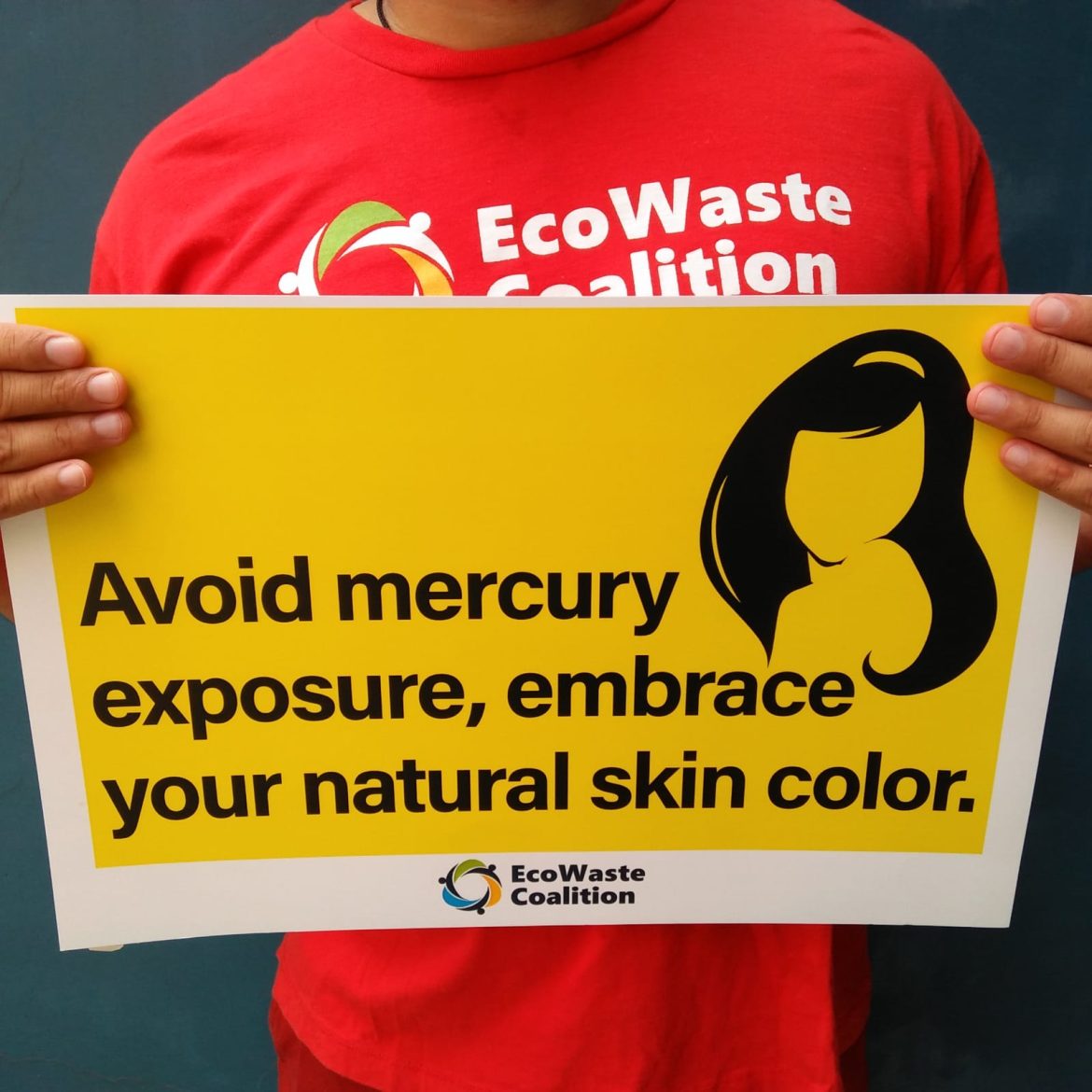
To prevent mercury exposure, the EcoWaste Coalition urged consumers to embrace their natural skin color and avoid skin bleaching, lightening or whitening products, especially those flagged by the FDA for lacking market authorization and/or for containing mercury and other hazardous substances.
It also advised consumers not to buy health products with unidentified composition or from doubtful sources; exercise caution when buying such products online; be suspicious of exaggerated, “miraculous” and “no side effects” claims; and to see a doctor if feeling unwell after use.
Additionally, the EcoWaste Coalition encouraged consumers to visit the FDA verification portal at https://verification.fda.gov.ph/Home.php before making a purchase to check if the establishment has a license to operate or if the product is duly notified or registered with the FDA.
EcoWaste Coalition calls on stores to remove illegal lead-containing paints from shelves
QUEZON CITY — In a bid to uphold the law and protect public health, the toxics watchdog group EcoWaste Coalition appealed to socially responsible retail establishments to cease and desist from selling imported paints laden with lead, a potent neurotoxin and endocrine-disrupting chemical banned in paint manufacturing.
The group, a strong advocate for a society free of harm from chemicals and waste, issued the clarion call after monitoring the local sale of leaded spray paints from China and Thailand in at least 47 general merchandise, hardware and home improvement stores in Region III (Bulacan, Pampanga), Region IV-A (Batangas, Cavite, Laguna, Rizal) and the National Capital Region (12 cities).
According to the investigation conducted by the group from June 10 to Aug. 12, 47 of the 70 stores visited were found selling one or more spray paint brands that have been analyzed to contain lead in excess of 90 parts per million (ppm), the maximum limit set by the Chemical Control Order (CCO) on lead and its compounds.
The CCO promulgated by the Department of Environment and Natural Resources (DENR) in 2013 banned lead-based raw materials in the production of paints and similar surface coatings, and phased out lead-containing decorative paints on Dec. 31, 2016, and lead-containing industrial paints on Dec. 31, 2019.
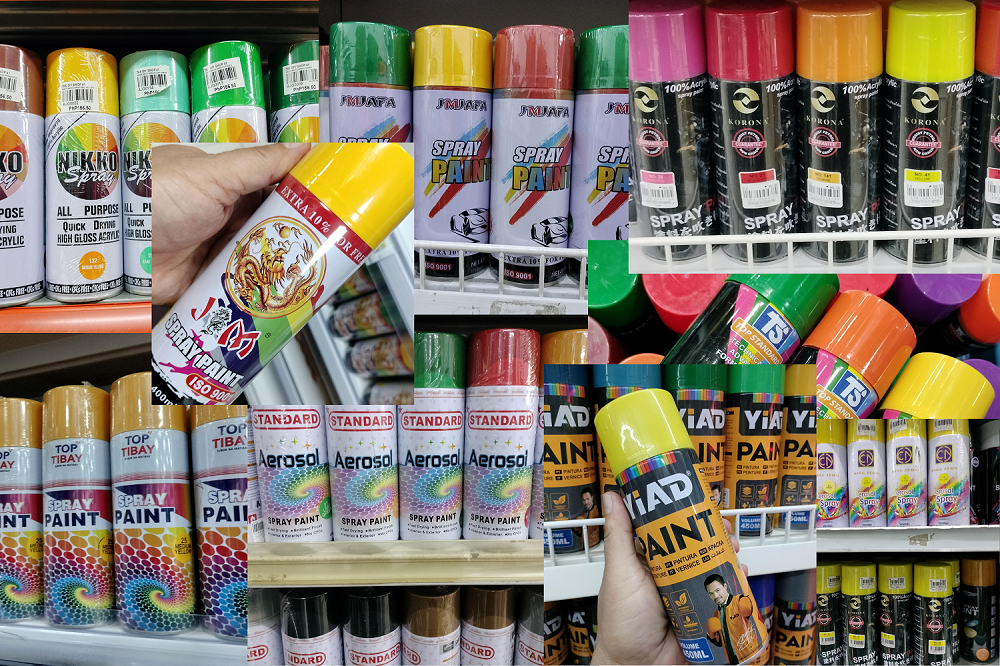
Among the lead-containing paints found on store shelves were products already flagged by the Food and Drug Administration (FDA) due to their lead content such as the medium yellow JM Spray Paint, canary yellow Koby Spray Paint, grass green and light yellow Nikko Spray All Purpose Quick Drying High Gloss Acrylic, and Jialing red and orange yellow Standard Aerosol Paint.
The group further found leaded YiAD Paint, an aerosol paint made in China, on sale in some chain stores. Manufactured in May 2025, this paint prominently features the image and signature of boxing icon Manny Pacquiao on the front label. The former senator has yet to issue a statement disassociating himself from lead-containing YiAD Paint.
“We are appalled by the proliferation of imported lead-containing paints in the domestic market as if the lead paint ban is not in effect,” said Manny Calonzo, campaigner, EcoWaste Coalition. “The unlawful importation has not eased, as evidenced by our discovery of highly leaded paints with 2024 and 2025 as manufacturing dates, which are being offered for sale to consumers who are not informed of the risks. Government regulators need to flex their muscles and enforce the ban.”
“As for store owners, we appeal to them to shun imported paints unless independently verified as compliant with product safety standards such as the 90 ppm lead content limit. In keeping with their corporate social responsibility, we advise them to ask for third-party certificates of analysis and conformity from their suppliers before making such paints available to their valued customers,” he added.
“To help the Philippines in enforcing the lead paint ban, we request the DENR to nominate lead chromates, the most common lead-based pigments used in paint manufacturing, for listing under the Rotterdam Convention,” suggested Jeiel Guarino, Global Lead Paint Elimination Campaigner, International Pollutants Elimination Network (IPEN). “An affirmative decision by the Conference of the Parties will list lead chromates and lead paints as hazardous chemicals subject to the treaty’s Prior Informed Consent (PIC) Procedure. If listed, companies that export lead chromates or paints containing them will no longer be permitted to export these commodities to a country that has not consented to import them.”
During its market investigation, the EcoWaste Coalition found on the shelves leaded spray paints bearing the names Aeropak, Anton, JM, JMJAFA, King Sfon, Koby, Korona, Nikko, Silvestre, Sinag, Standard, Standard JR, Top Standard, Top Tibay, Yatibay, and YiAD.
Based on the studies conducted by the group, the said paint brands have one or more colors containing lead above the 90 ppm limit as per X-Ray Fluorescence (XRF) and laboratory analyses.
Some of the above named paints can be found in the “Public Notice on Lead-Containing Paints” co-published by the EcoWaste Coalition, Philippine Paint & Coatings Association, Inc. (PPCAI) and IPEN to guide consumers and retailers on paint products with lead content.
EcoWaste Coalition Tags 1,146 Online Listings for Mercury and Mercury-Added Products
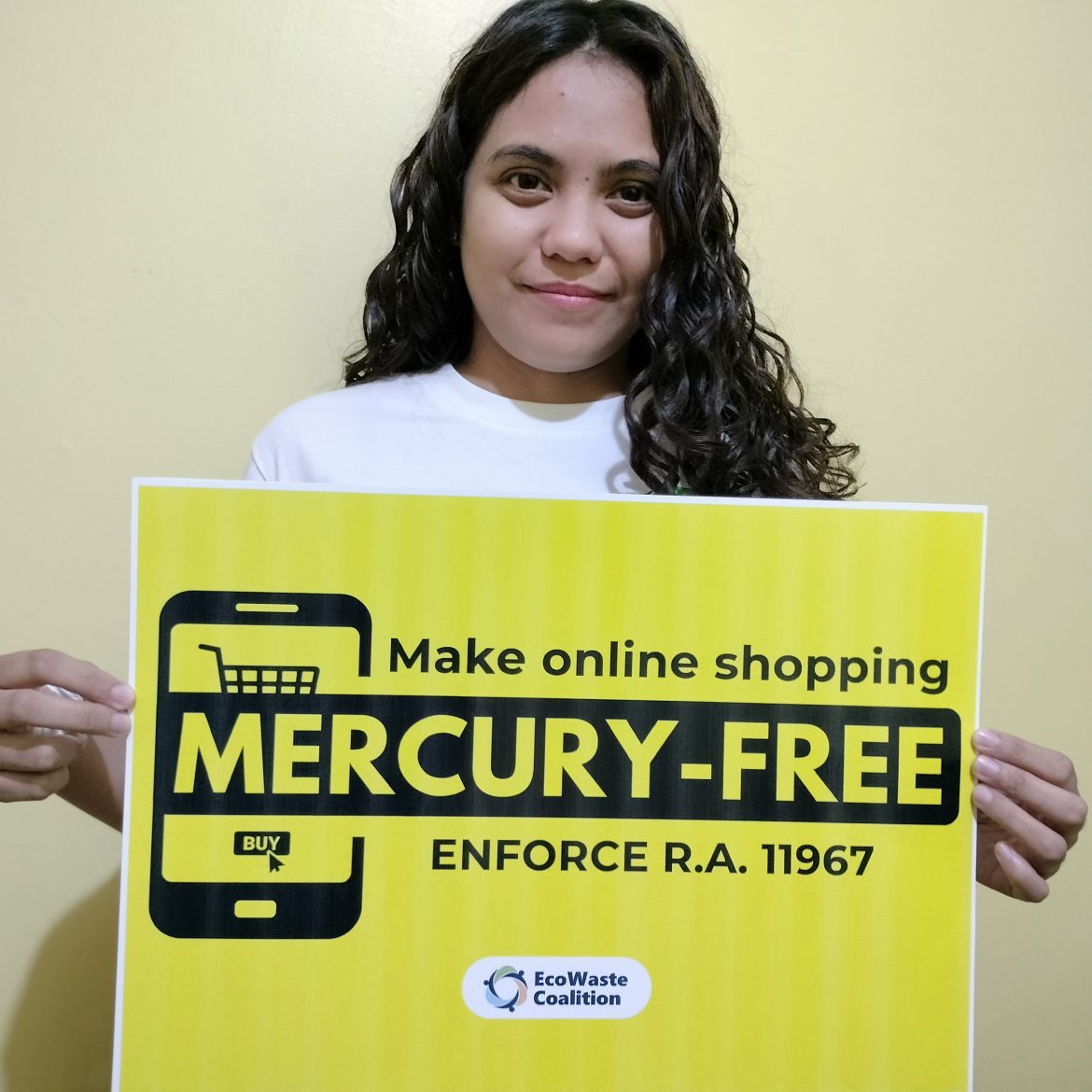
QUEZON CITY — The environmental health and justice group EcoWaste Coalition urged government regulators to stop the uncontrolled online trade of mercury and mercury-added products by actively enforcing Republic Act No. 11967, or the Internet Transactions Act, and imposing the consequent fines and penalties against violators.
In anticipation of the 8th anniversary of the global entry into force of the Minamata Convention on Mercury on August 16, the EcoWaste Coalition raked through e-commerce and social media platforms and found some 1,146 product listings for mercury and mercury-added products. The search, conducted from July 21-31, 2025, was also carried out to support the enforcement of RA 11967, which seeks to “guarantee effective regulation of e-commerce to protect consumer rights.”
Through a common letter sent to the Department of Trade and Industry (DTI), Environmental Management Bureau (EMB) and the Food and Drug Administration (FDA), the group reported to the agencies the unabated use of e-commerce and social media platforms by third-party merchants to advertise, promote and sell mercury and mercury-added products that have been banned to protect human health and the environment from mercury poisoning.
Based on the search conducted, the group identified at least 1,146 of such product listings, including 1,057 for skin lightening products flagged by the FDA for containing mercury and/or for being sold without the necessary authorization; 53 for mercury-based medical devices; 34 for liquid mercury for mining use; and 2 for mercury to counter “kulam” or “barang.”
To stop the illegal online trade, the EcoWaste Coalition appealed to the government regulators to initiate immediate takedown orders and make the online marketplace safe from mercury and mercury-added products.
The group also urged the regulators to apply Section 27 of RA 11967, which establishes the “solidary liability of e-marketplace or digital platform.” As stated in the law, “the e-marketplaces or digital platforms shall be solidarily liable if it fails, after notice, to act expeditiously to remove, or disable access to goods or services appearing on its platform that are prohibited by law, imminently injurious, unsafe, or dangerous.”
The active enforcement of RA 11967 and other pertinent consumer and product safety laws and the application of required fines and penalties, the EcoWaste Coalition said, will deter unscrupulous sellers from engaging in illicit acts or face the consequences for breaking the law.
It will further compel the management of e-commerce and social media platforms to strictly implement their community policies and rules to stop the persistent trade of banned and restricted substances and products, which can pose serious risks to public health and the environment, the group added.
As some of the online dealers are based outside the Philippines, particularly in China, Indonesia and Thailand, the group urged the regulators to reach out with their counterparts for joint law enforcement action, noting that errant sellers “cannot evade legal liability in the Philippines despite lack of legal presence in the country” as per RA 11967.
Moreover, the EcoWaste Coalition urged concerned regulators to inform the public of enforcement and implementation measures for RA 11967, including channels and methods on how concerned citizens and groups can report violations of the law.
Mercury-containing skin lightening products are banned under the ASEAN Cosmetic Directive, the long list of public health warnings issued by the FDA, and the Minamata Convention on Mercury; mercury-based medical devices such as dental amalgam, thermometers and sphygmomanometers are banned under DOH A.O. 2008-0021 and FDA Circular No. 2022-003; mercury for artisanal and small-scale gold mining is banned under Executive Order No. 79 and DENR A.O. 2019-20; and mercury for cultural uses (i.e., to ward off sorcery or witchcraft) is a dangerous practice opposed by DOH as per public advisory dated June 29, 2025
“The determined actions by government regulators will contribute to the protection of human health and the environment from the adverse effects of exposure to mercury, and safeguard the well-being of all digital consumers and the entire society,” the EcoWaste Coalition concluded.