



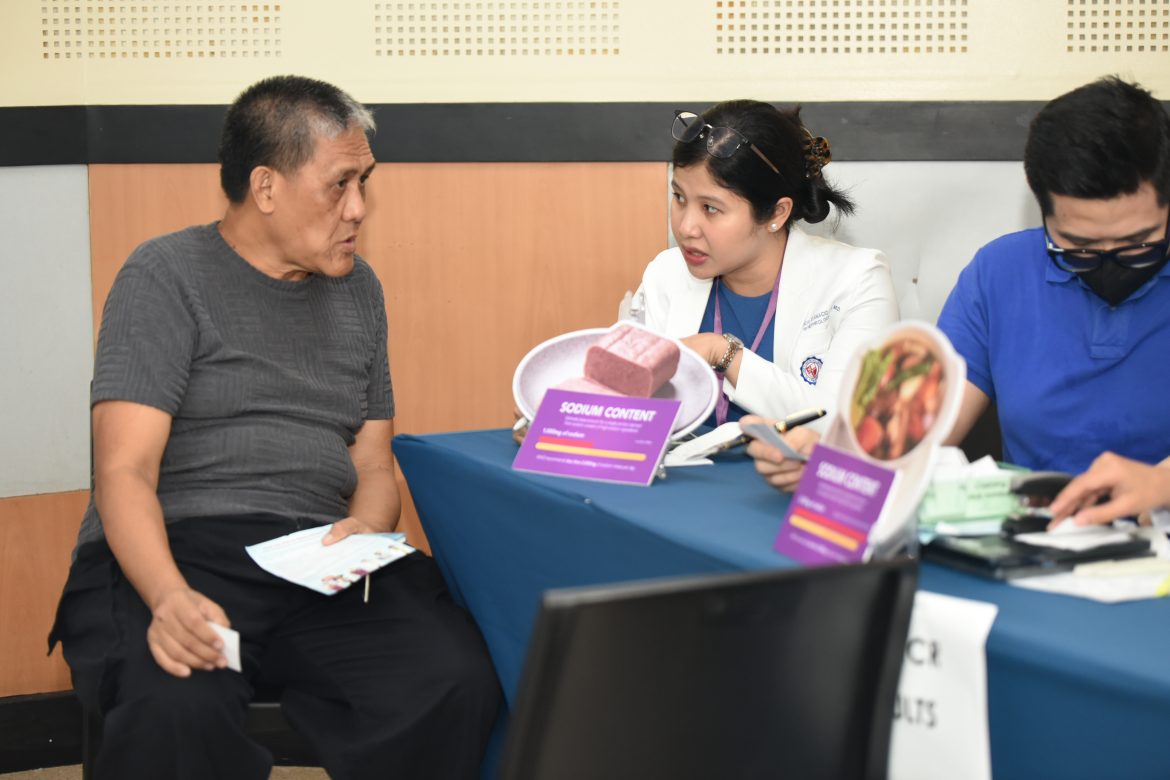
“Bawat oras, may isang Pilipinong nagkakasakit sa bato. At ang pinakamasakit dito, this disease is preventable,” said Dr. Deborah Ona, medical director of St. Luke’s Medical Center Quezon City (SLMC-QC) in the Iwas Alat, Iwas Sakit Lay Forum, held in time for the National Kidney Month.
Organized by SLMC-QC Philippine Society of Nephrology (PSN), and ImagineLaw, the forum brought together medical experts and patient leaders to spotlight the urgent need for kidney disease prevention—primarily, by reducing consumption of high-sodium products.
The human cost of excess sodium
Patient leaders shared how hypertension and chronic kidney disease (CKD) bring not only physical suffering but also deep emotional anxiety and financial strain.
Marybe Ricohermoso of the Marikina City Hypertension & Diabetes Club described the daily fear of a dialysis patient:
“Dala-dala mo araw-araw ang takot at pangamba na baka hindi ka na magising kinabukasan. At kung hindi man, naroon ang walang katapusang pag-aalala kung gaano nahihirapan ang ibang tao sa paligid mo para lang matulungan ka.”
Marimel Lamsin of the Kidney Alliance Philippines emphasized that national action is needed to help families avoid high-sodium products. She added, “This is not only for awareness to prevent kidney disease but also to address the financial challenges of the illness.”
CJ Luis of Dialysis PH Support Group underscored the cost of unhealthy diets: “Minsan mas mahal ang masustansyang pagkain, pero mas mahal ang magkasakit. Dahil ang kapalit ng sakit, hindi lang pera, kundi oras, trabaho, at mga pagkakataong hindi na maibabalik.”
Turning evidence into action
Dr. Rachell Siute of SLMC-QC reminded the public that CKD can be avoided if the Eight Golden Rules are followed: (1) maintain a healthy diet, (2) control blood sugar, (3) eat fruits and vegetables, (4) exercise regularly, (5) drink adequate water, (6) stop smoking, (7) avoid abusing pain relievers and herbal supplements, and (8) get regular check-ups.
These rules, she noted, are simple but powerful—and must be supported by a food environment that makes healthy choices accessible.
Building on this, Dr. Mary Christine Castro of the Nutrition Center of the Philippines presented data from the 2018–2019 National Nutrition Survey, showing Filipino households consume sodium mainly from salt, soy sauce, MSG, seasoning mixes, sardines, and iodized salt. She emphasized that while patients can take preventive steps, the broader food environment must change to reduce sodium intake at the population level.
Jeline Corpuz of Nutrition International reinforced this point: “Families need access to healthier food options. Reforming food environments including measures like the proposed Iwas Alat, Iwas Sakit Bill that would require reformulation of high-sodium products is essential so that kidney disease prevention becomes possible for everyone.”
A shift in the national policy
In its message of support for the event, the Department of Health highlighted the need to change the country’s approach: “For too long, our healthcare system has operated under a reactive framework, treating diseases only after they manifest. We are actively changing this narrative.”
The department confirmed it is currently developing the Strategic Plan for CKD (2026-2030), which will institutionalize early detection, lifestyle modifications, and healthier food environments.
Medical experts welcomed the move. Dr. Vimar Luz, President of the PSN, noted that “Primary prevention is far more effective than sustaining dialysis.” He pointed out that kidney disease prevention would not only save lives, but also ease the billions of annual burden PhilHealth spends on dialysis alone.
