BY ALEX ALAGON
corruption
- ICI probe into Davao Region’s ‘ghost projects’ will continue
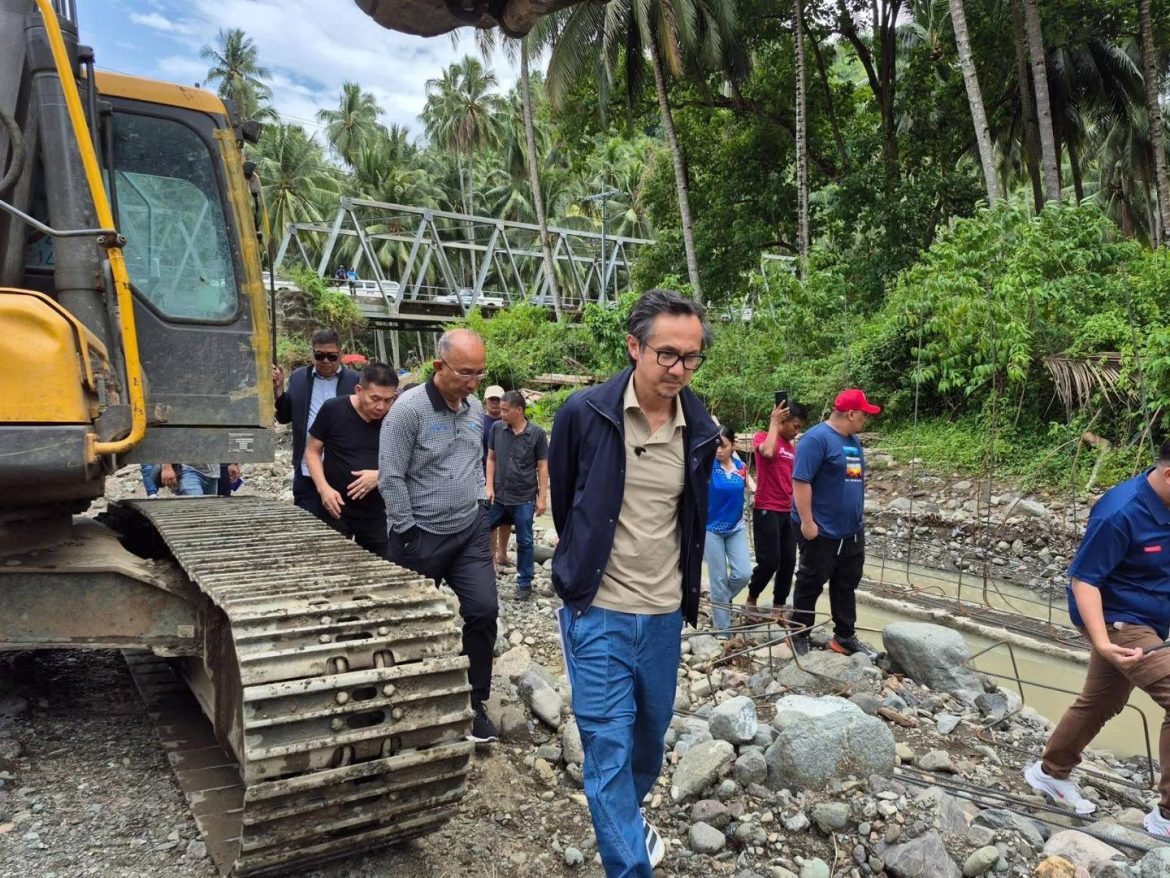
DEPARTMENT of Public Works and Highways (DPWH) Secretary Vince Dizon confirmed that Davao Occidental will only be the first of multiple investigations into possible ghost projects in Southern Mindanao.
In a press conference on Thursday, Sept. 25, he explained that a planned visit to the local district engineer’s office had to be postponed due to the delay in the on-site inspection in Davao Occidental, where a fully-paid but non-existent flood control project over P90 million was discovered.
The project was declared finished in 2022, and the contractor, the Discaya-owned St. Timothy Construction Corp., received the full payment.
“We are looking into that. In fact, we are supposed to visit the district engineer’s office today, but we don’t have time anymore because we were there for a long time,” Dizon said, referring to the Davao Occidental site inspection.
The statement comes amid heightened scrutiny of the agency’s flood control spending following a string of recent discoveries of substandard and ghost projects in various parts of the Philippines.
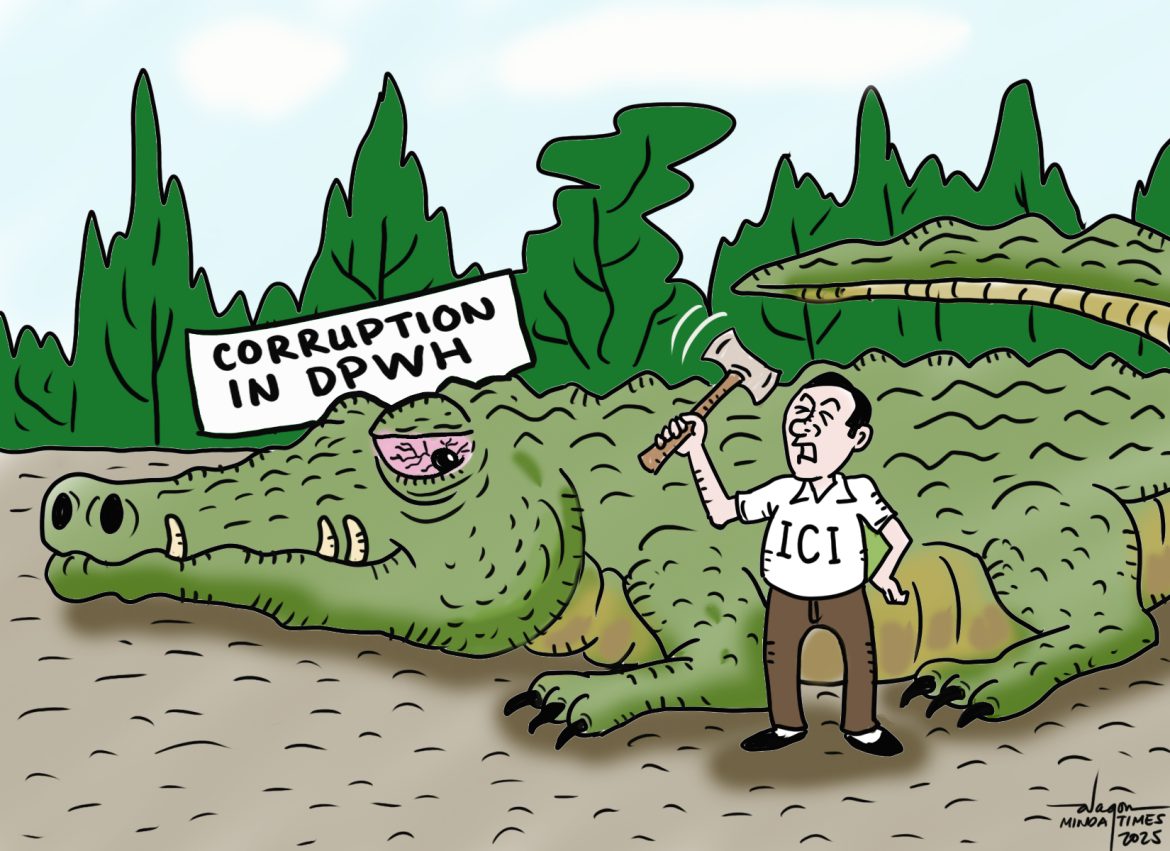
Dizon reiterated his firm stance that the investigation, which includes assistance from the Independent Commission for Infrastructure (ICI), will follow reports of irregularities wherever they lead.
However, he clarified that the nationwide crackdown on anomalous infrastructure projects is not solely focused on the Davao Region, despite the high-profile discovery of a suspected “ghost project” in Davao Occidental.
Dizon affirmed the agency’s commitment to investigating corruption across the country, even as the Davao Occidental case consumed much of their time.
“Of course not, we are focusing on the entire country,” Secretary Dizon stated when asked if there were orders to specifically target Davao City. “It’s not easy, but we got reports here [referring to Davao Occidental]. In the same way, we have reports in La Union, we have reports in Mindoro, we have reports in Eastern Samar.”
Meanwhile, Dizon said they will file charges like malversation of public funds, graft, and violations of the Government Procurement Reform Act against DPWH officials and the contractor in connection with the ghost project on Monday, Sept. 29.
Photo from ICI
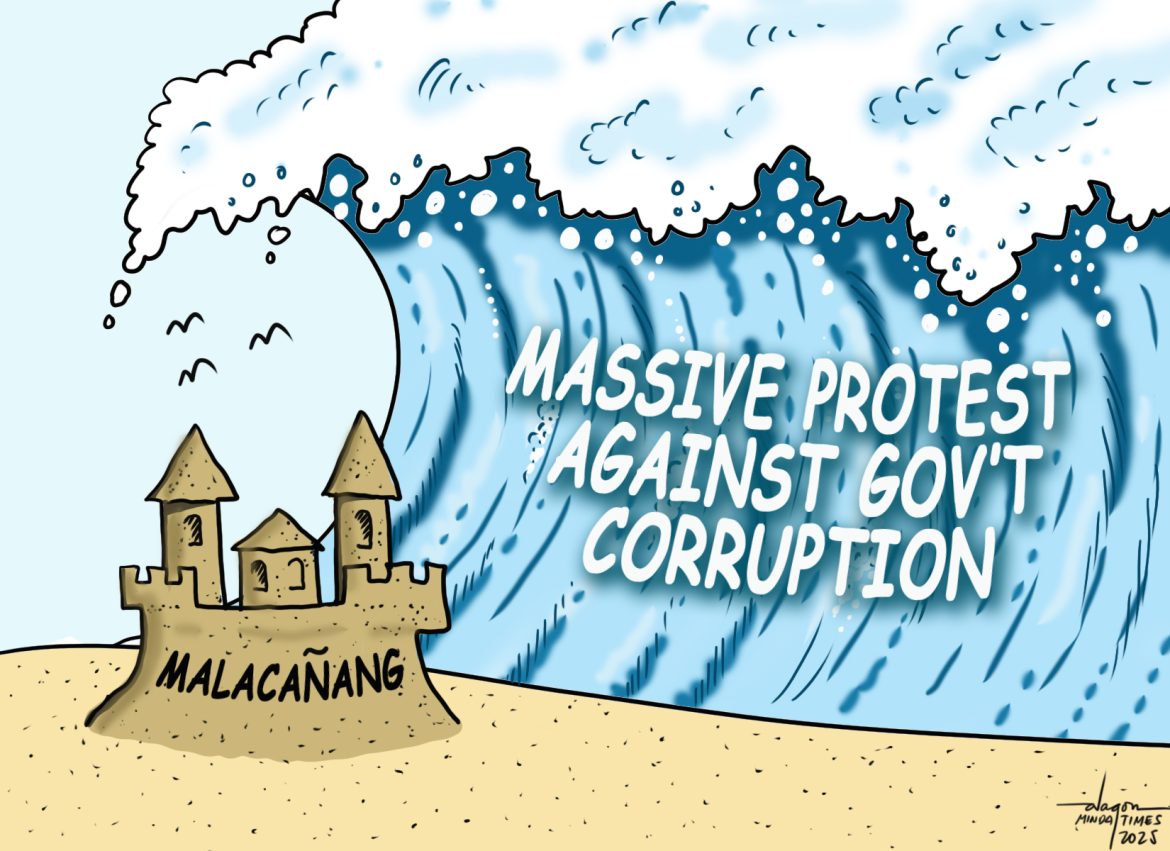
THE CALL of the Filipinos to remove Martin Romualdez as House Speaker has been granted—but does it really mean accountability? Former House Speaker Martin Romualdez stepped down from the lower house leadership on September 17, 2025, and was replaced by Bojie Dy, who previously served as Deputy Speaker during Romualdez’s term. Now, accountability means being responsible and answerable for your own actions, decisions, and duties. Stepping down as Speaker without first fixing your mess does not erase the anomalies during your term.
Being the Speaker holds the most power in the lower house. It is beyond impossible that your fellow congressmen inserted budget allocations without your knowledge or approval—especially in proceedings you presided over. Isn’t it ironic? And the fact that you stayed silent about it is infuriating—knowing that Filipinos needed an immediate response to this situation, because they are the ones who will suffer.
Do you feel so high that you forgot you are only a servant of the people? You even acted as if you were the president of the republic. Furthermore, as a Filipino and one of the voices of my fellow citizens, I demand justice for the people’s blood and sweat paying taxes that were meant to create decent roads, control floods, and build infrastructures that could generate more jobs.
This is an appeal to hear our lamenting voices—hoping that we will finally be heard. We Filipinos are beyond tired of this corrupt system. Every election, we hope it will mark the end of this constant cycle of betrayal. Will this last forever, or will it finally end? If we truly want to change the status quo, we must hold them accountable not just with words but with action. And again, stepping down does not make you accountable. Running away from the problem only worsens the situation. Because if you were really not guilty, you should have faced the consequences of your lapses as Speaker and used the power you once held to fix them.
The question remains: was stepping down an act of accountability—or just a political tactic? The people are exhausted from the circus happening in Congress.
Accountability or strategy? The lives of millions of Filipinos are always at stake. Enough with your greedy personal interests—serve the people with a real sense of responsibility and accountability. The very reason you ran for office was to serve the people’s interests. Running from the consequences will never mean accountability.
Jhon Mark L. Cosico (UC Main Political Science Student)
cosicojhonmark@gmail.com
09682212145
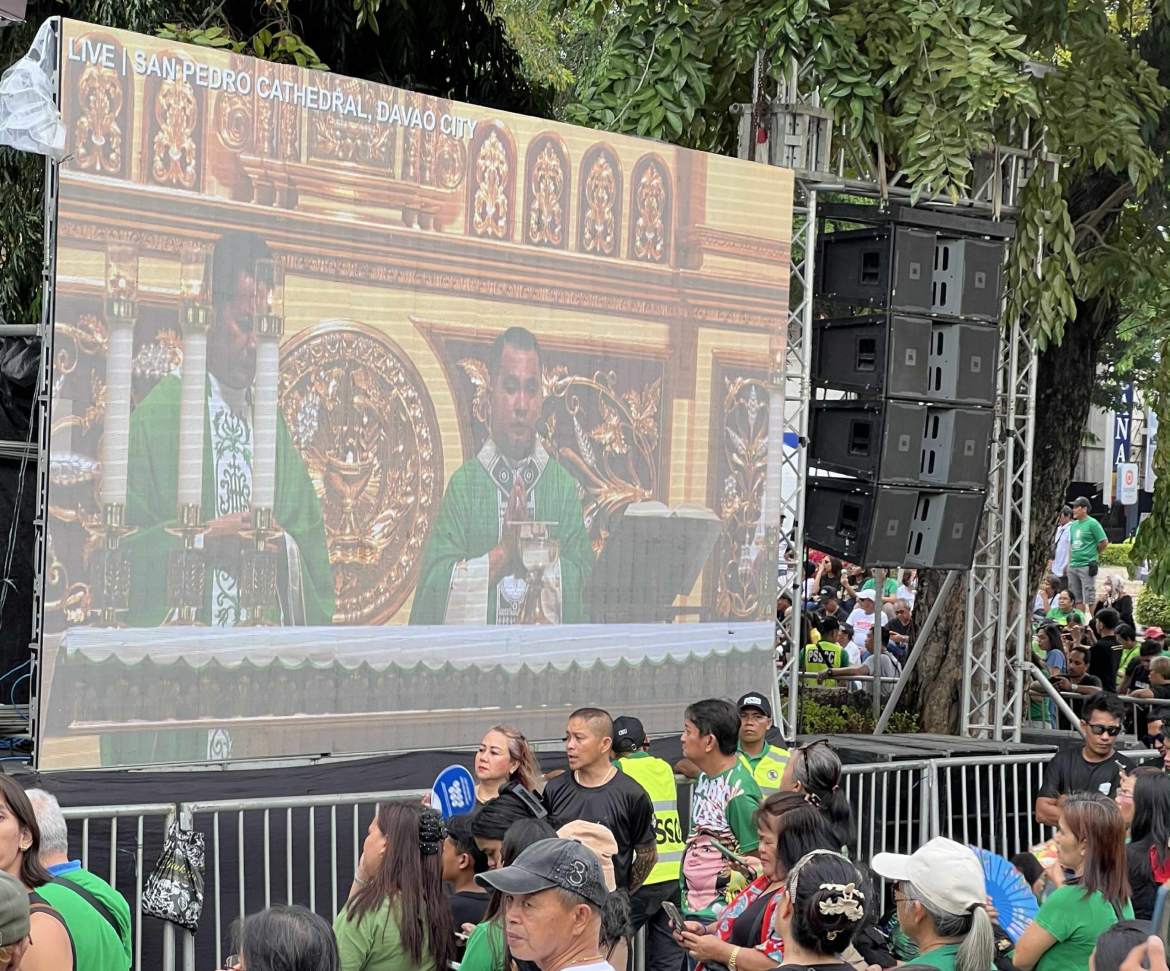
A PRIEST’S homily at the start of the “Pray for the Philippines” rally was a strong condemnation of corruption, transparency, and accountability in the government.
The sermon was delivered during a mass that opened the protest at San Pedro Square.
The priest began by explaining the political nature of his message, stating it resonated with the day’s readings. “My start was very political, my introduction was very political because, in my reflection, it would somehow resonate with our readings this Sunday,” he said.
He then posed a series of questions to the congregation, directly addressing issues of misused public funds.
“What do you call people who meddle with money that is not theirs? The Church is not turning a blind eye to the situation in our country, where there may be people in power with a lack of transparency and a lack of accountability, especially with the flood control project issues we are facing now,” the priest said.
He then questioned the existence of “ghost projects,” which have budgets but show no visible work. “Where did the money for the budgeted project go?” he asked, linking the issue to a “question of accountability, question of transparency, [and the] reality of corruption.”
The priest also voiced frustration with the conflicting reports from government officials. “When I listen to television, on social media, in the hearings in the House, and the hearings in the Senate, all they do is blame and deny. We are left to wonder, who is telling the truth? What is the real truth?” he said.
He concluded his homily with a somber reflection on the difficulty of finding the truth amidst the political noise. “It makes us feel sad because in our search for the truth, we may no longer find it.”
The priest’s remarks set a political tone for the rally, where participants carried signs with anti-corruption messages.
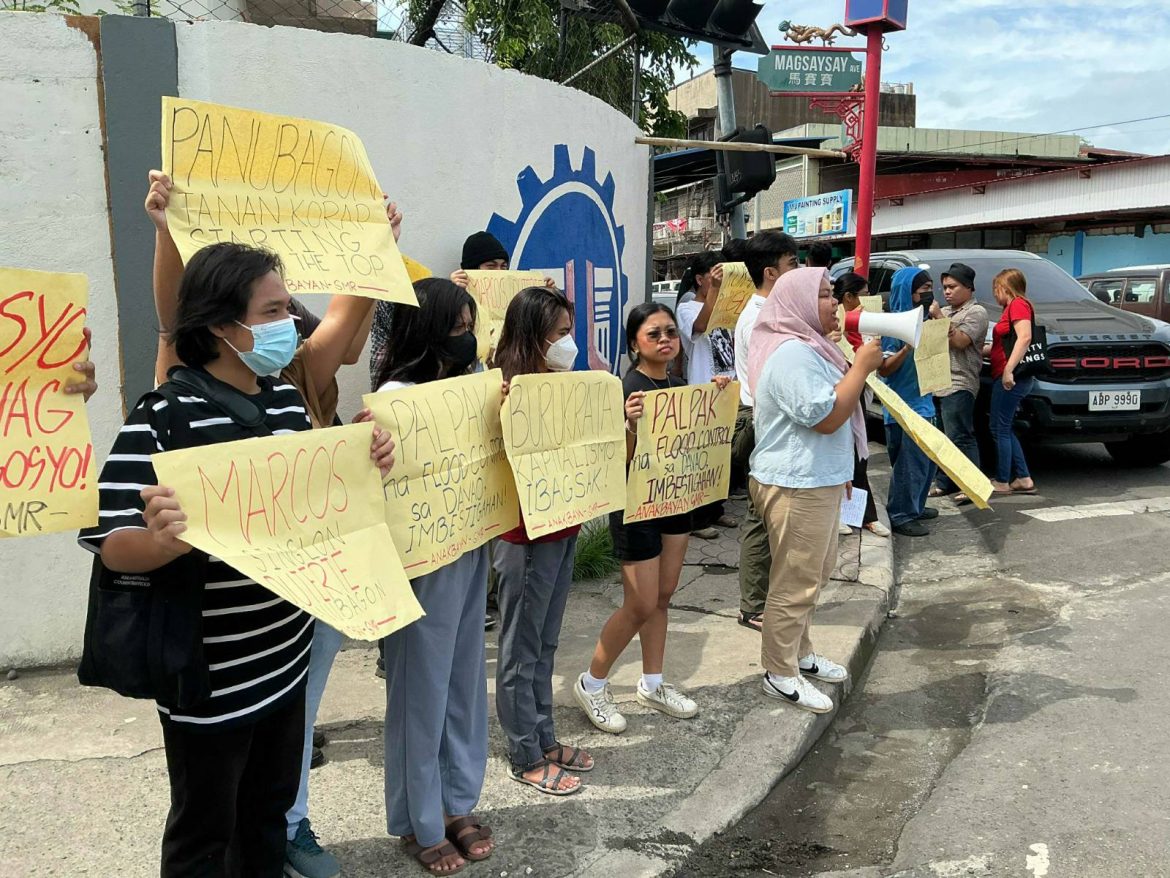
ANAKBAYAN Southern Mindanao Region slammed Congressman Paolo “Pulong” Duterte’s statement, particularly on the point that flooding in the city is “natural” since it supposedly ignores the crucial issue.
Anakbayan SMR, along with other left-leaning youth organizations in Davao City, conducted a lightning protest on September 7, 2025, at the Department of Public Works and Highways (DPWH) XI office along Guerrero Street, Davao City.
The protest was a response of the group to the ongoing issue of flood control project anomalies.
Fauzhea Guani, Chairperson for Anakbayan SMR, slammed Duterte’s statement that the flooding in the city is not natural, as year after year, residents continue to endure dangerous high floodwaters.
“Pulong’s statement is the height of privilege and insensitivity. The worsening flooding in our city is no longer just a natural event, as the Dutertes claim; at this point, it is a human-induced disaster that disrupts the daily lives of ordinary Dabawenyos,” Guani said.
Guani added that the narrative blatantly ignores that since 2016, there have been more than 800 ongoing and completed flood control projects, yet the supposed solutions have clearly failed.
The chairperson questioned the expenditures of the DPWH Region XI and demanded an immediate investigation into the agency’s flood control projects.
“Despite the DPWH XI spending a staggering 37.8 billion pesos from 2016 to 2025 on these projects, the city still faces devastating floods. If these projects were implemented as reported, why does flooding continue to persist in Davao City?” she said.
“The local government ruled by the Dutertes has clearly played a key role in implementing these supposed projects alongside the DPWH, which demand urgent scrutiny,” Guiani added.
To note, Duterte said in response to Rep. Benny Abante, that all flood projects in his district were completed and appropriately implemented.
“Besides, do not mind the floods in Davao, I can guarantee everybody that every peso allocated was implemented,” Pulong said.
He added that flooding in the city subsides compared to other areas that can be likened to a “swimming pool.”
The City Engineer’s Office has identified 265 flood-prone areas in the city, most are in District 1.
CEO OIC Atty. Janis Louis H. Esparcia reported that 140 are in the first district, 69 in the second district, and 56 in the third district, according to the data from the City Disaster Risk Reduction and Management Office.
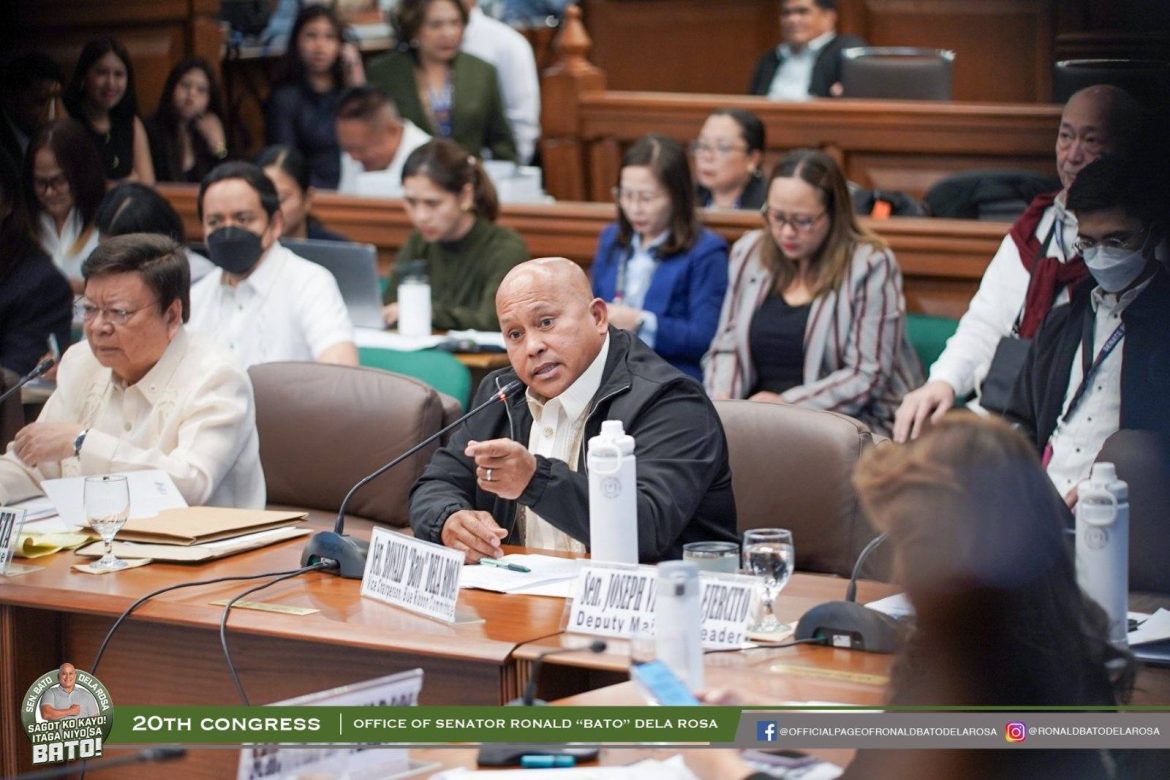
SENATOR Ronald “Bato” Dela Rosa questioned the recent change in Senate leadership, pointing out how its investigation into “ghost flood control projects” has implicated the House of Representatives, not Senator Francis Escudero.
In a post on his Facebook page, Dela Rosa wrote, “Ang kurapsyon sa ghost flood control projects ay nasa House of Representatives ayon sa imbestigasyon ng Senate Blue Ribbon Committee pero bakit ang Senate President ang pinalitan (Corruption surrounding ghost flood control projects lies at the footsteps of the House of Representatives, according to the investigation of the Senate Blue Ribbon Committee, so why was the Senate President replaced)?” the senator asked.
On Sept. 8, senators voted to elect Senator Vicente “Tito” Sotto III to replace Escudero.
With a vote of 15-9, Sotto was elected the new Senate President, while Escudero returned to the minority bloc along with other Duterte-allied senators.
Dela Rosa’s statement came amid the ongoing investigation by the Senate Blue Ribbon Committee into allegations of corruption on multi-billion-peso flood control projects.
During a series of hearings, the names of several congressmen and officials from the Department of Public Works and Highways have surfaced, allegedly involved in “ghost projects” and demanding “kickbacks.”
IT IS our take that the suggestion of Davao City Police Office (DCPO) director P/Col Mannan Muarip to add prison time to the penalty for violating the liquor ban is worth considering by the Sangguniang Panlungsod.
Yes, for now violators are only slapped with fines that most of them can very well afford. Just think of this. Violators are mostly those who have the money to squander while enjoying the city’s nightlife. They are those who can afford to buy not just beer by the bottle but by the cases. They are also those who spend their time inside watering holes drinking imported wine and liquor that are priced exorbitantly.
In other words, if these people can afford to splurge money on an expensive vice like drinking, without doubt they, too, can afford to pay the fines. They are also the ones who are generous enough to offer bribes to law enforcers who catch them violating the liquor ban. And oftentimes, with a few hundreds, or maybe thousands of pesos surreptitiously slipped inside the arresting authorities’ pockets, suddenly, the violators go scot-free.
With prison time added to the penalty, there is certainty that liquor drinkers will have second thoughts doing their thing. That is, for wine and liquor merchants, or drinkers, to think not just twice but many more times if they have to pursue their desire to have bigger sales, or satisfy their craving for the intoxicating liquid.
We would be eagerly waiting who among our councilors will be the first to look into the viability of adopting Colonel Muarip’s recommendation.
*********************************
In some regions and local government units, this is how officials of government agencies and the contractors of infra-related projects, and the contractors themselves, are perpetuating corruption and giving supposedly “fairer” opportunities for contractors to get projects.
“We can only agree to claims that corruption in government, mostly through its many agencies and offices,
is indeed “systemic.” Meaning, it has adopted an elaborate system that allows its perpetuation.”
With the knowledge – perhaps the “blessing” of the agencies’ regional directors – the various accredited contractor firms craft some kind of an “agreement” every time a project is bidded out. They agree among themselves who will get to win in the bidding. The one scheduled to get the project will advise the others on the amount of its bid. The rest will submit higher bids than that of the one slated to win in the bidding.
But the catch is, the winning bidder commits to give certain amount of money to the supposed “losing” bidders. That is one scheme that earns easy money for the “losing” contractor. No sweat. No expense. Perhaps only the amount of the premium of the bidder’s bond and other documentary requirements in the submission of bids.
The concerned agency officials? Well, the rule has long been established as to the percentage after deducting the take of the project sponsor, whoever he or she may be. That gives the contractors assurance of having a continuing business relations with the concerned government agency or office.
And the winners in the succeeding projects to be bid out? Well, as per their “honorable” men’s agreement, they will be rotated.
And in some local governments where project costs are usually lower than those of the national government, contractors, mostly with lesser capital, have organized themselves into cooperatives. But, again, the members agree to give contractors their fair chance of undertaking locally funded projects. To make sure that no non-members will get the chance of barging into the co-op’s domain, the group gets the services of a “contactor,” one insider at the local government, to feed the cooperative information of projects in the pipeline for implementation.
Of course, to ensure getting hold of the project, the cooperative of contractors has already an existing unwritten agreement as to who gets how much and when, so contracts are facilitated.
Availability of cash resources of winning contractors? Well, there is not much need. The signed contract between the winning bidder and the concerned local government is more than enough guarantee that materials needed for the project can be acquired through credit from suppliers who also bloat the supplies’ prices.
How do we know this scheme, our readers may be quick to ask. Well, with the years that our previous work allowed us to deal with contractors doing business with government agencies, and with our agency insider sources established during the many years that we worked as a media person, getting this information is some kind of a “walk in the park.”
Meanwhile, we can only agree to claims that corruption in government, mostly through its many agencies and offices, is indeed “systemic.” Meaning, it has adopted an elaborate system that allows its perpetuation.
Two such systems are imbedded in the schemes we have mentioned early on in this column today.
Marcos Jr. vows to file raps vs corrupt politicians involved in failed flood control projects
“Mahiya naman kayo (You should be ashamed of yourself),” President Ferdinand Marcos Jr. told corrupt contractors and politicians tagged in failed flood control projects which affected Filipinos nationwide in three typhoon visits in July.
The president in his fourth State of the Nation Address on Monday, ordered a crackdown on all failed and ghost flood control projects and the involved personalities.
“Mahiya naman kayo sa mga kabahayan nating naanod o nalubog sa mga pagbaha! Mahiya naman kayo lalo sa mga anak natin na magmamana sa mga utang na ginawa ninyo, na binulsa niyo lang ang pera,” Marcos said.
He emphasized that politicians and government officials could not deny getting a percentage from every project.
“Huwag na po tayong magkunwari. Alam naman ng buong madla na nagkaka-racket sa mga proyekto. Mga kickback, mga initiative, errata, SOP, for the boys. Kaya sa mga nakikipagsabwatan upang kunin ang pondo ng bayan at nakawin ang kinabukasan ng ating mga mamamayan, mahiya naman kayo sa inyong kapwa Pilipino,” the president stressed.
A week before the SONA, the country was battered with flashfloods brought about by typhoons Crising, Dante and Emong and southwest monsoon rains.
Marcos said upon his inspection, the projects were either failed, damaged or non-existent.
He stressed in his SONA, he is directing the Department of Public Works and Highways to immediately submit a list of all flood control projects from every region that started or completed in the last three years.
“The Regional Project Monitoring Committee shall examine that list of projects and give a report on those that have been failures, those that were not finished, and those that are alleged to be ghost projects,” he added.
The list will be published for public scrutiny to help in the probe of the projects.
The president also called for an audit and performance review regarding these projects to ensure the money was well-spent.
“Sa mga susunod na buwan, makakasuhan ang lahat ng mga lalabas na may sala mula sa imbestigasyon. Pati na ang mga kasabwat na kontratista sa buong bansa,” he stressed.
The president vowed that in 2026 National Budget, he will return any proposed General Appropriations Bill that is not fully aligned with the National Expenditure Program, even if it means ending up with a reenacted budget.
“Hindi ko aaprubahan ang kahit anong budget na hindi alinsunod sa plano ng gobyerno para sa sambayanang Pilipino,” Marcos stressed.
Photo from the Presidential Communications Office