

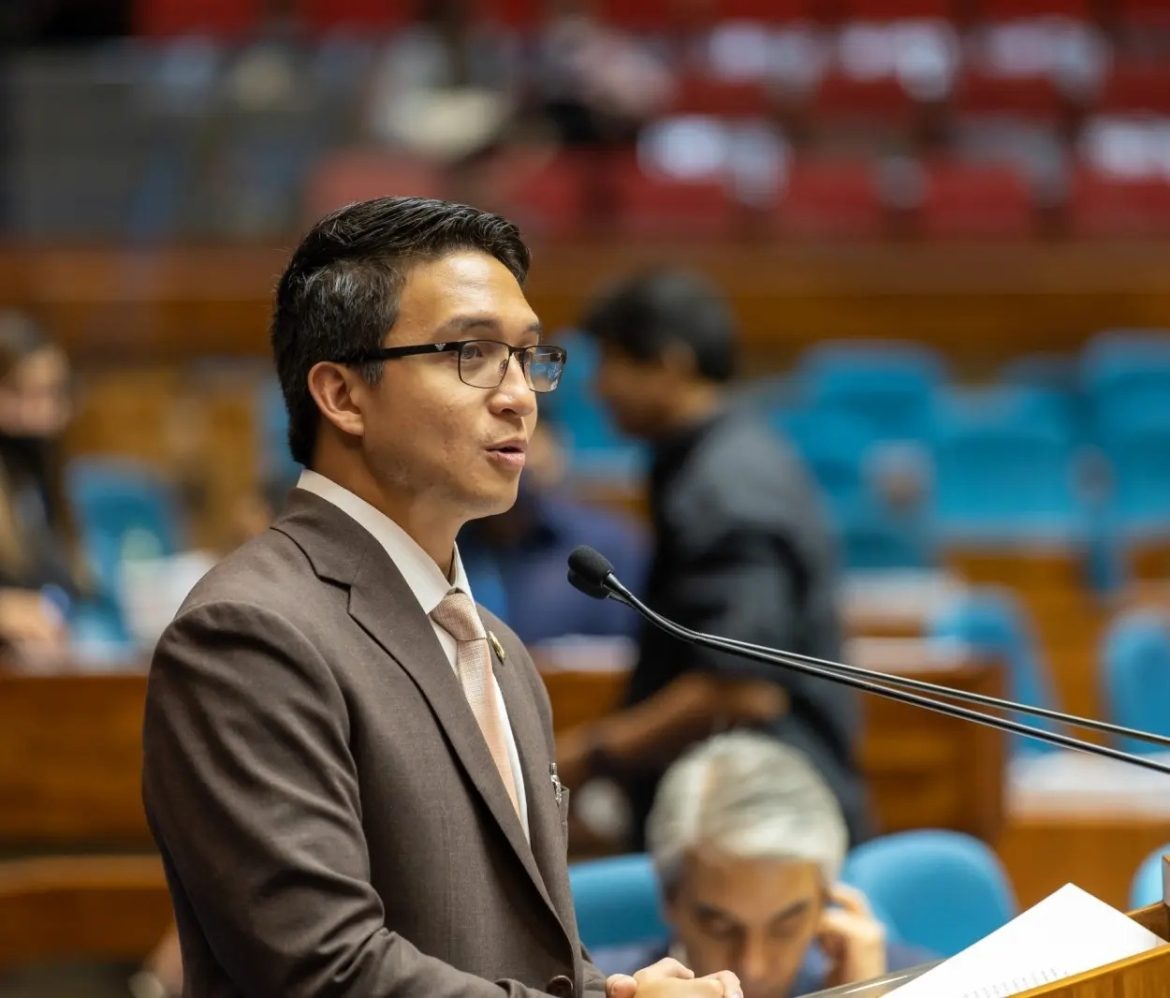
DAVAO Oriental Solon and House committee on social services chairperson Rep. Cheeno Miguel D. Almario has moved to set the record straight regarding the bill institutionalizing the Assistance to Individuals in Crisis Situations (AICS).
Almario clarified that the House of Representatives did not block the inclusion of the “anti-epal” provisions in the AICS institutionalization bill, nor do the House members intend to use the program as a political tool.
Almario explained that the delay in the bill’s ratification stems from a technical effort to ensure precise, enforceable wording; It is not due to the rejection of the “anti-epal” provisions. He noted that these measures reinforce safeguards already enforced by national government agencies, specifically Section 19 of the 2026 General Appropriations Act (GAA), which explicitly bars elected officials, candidates, and political parties from participating in or influencing the release of financial assistance.
“AICS and all other forms of government aid should never be used for the personal promotion, endorsement, or political advantage of any public official,” Almario stated. “Our mandate is to ensure a fair, transparent, accountable, and non-partisan distribution of aid to those who need it most.”
Moving forward: partners, not adversaries
Following the Senate’s recent appointment of its conferees, Rep. Almario confirmed that the House conferees are prepared to move forward immediately. He stressed that the House and the Senate share the exact same objective and must view each other as collaborators.
“We are partners with the Senate, not adversaries. Let us not turn a shared victory into a misunderstanding,” Almario said. “The House is ready. Let us convene, finalize the wording, and deliver this law.”
Rep. Almario expects the bicameral conference committee to settle the final language transparently and swiftly, describing the institutionalization of AICS as a vital safety net for vulnerable Filipinos.
“When a family loses a breadwinner, when a calamity wipes out a livelihood, when a parent cannot pay a hospital bill, that is when this law matters. Let us give them a program that is permanent, that is protected from politics, and that will be there the moment they need it.”